
Every individual tube listed below undergoes rigorous 100% Positive Material Identification (PMI) prior to dispatch, ensuring absolute compliance with ASME/ASTM and EN standards for high-temperature and extreme corrosion environments.




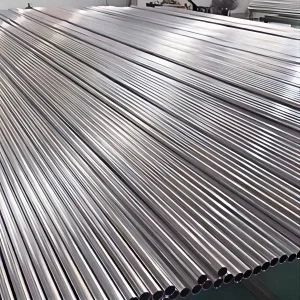



In high-stakes industrial engineering—ranging from deep-water hydrocarbon recovery and nuclear power generation to high-purity chemical processing—material grade mix-ups represent one of the most catastrophic operational risks. A single incorrect tube length installed in a superheater or sour gas heat exchanger can lead to premature stress-corrosion cracking (SCC), unexpected thermal oxidation, catastrophic pressure boundary breaches, and severe environmental hazard.
Traditional quality assurance models historically relied on standard mill test reports (MTCs) and statistical heat-sample testing (Acceptable Quality Limit - AQL). However, global supply chains have demonstrated that statistical sampling leaves unacceptable gaps. True operational safety requires transitioning from sample probability to absolute mathematical certainty. As a specialized premier manufacturer, Spezilla enforces a 100% Positive Material Identification (PMI) Protocol across every single production run of seamless, welded, and cold-drawn alloy tubing.
The global industrial landscape is undergoing a paradigm shift regarding material validation protocols. EPC contractors, refinery operators, and original equipment manufacturers (OEMs) are rewriting technical procurement specifications to mandatorily require factory-level 100% PMI verification. The key trends driving this evolution include:
Statistical batch verification is rapidly being outlawed in critical piping codes. Engineering standards now mandate non-destructive spectroscopic analysis of every single tube length prior to factory dispatch, eliminating human error during bundled shipping.
Modern factory testing integrates high-definition Energy-Dispersive X-ray Fluorescence (ED-XRF) and Optical Emission Spectroscopy (OES). These instruments detect transition metals (Ni, Cr, Mo, Ti, Nb) and light elements (Carbon, Nitrogen, Phosphorus) down to parts-per-million (ppm) levels.
Traceability is moving toward digital pairing. Spectral PMI data generated on the mill floor is directly linked via QR code to EN 10204 3.1/3.2 certificates, preventing downstream documentation tampering and grey-market substitution.
International procurement officers face unprecedented challenges when sourcing specialty stainless steels, super duplex alloys, and nickel-based tubing. The proliferation of multi-tiered distributors and regional re-packagers often obscures the true origin of raw material, leading to critical risk factors:
| Procurement Parameter | Standard Market Sourcing | Spezilla Direct-Factory 100% PMI Protocol |
|---|---|---|
| Alloy Verification Level | Statistical AQL (1-3 tubes per heat lot) | 100% Full-Piece Non-Destructive Testing |
| Carbon & Light Element Detection | Rarely tested at factory; assumed from ingot MTC | OES/LIBS validated for "L" grades (C ≤ 0.030%) |
| Traceability Integrity | Paper MTCs prone to loss or re-stamping | Direct heat mark laser etching matching mill spectral database |
| Third-Party Witnessing | Requires costly third-party site visits post-production | Integrated EN 10204 3.2 TPI (SGS, TÜV, BV, DNV) witness workflow |
| Risk of Premature Failure | Moderate to High (Alloy mix-ups in warehouse storage) | Zero Defect Guaranteed (Zero cross-contamination) |
Custom manufactured tubing verified via 100% PMI is deployed across diverse chemical and physical operating environments. Below are tailored macro solutions engineered for specific extreme-service sectors:
High-temperature hydroprocessing and fluid catalytic cracking (FCC) units demand strict molybdenum and chromium stabilization. Utilizing 100% PMI verified UNS S30908 (309S) and UNS S31009 (310H) prevents sulfidation corrosion and polythionic acid stress cracking during turnaround shutdowns.
Seawater handling and sour service (H2S bearing environments) cause severe pitting and crevice corrosion. Spezilla supplies 100% PMI verified Super Duplex UNS S32760 / 1.4501 and Super Austenitic S31254 (254SMO) with guaranteed Pitting Resistance Equivalent Number (PREN ≥ 42.0).
Boiler heat exchangers, superheaters, and feedwater heaters operate under intense thermomechanical fatigue. Nickel-based alloys like Alloy 800H (UNS N08810) require absolute verification of Aluminum and Titanium micro-alloying additions to assure long-term creep rupture strength above 600°C.
Achieving 100% material assurance requires selecting the proper non-destructive spectroscopic method tailored to the chemical composition of the alloy family. Below is the analytical matrix implemented across Spezilla manufacturing facilities:
| Analytical Technology | Primary Target Elements | Detection Limit | Metallurgical Application & Best Use Case |
|---|---|---|---|
| X-Ray Fluorescence (XRF) | Cr, Ni, Mo, Ti, Nb, Fe, Mn, Cu, W, Co | 0.01% (100 ppm) | Standard Austenitic (304/316), Duplex (2205/2507), High-Cr Stainless Steels |
| Optical Emission Spectroscopy (OES) | Carbon (C), Nitrogen (N), P, S, Al, Si, plus all transition metals | 0.005% (50 ppm) | Mandatory for Low-Carbon grades (304L/316L), 310H carbon verification, & Nitrogen-alloyed Super Austenitics |
| Laser-Induced Breakdown Spectroscopy (LIBS) | Rapid Carbon screening, Lithium, Be, Mg, Al | 0.01% (100 ppm) | High-speed mill-line verification for seamless straight tubes up to 25m lengths |
Surface Preparation Assurance: Valid PMI readings require removal of surface oxide scales, pickling residues, or heavy cold-drawing lubricants. Spezilla executes automated mechanical wire-brushing or spot polishing on all testing points prior to spectroscopic excitation, guaranteeing absolute spectral accuracy without substrate distortion.
The second sequence of our custom manufactured product line includes seamless, welded, super austenitic, and super duplex tubing engineered to exact customer drawings and international standards.


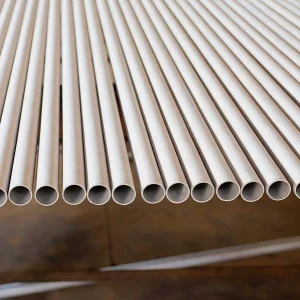




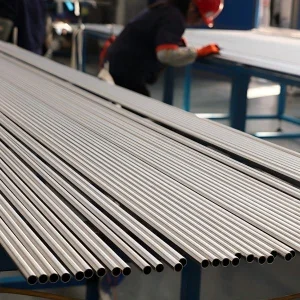
Navigating international trade laws, pressure vessel directives, and regional engineering codes requires robust factory-level compliance frameworks. Spezilla provides complete end-to-end regulatory integration for multinational projects across Europe, North America, the Middle East, and Asia-Pacific.
Every shipment is accompanied by a comprehensive EN 10204 3.1 Mill Test Certificate directly issuing heat-specific chemical analysis, mechanical property test data (Tensile, Yield, Elongation, Hardness), Hydrostatic/Eddy Current test logs, and 100% PMI verification logs. Independent third-party inspection (EN 10204 3.2) by SGS, TÜV Rheinland, Bureau Veritas, or DNV-GL is available upon project request.
Factory manufacturing lines adhere strictly to ASME Section II (Materials), Section VIII (Pressure Vessels), and European Pressure Equipment Directive (PED 2014/68/EU / AD 2000-W0). This ensures full authorization for seamless and welded tubing installation in stamped boilers, pressure vessels, and critical plant piping systems worldwide.
To safeguard high-surface-finish tubing (Bright Annealed / Polished) during transoceanic transit, all tubes are fitted with protective plastic end caps, wrapped in waterproof woven plastic sheeting, and packaged in ISPM-15 compliant fumigated wooden cases. Global logistics support provides DDP/CIF multi-modal shipping coordination directly to job sites.
As industrial processes scale in temperature, pressure, and corrosive intensity, material verification technology must continuously innovate. Spezilla's engineering roadmap focuses on integrating artificial intelligence and real-time inline metallurgical diagnostics into the core manufacturing line:
Development of machine-learning algorithms to interpret complex x-ray and laser emission spectra instantly, identifying trace impurities and micro-segregations before hot extrusion or cold drawing stages.
Replacing manual handheld scanning with multi-axis automated robotic gantries integrated directly into the continuous bright annealing line, logging spectral signatures at 10-centimeter intervals along every tube.
Pairing 100% PMI spectral data with Scope 1, 2, and 3 carbon intensity metrics, enabling global EPCs to select verified low-carbon, highly recycled alloy tubing without sacrificing metallurgical purity.
Below are detailed answers to key questions raised by global engineering teams, quality managers, and procurement leaders regarding 100% PMI verified tube manufacturing:
