
1 / 2
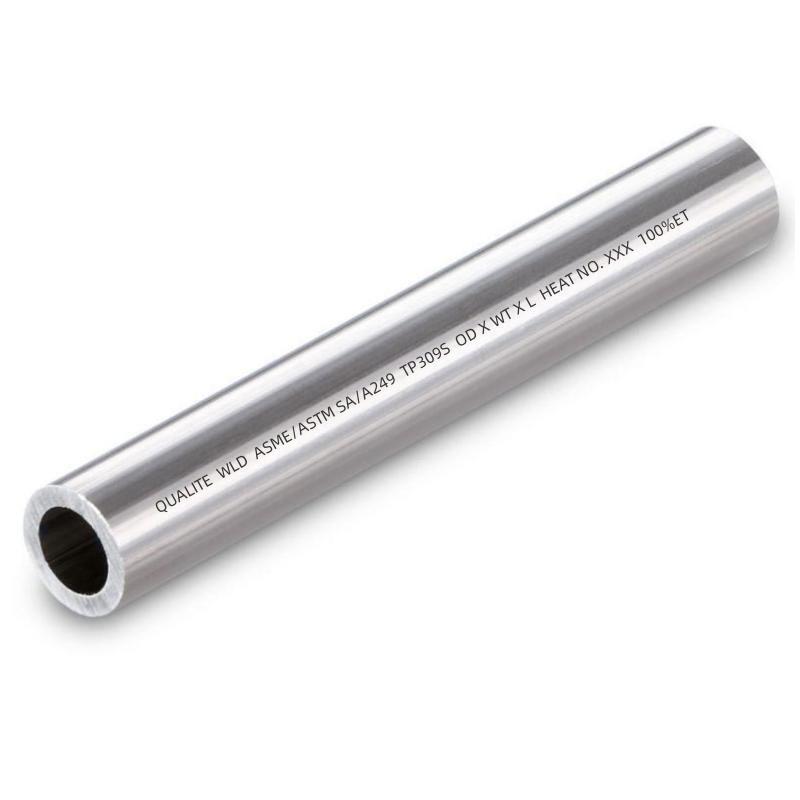
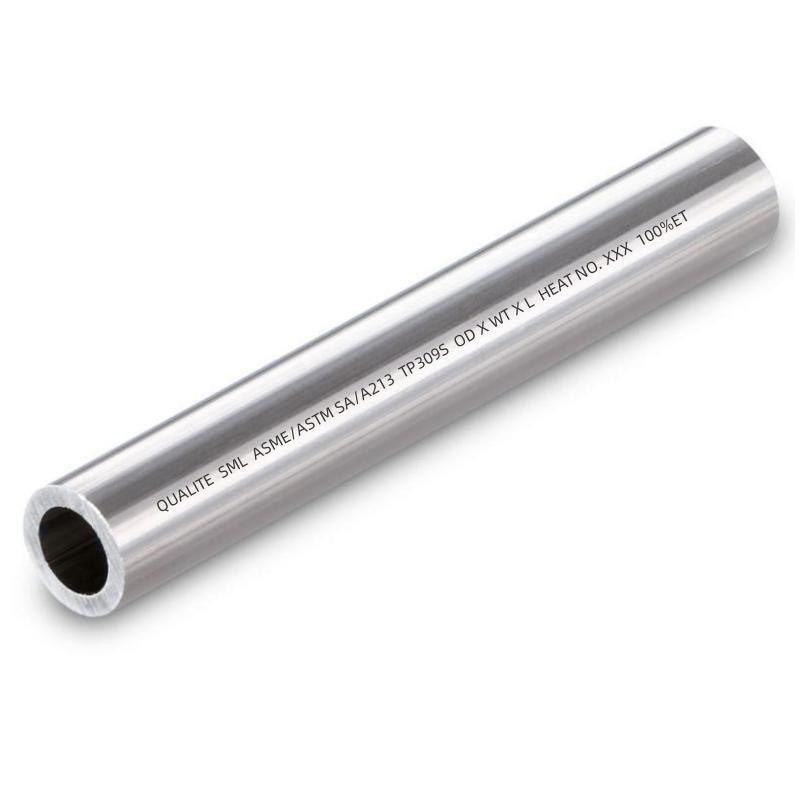
Custom Austenitic Steels 309S • UNS S30908 • 1.4833 Factories, Products
Product Description
309S & 1.4833 Stainless Steel Tubes Specifications
Chemical Composition (in % by mass)
| Grade | C (Max.) | Si (Max.) | Mn (Max.) | P (Max.) | S (Max.) | Cr | Ni | Mo | Ti | N | Others |
|---|---|---|---|---|---|---|---|---|---|---|---|
| 309S | 0.08 | 1.00 | 2.00 | 0.045 | 0.030 | 22.0 - 24.0 | 12.0 - 15.0 | - | - | - | - |
| 1.4833 | 0.15 | 1.00 | 2.00 | 0.045 | 0.015 | 22.0 - 24.0 | 12.0 - 14.0 | - | - | 0.10 | - |
Mechanical Property & Heat Treatment
| Grade | Rp 0.2 (MPa) | Rp 1.0 (MPa) | Rm (MPa) | A (%) | Hardness (HRB) | Heat Treatment |
|---|---|---|---|---|---|---|
| Min. | Min. | Min. - Max. | Min. | Max. | ||
| 309S | 205 | - | 515 | 35 | 90 | Solution Annealed |
| 1.4833 | 210 | 250 | 500 | 33 | - | Solution Annealed |
Tube Size Commonly Used (OD & Wall Thickness)
| OD (mm) | Thickness (mm) | |||||||||||||
|---|---|---|---|---|---|---|---|---|---|---|---|---|---|---|
| 0.50 | 0.70 | 0.80 | 0.89 | 1.00 | 1.20 | 1.24 | 1.50 | 1.65 | 2.00 | 2.11 | 2.50 | 2.77 | 3.05 | |
| 6.00 | x | x | x | x | x | x | x | x | ||||||
| 6.35 | x | x | x | x | x | x | x | x | x | |||||
| 7.00 | x | x | x | x | x | x | x | x | ||||||
| 7.50 | x | x | x | x | x | x | x | x | ||||||
| 8.00 | x | x | x | x | x | x | x | x | ||||||
| 9.00 | x | x | x | x | x | x | x | x | ||||||
| 9.53 | x | x | x | x | x | x | x | x | x | |||||
| 10.00 | x | x | x | x | x | x | x | x | ||||||
| 11.00 | x | x | x | x | x | x | x | x | ||||||
| 12.00 | x | x | x | x | x | x | x | x | x | |||||
| 12.70 | x | x | x | x | x | x | x | x | x | x | x | |||
| 13.00 | x | x | x | x | x | x | x | x | ||||||
| 14.00 | x | x | x | x | x | x | x | x | ||||||
| 15.00 | x | x | x | x | x | x | x | x | ||||||
| 15.88 | x | x | x | x | x | x | x | x | x | x | x | |||
| 16.00 | x | x | x | x | x | x | x | x | x | x | ||||
| 17.15 | x | x | x | x | x | x | x | x | x | x | x | |||
| 18.00 | x | x | x | x | x | x | x | x | x | x | ||||
| 19.00 | x | x | x | x | x | x | x | x | x | x | ||||
| 19.05 | x | x | x | x | x | x | x | x | x | x | x | x | x | |
| 20.00 | x | x | x | x | x | x | x | x | x | x | x | x | x | |
| 21.34 | x | x | x | x | x | x | x | x | x | x | x | x | x | |
| 22.00 | x | x | x | x | x | x | x | x | x | x | x | x | x | |
| 22.23 | x | x | x | x | x | x | x | x | x | x | x | x | x | |
| 23.00 | x | x | x | x | x | x | x | x | x | x | x | x | x | |
| 24.00 | x | x | x | x | x | x | x | x | x | x | x | x | x | |
| 25.00 | x | x | x | x | x | x | x | x | x | x | x | x | x | x |
| 25.40 | x | x | x | x | x | x | x | x | x | x | x | x | x | x |
| 26.00 | x | x | x | x | x | x | x | x | x | x | x | x | x | x |
| 26.67 | x | x | x | x | x | x | x | x | x | x | x | x | x | x |
| 26.90 | x | x | x | x | x | x | x | x | x | x | x | x | x | x |
| 28.00 | x | x | x | x | x | x | x | x | x | x | x | x | x | x |
| 28.58 | x | x | x | x | x | x | x | x | x | x | x | x | x | x |
| 30.00 | x | x | x | x | x | x | x | x | x | x | x | x | x | x |
| 31.75 | x | x | x | x | x | x | x | x | x | x | x | x | x | x |
| 32.00 | x | x | x | x | x | x | x | x | x | x | x | x | x | x |
| 33.40 | x | x | x | x | x | x | x | x | x | x | x | x | x | x |
| 35.00 | x | x | x | x | x | x | x | x | x | x | x | x | x | x |
| 36.00 | x | x | x | x | x | x | x | x | x | x | x | x | x | x |
| 38.10 | x | x | x | x | x | x | x | x | x | x | x | x | x | x |
| 42.00 | x | x | x | x | x | x | x | x | x | x | ||||
| 44.50 | x | x | x | x | x | x | x | x | x | |||||
| 48.26 | x | x | x | x | x | x | x | |||||||
| 50.80 | x | x | x | x | x | x | x | x | x | x | x | |||
Frequently Asked Questions (FAQ)
Q1: What is the main chemical distinction between 309S and 1.4833 stainless steel tubes?
309S has a maximum carbon content of 0.08% and sulfur up to 0.030%, whereas 1.4833 allows carbon up to 0.15%, caps sulfur at 0.015%, and includes up to 0.10% Nitrogen. Both grades feature 22.0 - 24.0% Chromium.
Q2: What are the mechanical properties of 309S stainless steel tubes?
309S tubes feature a minimum yield strength (Rp 0.2) of 205 MPa, tensile strength (Rm) of 515 MPa, minimum elongation of 35%, and a maximum hardness of 90 HRB.
Q3: What are the yield and tensile strength specs for 1.4833 stainless steel tubes?
1.4833 stainless steel tubes have a minimum yield strength Rp 0.2 of 210 MPa, Rp 1.0 of 250 MPa, tensile strength (Rm) of min. 500 MPa, and elongation of min. 33%.
Q4: What heat treatment process is applied to 309S and 1.4833 tubes?
Both 309S and 1.4833 stainless steel tubes are supplied in a Solution Annealed condition to optimize structural performance and corrosion resistance.
Q5: What size ranges are available for these stainless steel tubes?
Outer diameters (OD) range from 6.00 mm up to 50.80 mm, with wall thicknesses available between 0.50 mm and 3.05 mm depending on the chosen outer diameter.










