
1 / 3
Custom Austenitic Steels 316L • UNS S31603 • 1.4404 Manufacturer, Factories
Product Description
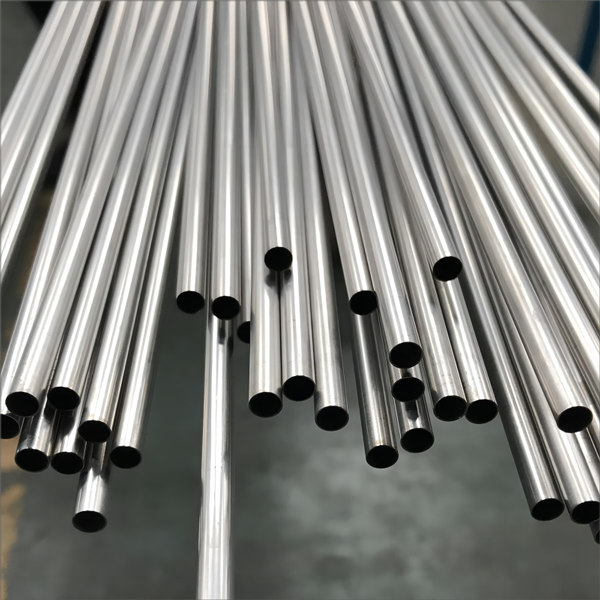
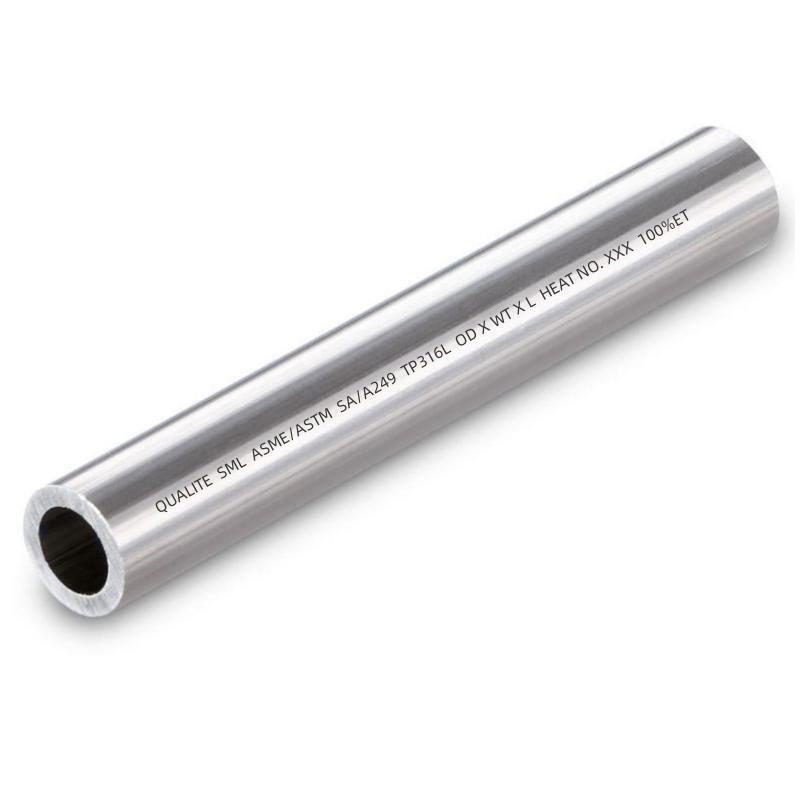
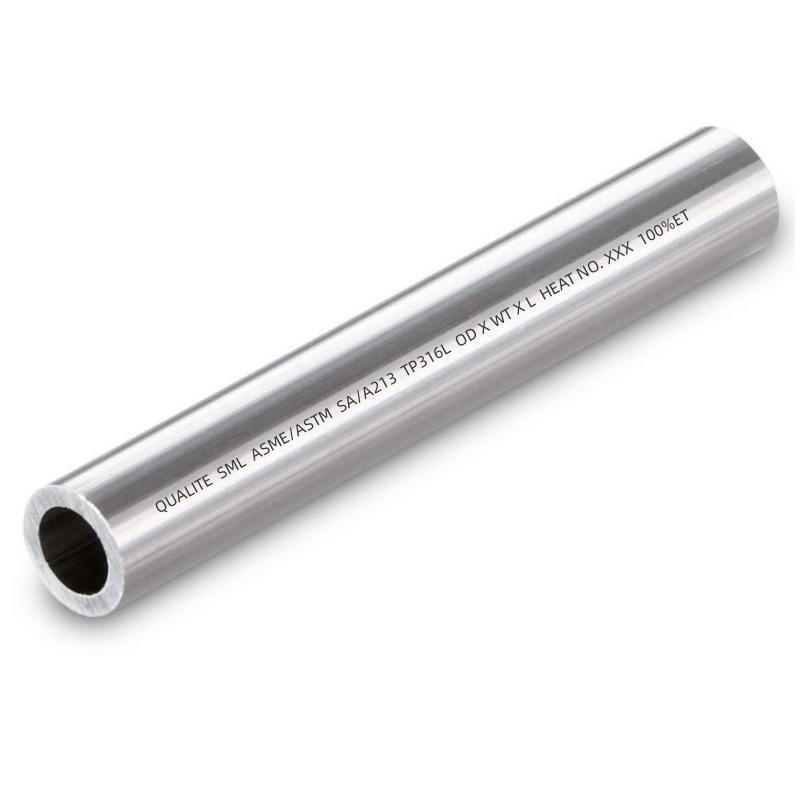
316L Stainless Steel Tubes, 1.4404 Stainless Steel Tubes
Chemical Composition
| Chemical Composition (in % by mass) | |||||||||||
|---|---|---|---|---|---|---|---|---|---|---|---|
| Grade | C | Si | Mn | P | S | Cr | Ni | Mo | Ti | N | Others |
| Max. | Max. | Max. | Max. | Max. | |||||||
| 316L | 0.030 | 1.00 | 2.00 | 0.045 | 0.030 | 16.0 - 18.0 | 10.0 - 14.0 | 2.00 - 3.00 | |||
| 1.4404 | 0.030 | 1.00 | 2.00 | 0.045 | 0.015 | 16.5 - 18.5 | 10.0 - 13.0 | 2.00 - 2.50 | 0.10 | ||
Mechanical Property & Heat Treatment
| Mechanical Property & Heat Treatment | ||||||
|---|---|---|---|---|---|---|
| Grade | Rp 0.2 (Mpa) | Rp 1.0 (Mpa) | Rm (Mpa) | A (%) | Hardness (HRB) | Heat Treatment |
| Min. | Min. | Min. - Max. | Min. | Max. | ||
| 316L | 170 | 485 | 35 | 90 | Solution Annealed | |
| 1.4404 | 190 | 225 | 490 - 690 | 40 | Solution Annealed | |
Commonly Used Tube Sizes
| Tube Size Commonly Used | ||||||||||||||
|---|---|---|---|---|---|---|---|---|---|---|---|---|---|---|
| OD | Thickness (mm) | |||||||||||||
| (mm) | 0.50 | 0.70 | 0.80 | 0.89 | 1.00 | 1.20 | 1.24 | 1.50 | 1.65 | 2.00 | 2.11 | 2.50 | 2.77 | 3.05 |
| 6.00 | x | x | x | x | x | x | x | x | ||||||
| 6.35 | x | x | x | x | x | x | x | x | x | |||||
| 7.00 | x | x | x | x | x | x | x | x | ||||||
| 7.50 | x | x | x | x | x | x | x | x | ||||||
| 8.00 | x | x | x | x | x | x | x | x | ||||||
| 9.00 | x | x | x | x | x | x | x | x | ||||||
| 9.53 | x | x | x | x | x | x | x | x | x | |||||
| 10.00 | x | x | x | x | x | x | x | x | ||||||
| 11.00 | x | x | x | x | x | x | x | x | ||||||
| 12.00 | x | x | x | x | x | x | x | x | x | |||||
| 12.70 | x | x | x | x | x | x | x | x | x | x | x | |||
| 13.00 | x | x | x | x | x | x | x | x | ||||||
| 14.00 | x | x | x | x | x | x | x | x | ||||||
| 15.00 | x | x | x | x | x | x | x | x | ||||||
| 15.88 | x | x | x | x | x | x | x | x | x | x | x | |||
| 16.00 | x | x | x | x | x | x | x | x | x | x | ||||
| 17.15 | x | x | x | x | x | x | x | x | x | x | x | |||
| 18.00 | x | x | x | x | x | x | x | x | x | x | ||||
| 19.00 | x | x | x | x | x | x | x | x | x | x | ||||
| 19.05 | x | x | x | x | x | x | x | x | x | x | x | x | x | |
| 20.00 | x | x | x | x | x | x | x | x | x | x | x | x | x | |
| 21.34 | x | x | x | x | x | x | x | x | x | x | x | x | x | |
| 22.00 | x | x | x | x | x | x | x | x | x | x | x | x | x | |
| 22.23 | x | x | x | x | x | x | x | x | x | x | x | x | x | |
| 23.00 | x | x | x | x | x | x | x | x | x | x | x | x | x | |
| 24.00 | x | x | x | x | x | x | x | x | x | x | x | x | x | |
| 25.00 | x | x | x | x | x | x | x | x | x | x | x | x | x | x |
| 25.40 | x | x | x | x | x | x | x | x | x | x | x | x | x | x |
| 26.00 | x | x | x | x | x | x | x | x | x | x | x | x | x | x |
| 26.67 | x | x | x | x | x | x | x | x | x | x | x | x | x | x |
| 26.90 | x | x | x | x | x | x | x | x | x | x | x | x | x | x |
| 28.00 | x | x | x | x | x | x | x | x | x | x | x | x | x | x |
| 28.58 | x | x | x | x | x | x | x | x | x | x | x | x | x | x |
| 30.00 | x | x | x | x | x | x | x | x | x | x | x | x | x | x |
| 31.75 | x | x | x | x | x | x | x | x | x | x | x | x | x | x |
| 32.00 | x | x | x | x | x | x | x | x | x | x | x | x | x | x |
| 33.40 | x | x | x | x | x | x | x | x | x | x | x | x | x | x |
| 35.00 | x | x | x | x | x | x | x | x | x | x | x | x | x | x |
| 36.00 | x | x | x | x | x | x | x | x | x | x | x | x | x | x |
| 38.10 | x | x | x | x | x | x | x | x | x | x | x | x | x | x |
| 42.00 | x | x | x | x | x | x | x | x | x | x | ||||
| 44.50 | x | x | x | x | x | x | x | x | x | |||||
| 48.26 | x | x | x | x | x | x | x | |||||||
| 50.80 | x | x | x | x | x | x | x | x | x | x | x | |||
Frequently Asked Questions (FAQ)
What is the difference between 316L and 1.4404 stainless steel tubes?
316L is the designation under the American ASTM/AISI standard, while 1.4404 is the equivalent European EN standard designation. Both represent low-carbon molybdenum-bearing austenitic stainless steels with almost identical chemical composition and mechanical performance.
Why is Molybdenum added to 316L / 1.4404 stainless steel?
Molybdenum significantly enhances the material's corrosion resistance, particularly against pitting and crevice corrosion in chloride-rich environments such as seawater or chemical processing fluids.
What does the "L" stand for in 316L?
The "L" stands for "Low Carbon". 316L has a maximum carbon content of 0.030%, which prevents harmful carbide precipitation during welding and ensures superior intergranular corrosion resistance.
What are the main applications of 316L and 1.4404 stainless steel tubes?
These tubes are widely used in chemical processing, pharmaceuticals, food and beverage production, marine equipment, heat exchangers, automotive systems, and high-purity gas and fluid lines.
Why is Solution Annealing performed on 316L / 1.4404 tubes?
Solution annealing heat treatment dissolves precipitated carbides back into the austenitic matrix, relieving internal stresses and restoring maximum corrosion resistance and ductility after cold working or welding.










