1 / 1
Custom Austenitic Steels 316Ti • UNS S31635 • 1.4571 Manufacturer, Products
Product Description
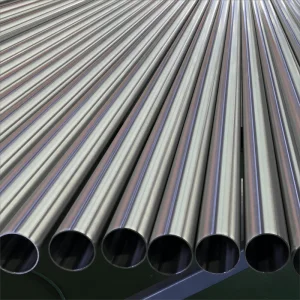
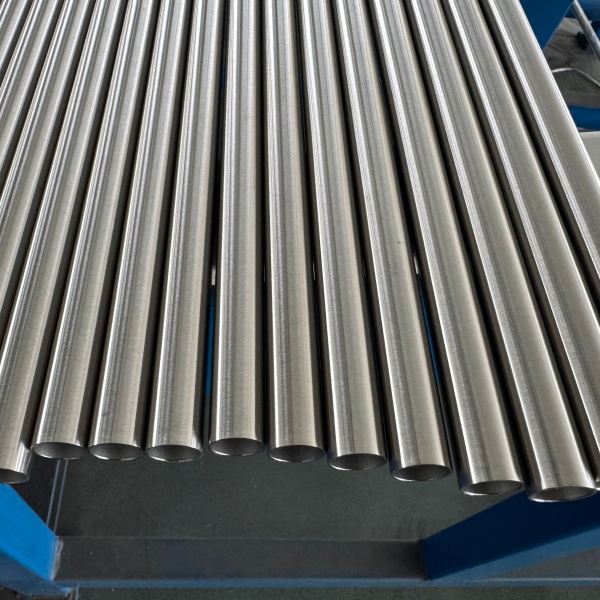
316Ti Stainless Steel Tubes, 1.4571 Stainless Steel Tubes
Chemical Composition (in % by mass)
| Grade | C | Si | Mn | P | S | Cr | Ni | Mo | Ti | N | Others |
|---|---|---|---|---|---|---|---|---|---|---|---|
| Max. | Max. | Max. | Max. | Max. | |||||||
| 316Ti | 0.08 | 0.75 | 2.00 | 0.045 | 0.030 | 16.0 - 18.0 | 10.0 - 14.0 | 2.00 - 3.00 | 5 X (C+N) - 0.70 | 0.10 | - |
| 1.4571 | 0.08 | 1.00 | 2.00 | 0.045 | 0.015 | 16.5 - 18.5 | 10.5 - 13.5 | 2.00 - 2.50 | 5 X C - 0.70 | - | - |
Mechanical Property & Heat Treatment
| Grade | Rp 0.2 (MPa) | Rp 1.0 (MPa) | Rm (MPa) | A (%) | Hardness (HRB) | Heat Treatment |
|---|---|---|---|---|---|---|
| Min. | Min. | Min. - Max. | Min. | Max. | ||
| 316Ti | 205 | - | 515 | 35 | 90 | Solution Annealed |
| 1.4571 | 210 | 245 | 500 - 730 | 35 | - | Solution Annealed |
Tube Size Commonly Used
| OD (mm) | Thickness (mm) | |||||||||||||
|---|---|---|---|---|---|---|---|---|---|---|---|---|---|---|
| 0.50 | 0.70 | 0.80 | 0.89 | 1.00 | 1.20 | 1.24 | 1.50 | 1.65 | 2.00 | 2.11 | 2.50 | 2.77 | 3.05 | |
| 6.00 | x | x | x | x | x | x | x | x | ||||||
| 6.35 | x | x | x | x | x | x | x | x | x | |||||
| 7.00 | x | x | x | x | x | x | x | x | ||||||
| 7.50 | x | x | x | x | x | x | x | x | ||||||
| 8.00 | x | x | x | x | x | x | x | x | ||||||
| 9.00 | x | x | x | x | x | x | x | x | ||||||
| 9.53 | x | x | x | x | x | x | x | x | x | |||||
| 10.00 | x | x | x | x | x | x | x | x | ||||||
| 11.00 | x | x | x | x | x | x | x | x | ||||||
| 12.00 | x | x | x | x | x | x | x | x | x | |||||
| 12.70 | x | x | x | x | x | x | x | x | x | x | x | |||
| 13.00 | x | x | x | x | x | x | x | x | ||||||
| 14.00 | x | x | x | x | x | x | x | x | ||||||
| 15.00 | x | x | x | x | x | x | x | x | ||||||
| 15.88 | x | x | x | x | x | x | x | x | x | x | x | |||
| 16.00 | x | x | x | x | x | x | x | x | x | x | ||||
| 17.15 | x | x | x | x | x | x | x | x | x | x | x | |||
| 18.00 | x | x | x | x | x | x | x | x | x | x | ||||
| 19.00 | x | x | x | x | x | x | x | x | x | x | ||||
| 19.05 | x | x | x | x | x | x | x | x | x | x | x | x | x | |
| 20.00 | x | x | x | x | x | x | x | x | x | x | x | x | x | |
| 21.34 | x | x | x | x | x | x | x | x | x | x | x | x | x | |
| 22.00 | x | x | x | x | x | x | x | x | x | x | x | x | x | |
| 22.23 | x | x | x | x | x | x | x | x | x | x | x | x | x | |
| 23.00 | x | x | x | x | x | x | x | x | x | x | x | x | x | |
| 24.00 | x | x | x | x | x | x | x | x | x | x | x | x | x | |
| 25.00 | x | x | x | x | x | x | x | x | x | x | x | x | x | x |
| 25.40 | x | x | x | x | x | x | x | x | x | x | x | x | x | x |
| 26.00 | x | x | x | x | x | x | x | x | x | x | x | x | x | x |
| 26.67 | x | x | x | x | x | x | x | x | x | x | x | x | x | x |
| 26.90 | x | x | x | x | x | x | x | x | x | x | x | x | x | x |
| 28.00 | x | x | x | x | x | x | x | x | x | x | x | x | x | x |
| 28.58 | x | x | x | x | x | x | x | x | x | x | x | x | x | x |
| 30.00 | x | x | x | x | x | x | x | x | x | x | x | x | x | x |
| 31.75 | x | x | x | x | x | x | x | x | x | x | x | x | x | x |
| 32.00 | x | x | x | x | x | x | x | x | x | x | x | x | x | x |
| 33.40 | x | x | x | x | x | x | x | x | x | x | x | x | x | x |
| 35.00 | x | x | x | x | x | x | x | x | x | x | x | x | x | x |
| 36.00 | x | x | x | x | x | x | x | x | x | x | x | x | x | x |
| 38.10 | x | x | x | x | x | x | x | x | x | x | x | x | x | x |
| 42.00 | x | x | x | x | x | x | x | x | x | x | ||||
| 44.50 | x | x | x | x | x | x | x | x | x | |||||
| 48.26 | x | x | x | x | x | x | x | |||||||
| 50.80 | x | x | x | x | x | x | x | x | x | x | x | |||
Frequently Asked Questions (FAQ)
Q1
What is the main difference between 316Ti and 1.4571 stainless steel tubes?
316Ti and 1.4571 are essentially equivalent stainless steel grades. Grade 316Ti is designated under the ASTM/AISI standard, while 1.4571 is designated under the EN/DIN standard. Both grades contain titanium additions to improve resistance to intergranular corrosion.
Q2
Why is Titanium (Ti) added to 316Ti and 1.4571 stainless steels?
Titanium is added to stabilize the structure against chromium carbide precipitation at elevated temperatures (typically 425°C to 860°C). This prevents sensitization and protects the steel against intergranular corrosion during thermal processing or welding.
Q3
What are the standard mechanical properties of 316Ti tubes?
316Ti stainless steel tubes feature a minimum yield strength (Rp 0.2) of 205 MPa, a minimum tensile strength (Rm) of 515 MPa, minimum elongation of 35%, and a maximum hardness of 90 HRB after solution annealing.
Q4
What heat treatment is applied to 316Ti / 1.4571 stainless steel tubing?
These stainless steel tubes undergo Solution Annealing heat treatment. This process optimizes corrosion resistance, dissolves precipitates, and relieves internal stresses incurred during forming or drawing.
Q5
What are typical size ranges for 316Ti / 1.4571 stainless steel tubes?
Commonly produced tube outside diameters (OD) range from 6.00 mm to 50.80 mm, with wall thicknesses available from 0.50 mm up to 3.05 mm depending on the required tube diameter.
Q6
In which industries are 316Ti / 1.4571 tubes commonly utilized?
Due to their high temperature resistance and corrosion resistance, these tubes are widely used in chemical processing, marine environments, automotive exhaust systems, heat exchangers, power generation, and petrochemical facilities.