
High-Performance Austenitic & Alloy Tubing Products
Precision-engineered tubular solutions manufactured under strict ISO 9001 and ASME nuclear/industrial standards for critical fluid handling.

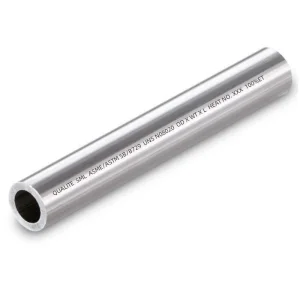
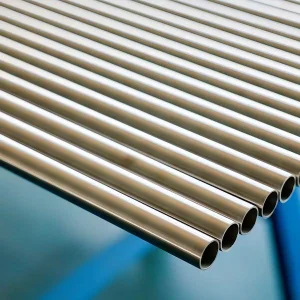





Metallurgical Fundamentals & Custom 316 Pipe Manufacturing
In modern industrial process engineering, the selection of raw materials defines operational longevity, pressure containment envelope, and resistance to aggressive media. Custom 316 pipe factories operate at the intersection of mechanical metallurgy, precise thermal treatment, and rigorous non-destructive quality verification.
Key Information Gain: Molybdenum-Enhanced Passivation Kinetics
Unlike standard 18/8 austenitic grades (such as AISI 304/304L), grade 316 stainless steel (UNS S31600 / 1.4401) incorporates 2.0% to 3.0% Molybdenum (Mo). This addition fundamentally alters the passive oxide layer ($Cr_2O_3$), creating a complex, highly stable surface film enriched with Mo-based compounds. This passivation chemistry dramatically increases the material's Pitting Resistance Equivalent Number (PREN) from ~19.0 to over ~25.0, offering defense against localized chloride-induced pitting, crevice corrosion, and stress corrosion cracking (SCC).
Chemical & Mechanical Specification Matrix
Modern advanced pipe manufacturing facility engineers must strictly adhere to international composition standards. The table below outlines the core metallurgical thresholds comparing 316, 316L, and 316Ti variants produced across premier custom mills.
| Grade Variant | UNS / EN Standard | Carbon (C) Max | Chromium (Cr) | Nickel (Ni) | Molybdenum (Mo) | Min Yield (MPa) | Min Tensile (MPa) |
|---|---|---|---|---|---|---|---|
| AISI 316 | UNS S31600 / 1.4401 | 0.08% | 16.0 - 18.0% | 10.0 - 14.0% | 2.0 - 2.5% | 205 | 515 |
| AISI 316L | UNS S31603 / 1.4404 | 0.030% | 16.0 - 18.0% | 10.0 - 14.0% | 2.0 - 3.0% | 170 | 485 |
| AISI 316Ti | UNS S31635 / 1.4571 | 0.08% | 16.0 - 18.0% | 10.0 - 14.0% | 2.0 - 2.5% (Ti 5xC min) | 205 | 515 |
| AISI 317L | UNS S31703 / 1.4438 | 0.030% | 18.0 - 20.0% | 11.0 - 15.0% | 3.0 - 4.0% | 205 | 515 |
Custom 316 Pipe Factory Fabrication Routes
A specialized custom 316 pipe mill maintains dual manufacturing capability: Seamless (Cold Pilgered / Cold Drawn) and Welded (Automated TIG / Laser / Plasma). Selecting the correct route depends on design pressure requirements, wall thickness uniformity, and project economics.
Seamless Pipe Route (ASTM A312 / A213)
Produced from solid stainless steel billets via rotary piercing, cold pilgering, and precision hydraulic cold drawing. Eliminates longitudinal weld seams entirely, maximizing bursting strength for extreme high-pressure applications (up to 700 bar) under ASME Boiler and Pressure Vessel Code (BPVC) standards.
Welded & Cold Drawn (W&D Route)
Utilizes continuous cold-rolled strip forming combined with autogenous Gas Tungsten Arc Welding (GTAW/TIG) or High-Power Fiber Laser welding. Subsequent cold drawing reduces cross-sectional wall thickness, recrystallizes weld microstructure, and delivers wall thickness tolerances within ±5%.
Solution Annealing & Passivation
To eliminate intergranular chromium carbide precipitation ($Cr_{23}C_6$) occurring in the sensitization range of $450^\circ\text{C}$ to $850^\circ\text{C}$, custom pipes undergo continuous bright annealing at $1040^\circ\text{C} - 1150^\circ\text{C}$ in a pure hydrogen atmosphere, followed by rapid water quenching.
Global Commercial Demand Drivers & Industry Trends
The global market for custom 316 and 316L stainless steel piping is accelerating, driven by expansion in green energy infrastructure, LNG transportation, offshore oil processing, and pharmaceutical manufacturing.
Macroeconomic & Raw Material Volatility
Custom 316 pipe factories navigate dynamic cost pressures linked to London Metal Exchange (LME) Nickel prices and Ferromolybdenum indexes. Leading manufacturers implement advanced hedging mechanisms alongside automated lean rolling schedules to offer tier-one EPC contractors stable pricing structures for multi-year capital projects.
Strict Traceability & EN 10204 3.1/3.2 Mandates
Modern quality assurance demands complete digital heat traceability from raw melt to installed pipe section. Project owners across North America, Europe, and the Middle East require EN 10204 3.1 certification as standard, with independent third-party inspectors (TÜV, Lloyd's Register, DNV, SGS) verifying EN 10204 3.2 compliance for offshore installations.
Macro Industry Solutions & Deployment Scenarios
Customized 316 tubing and piping systems provide tailored solutions engineered to withstand extreme mechanical stress, chemical corrosion, and thermal cycling across diverse operational landscapes.
Chemical & Petrochemical
Conveyance of organic acids, halides, and sulfur compounds. Custom 316L pipes prevent intergranular corrosion caused by post-weld carbide precipitation in heavy-wall reactor piping systems.
Marine & Offshore FPSOs
High resistance to marine splash zones and brackish water environments. 316 pipes serve in firewater loops, hydraulic control lines, and seawater cooling jacket circuits on off-shore platforms.
Biomedical & Ultra-Pure Pharma
Custom mechanical polishing and electropolishing (EP) deliver inner wall roughness below Ra 0.2 µm, suppressing biofilm accumulation in Purified Water (PW) and Water for Injection (WFI) distribution loops.
Power Generation Heat Exchange
Custom U-bend heat exchanger tubes manufactured under ASTM A249 / A213 standards, providing dimensional precision for tight-radius bend zones subjected to high steam velocities.
Technology Roadmap & Next-Generation Manufacturing
Leading custom 316 pipe manufacturing facilities are evolving beyond traditional cold-forming techniques, integrating digital quality loops, AI-assisted flaw identification, and sustainable production paradigms.
Inline Laser Profilometry
Real-time 360-degree laser scanners continuously map outer diameter, ovality, and wall thickness uniformity across the entire pipe length, flagging micron-level anomalies instanteneously during extrusion or welding.
Green Hydrogen Annealing
Transitioning from traditional cracked-ammonia or hydrocarbon-derived hydrogen gas to 100% green hydrogen generated via electrolysis, reducing the carbon intensity of thermal solution annealing by up to 85%.
Automated NDT & Digital Twins
Combining multi-frequency Eddy Current Testing (ECT) and Phased Array Ultrasonic Testing (PAUT) with cloud-connected Digital Twin databases for permanent inspection record logging.
Frequently Asked Questions (Engineering Q&A)
Expert answers to standard procurement, metallurgical selection, and operational questions encountered by piping engineers and OEM buyers.
Specialized Corrosion-Resistant & Austenitic Alloys
Browse our secondary selection of specialized super austenitic, nickel alloy, and titanium tubular products available directly from our manufacturing facilities.








