
High-Performance Austenitic & Special Alloy Pipes
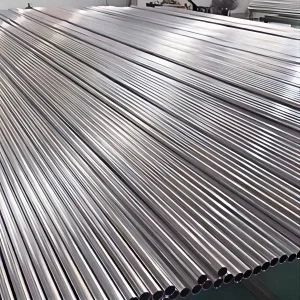
Explore our flagship custom engineered pipes and tubes, manufactured to exact dimensional tolerances with bright annealed or cold-worked surface finishes.








Global Trends in Custom Austenitic Stainless Steel Tubing
Austenitic stainless steels constitute over 70% of total global stainless steel production due to their face-centered cubic (FCC) crystal structure, which imparts exceptional cryogenic toughness, superior ductility, and robust corrosion resistance across elevated temperature regimes.
High-Temperature Oxidation & Creep Resistance
Industrial thermal processing plants, gas turbines, and waste heat recovery units increasingly demand stabilized grades such as TP347H (UNS S34709) and TP310S (UNS S31008). The addition of Niobium (Nb) in 347H prevents intergranular corrosion in the sensitization range (425–860°C), while high Chromium (24–26%) and Nickel (19–22%) contents in 310S form a self-healing, adherent chromia oxide layer capable of continuous operation up to 1150°C.
Global Decarbonization & Clean Energy Demand
The global transition towards green hydrogen transportation, carbon capture, utilization, and storage (CCUS), and concentrated solar power (CSP) has created unprecedented demand for ultra-clean austenitic tubing. Molybdenum-bearing alloys like TP317L and Super Austenitic 904L (UNS N08904) prevent localized pitting and crevice corrosion in acidic flue-gas desulfurization (FGD) media and high-pressure hydrogen embrittlement environments.
Pitting Resistance Equivalent Number (PREN) Optimization
Chemical plant designers rely heavily on PREN values ($PREN = \%Cr + 3.3\%Mo + 16\%N$) to quantify alloy longevity. While standard 304L yields a PREN of ~19 and 316L achieves ~24, Super Austenitic alloys (e.g., UNS S31254 / 6% Mo) achieve PREN values exceeding 43. This provides seawater pitting immunity equivalent to nickel-base alloys at significantly reduced capital expenditure.
Austenitic Grade & Manufacturing Standard Comparison
Technical evaluation matrix comparing standard chemical compositions, mechanical properties, and relevant international manufacturing standards for custom pipe procurement.
| Grade / UNS | EN / DIN | Key Standard | Cr (%) | Ni (%) | Mo / Other | Yield (MPa) | Tensile (MPa) | Corrosion Index |
|---|---|---|---|---|---|---|---|---|
| TP304L / S30403 | 1.4307 | ASTM A269 / A312 | 18.0 - 20.0 | 8.0 - 12.0 | - | ≥ 170 | ≥ 485 | PREN ~19 Standard Fluid |
| TP316L / S31603 | 1.4404 | ASTM A213 / A249 | 16.0 - 18.0 | 10.0 - 14.0 | Mo: 2.0 - 3.0 | ≥ 170 | ≥ 485 | PREN ~24 Chloride Resistance |
| TP316Ti / S31635 | 1.4571 | DIN 17458 / EN 10216-5 | 16.0 - 18.0 | 10.0 - 14.0 | Ti: 5x(C+N)-0.70 | ≥ 205 | ≥ 515 | PREN ~24 Anti-Sensitization |
| TP317L / S31703 | 1.4438 | ASTM A213 / A312 | 18.0 - 20.0 | 11.0 - 15.0 | Mo: 3.0 - 4.0 | ≥ 205 | ≥ 515 | PREN ~29 High Acid Media |
| TP321 / S32100 | 1.4541 | ASTM A213 / A312 | 17.0 - 19.0 | 9.0 - 12.0 | Ti: 5x(C+N)-0.70 | ≥ 205 | ≥ 515 | PREN ~20 High Temp 800°C |
| TP347H / S34709 | 1.4912 | ASME SA213 / SA312 | 17.0 - 19.0 | 9.0 - 13.0 | Nb: 8xC - 1.10 | ≥ 205 | ≥ 515 | PREN ~20 Boiler Creep Strength |
| TP310S / S31008 | 1.4845 | ASTM A213 / A312 | 24.0 - 26.0 | 19.0 - 22.0 | Si: ≤ 1.50 | ≥ 205 | ≥ 515 | PREN ~27 Furnace 1150°C |
| 904L / N08904 | 1.4539 | ASTM B677 / SA269 | 19.0 - 23.0 | 23.0 - 28.0 | Mo: 4.0-5.0, Cu: 1.5 | ≥ 220 | ≥ 490 | PREN ~36 Sulfuric Acid Immunity |
China Industry 4.0: Supply Chain Resilience & Cost-Efficiency
Our state-of-the-art Huzhou and Shanghai manufacturing infrastructure leverages advanced Industry 4.0 digital automation to redefine precision stainless pipe production. By integrating raw material sourcing with computerized cold-drawing mills, automated TIG/Laser welding, and inline quality control, we provide unmatched operational efficiency for global buyers.
Fully Automated Cold-Draw & Pilgering
Multi-pass hydraulic cold drawing ensures tight outside diameter (OD) and wall thickness (WT) tolerances down to ±0.05 mm, minimizing surface roughness to Ra < 0.4 µm for sanitary and hydraulic requirements.
Real-Time Digital Quality Traceability
Every pipe length undergoes automated continuous inline Eddy Current Testing (ECT) and Ultrasonic Testing (UT). Full heat number data is uploaded directly to digital Mill Test Certificates (EN 10204 3.1/3.2).
Upstream Raw Material Integration
Direct strategic partnerships with Tier-1 stainless steel master coil refiners guarantee chemical purity, low gas content (O, N, H), and rapid production lead times even during global supply chain shifts.
Supply Chain Advantage Metrics
- Raw Material Traceability 100% Heat Melted
- Annual Production Output 35,000 Metric Tons
- Straight Length Fabrication Up to 25.0 Meters
- Non-Destructive Testing (NDT) ASTM E426 / E213
- Global Order Lead Time 15 - 30 Days
Local Application Scenarios & Global Field Deployments
Custom austenitic stainless steel pipes engineered to solve corrosion, high pressure, and thermal fatigue across key global industries.
Middle East: Sour Gas & Refineries
High H₂S and CO₂ concentrations in Middle Eastern oil and gas extraction demand sulfide stress cracking (SSC) immune piping. Custom ASME SA213 TP316L and TP317L tubes with restricted sulfur content (< 0.005%) meet NACE MR0175 / ISO 15156 standards for long-term sour service operations.
North America: LNG & Cryogenic Terminals
Liquefied Natural Gas (LNG) processing at -162°C requires materials that maintain ductile-to-brittle transformation resistance. Austenitic grades like TP304/304L maintain ultra-high Charpy V-notch impact energy values (> 100 J) at -196°C, making them essential for boil-off gas (BOG) piping systems.
Europe: Chemical & Green Hydrogen
European green chemical hubs demand high-purity electro-polished (EP) super austenitic tubing (904L, S31254). These pipes eliminate microscopic crevice sites during high-pressure water electrolysis and aggressive acid synthesis, ensuring zero contamination of sensitive hydrogen catalysts.
Comprehensive Testing & E-E-A-T Quality Assurance
Every single length of custom austenitic stainless steel pipe undergoes multi-stage metallurgical, non-destructive, and hydrostatic validation prior to export certification.
PMI Chemistry Verification
X-ray Fluorescence (XRF) and Optical Emission Spectrometry (OES) verify 100% of heats to guarantee compliance with ASTM elemental composition limits.
Hydrostatic Testing (up to 20 MPa)
Pipes undergo 100% hydrostatic pressure testing per ASTM A1016 to confirm structural pressure integrity without permanent deformation or leakage.
Eddy Current & Ultrasonic Inspection
Automatic electromagnetic flaw detection (ASTM E426) scans longitudinal and transverse defects along the entire pipe length and weld seam.
Intergranular Corrosion Testing
Corrosion coupon sampling evaluated per ASTM A262 Practice E (Strauss Test) ensures heat-treated austenitic pipes are free from chromium depletion grain boundaries.
High-Temperature & Specialty Alloy Tubing
Explore our complete catalog of heat exchanger, boiler, and specialized austenitic stainless steel pipe solutions.







Frequently Asked Questions & Procurement Insights
Clear, expert answers regarding specifications, customization options, mill certifications, and delivery timelines for engineered austenitic piping.
