
High-Precision Alloy & Titanium Tubing Solutions
Explore our top-tier catalog of precision-drawn seamless, welded, and specialized alloy tubing engineered to withstand critical environmental stress, extreme thermal cycles, and aggressive media.


High-Quality Austenitic Steels 347 • UNS S34700 • 1.4550 Suppliers, Product
View Product Specifications
Custom Austenitic steel ASME SA213 · TP304 Seamless Tube Manufacturer, Supplier
View Product Specifications
High-Quality Super Austenitic Steels 904L • UNS N08904 • 1.4539 Suppliers, Factory
View Product Specifications
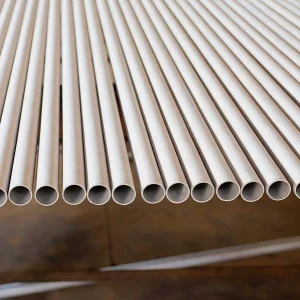
Custom Super austenitic steel ASME SA213 · S31254.SMO254 pipe Manufacturers, Products
View Product Specifications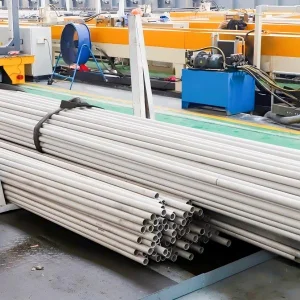

High-Quality Nickel Alloy Tubes 800HT • UNS N08811 • 1.4959 Manufacturer, Product
View Product SpecificationsIndustry Growth & Technological Evolution in Small Titanium Tubing
An authoritative whitepaper analysis on micro-bore titanium manufacturing, metallurgical engineering advancements, and critical global supply benchmarks.
The Paradigm Shift in Small-Diameter Tubing Metallurgy
Over the last decade, global high-tech manufacturing sectors—spanning medical technology, aerospace hydraulics, green hydrogen electrolyzers, and subsea analytical instrumentation—have drastically escalated their demands for small titanium tubes (typically defined as outside diameters ranging from 0.5 mm up to 19.05 mm, with wall thicknesses down to 0.05 mm). Titanium’s exceptional strength-to-weight ratio, total immunity to chloride-induced pitting, and biocompatibility make it uniquely suited to replace traditional stainless steel or nickel alloys in high-stress, micro-scale environments.
Precision Cold Drawing & Vacuum Annealing Innovation
Manufacturing custom small titanium tubing requires solving intricate metallurgical challenges. Unlike stainless steel, titanium possesses high reactivity with atmospheric gases at elevated temperatures and a strong propensity for work hardening during cold reduction. Modern manufacturing routes combine multi-pass cold pilgering and precision bench drawing with inert argon or ultra-high vacuum annealing furnaces (operating at pressures below 10⁻⁴ Torr). This process achieves ultra-fine grain boundaries, uniform grain size control (ASTM 7 or finer), and exceptional concentricity without internal surface defects or oxygen embrittlement.
Global Enterprise Procurement & Supply Chain Risk Management
Navigating raw material volatile pricing, stringent OEM quality audits, lead time compression, and multi-regional regulatory compliance.
Total Cost of Ownership (TCO) Optimization
Global procurement officers frequently struggle with balancing upfront material cost against lifetime field reliability. While Grade 2 or Grade 5 small titanium tubes carry higher initial price points per meter compared to standard TP316L stainless steel, their virtually infinite corrosion life in marine, sour gas, or active chemical environments reduces lifecycle replacement costs to near zero. Strategic sourcing programs leverage custom length cutting (up to 25 meters straight or coiled) to minimize fabrication scrap rates.
Material Traceability & EN 10204 3.1/3.2 Certification
For tier-1 suppliers in aerospace and medical OEMs, full heat-level chemical and mechanical traceability is non-negotiable. Leading titanium tube manufacturers provide comprehensive Mill Test Certificates (MTC) compliant with EN 10204 3.1, detailing Melt Heat Source, Chemical Analysis (Oxygen, Hydrogen, Nitrogen limits per ASTM B338), Yield/Tensile Strengths, Flattening Tests, Flare Tests, and 100% Non-Destructive Hydrostatic or Ultrasonic testing verification.
Supply Chain Resilience & Buffer Stocking
Geopolitical shifts and titanium sponge production bottlenecks require agile procurement workflows. Specialized custom manufacturers offer global hub-warehousing, blanket order stocking programs, and customized packaging solutions—including nitrogen-purged argon sealing, plastic end capping, and rigid export wooden crates—ensuring micro-tubing arrives zero-defect, clean-room ready, and undamaged across long ocean and air freight routes.
Macro Industry Solutions: Where Precision Titanium Tubing Excels
Custom engineered small-bore titanium tubing deployed in planet-critical, ultra-pure, and mission-critical operating environments.
Medical Devices & Implantable Capillaries
Custom micro-bore titanium tubes made from Grade 5 ELI (Extra Low Interstitial - UNS R56401) or Grade 2 are widely used for orthopedic internal implants, pacemaker lead housings, minimally invasive surgical cannulas, endoscopic instruments, and vascular stents. Titanium’s non-magnetic property avoids interference with high-field MRI scans, while its tissue bio-inertness prevents inflammatory reactions.
Aerospace & Defense Hydraulic Lines
High-pressure hydraulic and fuel lines in modern commercial aircraft rely on cold-worked, stress-relieved titanium Grade 9 (Ti-3Al-2.5V). Small titanium hydraulic tubes provide up to 40% mass reduction compared to stainless steel equivalents while withstanding impulse operating pressures exceeding 5,000 PSI and severe vibrational fatigue cycles during flight operations.
Green Hydrogen Electrolyzers & Fuel Cells
Proton Exchange Membrane (PEM) water electrolyzers utilize fine titanium capillary tubing for high-purity water supply and hydrogen/oxygen discharge under acid-moist environments. Titanium resists hydrogen embrittlement when operated within certified temperature/potential windows, maintaining zero metal ion leaching that would otherwise poison catalyst layers.
Chemical Injection & Analytical Chromatography
In offshore subsea chemical injection umbilicals and High-Performance Liquid Chromatography (HPLC) analytical systems, small titanium tubing carries highly corrosive reagents, solvents, and sour crude samples containing H₂S and CO₂. Smooth inner bore finishes (Ra < 0.25 µm) eliminate dead volume, carryover contamination, and peak broadening.
Desalination & Marine Sensor Housing
Oceanographic sensor probes, seawater heat exchanger micro-coils, and reverse osmosis pre-treatment systems suffer severe corrosion from concentrated brine. Small titanium tubes in Grade 1 or Grade 2 are completely immune to seawater crevice corrosion at ambient temperatures, outperforming 316L and Duplex 2205 in long-term subsea deployments.
Semiconductor Ultra-Pure Gas Conveyance
Modern microchip fabrication facilities employ electropolished seamless titanium small tubing to transfer specialized etching gases (such as Cl₂, HCl, and fluorocarbons). Titanium’s passive oxide layer prevents gas outgassing and particle contamination, supporting sub-2nm semiconductor yield optimization.
Metallurgical Comparison: Small Titanium Tube Alloys
Engineering breakdown of popular titanium tube grades to simplify material selection based on pressure, temperature, and environment.
| Titanium Grade | UNS / DIN Equivalent | Tensile Strength (MPa) | Yield Strength (MPa) | Primary Attributes | Key Applications |
|---|---|---|---|---|---|
| Grade 1 (CP Ti) | UNS R50250 / 3.7025 | ≥ 240 | 170 - 310 | Highest ductility, superior cold formability, ultra-soft | Micro-coils, deep-drawn medical caps, low-pressure lines |
| Grade 2 (CP Ti) | UNS R50400 / 3.7035 | ≥ 345 | 275 - 450 | Optimal balance of strength, weldability, and corrosion resistance | General industrial tubing, chemical transfer, marine instrumentation |
| Grade 5 (Ti-6Al-4V) | UNS R56400 / 3.7165 | ≥ 895 | ≥ 828 | Ultra-high mechanical strength, high fatigue resistance | Medical implants, high-pressure aerospace structural tubes |
| Grade 7 (Ti-0.2Pd) | UNS R52400 / 3.7235 | ≥ 345 | 275 - 450 | Palladium-enhanced corrosion resistance in acidic media | Reducing chemical acids, hot chloride solutions, chemical feed lines |
| Grade 9 (Ti-3Al-2.5V) | UNS R56320 / 3.7195 | ≥ 620 | ≥ 483 | 30-50% stronger than CP titanium, excellent cold bendability | Aerospace hydraulic tubing, high-performance racing fuel lines |
| Grade 12 (Ti-0.3Mo-0.8Ni) | UNS R53400 / 3.7105 | ≥ 483 | ≥ 345 | Enhanced crevice corrosion resistance at high temperatures | Brine concentrators, chemical heat exchangers above 100°C |
Precision Manufacturing & Inspection Roadmap
From raw vacuum-melted sponge to certified micro-bore tube: a fully transparent production flow.
Raw Melt & Ingot Selection
Double or triple Vacuum Arc Remelting (VAR) ensures zero interstitial contamination, homogeneous chemical alloy distribution, and strict gas-content limits (H₂ < 0.012%, O₂ controlled per grade).
Extrusion & Hollow Piercing
Hot extrusion or rotary piercing generates seamless heavy-wall mother tubes with optimal grain orientation, preparing the stock for subsequent cold reduction stages.
Multi-Pass Cold Drawing
Precision cold pilgering and mandrel plug drawing progressively reduce outside diameter and wall thickness, establishing ultra-tight dimensional tolerances (down to ±0.01 mm).
Vacuum Bright Annealing
Intermediate and final recrystallization annealing inside high-vacuum furnaces (10⁻⁴ Torr) eliminates internal strain while preventing surface oxidation or alpha-case formation.
Surface Treatment & Polishing
Chemical pickling, electropolishing, or mechanical bore honing produces micro-smooth surface finishes (Ra 0.15 µm – 0.4 µm) required for medical and high-purity fluid transfer.
100% NDT & Quality Release
Every finished tube undergoes Eddy Current Testing (ASTM E426), Ultrasonic Wall Thickness measurement, Hydrostatic/Pneumatic Proofing, and dimensional laser verification prior to packaging.
Localized Support & Regulatory Compliance Assurance
Empowering international engineering teams with global compliance frameworks and localized technical consultation.
Global Standards Compliance Architecture
Custom small titanium tubes are manufactured to align seamlessly with multi-regional industrial directives:
• ASTM / ASME: ASTM B338 (Seamless/Welded Ti Tubes for Condensers), ASTM B861 (Seamless Ti Pipe/Tube), ASTM F136 (Implants)
• Aerospace Standards: AMS 4943, AMS 4944, AMS 4945 (Ti-3Al-2.5V Hydraulic Tubing)
• International Directives: ISO 13485 (Medical Quality Management), ISO 9001:2015, REACH, RoHS3, and DFARS compliance.
Localized Engineering & Supply Hubs
To eliminate border friction and complex customs clearance delays for global partners, localized engineering support hubs assist with:
• Custom Prototyping: Rapid-turnaround small-lot mill runs for initial design validation and clinical trial batches.
• Precision Secondary Fabrication: In-house micro-bending, flaring, swaging, coil winding, laser cutting, and end-closure welding.
• Dedicated Logistics: DDP/DAP door-to-door delivery with customized protective packaging preventing bending or scratch damage during transport.
Technology Roadmap & Future Outlook (2025–2035)
Anticipating next-generation advancements in titanium capillary manufacturing, hybrid additive processing, and sustainable metallurgy.
Ultra-Thin Wall Micro-Capillaries
Future medical endovascular procedures and micro-heat exchangers require titanium tube wall thicknesses dropping below 0.03 mm (30 microns). Advanced cold drawing dies paired with real-time laser interferometric monitoring will enable repeatable sub-micron tolerances on ultra-thin walls.
Additive-Preform Seamless Tube Hybrid Manufacturing
Combining Wire Arc Additive Manufacturing (WAAM) or Laser Powder Bed Fusion (LPBF) to create specialized alloy preforms followed by precision pilgering will unlock custom non-standard titanium alloys (such as Beta-Ti alloys with ultra-low modulus) previously unworkable via standard melting.
Decarbonized Closed-Loop Titanium Recycling
Eco-conscious global OEMs require lower embodied carbon. Next-generation titanium tube production will integrate 100% recycled scrap processing via Plasma Arc Melting (PAM), reducing manufacturing energy consumption by up to 60% without compromising interstitial purity.
Frequently Asked Questions: Technical Engineering & Procurement
Comprehensive, intent-focused answers to aid design engineers, metallurgical specialists, and global purchasing agents.
Q: What dimensions define a "small titanium tube"?
In industry terminology, a small titanium tube generally refers to tubing with an Outside Diameter (OD) ranging from 0.5 mm (0.019 inches) up to 19.05 mm (0.750 inches), and wall thicknesses starting from 0.05 mm up to 1.65 mm. Smaller sizes under 3.0 mm OD are frequently classified as titanium micro-tubes or titanium capillary tubing.
Q: Should I select Seamless or Welded & Drawn titanium tubes for high-pressure service?
For critical high-pressure, cyclic fatigue, or nuclear applications, Seamless Titanium Tubing (manufactured per ASTM B861 or AMS standards) is preferred as it eliminates the longitudinal weld boundary. However, modern Welded & Drawn Titanium Tubing (cold worked and fully annealed per ASTM B338) offers exceptional wall concentricity, superior inner surface finish, and cost savings for heat exchangers and hydraulic lines operating within moderate pressure parameters.
Q: How does Grade 2 Titanium compare with Grade 5 for small tube applications?
Grade 2 is Commercially Pure (CP) titanium offering excellent ductility, ease of cold bending, superior weldability, and exceptional corrosion resistance in marine and chemical environments. Grade 5 (Ti-6Al-4V) is an alpha-beta alloy providing nearly triple the tensile strength of Grade 2, making it ideal for high-stress aerospace hydraulic lines and high-fatigue medical implants, though it requires specialized hot forming or stress-relieved bending.
Q: How is bursting pressure calculated for small titanium tubing?
Bursting pressure can be estimated using Barlow’s Formula: P = (2 × S × t) / D, where P is burst pressure, S is material tensile strength (or allowable working stress), t is nominal wall thickness, and D is outside diameter. Due to titanium's high yield strength, small titanium tubes maintain exceptionally high burst limits even with thin wall profiles.
Q: What surface roughness standards can be achieved on internal bore surfaces?
Through plug drawing, bright vacuum annealing, and internal electropolishing, internal surface roughness can be reduced to Ra ≤ 0.2 µm (8 µin). This ultra-smooth bore is critical for medical cannulas, high-performance chromatography, and ultra-pure semiconductor gas delivery to prevent particulate traps and bacterial adhesion.
Q: Can custom small titanium tubes be supplied in continuous coils?
Yes. Small titanium tubes (especially in OD sizes from 1.58 mm to 9.52 mm) can be supplied in continuous seamless bright annealed coils up to several hundred meters in length without orbital joints. This is ideal for subsea chemical injection umbilicals, analytical instrumentation, and heat exchanger coils.
Q: What non-destructive testing (NDT) methods are performed?
Standard quality control includes 100% inline Eddy Current Testing (ECT per ASTM E426) to detect surface and subsurface pinholes, Ultrasonic Testing (UT per ASTM E213) for wall thickness verification, and Hydrostatic or Pneumatic underwater bubble testing to guarantee zero-leak integrity.
Q: What mill certificates accompany titanium tube shipments?
All orders are shipped with EN 10204 3.1 Certified Mill Test Reports (MTC). Independent third-party inspection certificates per EN 10204 3.2 (such as TÜV, Lloyd's Register, or DNV) can be provided upon request prior to dispatch.
Complementary High-Performance Tubing Catalog
Discover our extended line of precision specialty stainless, super austenitic, nickel alloy, and titanium tube products.

High-Quality Nickel Alloy Tubes 600 • UNS N06600 • 2.4816 Manufacturer, Manufacturers
View Product Specifications

Custom Austenitic steel ASME SA312 · TP304 Stainless Steel Pipe Manufacturers, Supplier
View Product Specifications

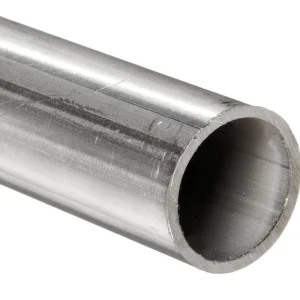

Custom Austenitic Steels 304 • UNS S30400 • 1.4301 Manufacturer, Factories
View Product Specifications
Request a Custom Small Titanium Tube Engineering Quote
Partner with a trusted specialty tubing manufacturer. Send us your custom dimensions, tight tolerances, grade specifications, or engineering drawings for a detailed response within 24 hours.
