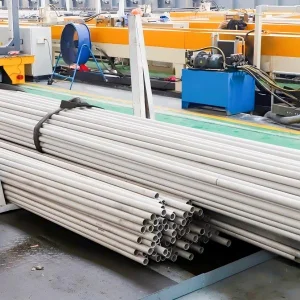
High-Precision Austenitic & Alloy Tubing Portfolio
Engineered for extreme thermal gradients, corrosive chemical media, and high-pressure fluid control systems.

Custom Austenitic Steels 316Ti • UNS S31635 • 1.4571 Manufacturer, Products
View Specification
High-Quality Super Duplex Steels 2507 • S32750 • 1.4410 Manufacturer, Factories
View Specification
Custom Nickel Alloy Tubes 825 • UNS N08825 • 2.4858 Suppliers, Product
View Specification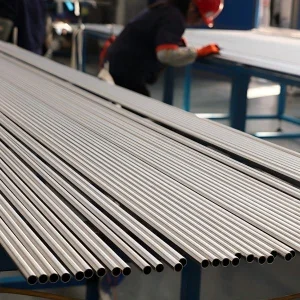
Custom Austenitic steel ASME SA213 · TP304L Supplier, Factories
View Specification
Custom Austenitic steel ASME SA312 · TP304L Suppliers, Factories
View Specification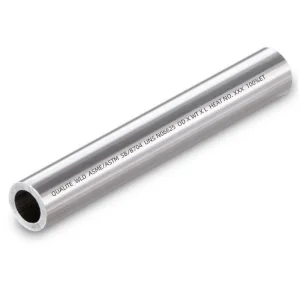
High-Quality Nickel Alloy Tubes 625 • UNS N06625 • 2.4856 Suppliers, Product
View Specification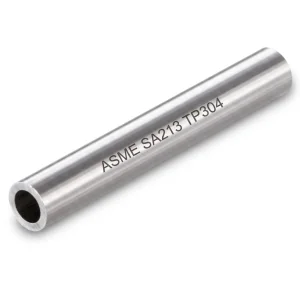
Custom Austenitic steel ASME SA312 · TP304 Stainless Steel Pipe Manufacturers, Supplier
View Specification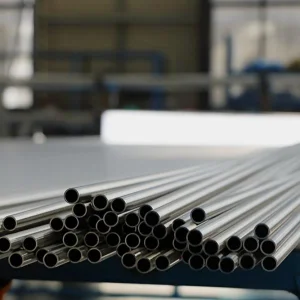
High-Quality Austenitic steel ASME SA213 · TP321 Manufacturer, Supplier
View SpecificationDecoding ASTM A213, ASTM A269, and ASTM A789 Specifications
A rigorous structural analysis contrasting seamless boiler tubes, general service tubing, and duplex alloy tubing for severe industrial applications.
ASTM A213 / ASME SA213
Primary Focus: Seamless Austenitic & Ferritic Alloy-Steel Boiler, Superheater, and Heat-Exchanger Tubes.
Engineered exclusively for seamless execution under elevated thermal and mechanical stresses. Requires stringent solution annealing heat treatment, mandatory hydrostatic testing or non-destructive electric testing, and precise grain size verification (typically ASTM No. 7 or coarser for H-grades).
Critical Heat ExchangersASTM A269 / ASME SA269
Primary Focus: Seamless and Welded Austenitic Stainless Steel Tubing for General Industrial Service.
Covers light-wall and standard-wall tubing intended for general corrosion resistance and low- or high-temperature service. Demands bright annealing or liquid-quenched solution treatment, smooth surface finishes (Ra ≤ 0.4 μm upon request), and strict dimensional tolerance controls over outside diameter and wall thickness.
Instrumentation & Process LinesASTM A789 / ASME SA789
Primary Focus: Seamless and Welded Ferritic/Austenitic (Duplex) Stainless Steel Tubing for General Service.
Specifies dual-phase microstructure alloys (e.g., UNS S31803, S32205, S32750). Combines high mechanical yield strength (≥ 450 MPa) with exceptional resistance to chloride stress corrosion cracking (SCC) and pitting. Requires phase balance quantification (35%-55% ferrite content).
Offshore & Chloride Environments| Standard Specification | Manufacturing Route | Key Material Grades | Tensile Strength (min) | Yield Strength (min) | Primary Testing Requirements |
|---|---|---|---|---|---|
| ASTM A213 / SA213 | Seamless Only | TP304/L, TP316/L, TP321, TP316Ti, TP347H | 515 MPa (75 ksi) | 205 MPa (30 ksi) | Flare, Flange, Hardness, Hydrostatic or NDT (Eddy Current / UT) |
| ASTM A269 / SA269 | Seamless & Welded | TP304/L, TP316/L, TP317L, 904L (UNS N08904) | 485 MPa (70 ksi) | 205 MPa (30 ksi) | Flaring, Reverse Flattening (for welded), Hydrostatic or Nondestructive |
| ASTM A789 / SA789 | Seamless & Welded | UNS S31803, S32205 (2205), S32750 (2507) | 655 - 750 MPa | 450 - 550 MPa | Pitting Resistance Test (ASTM G48), Metallographic Ferrite Count, NDT |
Pitting Resistance Equivalent & Microstructural Stability
In-depth material science insights into preventing pitting, crevice corrosion, and intergranular degradation in industrial fluid systems.
Pitting Resistance Equivalent Number (PREN) Calculation
Evaluating an alloy’s resistance to localized pitting in aggressive halide (chloride-bearing) environments requires precise PREN formulation. For austenitic and duplex stainless steels, PREN is defined by:
Standard 316L delivers a PREN of ~25, whereas Duplex UNS S32205 reaches ~35, and Super Duplex UNS S32750 exceeds 42. Selecting a tube with an optimized PREN prevents premature wall perforation in heat exchangers operating with seawater or brackish cooling fluids.
Intergranular Corrosion & Sensitization Prevention
During thermal processing or field welding between 450°C and 850°C, chromium carbides ($\text{Cr}_{23}\text{C}_6$) precipitate along grain boundaries, depleting adjacent regions of chromium (sensitization). Spezilla mitigates this through two precise metallurgical routes:
- Low-Carbon Chemistry (L-Grades): Restricting carbon to ≤ 0.030% in TP304L and TP316L eliminates carbide precipitation kinetics during welding.
- Titanium/Niobium Stabilization: In TP321 (1.4541) and TP316Ti (1.4571), titanium additions bind carbon preferentially as TiC, preserving matrix chromium levels.
China Industry 4.0: Supply Chain Resilience & Production Efficiency
Combining state-of-the-art cold-drawing automation in Huzhou with high-capacity digitalized quality monitoring.
Automated Cold Drawing & Pilgering
Our Huzhou production center houses multi-stand cold pilger mills and hydraulic precision draw benches capable of refining tube dimensions down to wall tolerances of ±5%. Cold work refines the grain structure, boosting tensile strength and yielding flawless surface micro-smoothness.
Hydrogen-Atmosphere Bright Annealing
Heat treatment is performed in continuous inline bright annealing furnaces under pure dry hydrogen atmospheres ($99.999\%$ purity, dew point ≤ -60°C). This process stress-relieves cold-worked structures without surface oxidation, preserving a mirror-bright aesthetic and maximum corrosion resistance.
End-to-End Digital Traceability
From raw melt heat numbers to final bundle dispatch, every single meter of tube is logged into our ERP system. Automated laser marking records specification, heat number, outer diameter, wall thickness, and mill test certificate codes directly onto the tube surface.
Macro-Industry Applications & Tailored Engineering
Providing specialized alloy tube configurations tailored to the extreme demands of global energy, chemical, and desalination projects.
Offshore Oil & Gas Subsea Systems
Duplex ASTM A789 UNS S31803 / S32205 tubes provide high yield strength and severe resistance to sour gas ($\text{H}_2\text{S}$) and high-pressure subsea hydraulic control lines. Built to withstand marine splash-zone conditions and deepwater external collapse pressures.
Supercritical Power Generation
ASTM A213 TP347H and TP316H seamless tubes are specified for high-temperature superheater and reheater coils operating above 550°C. High creep-rupture strength prevents tube deformation under high thermal stress and cyclic boiler loading.
Desalination & Seawater Cooling
Super Duplex UNS S32750 and Super Austenitic 904L / 6Mo (UNS S31254) offer immunity to pitting and crevice corrosion in high-salinity multi-stage flash (MSF) evaporators and reverse osmosis (RO) high-pressure manifolds.
Hydrogen Economy & Clean Tech
Bright annealed ASTM A269 TP316L instrumentation tubes with controlled inner surface roughness ($\text{Ra} \le 0.25\,\mu\text{m}$) ensure zero gas entrapment, leak-free compression fitting connections, and structural resistance to hydrogen embrittlement.
Global Enterprise Procurement Framework & Lifecycle Cost Optimization
Helping international EPC contractors and OEM procurement officers balance upfront material acquisition costs with long-term operational integrity.
Technical RFQ Checklist
To eliminate ambiguity during quote evaluation, technical procurement requests must detail standard boundaries:
- Dimensional Mandates: Specify Exact OD, WT (Average vs. Minimum Wall), and Length Tolerances (Straight or U-Bent radius).
- Surface Finish Threshold: Define inner and outer surface roughness (e.g., Mechanical Polish Grit 320, AP vs. BA).
- Testing Protocol: List required NDT methods (Eddy Current per ASTM E426, UT per ASTM E213, Hydrostatic Pressure).
- Documentation: Requirement for EN 10204 3.1 or independent 3.2 inspection MTCs.
Total Cost of Ownership (TCO) Analysis
While standard 304L stainless tubing offers lower initial purchase expenditure, specifying Duplex S32205 under ASTM A789 can yield up to a 40% reduction in total weight due to higher allowable design stress under ASME Boiler and Pressure Vessel Code (BPVC). Furthermore, enhanced pitting resistance drastically extends equipment mean time between maintenance (MTBM).
Technical Roadmap & Next-Generation Metallurgy
Anticipating future industrial needs through advanced alloy formulation, digital sensor integration, and decarbonized manufacturing.
Hyper-Duplex Alloys (PREN > 49)
Development of ultra-high strength hyper-duplex formulations engineered for ultra-deepwater drilling environments exceeding 3,000 meters. Designed to offer structural performance capable of withstanding acidic oilfield chemistries containing high concentrations of $\text{H}_2\text{S}$ and $\text{CO}_2$.
Smart Tubing & Real-Time Structural Sensing
Integration of surface-mounted micro-fiber optic distributed temperature and strain sensors. Embedded smart tubes will allow real-time monitoring of thermal fatigue, wall thinning, and localized stress peaks in critical heat exchangers during operational cycles.
Decarbonized Green Steel Production
Transitioning upstream raw melt feedstock to green-hydrogen-reduced direct reduced iron (DRI) electric arc furnace (EAF) steelmaking. Reducing scope 3 embodied carbon emissions by over 60% across the full lifecycle of ASTM standard tube products.
Localization Support, Quality Testing & International Compliance
Zero-defect quality policy enforced through rigorous mechanical testing, chemical verification, and global compliance certifications.
Destructive & Mechanical Testing
Every batch undergoes destructive verification including Tensile and Yield strength testing (ASTM A370), Rockwell/Vickers Hardness testing, Flattening test (no cracking at 180° fold), Flaring test, and Intergranular Corrosion testing per ASTM A262 Practice E.
100% Non-Destructive Testing (NDT)
Standard quality routines mandate 100% Eddy Current Inspection (per ASTM E426 / EN 10246-2) for detecting longitudinal surface anomalies, paired with hydrostatic testing at pressures up to 300 bar or Ultrasonic flaw detection (per ASTM E213).
Global Regulatory Certifications
Full alignment with ISO 9001:2015 quality management systems, Pressure Equipment Directive (PED 2014/68/EU), AD 2000-W0 certification, and capability to issue Mill Test Certificates in full accordance with EN 10204 Type 3.1 or Type 3.2 (TUV, SGS, Lloyd's Register).
Frequently Asked Engineering & Procurement Questions
Detailed technical answers to common queries regarding ASTM standards, alloy selection, and manufacturing limits.
High-Performance Austenitic & Titanium Tube Products
Explore custom titanium grade formulations and high-temperature ASME standard stainless tubing solutions.

High-Quality Austenitic steel ASME SA269 · TP316L Manufacturers, Factories
View Specification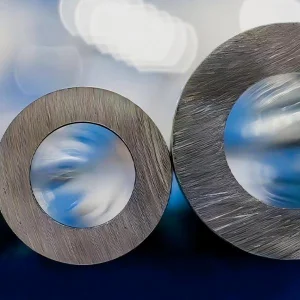
Custom Austenitic steel ASME SA213 · TP316H Manufacturers, Products
View Specification
Custom Austenitic steel ASME SA312 · TP321 Suppliers, Product
View Specification
Custom Titanium Tubes • Grade 1•UNS R50250 Product, Products
View Specification
High-Quality Titanium Tubes • Grade 3•UNS R50550 Factories, Product
View Specification
Custom Austenitic Steels 304 • UNS S30400 • 1.4301 Manufacturer, Factories
View Specification
Custom Austenitic steel ASME SA213 · TP316LN.UNS S31653 Manufacturers, Factory
View Specification