
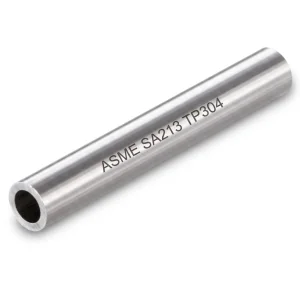
Featured PED Certified Austenitic & Alloy Tubing (Batch 1)
Precision-engineered tubular products manufactured to ASME SA213, SA312, SA269, and EN 10217-7 / EN 10216-5 standards. Fully certified with EN 10204 3.1 / 3.2 Material Test Certificates.








PED 2014/68/EU Certification & Regulatory Compliance in Modern Heat Exchangers
In thermal energy conversion, petrochemical processing, and power generation, heat exchangers operate under extreme pressures, thermal cycling, and aggressive chemical environments. Equipment deployed within the European Economic Area (EEA)—or exported globally by tier-1 EPC contractors—must strictly adhere to the Pressure Equipment Directive (PED) 2014/68/EU. Obtaining verified PED certification is not merely a regulatory formality; it is an essential engineering validation of material traceability, non-destructive testing (NDT), and structural reliability under fatigue.
Leading manufacturers operate under certified Quality Management Systems complying with PED 2014/68/EU Module H / Module H1 and AD 2000-Merkblatt W0. This ensures that every heat exchanger tube—whether seamless or welded & drawn—undergoes rigorous verification from melt to final hydro-test. The integration of EN 10204 3.1 and independent EN 10204 3.2 inspection certificates guarantees full chemical composition accuracy, grain size consistency, and mechanical performance compliance.
PED 2014/68/EU Module H/H1
Full quality assurance system audit verified by Notified Bodies (TÜV, Bureau Veritas, DNV), validating heat treatment, forming, and NDT procedures without batch limitation.
AD 2000-W0 Compliance
Mandatory material qualification for German pressure vessel code compliance, demonstrating high-temperature yield strength and impact toughness down to cryogenic ranges.
EN 10204 3.1 / 3.2 Traceability
100% material heat traceability linking raw master coils/hollows directly to chemical ladles, mechanical tension tests, hydrostatic, and eddy-current records.
China's Advanced Precision Tubing Ecosystem: Scale, Metallurgical Control & Efficiency
China's stainless steel and nickel alloy manufacturing sector has undergone a massive technological transformation. Far from being merely a low-cost production hub, modern Chinese tube factories (located in manufacturing clusters such as Huzhou, Zhejiang and Jiangsu) utilize state-of-the-art cold-pilgering, automated TIG/Plasma welding, continuous bright annealing, and real-time ultrasonic inspection lines that rival traditional Western mills.
Upstream Metallurgical Integration
By sourcing raw mother hollows and strips directly from tier-1 steel mills (such as Baosteel and Tsingshan), Chinese factories maintain strict control over residual trace elements (P < 0.025%, S < 0.005%, low O2 content). This low-impurity melt ensures superior weldability, high PREN consistency in duplex alloys, and enhanced pitting resistance in aggressive chloride service.
Ultra-Long Straight & U-Bent Tubing
Advanced continuous bright annealing furnaces allow China mills to produce straight heat exchanger tubes up to 25 meters in length without mid-span welds. Specialized automatic U-bending machines execute tight bending radii (down to 1.5D) followed by stress-relief heat treatment, fully compliant with ASTM A688 / ASTM A803 requirements.
Metallurgical Selection Matrix: Matching Tube Alloys to Severe Media
Proper alloy selection is critical to preventing catastrophic failure modes such as Chloride Stress Corrosion Cracking (SCC), pitting, crevice corrosion, and intergranular attack. The table below presents key engineering data across standard austenitic, super austenitic, duplex, nickel alloy, and titanium heat exchanger tube grades.
| Alloy Grade | UNS / EN Standard | PREN Value | Yield Strength (MPa) | Recommended Process Media & Application |
|---|---|---|---|---|
| TP316L / 1.4404 | UNS S31603 / EN 10217-7 | 23 - 25 | ≥ 205 | General chemical processing, steam condensers, food & beverage heat exchange. |
| TP316LN / 1.4429 | UNS S31653 / EN 10216-5 | 25 - 27 | ≥ 275 | Nitrogen-strengthened low-carbon austenitic for high-pressure organic acid recovery. |
| TP347H / 1.4550 | UNS S34709 / ASTM A213 | N/A (Niobium St.) | ≥ 205 | High-temperature superheaters, radiant coils, power generation (> 550°C service). |
| Duplex 2205 / 1.4462 | UNS S31803 / S32205 | 33 - 35 | ≥ 450 | Oil & gas reboilers, brackish water cooling, severe chloride SCC environments. |
| Super Duplex 2507 | UNS S32750 / 1.4410 | ≥ 42 | ≥ 550 | Offshore platforms, reverse osmosis desalination plants, sour gas scrubbing. |
| Nickel Alloy 400 | UNS N04400 / 2.4360 | N/A (Cu-Ni) | ≥ 195 | Hydrofluoric acid alkylation units, marine feed-water heaters, salt evaporators. |
| Nickel Alloy 800H | UNS N08810 / 1.4958 | N/A (Fe-Ni-Cr) | ≥ 170 | Ethylene cracking furnaces, high-temperature thermal processing (> 600°C). |
| Titanium Grade 3 | UNS R50550 / 3.7055 | High Oxide Passivity | ≥ 380 | Coastal power plant condensers, raw seawater heat exchange, oxidizing mineral acids. |
* Note: PREN (Pitting Resistance Equivalent Number) = %Cr + 3.3(%Mo + 0.5%W) + 16%N. Values are nominal and provided for comparative engineering evaluation.
Global EPC Procurement Strategies & Localized Application Scenarios
Global Procurement Officers, Engineering Buyers, and Plant Asset Managers face multidimensional challenges when sourcing heat exchanger tubes. Balancing lead-time predictability, freight logistics, localized engineering compliance, and total cost of ownership (TCO) requires a trusted manufacturing partner capable of meeting both Western ASME/ASTM codes and regional European EN/DIN frameworks.
Refinery Sour Service & Hydrotreating
In hydrogen desulfurization (HDS) and amine gas treating units, tubes face wet H2S cracking. Utilizing PED-certified SA213 TP316L / TP317L with strict hardness control (< 22 HRC) prevents sulfide stress cracking (SSC) under NACE MR0175 / ISO 15156 standards.
Geothermal & Desalination Condensers
High chloride concentrations and non-condensable gases require ultra-reliable Super Duplex 2507 or Titanium Grade 3 tubing. Precision cold-drawing ensures uniform wall thickness (W.T. tolerance within ±8%), eliminating localized hot spots and erosion corrosion.
High-Temperature Power Generation
Feedwater heaters and boiler superheaters require high creep strength. Stabilized grades such as 347H (UNS S34709) and Nickel Alloy 800H offer superior thermal stability up to 700°C without risk of intergranular sensitization.
Future Technology Trends in Heat Exchanger Tube Manufacturing
The global transition toward green hydrogen, carbon capture, and high-efficiency thermal systems is driving fundamental changes in heat exchanger design. Modern factories are rapidly adopting next-generation production processes:
1. Clean Energy & Green Hydrogen Infrastructure
High-pressure hydrogen coolers operating at 700+ bar require smooth internal surfaces to prevent hydrogen embrittlement. Modern mills utilize specialized mechanical and electro-polishing to achieve internal surface roughness down to Ra < 0.25 µm.
2. Non-Destructive Digital Testing Integration
Industry 4.0 automated testing lines integrate simultaneous Multi-Frequency Eddy Current Testing (ECT) and Digital Ultrasonic Testing (UT) to detect both surface micro-cracks and internal wall thickness variations at high line speeds.
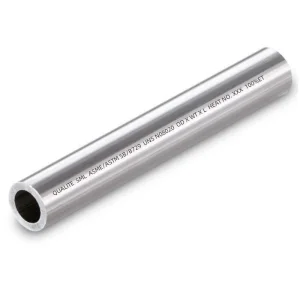
Specialty Nickel Alloy, Super Duplex & Titanium Tubing (Batch 2)
Advanced corrosion-resistant tubing solutions engineered for high-pressure, cryogenic, and aggressive chemical processing environments.






Frequently Asked Questions: Technical, PED & Procurement Insights
Get direct answers from our Chief Metallurgist and International Logistics Team regarding PED compliance, manufacturing tolerances, and quality verification.
Partner with Certified Tubing Manufacturers for Your Next EPC Project
Need technical assistance with alloy selection, PED compliance, or custom wall thickness tolerances? Contact our engineering team for immediate RFQ responses, mill test report validation, and fast global shipping options.
