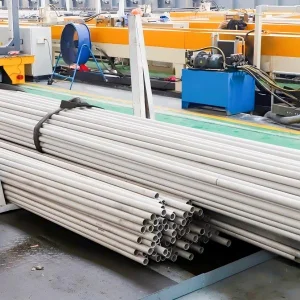
Custom Austenitic Steels Factories & Product in Thailand
High-Performance Austenitic & Super Duplex Tubing Solutions Tailored for Thailand's Industrial Transformation, Offshore Energy, and Petrochemical Processing Infrastructure.
Core Alloy & Super Duplex Products




Thailand’s industrial narrative has evolved dramatically under the strategic umbrella of the Eastern Economic Corridor (EEC) initiative across Rayong, Chonburi, and Chachoengsao provinces. As Southeast Asia’s primary automotive manufacturing hub and a critical center for heavy petrochemical refining, fertilizer production, LNG regasification, and offshore natural gas extraction in the Gulf of Thailand (e.g., Erawan and Bongkot fields), Thailand presents a demanding operating environment for structural and thermal tubing systems.
The tropical coastal climate of Thailand—characterized by atmospheric humidity exceeding 85%, high ambient temperatures, and aggressive marine chloride deposition—demands material reliability far beyond standard commercial stainless grades. Traditional 304 and 316 austenitic stainless steel tubing frequently experiences severe localized pitting, crevice corrosion, and Chloride Stress Corrosion Cracking (CSCC) when exposed to brackish cooling water, offshore salt spray, and high-temperature chemical process streams.
Offshore & LNG Regasification
The Gulf of Thailand contains elevated levels of CO₂ and trace H₂S in natural gas streams. Production platforms require Super Duplex UNS S32750/S32760 for topside piping, heat exchangers, and umbilical lines to prevent sulfide stress cracking and erosion-corrosion.
Map Ta Phut Petrochemical Hub
Processing units at Map Ta Phut Industrial Estate utilize custom-engineered austenitic grades (ASME SA213 TP317L, TP321, TP347H) and Nickel Alloy 800 to withstand severe thermal cycling, organic acids, and high-pressure steam condensate.
For global EPC firms, original equipment manufacturers (OEMs), and Thai state-backed energy enterprises (such as PTT Group and SCG Chemicals), procurement decisions are governed by rigid metallurgical compliance, life-cycle cost analysis, and verifiable material origin.
Pitting Resistance Equivalent Number (PREN): Material selection in tropical marine environments hinges on the PREN value, calculated as:
Standard austenitic grades like TP304/304L exhibit a PREN of ~19, while TP316L achieves ~24. However, for critical heat exchangers operating in Map Ta Phut or offshore Rayong using raw seawater or estuary cooling, engineers require Super Duplex Steels (UNS S32750 / S32760) possessing a PREN > 42, guaranteeing complete resistance to pitting corrosion up to Critical Pitting Temperatures (CPT) exceeding 55°C.
Custom austenitic and duplex tubing manufacturing requires absolute precision during the solution annealing phase. For Super Duplex steels (2507 / S32760), maintaining a balanced 50/50 austenite-ferrite phase ratio is essential for optimizing both tensile strength (800–1000 MPa) and SCC immunity. Rapid water quenching from 1040°C–1120°C prevents the harmful precipitation of intermetallic phases—such as Sigma (σ), Chi (χ), and Chromium Nitrides—which severely degrade impact toughness and pitting resistance.
| Steel Grade & Standard | UNS / EN Designation | Yield Strength Min (MPa) | Tensile Strength Min (MPa) | PREN Rating | Primary Industrial Application in Thailand |
|---|---|---|---|---|---|
| Super Duplex 2507 (ASTM A789/A790) | UNS S32750 / 1.4410 | 550 | 750–1000 | ≥ 42.0 | Offshore platform risers, Seawater Desalination, Gulf Gas Handling |
| Super Duplex 32760 (ASTM A789) | UNS S32760 / 1.4501 | 550 | 750–1000 | ≥ 42.0 | Chemical processing with Cu/W additions for acidic marine service |
| Austenitic 317L (ASME SA213) | UNS S31703 / 1.4438 | 240 | 550 | ≥ 29.0 | Flue gas desulfurization (FGD), Textile dye synthesis, Organic Acid plants |
| Austenitic 347H (ASME SA213) | UNS S34709 / 1.4961 | 205 | 515 | ~ 20.0 | High-temperature superheaters, Petrochemical cracking furnaces |
| Austenitic 309S (ASTM A312) | UNS S30908 / 1.4833 | 205 | 515 | ~ 21.0 | Heat treating retorts, Furnace components, Waste incineration line |
| Nickel Alloy 800 (ASTM B407) | UNS N08800 / 1.4876 | 205 | 520 | N/A (High Ni-Cr) | Ethylene pyrolysis, Steam-methane reformers, Power boilers |
Engineered alloy tubing serves as the backbone for critical energy and processing infrastructure. Below are three specialized engineering solutions implemented across industrial hubs in Thailand:
Solution A: Seawater Cooling & Heat Exchanger Integrity
Challenge: Power generation facilities in Chonburi utilizing ocean water experience biofouling, micro-pitting, and rapid tube wall degradation when using standard 316L tubing.
Engineering Remedy: Implementation of cold-drawn, bright-annealed Super Duplex 2507 (UNS S32750) seamless tubes per ASME SA789. The high chromium (25%), molybdenum (4%), and nitrogen (0.28%) content completely eliminates localized pitting while doubling wall yield strength, allowing for thinner wall tube designs and enhanced heat transfer efficiency.
Solution B: High-Temperature Pyrolysis & Catalytic Cracking
Challenge: Ethylene units at Map Ta Phut run process temperatures between 650°C and 900°C, inducing severe thermal creep, carburization, and sigma phase embrittlement in conventional stainless steels.
Engineering Remedy: Provision of stabilized Austenitic Steels 347H (UNS S34709) and Nickel Alloy 800 (UNS N08800). Niobium stabilization in 347H prevents intergranular chromium carbide precipitation at the grain boundaries, ensuring high creep-rupture strength during continuous multi-year refinery cycles.
Solution C: Acidic Process Fluid & Chemical Condensers
Challenge: Fertilizer production plants handling concentrated sulfuric and phosphoric acid slurries require tubing capable of resisting uniform acid corrosion and chloride-induced cracking.
Engineering Remedy: Deployment of custom-manufactured ASME SA213 TP317L (UNS S31703) seamless and welded tubing. Elevated molybdenum content (3.0–4.0%) significantly improves resistance to chemical pitting compared to standard TP316L, maximizing mean time between maintenance overhauls (MTBF).
Delivering defect-free tubing for critical applications requires strict adherence to automated manufacturing technology, cold-working refinement, and non-destructive testing protocols.
1. Autogenous Welding & Laser Hybrid Lines
Welded tubes (ASME SA249, SA312) are produced using multi-cathode TIG or high-energy Laser-TIG hybrid welding without filler metals. This yields a 100% full-penetration weld seam with uniform bead geometry, minimal heat-affected zone (HAZ), and smooth internal surface finish suitable for high-purity fluid transport.
2. Precision Cold-Drawing & Pilgering
To achieve tight dimensional tolerances (OD tolerances down to ±0.05 mm and Wall Thickness variations within ±7.5%), tubes undergo multi-pass cold drawing over precision mandrels or cold pilgering. This cold work refines the grain structure of both base metal and weld seam.
3. Controlled Atmosphere Bright Annealing
Heat treatment is executed in continuous inline bright annealing furnaces under a pure 100% dry hydrogen or cracked ammonia atmosphere at temperatures up to 1150°C. This eliminates surface oxidation, removes residual drawing stresses, and restores maximum corrosion passivity without requiring chemical pickling.
4. 100% Non-Destructive Testing (NDT)
Every single length of tube undergoes mandatory NDT evaluation: Inline Eddy Current Testing (ECT) per ASTM E426 / E309 to detect micro-cracks, hydrostatic testing up to 300 bar per ASTM A1016, and ultrasonic testing (UT) for high-pressure seamless boiler tubes.
Seamless cross-border procurement requires strict alignment with Thai import standards, port logistics (Laem Chabang & Bangkok Port), and international certification benchmarks.
Full Certification (EN 10204 3.1 & 3.2)
All shipments arrive complete with Mill Test Certificates (MTC) verifying chemical heat analysis, mechanical tensile/yield testing, flattening/flaring tests, hardness checks, and grain size determination per ASTM E112. Independent third-party inspection (TÜV, DNV, Lloyd's Register, SGS) available for EN 10204 3.2 compliance.
Custom Lengths & Specialized Packaging
To eliminate jobsite waste for Thai plant fabricators, tubing is supplied in exact cut lengths up to 25 meters, straight or bent into U-tubes for heat exchangers (per ASTM A688 / A803). End protection includes plastic caps, inner vapor-corrosion inhibitor (VCI) wrapping, and seaworthy fumigated wooden crates.
Detailed responses to critical engineering and procurement queries regarding alloy tubing selection, installation, and performance under Thai industrial conditions.
Custom Austenitic & Special Alloy Tubing Portfolio
Explore our standard and custom-manufactured alloy tubing grades engineered to ASTM, ASME, and EN standards.