
Featured Industrial Tubing Solutions for Mexico City Projects
Explore our specialized precision tube series engineered for high thermal efficiency, extreme oxidation resistance, and superior stress-corrosion performance in Central Mexico.


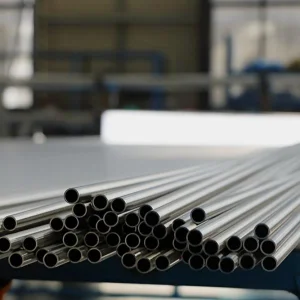

Metallurgical Architecture: Ferritic & Martensitic Stainless Steels Defined
In modern industrial engineering, selecting the optimal stainless steel matrix requires a precise understanding of phase diagrams, crystal structures, and alloying elements. Ferritic and Martensitic stainless steels (the 400-series alloy family) represent the cornerstone of cost-effective, high-performance materials engineered to eliminate reliance on volatile nickel markets while offering specialized mechanical and physical characteristics.
Ferritic Stainless Steels (Body-Centered Cubic)
Ferritic stainless steels possess a Body-Centered Cubic (BCC) crystal lattice, containing chromium levels typically ranging from 10.5% to 30%. Because they contain little to no nickel, ferritic alloys maintain absolute immunity to Chloride Stress Corrosion Cracking (SCC)—a catastrophic failure mode frequently observed in standard 300-series austenitic steels exposed to saline or industrial water systems. Key characteristics include low thermal expansion coefficients (matching carbon steel closely), high thermal conductivity, and exceptional resistance to high-temperature oxidation up to 1050°C. Modern dual-stabilized grades (utilizing Titanium and Niobium addition) prevent intergranular corrosion post-welding.
Martensitic Stainless Steels (Body-Centered Tetragonal)
Martensitic stainless steels are high-carbon, chromium-bearing alloys (11.5% to 18% Cr) engineered to undergo phase transformation from austenite to a Body-Centered Tetragonal (BCT) martensitic structure via rapid quenching. This crystal structure allows heat treatment via quenching and tempering to achieve extraordinary tensile strength (up to 1600 MPa) and extreme surface hardness (up to 60 HRC). Martensitic grades deliver exceptional wear resistance, micro-abrasion defense, and structural rigidity, making them essential for high-pressure valve trim, turbine blades, hydraulic pump shafts, and surgical cutlery operating under severe stress.
Mexico City Regional Industrial Dynamics & Nearshoring Landscape
Mexico City (CDMX) serves as the strategic economic engine and command center for North America's rapidly expanding manufacturing footprint. Accelerated by the global Nearshoring wave and the structural frameworks of the USMCA (T-MEC) trade agreement, Central Mexico has evolved into a tier-one manufacturing epicenter. Operating a production facility in this environment requires localized metallurgical compliance, rapid supply chain dispatch, and precision alignment with international engineering specifications.
Automotive & Exhaust Hubs
Connecting CDMX directly to key industrial parks in Toluca, Lerma, Puebla, and the Bajío corridor (Querétaro, San Luis Potosí), automotive tier-1 suppliers utilize our stabilization-optimized AISI 409L and AISI 441 ferritic tubes for catalytic converters, hot-end exhaust manifolds, and EGR cooler systems.
Thermal Energy & Power Infrastructure
State-owned energy projects (CFE power generation plants) and private combined-cycle installations across Central Mexico leverage AISI 439 and AISI 444 heat exchanger tubing. These grades deliver superior thermal conductivity compared to 316L while completely eliminating chloride-induced pitting.
High-Altitude Atmospheric Resilience
Mexico City’s unique altitude (2,240 meters above sea level) combined with urban industrial atmospheric conditions requires material selections that resist atmospheric sulfur pollution, urban humidity condensation, and extreme diurnal thermal cycling without micro-cracking.
Macro Industrial Analysis: Total Cost of Ownership (TCO) & Nickel Volatility
Industrial buyers and engineering EPC procurement directors in Mexico City face escalating raw material cost unpredictability driven by London Metal Exchange (LME) nickel surcharges. Ferritic stainless steels offer a structurally superior solution to stabilize capital expenditure (CAPEX) while maintaining long-term operational integrity.
| Evaluation Parameter | Standard Austenitic (e.g., 304 / 316L) | Spezilla Ferritic Series (e.g., 430 / 444) | Economic & Operational Gain |
|---|---|---|---|
| Nickel Content (%) | 8.0% - 12.0% (High Price Exposure) | 0.0% - 0.5% (Zero/Low Nickel) | Eliminates Nickel Surcharge Volatility |
| Thermal Conductivity (W/m·K) | 16.2 W/m·K at 100°C | 25.6 W/m·K at 100°C | +58% Higher Heat Exchange Efficiency |
| Thermal Expansion (10⁻⁶/K) | 17.2 (High Thermal Fatigue Risk) | 10.4 (Close to Carbon Steel) | Prevents Thermal Stress & Weld Cracking |
| Chloride Stress Corrosion (SCC) | Susceptible above 60°C in Cl⁻ water | Immune (BCC Crystal Symmetry) | Zero Risk of Sudden SCC System Failure |
| Raw Material Cost Stability | High Fluctuations (Monthly Alloy Surcharge) | Highly Predictable Flat Pricing | Accurate Budgeting for Mexico EPC Projects |
Comprehensive Grade Matrix: Chemical Composition & ASTM Standards
Spezilla manufactures seamless, welded, and cold-drawn ferritic and martensitic tubing to international ASTM, ASME, EN, and ISO standards. The technical matrix below details our prime grade offerings specified for Mexican industrial installations.
| Grade Designation | UNS / EN Standard | Cr (%) | Mo (%) | Stabilization / Carbon | Primary Industrial Application |
|---|---|---|---|---|---|
| AISI 409L | UNS S40900 / 1.4512 | 10.5 - 11.7 | - | Ti Stabilized / C ≤ 0.03% | Automotive Exhaust Systems, Manifolds, Tubing |
| AISI 430 | UNS S43000 / 1.4016 | 16.0 - 18.0 | - | Standard Ferritic / C ≤ 0.12% | Food Processing, Appliance Trim, Architectural |
| AISI 439 | UNS S43035 / 1.4510 | 17.0 - 19.0 | - | Ti + Al Stabilized / C ≤ 0.03% | Sugar Mill Condenser Tubes, Feedwater Heaters |
| AISI 441 | UNS S43932 / 1.4509 | 17.5 - 19.5 | - | Nb + Ti Dual Stabilized | High-Temp Exhaust, Solar Heat Exchangers |
| AISI 444 | UNS S44400 / 1.4521 | 17.5 - 19.5 | 1.75 - 2.50 | Nb + Ti Dual / C ≤ 0.025% | Hot Water Tanks, Desalination, High-Cl Media |
| AISI 410 (Martensitic) | UNS S41000 / 1.4006 | 11.5 - 13.5 | - | C: 0.08 - 0.15% (Heat Treatable) | Hydraulic Pump Shafts, Steam Turbine Valves |
| AISI 420 (Martensitic) | UNS S42000 / 1.4021 | 12.0 - 14.0 | - | C: 0.15 - 0.40% (High Hardness) | Valves, Surgical Instruments, Wear Bushings |
| AISI 431 (Martensitic) | UNS S43100 / 1.4057 | 15.0 - 17.0 | - | Ni: 1.25-2.50% / C ≤ 0.20% | Marine Shafting, High-Tensile Aerospace Bolts |
Targeted Application Scenarios Across Central Mexico
Spezilla’s specialized ferritic and martensitic tubing products are engineered to solve high-stress operational challenges encountered by engineering firms and factory operators across Mexico City and adjacent industrial corridors.
Tier-1 Automotive Exhaust Systems
Operating in the Toluca and Puebla manufacturing rings, automotive suppliers require high thermal stability under thermal shock. Our ASTM A268 / EN 10296-2 409L & 441 welded and drawn tubes withstand cyclic temperatures up to 850°C without scaling or structural sag, fully conforming to ISO/TS 16949 quality benchmarks.
Sugar Refining & Food Processing
Extending into Veracruz and Morelos agro-industrial sugar mills, evaporator tubes encounter organic acids and abrasive juice slurries. Ferritic AISI 439 / 444 seamless tubing delivers long operational campaigns with minimal erosion-corrosion, outperforming traditional brass or carbon steel tubes.
PEMEX Refining & Petrochemical Trim
Refinery maintenance contractors in Central Mexico deploy hardened AISI 410 / 420 martensitic solid bars and heavy-wall tubes for valve seats, stems, and flare stack ignition systems requiring retention of yield strength at elevated pressures and high flow velocities.
Quality Assurance, Testing Protocols & Mexico Customs Compliance
Spezilla operates under strict ISO 9001:2015 and IATF 16949 quality management frameworks. Every production lot destined for Mexico City undergoes rigorous non-destructive and destructive testing to guarantee absolute reliability under zero-defect requirements.
100% Non-Destructive & Mechanical Testing
Every length of ferritic and martensitic tubing undergoes online Eddy Current Testing (ECT) per ASTM E426 and Hydrostatic pressure testing per ASTM A1016. Mechanical validation includes tensile strength, offset yield strength, Rockwell/Vickers hardness profiling, flattening tests, and reverse-bend flange testing to verify weld integrity.
All shipments are dispatched with authentic EN 10204 3.1 Mill Test Certificates (MTC) incorporating full chemical heat analysis, heat-treatment temperature logs, and mechanical test data. Third-party inspection (SGS, TÜV, Bureau Veritas) according to EN 10204 3.2 is provided upon request.
USMCA / T-MEC & Mexico Logistics Safeguards
Navigating import logistics into Mexico City demands clear documentation and protective packaging tailored for tropical maritime transit and high-altitude warehouse storage.
- Anti-Corrosion Packaging: Vacuum-sealed VCI (Vapor Corrosion Inhibitor) plastic wrapping with moisture-absorbing desiccant sachets inside ISPM-15 certified wooden cases.
- Port Routing: Streamlined customs clearance via the Port of Veracruz (Atlantic route) or Port of Manzanillo (Pacific route) with direct bonded trucking to CDMX.
- Harmonized Tariff Compliance: Full HS Code classification, Certificate of Origin paperwork, and NOM (Normas Oficiales Mexicanas) safety marking.
Technology Roadmap: Future Innovations in Ferritic Metallurgy
As global industries transition toward zero-carbon manufacturing, modern metallurgy is continuously enhancing the operational boundaries of ferritic stainless steels. Spezilla is actively leading research initiatives in next-generation alloy design.
Ultra-High Purity (EAF-AOD-VOD) Refining
Utilizing Vacuum Oxygen Decarburization (VOD) processing, carbon and nitrogen interstitial levels are reduced below 100 ppm, dramatically elevating the ductile-to-brittle transition temperature (DBTT) and enabling sub-zero impact toughness down to -40°C.
Hydrogen-Compatible Martensitic Grades
Developing modified 410/420 martensitic matrix formulations with micro-alloyed vanadium and titanium to prevent hydrogen embrittlement in high-pressure hydrogen fueling and storage systems being planned in Central Mexico.
1100°C High-Oxidation Alloys
Engineered high-aluminum, high-chromium ferritics (such as 446 and modified Fe-Cr-Al alloys) designed to form self-healing alumina (Al₂O₃) surface scales for furnace heating tubes and solid oxide fuel cell (SOFC) interconnects.
Complete Specialty Product Portfolio Serving Mexico City
Browse our extended catalog of high-nickel, titanium, duplex, and customized stainless steel tubing solutions ready for dispatch to Mexico City buyers.







Frequently Asked Questions: Technical & Commercial Guide for Mexico City
Key technical answers for engineering consultants, procurement agents, and plant operators sourcing stainless tubing in Central Mexico.
AISI 444 (UNS S44400) contains 18% Chromium and 2% Molybdenum, providing pitting resistance equal to or superior to 316L (PREN ~21 vs ~25). However, because AISI 444 has a body-centered cubic ferritic structure with near-zero nickel, it is completely immune to Chloride Stress Corrosion Cracking (SCC), which frequently destroys 316L in warm chlorinated water systems. Additionally, AISI 444 has a lower thermal expansion coefficient and higher thermal conductivity, resulting in significantly higher heat transfer efficiency and longer service life.
During welding, unstabilized ferritic stainless steels are prone to chromium carbide precipitation at grain boundaries, causing sensitization and intergranular corrosion in the heat-affected zone (HAZ). Dual stabilization with Titanium (Ti) and Niobium (Nb) locks up carbon and nitrogen atoms as stable nitrides and carbides at high temperatures. This prevents chromium depletion, preserves corrosion resistance post-welding, improves creep strength, and enables continuous duty at high exhaust temperatures (up to 850°C).
Spezilla coordinates complete end-to-end logistics servicing Mexico City (CDMX) and surrounding industrial belts (Toluca, Puebla, Querétaro). Shipments are routed via direct sea freight to the Port of Veracruz or Manzanillo, followed by customs clearance handled with full Pedimento and HS Code documentation. Products are shipped in heavy-duty export packaging (VCI anti-corrosion barrier wrapping inside ISPM-15 heat-treated wooden crates) to ensure zero rust or damage upon arrival.
Martensitic stainless steels have high hardenability due to their higher carbon content. Welding them without strict thermal controls will result in untempered, brittle martensite in the weld zone, leading to cracking. Successful welding requires pre-heating the joint to 200°C–300°C, utilizing matching or austenitic filler metals (such as 309L), and performing immediate Post-Weld Heat Treatment (PWHT) tempering at 650°C–750°C to restore ductility and toughness.
Every shipment includes an EN 10204 3.1 Mill Test Certificate directly traceable to the melt heat number. The MTC details full chemical composition (analyzed via optical emission spectrometry), mechanical test results (tensile, yield, elongation, hardness), non-destructive testing reports (Eddy Current & Hydrostatic test results), and heat treatment process logs. EN 10204 3.2 certificates issued by third-party inspection agencies (SGS, TÜV, Lloyd’s Register) are available upon order placement.
Partner with Spezilla for Precision Tubing in Mexico City
Whether you are engineering automotive exhaust lines in Toluca, designing power generation heat exchangers in CDMX, or replacing refinery pump trim, our metallurgical team provides direct engineering support and competitive factory pricing.
