
Featured Custom Tubing & Alloy Solutions
Explore our flagship austenitic, nickel alloy, duplex, and titanium tube configurations certified to international ASTM/ASME and EN standards.

High-Quality Austenitic Steels 317L • UNS S31703 • 1.4438
View Product Details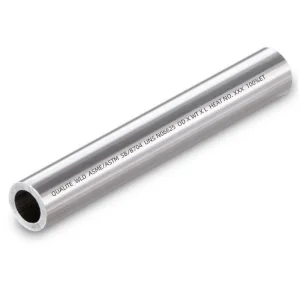
High-Quality Nickel Alloy Tubes 625 • UNS N06625 • 2.4856
View Product Details
Custom Nickel Alloy Tubes 800 • UNS N08800 • 1.4876
View Product Details
Custom Austenitic Steels 304 • UNS S30400 • 1.4301 Manufacturer
View Product Details
High-Quality Austenitic Steels 347H • UNS S34709 Product
View Product Details
Custom Austenitic steel ASME SA213 · TP304 Seamless Tube
View Product Details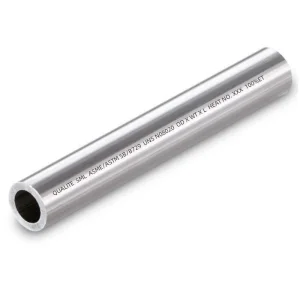
Custom Nickel Alloy Tubes 20 • UNS N08020 • 2.4660 Supplier
View Product Details
High-Quality Titanium Tubes • Grade 3 • UNS R50550 Factories
View Product DetailsEngineering Fundamentals of Custom 304 Stainless Steel Tubing
A comprehensive examination of chemical composition, microstructural stability, mechanical properties, and manufacturing routes for global industrial buyers.
The Science Behind AISI 304 / UNS S30400 / EN 1.4301
Grade 304 (18/8 stainless steel) remains the foundational workhorse of the global process engineering industry. Characterized by an austenitic crystal matrix preserved at ambient temperature through an optimal balance of Chromium (18.0% – 20.0%) and Nickel (8.0% – 10.5%), custom 304 tubing delivers exceptional formability, high-impact strength, and outstanding chemical passivity in moderately corrosive media.
When custom engineered by specialized mills, 304 stainless steel tubes undergo stringent grain refining heat treatments (bright annealing at 1040°C–1120°C in pure hydrogen atmospheres) to completely dissolve chromium carbides and prevent intergranular corrosion caused by sensitization during service or secondary welding processes.
Seamless vs. Welded & Drawn (W&D) Manufacturing Routes
Procurement teams must carefully align structural design codes with the appropriate tubing manufacturing method. Custom 304 tube production at qualified facilities operates across three primary process lines:
Seamless 304 Tubing (ASTM A213 / ASME SA213)
Produced via hot piercing of solid stainless steel billets followed by cold pilgering or multi-pass cold drawing. Best suited for ultra-high-pressure boiler tubes, superheaters, and extreme fluid environments where design codes strictly mandate zero longitudinal weld seams.
Welded & Cold Drawn - W&D (ASTM A249 / ASTM A269)
Formed from cold-rolled strip via automated TIG/Laser welding, followed by heavy sink or mandrel cold drawing (DOM). Cold drawing completely recrystallizes the weld zone during bright annealing, yielding concentric wall tolerances, superior surface finish, and cost savings of 20%–35% over seamless options.
Comprehensive Metallurgy & Dimensional Specifications
| Specification Parameter | ASTM A213 / A249 / A269 (TP304) | EN 10217-7 / EN 10216-5 (1.4301) | Custom OEM Tolerance Capability |
|---|---|---|---|
| Chemical Composition (% wt) | Cr: 18.0–20.0 | Ni: 8.0–11.0 | C: ≤0.08 | Mn: ≤2.0 | Cr: 17.5–19.5 | Ni: 8.0–10.5 | C: ≤0.07 | N: ≤0.11 | Tighter chemistry heats tailored for orbital welding |
| Yield Strength (Rp0.2) | ≥ 205 MPa (30 ksi) | ≥ 210 MPa | Custom strain-hardened tempers up to ≥ 450 MPa |
| Tensile Strength (Rm) | ≥ 515 MPa (75 ksi) | 500 to 700 MPa | Tailored ductility & elongation profiles (≥ 35%) |
| Outer Diameter (OD) Range | 4.00 mm to 114.30 mm (0.157" to 4.500") | 4.00 mm to 114.30 mm | Non-standard micro-bore down to 0.50 mm OD |
| Wall Thickness (WT) Range | 0.40 mm to 3.05 mm (0.016" to 0.120") | 0.40 mm to 3.05 mm | Ultra-thin wall (≤ 0.25 mm) or heavy wall options |
| Surface Roughness (Ra) | As-drawn Ra 0.8 μm | Polished Ra ≤ 0.4 μm | Metallically clean | Electro-polished Ra ≤ 0.25 μm | Custom Mechanical (180–800 Grit) & EP finishes |
China’s Advanced Manufacturing & Supply Chain Dominance
How modern Chinese stainless steel tube mills integrate raw material access, advanced cold processing technology, and rapid international logistics.
Upstream Raw Material Integration
Leading Chinese custom 304 tube suppliers are directly linked with premier steel producers like Tsingshan Group, TISCO, and Baosteel. This guarantees ultra-clean melt stock (VOD/AOD refined), low sulfur levels, consistent chemistry, and immunity from global raw coil shortages.
High-Automation Cold Processing Mills
Utilizing high-speed multi-roll cold pilgering units, precision hydraulic cold draw benches, and continuous inline hydrogen bright annealing furnaces, Chinese factories deliver microscopic wall concentricity (+/- 5%) and mirror-smooth surface finishes at scale.
Unrivaled Scale & Cost Efficiency
Clustered specialized industrial manufacturing hubs in Huzhou (Zhejiang) and Shanghai enable efficient vendor networks for tooling, pickling, polishing, and non-destructive testing—offering global procurement teams 20% to 40% total procurement cost savings.
Global Enterprise Procurement & Decision Criteria
Evaluating total cost of ownership (TCO), quality verification protocols, and risk mitigation strategies when sourcing custom 304 stainless steel tubing.
The 5-Point Quality Verification Framework
Global Fortune 500 OEMs and EPC contractors cannot afford field failures caused by off-spec tubing. Reliable custom 304 tube manufacturers implement rigorous multi-stage quality control steps before issuing final release documentation:
- Positive Material Identification (PMI): 100% handheld XRF spectrum testing on incoming raw material and finished tubes to verify zero elemental mix-ups.
- Non-Destructive Testing (NDT): Continuous inline Eddy Current Testing (per ASTM E426 or EN 10246-2) combined with Hydrostatic Testing (up to 300 Bar) or Ultrasonic Flaw Detection.
- Intergranular Corrosion (IGC) Testing: Practice A, B, or E according to ASTM A262 to ensure complete immunity against intercrystalline attack.
- Mechanical & Technological Testing: Flattening, flaring, reverse bending, and tensile testing performed per lot to guarantee superior ductility during field tube expanding.
- Dimensional & Surface Metrology: Laser micrometers verify wall concentricity and bore gauges check inner diameter (ID) micro-roughness.
Total Cost of Ownership (TCO) Optimization
When selecting custom 304 tube suppliers, purchasing leads must calculate total landed costs rather than focusing solely on nominal FOB per-meter pricing:
Custom Lengths & U-Bends Reduce Fabrication Waste
Ordering custom pre-cut straight lengths (up to 25 meters) or pre-formed U-tubes for shell-and-tube heat exchangers eliminates on-site cutting waste, reduces field welds, and shortens project turnaround.
Export-Grade Protective Packaging
High-value precision tubing requires wooden boxes, plastic end caps, fiber wrapping, and desiccant packs to prevent transit denting, saltwater oxidation, or contamination during ocean transit.
Localization Support, Regulatory Safeguards & Compliance
Bridging international engineering codes with localized customer logistics, technical documentation, and regional standards compliance.
ASME, PED & ISO Compliance
Our custom 304 tubes fully comply with the European Pressure Equipment Directive (PED 2014/68/EU), AD2000-W0, ASME Boiler and Pressure Vessel Code (BPVC Section II Part A), and ISO 9001:2015 quality management systems.
Traceable Mill Test Certificates (MTC)
Every shipment is accompanied by a transparent EN 10204 3.1 Mill Test Certificate detailing actual heat chemical analysis, mechanical test values, heat treatment charts, and non-destructive test results. Independent 3.2 third-party inspection (TUV, SGS, BV, Lloyd’s) is available on request.
Localized Technical & Logistics Hubs
Our Shanghai export and engineering team works alongside local forwarders and regional stocking partners across Europe, North America, Southeast Asia, and the Middle East to offer flexible DDP, CIF, or FOB delivery options with localized customs support.
High-Performance Applications & Specialized Scenarios
Targeted engineering configurations designed to handle aggressive thermal cycles, high mechanical stress, and strict hygiene guidelines.
1. Food, Dairy & Beverage Processing
Custom 304 sanitary tubing designed to ASTM A270 / DIN 11850 standards features ultra-smooth internal surfaces (Ra ≤ 0.4 μm mechanically polished or electro-polished). This smooth interior prevents bacterial growth and biofilm buildup in milk lines, breweries, and pharmaceutical fluid handling.
2. Industrial Heat Exchangers & Condensers
Under ASTM A249 and ASTM A688 specifications, custom 304 welded & drawn tubes are heavily utilized in feedwater heaters, shell-and-tube heat exchangers, and surface condensers. Available as straight lengths up to 25m or precision U-bent tubes with stress-relieved bend radii.
3. Automotive Exhaust & Fuel Lines
Custom 304 tubing provides high elevated-temperature oxidation resistance and formability required for automotive Exhaust Gas Recirculation (EGR) coolers, fuel injection lines, and high-performance exhaust manifolds engineered to withstand engine vibration.
4. Chemical & Petrochemical Fluid Lines
Used for conveying nitric acid, organic acids, alkaline solutions, and industrial gases. Custom 304 seamless and welded tubes offer long service life and high safety margins under ASME B31.3 process piping design codes.
5. Architectural & High-Precision Structural
Bright annealed or 320-grit polished custom 304 tubes are extensively deployed in high-end architectural handrails, structural glass facades, marine fittings, and semiconductor cleanroom equipment frameworks.
6. Hydraulic & Instrumentation Lines
Small-diameter precision custom 304 tubes engineered to ASTM A269 provide tight outer diameter tolerances (± 0.05 mm) and clean bore surfaces necessary for leak-tight compression fitting assemblies in control systems.
Emerging Trends & Innovations in 304 Tube Manufacturing
How automation, green steel practices, and ultra-high purity requirements are reshaping the global stainless steel tubing landscape.
Smart Industry 4.0 Quality Monitoring
Modern tube manufacturing lines are rapidly integrating real-time laser profile scanners, multi-frequency automated eddy current testing, and AI-driven weld seam monitoring. Digital twin technology tracks thermal profiles during bright annealing, ensuring consistent grain structure across every batch and providing complete digital product passports (DPP).
Decarbonization & Green Stainless Steel Production
Environmental regulations and corporate ESG mandates are driving demand for sustainable stainless steel. Premier Chinese manufacturers are implementing Electric Arc Furnaces (EAF) powered by renewable solar and hydro grid energy, utilizing up to 80% recycled stainless scrap to lower the carbon footprint per meter of custom 304 tube produced.
Ultra-High Purity (UHP) Surface Treatment
As semiconductor fabrication plants and hydrogen fuel cell infrastructure expand globally, demand for UHP custom 304 and 316L tubing is growing rapidly. Advanced electropolishing techniques achieving internal surface roughness of Ra ≤ 0.15 μm inside ultra-clean environments ensure zero particle outgassing in high-purity fluid delivery systems.
Advanced Thin-Wall Weight Reduction
Aerospace, automotive, and thermal management industries increasingly demand ultra-thin wall custom 304 tubes (wall thickness ≤ 0.30 mm) that maximize heat transfer efficiency and minimize weight while maintaining burst pressure strength through controlled cold working.
More High-Performance Stainless Steel & Alloy Tubes
Browse our complete catalog of specialized steel, titanium, and nickel alloy tubing options manufactured to exact client requirements.

Custom Austenitic Steels 316H • UNS S31609 • 1.4919 Supplier
View Product Details
High-Quality Ferritic & Martensitic Steels 410 • UNS S41000
View Product Details
Custom Austenitic steel ASME SA213 · TP316H Manufacturers
View Product Details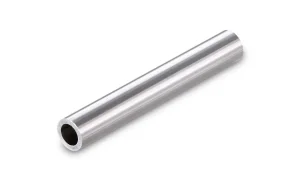
High-Quality Titanium Tubes • Grade 2 • UNS R50400 Factories
View Product Details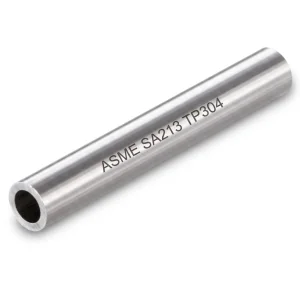
Custom Austenitic steel ASME SA312 · TP304 Stainless Steel Pipe
View Product Details
High-Quality Super Duplex Steels 2507 • S32750 • 1.4410 Manufacturer
View Product Details
Custom Austenitic steel ASME SA312 · TP304H Manufacturers
View Product Details
Custom Nickel Alloy Tubes 400 • UNS N04400 • 2.4360 Manufacturer
View Product DetailsFrequently Asked Questions (FAQ)
Expert engineering answers to common procurement, design, and manufacturing queries regarding custom 304 stainless steel tubes.
What is the difference between 304, 304L, and 304H stainless steel tubing?
The primary difference lies in carbon content control. Standard 304 contains up to 0.08% carbon. 304L is a low-carbon variant (carbon ≤ 0.030%) designed to prevent carbide precipitation during welding, preserving corrosion resistance in heavy-gauge welded assemblies without post-weld annealing. 304H contains a controlled carbon content of 0.04% to 0.10%, providing elevated creep strength and mechanical stability for high-temperature boiler and heat exchanger applications exceeding 500°C.
Which standard should I select: ASTM A213, ASTM A249, or ASTM A269?
Select ASTM A213 for seamless austenitic alloy-steel boiler, superheater, and heat-exchanger tubes operating under severe design pressure requirements. Choose ASTM A249 for welded austenitic tubes specifically intended for heat exchangers, condensers, and feed water heaters. Specify ASTM A269 for general service tubing where smooth surface finishes, precise dimensional tolerances, and general corrosion resistance are required for instrumentation and hydraulic lines.
How does custom 304 tubing perform in chloride-bearing environments compared to 316L?
Grade 304 has a Pitting Resistance Equivalent Number (PREN) of approximately 19, making it ideal for freshwater, urban atmospheres, and mild industrial media. However, in environments containing chloride levels exceeding 200 ppm (such as seawater or brackish cooling water), 304 can suffer from localized pitting and crevice corrosion. Grade 316L contains 2.0% to 3.0% Molybdenum, boosting its PREN to ~24 and offering far higher resistance to chloride pitting.
What custom fabrication services can be performed directly at the factory?
Factory fabrication includes precision fixed-length cutting (up to 25m), U-bending per TEMA standards with localized heat treatment on bend radii, mechanical polishing (180 to 800 grit), electro-polishing (Ra ≤ 0.25 μm), end forming (flaring, swaging, expand ends), continuous coiling, and custom CNC bending based on client CAD drawings.
What testing documentation is included with an EN 10204 3.1 Mill Test Certificate?
An EN 10204 3.1 MTC is issued directly by the manufacturer’s authorized inspection department and certifies: melt heat numbers, ladle chemical analysis, tensile and yield strength results, percentage elongation, hardness values, hydrostatic or eddy current test verification, grain size, intergranular corrosion test results, and dimensional verification data for complete lot-level traceability.
What lead times can global procurement teams expect for custom production runs?
Standard production lead times for custom mill orders typically range between 15 to 30 days depending on total tonnage, heat treatment requirements, and surface finishing specifications. Expedited air freight or containerized ocean freight can be arranged directly from Shanghai/Ningbo ports for global distribution.
