Precision-Engineered Alloys & Custom Piping



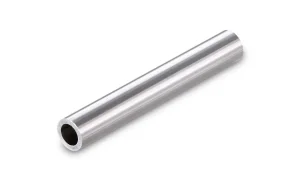


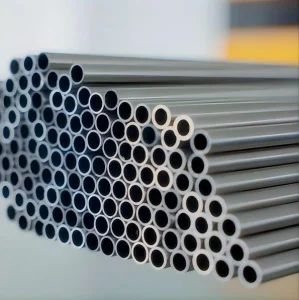
Metallurgical Breakdown of UNS N08904 / 1.4539 (904L) Pipe Systems
Understanding the microstructural stability, corrosion kinetics, and extreme environment endurance of high-molybdenum, high-nickel super austenitic stainless steels.
25% Nickel Substrate Matrix
The extensive 24.0%–28.0% Nickel composition provides absolute structural stability against stress corrosion cracking (SCC) in chloride-rich solutions, surpassing traditional 316L (10% Ni) by orders of magnitude under elevated thermal stress.
4.5% Molybdenum & Copper Synergism
Inclusion of 1.0%–2.0% Copper combined with 4.0%–5.0% Molybdenum yields extraordinary passivization against reducing acids, particularly conferring near-total immunity to hot concentration sulphuric acid (H₂SO₄) and wet phosphoric acid.
Ultra-Low Carbon (<0.020%) Intergranular Protection
By enforcing a strict carbon ceiling below 0.020%, UNS N08904 prevents chromium carbide precipitation during welding thermal cycles, eliminating the risk of intergranular corrosion without requiring post-weld solution annealing.
| Alloy Grade | UNS Designation | EN / W.Nr. | Chromium (Cr) | Nickel (Ni) | Molybdenum (Mo) | Copper (Cu) | PREN Score |
|---|---|---|---|---|---|---|---|
| 904L Super Austenitic | UNS N08904 | 1.4539 | 19.0 - 23.0% | 24.0 - 28.0% | 4.0 - 5.0% | 1.0 - 2.0% | ≥ 34.0 |
| 316L Standard Austenitic | UNS S31603 | 1.4404 | 16.5 - 18.5% | 10.0 - 13.0% | 2.0 - 2.5% | - | ~ 25.0 |
| 317L High-Mo Austenitic | UNS S31703 | 1.4438 | 18.0 - 20.0% | 12.0 - 15.0% | 3.0 - 4.0% | - | ~ 29.0 |
| 2205 Duplex Steel | UNS S32205 | 1.4462 | 22.0 - 23.0% | 4.5 - 6.5% | 3.0 - 3.5% | - | ~ 35.0 |
Global Procurement Trends & Macro-Economic Industry Demands
How chemical mega-complexes, green hydrogen production, and desalination facilities are reshaping the demand curve for custom 904L tubular infrastructure.
Decarbonization & Green Hydrogen Electrolyzers
The global energy transition has driven rapid adoption of 904L pipes in high-pressure PEM and alkaline electrolyzer stack manifolds. The material's resistance to caustic liquors, hydrogen embrittlement, and trace halide impurities makes it the premier spec alloy for clean hydrogen generation hubs.
Phosphoric Acid & Fertilizer Mega-Plants
With global food security expanding agricultural chemical infrastructure, fertilizer production plants handling crude wet-process phosphoric acid (containing up to 54% P₂O₅ alongside severe fluoride and chloride contamination) rely exclusively on custom 904L heat exchanger tubing and process lines to prevent premature line failure.
Semiconductor High-Purity Chemical Distribution
Modern microchip fabrication plants utilize ultra-pure 904L polished seamless pipes for transporting aggressive chemical reagents (sulfuric acid mixtures, etching fluids). The material prevents metal ion leaching into ultra-pure liquid streams, maintaining zero defect yields in sub-2nm semiconductor manufacturing.
Macro Industrial Solutions: Tailored Engineering Applications
Proven operational performance across aggressive chemical synthesis, offshore marine engineering, and power generation systems.
Flue Gas Desulfurization (FGD) Scrubbers
Power utility plants utilizing coal and heavy oil encounter severe acidic condensate in exhaust scrubbers. 904L pipes resist sulfur dioxide (SO₂), chloride concentrations, and high-temperature flue gases, dramatically extending maintenance cycles over standard 316L components.
Offshore & SWRO Desalination Cooling
In seawater reverse osmosis (SWRO) systems and floating oil & gas production platforms (FPSO), high velocity saline water induces severe crevice and pitting corrosion. 904L piping offers a highly economical alternative to super duplex and nickel alloy 625 systems.
Pharmaceutical Synthesis & Fine Chemicals
Eliminates localized batch contamination caused by aggressive organic acids (formic, acetic, oxalic). Smooth internal bore finishes (Ra < 0.4 µm) ensure zero bacterial adhesion and seamless CIP (Clean-In-Place) performance.
Rigorous Inspection Protocols & Global Compliance Framework
Ensuring 100% material integrity and zero-defect deployment across high-hazard industrial pipelines.
Hydrostatic & Eddy Current Testing
100% of manufactured 904L pipes undergo non-destructive Eddy Current Testing (ECT) per ASTM A1016 and hydrostatic pressure verification up to 300 bar, confirming absolute wall soundness and zero micro-fissures.
Intergranular Corrosion Testing
Batch samples undergo rigorous corrosion qualification strictly according to ASTM A262 Practice E (Copper-Copper Sulfate-Sulfuric Acid Test) and ASTM G48 Method A for pitting and crevice corrosion verification.
Full Traceability & Certification
Shipped with full EN 10204 3.1 certification detailing real-time ladle chemistry, physical property curves, and non-destructive examination logs. Independent EN 10204 3.2 inspection (TÜV, SGS, Lloyd's Register) supported.
Technical Roadmap: Seamless vs. Welded Manufacturing Routes
Advanced cold-pilgering, autogenous TIG welding, and bright annealing methodologies ensuring tight dimensional tolerances.
Cold-Drawn Seamless (CDS) Route
Manufactured according to ASTM B677 / ASME SB677. Extruded mother hollows undergo multi-pass cold pilgering and cold drawing to achieve precision outside diameters (OD 4.0mm – 114.3mm) with uniform wall thickness and seamless structural continuity, suitable for extreme high-pressure applications.
Welded & Cold Redrawn (W&D) Route
Produced under ASTM B674 / ASME SB674. High-precision 904L strip is roll-formed and joined via autogenous TIG or plasma welding. Tubes are subsequently cold drawn over a mandrel to eliminate the weld bead, delivering seamless-like internal concentricity at optimized cost.
Bright Annealing (1080°C - 1150°C)
Post-deformation heat treatment is conducted in a continuous pure Hydrogen protective atmosphere furnace at temperatures exceeding 1080°C, followed by rapid quenching. This restores full single-phase austenitic corrosion resistance while producing a scale-free, bright metallic finish.
Localized Engineering Support & Regional Regulatory Compliance
Navigating global pressure vessel design codes, environmental standards, and tailored export logistics.
PED 2014/68/EU & AD 2000-W0 Certification
Fully compliant with European Pressure Equipment Directive (PED) Category I-IV pressure systems. Complete documentation packages including AD 2000-Merkblatt W0 certification for seamless integration into European plant projects.
ASME Boiler & Pressure Vessel Code (BPVC)
Manufactured in strict accordance with ASME Section VIII Division 1 and ASME B31.3 Process Piping codes. Material heat-lot certifications directly support Canadian Registration Number (CRN) safety filings across all provinces.
Custom Fabrication & U-Bending Services
On-site precision machining, automatic beveling, orbital welding preparations, and tight-radius U-bending per ASTM A688. Stress relief heat treatment applied to bend zones to guarantee long-term field stability.
Frequently Asked Questions: Technical & Commercial Insights
Expert engineering answers regarding selection, processing, performance, and international specifications for 904L pipes.
What key advantage does 904L (UNS N08904) offer over 316L in chloride and acid environments?
While 316L contains ~2.0%-2.5% Molybdenum and 10% Nickel, 904L contains 4.0%-5.0% Molybdenum, 25% Nickel, and 1.5% Copper. This significant increase in alloy concentration raises the Pitting Resistance Equivalent Number (PREN) from ~25 to ≥34. Furthermore, the higher nickel content provides near immunity to Chloride Stress Corrosion Cracking (SCC), while copper adds superior resistance to reducing acids like sulfuric and phosphoric acid where 316L rapidly degrades.
Which standards govern seamless and welded 904L stainless steel pipes?
Seamless 904L pipes are typically manufactured according to ASTM B677 / ASME SB677 (Tubing) and ASTM A312 (Piping). Welded 904L pipes conform to ASTM B673 and ASTM B674 / ASME SB674. European specifications govern under EN 10216-5 (Seamless) and EN 10217-7 (Welded), with dimensions specified per ISO 1127 or ANSI B36.19M.
Is post-weld heat treatment (PWHT) required for custom 904L pipe fabrications?
Due to its ultra-low carbon content (C < 0.020%), 904L is resistant to sensitization (chromium carbide precipitation) during normal welding procedures. Therefore, post-weld solution annealing is generally not required to maintain intergranular corrosion resistance. However, matching filler metals (typically ERNiCrMo-3 or ER385) must be utilized to maintain equivalent corrosion resistance in the weld zone.
How does 904L compare to 2205 Duplex Stainless Steel?
2205 Duplex features higher yield strength (~450 MPa vs ~220 MPa for 904L) and a comparable PREN (~35). However, 904L performs significantly better in pure reducing acids (sulfuric acid) due to its 1.5% Copper addition. 904L also retains superior toughness at cryogenic temperatures, whereas 2205 duplex undergoes a ductile-to-brittle transition below -50°C.
What outside diameter and wall thickness tolerances can be achieved?
Through advanced cold pilgering and draw-bench operations, outside diameter tolerances can be maintained within ±0.05 mm for precision tubing, and wall thickness tolerances within ±7.5% (exceeding standard ASTM A1016 requirements). Custom surface roughness polishing down to Ra < 0.2 µm (8 µin) electro-polished is available upon request.
What is the maximum continuous working temperature for 904L in acidic services?
In sulfuric acid applications up to 20% concentration, 904L can operate reliably up to 70°C (158°F). In dilute solutions, it can handle temperatures up to 400°C (752°F) without scaling. For extreme oxidizing conditions above 550°C, high-nickel heat-resistant grades like 800HT or 310S are recommended instead.