
Featured Precision Alloy Tubes Portfolio (Part I)
Explore high-integrity stainless steel, nickel alloy, and super duplex cold-drawn precision tubing engineered for critical industrial applications.





Technical Metallurgy & Cold-Drawing Mechanics
Understanding the microstructural transformation, dimensional accuracy, and mechanical performance of custom cold-drawn precision seamless tubing.
The Engineering Mandate: Why Cold Drawn Precision Seamless Tubing?
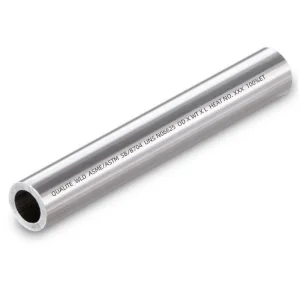
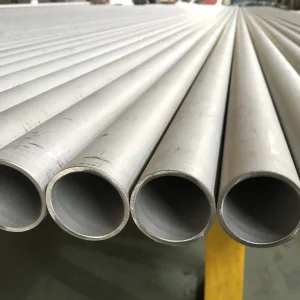
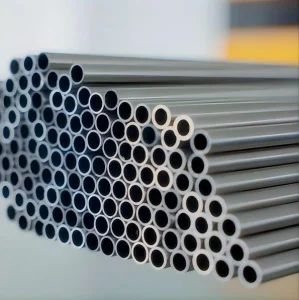
In high-stress thermal, chemical, and mechanical environments, hot-finished seamless tubes or standard welded pipes often fail to meet the rigorous demands for dimensional precision, concentricity, microstructural uniformity, and surface smoothness. Cold drawn precision seamless tubing represents the pinnacle of tubular engineering. Through plastic deformation at room temperature—utilizing precision dies and floating or fixed mandrels (plug drawing)—the raw seamless hollow undergoes a structural transformation that refines grain boundaries, increases tensile strength, and achieves unprecedented dimensional control.
The cold-drawing process alters metal geometry through controlled strain hardening. For critical alloys such as ASME SA213 TP316Ti, Nickel Alloy 625 (UNS N06625), and Super Duplex S32750, precision drawing eliminates interior wall eccentricity, preventing localized stress concentrations under extreme internal hydraulic pressures.
Microstructural Refinement
Cold plastic deformation combined with controlled bright annealing (in pure hydrogen atmospheres) restores corrosion resistance while producing a fine, uniform austenitic or duplex grain structure free from surface oxidation.
Dimensional Tolerance Mastery
Adhering strictly to ASTM A213, ASTM A269, EN 10305-1, and DIN 2391 standards, achieving outer diameter (OD) and inner diameter (ID) tolerances tight enough for direct hydraulic sleeve integration without machining.
Superior Fatigue Resilience
Elimination of longitudinal weld seams ensures isotropic mechanical strength, preventing preferential stress-corrosion cracking (SCC) and cyclic thermal fatigue in boilers, condensers, and subsea lines.
Macro Industry Solutions & Sector-Specific Applications
How specialized cold drawn seamless tubes address high-stakes engineering challenges across key global infrastructure sectors.
Aerospace & Hydraulic Control
Precision execution in hydraulic fluid transmission lines operating above 5,000 PSI. Requires defect-free inner bores ($Ra < 0.2\mu m$) to avoid valve cavitation and seal degradation in flight control actuators.
- Preferred Alloys: 316L, Titanium Grade 2 / Grade 12
- Standard: ASTM A269 / AMS 5557
Oil & Gas / Subsea HPHT
High-Pressure High-Temperature (HPHT) umbilical lines, downhole control tubing, and sour gas service exposure ($H_2S$). Demands high PREN values (>40) to combat pitting and crevice corrosion.
- Preferred Alloys: UNS S32750 (2507), UNS S32760, Inconel 625
- Standard: ASTM A789 / NACE MR0175 compliant
Power Generation & Nuclear Thermal
Superheater tubes, reheater elements, and feed-water heaters subjected to continuous creep range temperatures up to 650°C. Titanium-stabilized alloys prevent intergranular chromium-carbide precipitation.
- Preferred Alloys: ASME SA213 TP316Ti, 310S/H, Alloy 800H
- Standard: ASME SA213 / EN 10216-5
Chemical & Petrochemical Processing
Handling aggressive media including hot nitric acid, organic chlorides, and sulfuric concentrations. Custom drawn wall thickness ensures prolonged corrosion allowance and operating lifespan.
- Preferred Alloys: Hastelloy C276, Monel 400 (UNS N04400), 904L
- Standard: ASTM B163 / ASTM B167
Automotive & E-Mobility Drives
High-pressure common rail fuel injection lines (>2,500 bar) and lightweight structural drive shafts requiring precise torque transfer and resistance to severe vibration fatigue.
- Preferred Alloys: E235, E355, Stainless 304/304L
- Standard: EN 10305-1 / ISO 8535-1
Pharmaceutical & Ultra-High Purity (UHP)
Biomedical fluids, chromatography columns, and gas sampling lines where inner surface contamination must be zero. Tubes undergo electropolishing and bright annealing.
- Preferred Alloys: 316L VIM+VAR, UNS S31254 (6Mo)
- Standard: ASTM A270 / ASME BPE
Global Enterprise Procurement Specifications Matrix
Cross-referencing international dimensional, metallurgical, and testing standards for engineering procurement leaders.
| Material Family | UNS / Standard Grade | Applicable ASTM/ASME Spec | EN / DIN Standard | Key Mechanical Properties (Yield / Tensile) | Core Application Focus |
|---|---|---|---|---|---|
| Austenitic Stainless | TP316Ti / UNS S31635 | ASTM A213 / ASME SA213 | EN 10216-5 / 1.4571 | ≥ 205 MPa / ≥ 515 MPa | High Temp Thermal Exchangers |
| Austenitic Stainless | TP316L / UNS S31603 | ASTM A312 / ASTM A269 | EN 10216-5 / 1.4404 | ≥ 170 MPa / ≥ 485 MPa | Corrosive Chemical Lines |
| Super Duplex | 2507 / UNS S32750 | ASTM A789 / ASTM A790 | EN 10216-5 / 1.4410 | ≥ 550 MPa / ≥ 750 MPa | Subsea & Marine Desalination |
| Hyper Duplex | 32760 / UNS S32760 | ASTM A789 / ASTM A790 | EN 10216-5 / 1.4501 | ≥ 550 MPa / 750-1000 MPa | Offshore Oil Field & Sour Gas |
| Nickel Superalloy | Alloy 625 / UNS N06625 | ASTM B444 / ASME SB444 | NC12DC / 2.4856 | ≥ 415 MPa / ≥ 830 MPa | Extreme Heat & Flue Gas Scrubbing |
| Nickel-Copper | Monel 400 / UNS N04400 | ASTM B163 / ASTM B165 | 2.4360 / NICR21MO | ≥ 170 MPa / ≥ 480 MPa | Marine Condensers & HF Alkylation |
| Titanium Alloy | Grade 12 / UNS R53400 | ASTM B338 / ASME SB338 | 3.7105 / Ti-0.3Mo-0.8Ni | ≥ 275 MPa / ≥ 483 MPa | High Temp Chemical Evaporators |
Procurement Total Cost of Ownership (TCO) Analysis
For procurement officers evaluating custom cold drawn precision seamless tube suppliers, purchasing decisions based solely on raw linear meter cost introduce massive operational risk. Uncertified tubing with loose tolerances (e.g., non-concentric wall thickness exceeding ±15%) increases installation failure rates during orbital welding, leads to premature erosion-corrosion at high velocity fluid turns, and exposes industrial plants to unexpected downtime costing millions.
Spezilla’s cold drawn precision tubing enforces strict heat traceability from ingot melting through final bright annealing. Every production lot includes full chemical spectrographic analysis, hydrostatic pressure testing up to 300 bar, hydrostatic-equivalent Eddy Current testing, and surface roughness verification.
Emerging Industry Trends in Cold Drawn Seamless Tubing
Market dynamics, technological evolutions, and sustainability vectors driving the next decade of precision tubular engineering.
1. Micro-Alloying & High-Entropy Materials
Shift towards complex multi-component alloys combining Chromium, Molybdenum, Nitrogen, and Nickel to achieve PREN > 50, permitting reduced wall thickness without sacrificing structural integrity under high working pressures.
2. Zero-Decarb Hydrogen Bright Annealing
Transitioning from conventional open-fire furnace annealing to pure Hydrogen atmosphere continuous roller hearth furnaces. This eliminates surface scaling, removes the need for hazardous acid pickling, and produces a mirror-like finish.
3. In-Line Laser Micro-Metrology & Industry 4.0
Real-time continuous 360-degree laser wall scanning during cold drawing. Closed-loop AI controls dynamically adjust draw die positioning to lock outer diameter tolerances down to ±0.02mm.
4. Sustainable Circular Manufacturing
Decarbonizing steel transformation through electric arc furnace (EAF) raw material sourcing, 100% closed-loop lubrication oil recycling during cold drawing, and zero-discharge rinse water systems.
Technology Roadmap: Next-Generation Precision Tubing Focus
Strategic milestones shaping product development and metallurgical performance over the coming decade.
Phase I: Ultra-Smooth Bores (2025–2027)
Scaling commercial production of cold-drawn, interior-electropolished (EP) nickel and stainless alloy tubing with inner roughness $Ra \le 0.1 \mu m$ for semiconductor sub-nanometer gas delivery and biopharma liquid transport.
Phase II: Cryogenic & High-Hydrogen Alloys (2027–2030)
Developing specialized austenitic and nickel seamless drawn tubes optimized for liquid hydrogen storage and transport at -253°C, immune to hydrogen embrittlement under continuous thermal cycling.
Phase III: Smart Sensor-Embedded Tubing (2030+)
Pioneering composite cold drawn seamless tubes featuring embedded fiber-optic strain and temperature micro-sensors within the tube wall matrix for real-time structural health monitoring in subsea oilfields.
Quality Assurance, Global Compliance & Localized Support
Mitigating cross-border supply chain risks through comprehensive certification, third-party inspection, and tailored logistics.
Quality Management Compliance
Every meter of tubing is produced under strict quality management frameworks including ISO 9001:2015, IATF 16949 (for automotive fuel lines), and PED 2014/68/EU (Pressure Equipment Directive) for European pressure vessels.
EN 10204 3.1 & 3.2 Certification
Full material traceability provided via EN 10204 3.1 certificates detailing exact heat chemistry, mechanical yield/tensile/elongation testing, hardness values (HRB/HV), and NDT results. Independent 3.2 inspection (TÜV, DNV, SGS, Lloyd's Register) supplied on request.
VCI Packaging & Custom Logistics
To ensure flawless surface protection during long-distance maritime transit, tubes are capped with plastic end-protectors, wrapped in Vapor Corrosion Inhibitor (VCI) paper, and packed in heavy-duty sea-worthy wooden crates or corrugated aluminum bundles.
Featured Precision Alloy Tubes Portfolio (Part II)
Browse additional custom cold drawn titanium, duplex, and heat-resistant nickel alloy tubes engineered to global specifications.







Technical & Procurement Q&A (Frequently Asked Questions)
Detailed engineering answers to critical questions regarding cold drawn seamless tube manufacturing, tolerances, and testing protocols.
1. What is the fundamental difference between hot-finished seamless tubes and custom cold drawn precision seamless tubes?
Hot-finished seamless tubes are formed at elevated temperatures above the recrystallization point, resulting in wider dimensional tolerances (typically ±12.5% on wall thickness), higher surface roughness ($Ra 3.2 - 6.3 \mu m$), and potential surface oxide scales. In contrast, custom cold drawn precision seamless tubes undergo room-temperature mechanical drawing through tungsten carbide dies over polished mandrels. This process yields extremely tight wall thickness concentricity (down to ±5%), exceptionally smooth surface finishes ($Ra \le 0.4 \mu m$), higher yield strengths via strain hardening, and precise grain refinement following post-draw bright annealing.
2. When should an engineer specify ASME SA213 TP316Ti over standard TP316L for precision tubing?
ASME SA213 TP316Ti contains a intentional Titanium addition (typically $5 \times (C + N) \le Ti \le 0.70\%$). This Titanium acts as a carbide stabilizer. At elevated operating temperatures between 425°C and 800°C, Titanium preferentially combines with Carbon to form Titanium Carbides (TiC), preventing Chromium Carbide precipitation at the grain boundaries (sensitization). Choose TP316Ti for long-term high-temperature heat exchangers or exhaust systems where continuous thermal exposure would otherwise cause intergranular corrosion in standard 316L.
3. How does cold drawing improve the performance of Nickel Alloy 625 (UNS N06625) and Super Duplex 2507 (UNS S32750)?
Nickel Alloy 625 and Super Duplex 2507 are work-hardening materials with extreme strength and corrosion resistance. Cold drawing refines the grain structure of these tough alloys, increasing yield strength without sacrificing ductility when followed by precise solution annealing (1050°C - 1150°C for S32750, rapid water quenching). The resulting tube possesses uniform wall thickness essential for subsea umbilicals and chemical high-pressure reactors, preventing localized wall thinning under cyclic pressure.
4. What non-destructive testing (NDT) protocols are mandatory for custom cold drawn tubes used in pressure equipment?
In compliance with ASTM A1016, EN 10216-5, and PED 2014/68/EU, custom cold drawn precision tubing undergoes a dual-NDT evaluation:
1. Eddy Current Testing (ECT): Per ASTM E426 or EN ISO 10893-1, detecting longitudinal and transverse surface cracks or pinholes continuously along 100% of the tube length.
2. Hydrostatic Pressure Testing or Ultrasonic Testing (UT): Hydrostatic testing pressures up to 300 bar (4,350 PSI) calculated via Barlow's Formula ($P = \frac{2ST}{D}$), or Ultrasonic examination per ASTM E213 to identify internal wall laminations and sub-surface inclusions.
5. Can custom cold drawn precision seamless tubes be supplied in U-bent or coiled configurations?
Yes. Precision cold drawn tubes are frequently supplied as U-bent tubes (for shell-and-tube heat exchangers per ASTM A688 / A803) or as long continuous coils (up to 2,000 meters without orbital welds for downhole control lines). U-bend legs undergo post-bending stress-relief heat treatment in the bend area to eliminate residual tensile stresses that could induce Stress Corrosion Cracking (SCC) during service.
