
Featured Polished & High-Purity Tubing Products
Explore our premium range of precision engineered austenitic, ferritic, and nickel alloy tubing compliant with ASME SA312, SA249, SA269, and ASTM standards.

Custom Austenitic steel ASME SA312 · TP316L Manufacturer, Manufacturers

High-Quality ASME SA249 TP304 Welded Stainless Steel Tubes Manufacturer, Suppliers

Custom Ferritic & Martensitic Steels 405 Stainless Steel Tubes, UNS S40500, 1.4002 Suppliers, Products

High-Quality Austenitic steel ASME SA269 · TP321 Supplier, Products

Custom Nickel Alloy Tubes 400 • UNS N04400 • 2.4360 Manufacturer, Products

Custom Nickel Alloy Tubes 800 • UNS N08800 • 1.4876 Manufacturer, Products

Custom Austenitic Steels 316L • UNS S31603 • 1.4404 Manufacturer, Factories

High-Quality Nickel Alloy Tubes 600 • UNS N06600 • 2.4816 Manufacturer, Manufacturers
1. Executive Summary: Surface Engineering Science in Polished Finish Tubing
Understanding surface topography, mechanical abrasion dynamics, electrochemical leveling, and passivation chemistry in high-spec industrial applications.
The Science of Surface Roughness ($Ra$, $Rz$, $Rq$)
In modern industrial process lines—spanning ultra-high purity (UHP) semiconductor gas delivery, biopharmaceutical synthesis, nuclear heat exchangers, and sanitary food processing—the micro-geometry of the inner diameter (ID) and outer diameter (OD) surface of metal tubing directly governs operational safety, fluid dynamics, bio-burden accumulation, and localized corrosion kinetics.
Surface Roughness Average ($Ra$) represents the arithmetical mean deviation of the assessed profile. However, high-gain SEO engineering insights demonstrate that $Ra$ alone is insufficient for critical media transport. Parameter $Rz$ (maximum height of profile) and $Rq$ (root mean square roughness) are vital to detect isolated microscopic micro-cracks or deep inclusions created during tube cold-drawing.
- Mechanical Polishing (MP): Uses progressive abrasive grits (from 180 mesh up to 800 mesh) with high-speed automated polishing heads to physically shear peaks and fill valleys on the metal substrate.
- Electro-Polishing (EP): An electrochemical process acting as reverse galvanization, selectively dissolving micro-peaks on the surface, yielding a featureless, mirror-like finish ($Ra \le 0.13\,\mu\text{m}$ or $5\,\mu\text{in}$).
Electrochemical Passivation & Passive Layer Enhancement
The primary benefit of a custom polished finish manufactured by specialized factories lies in the enrichment of the protective Chromium Oxide ($Cr_2O_3$) passive film. During standard manufacturing, mechanical grinding introduces localized thermal stress and cold-work distortion layer (Beilby layer).
Advanced Chinese electro-polishing facilities employ automated temperature-controlled baths with optimized sulfuric-phosphoric acid electrolytes. This process effectively removes iron ($Fe$) atoms from the matrix lattice, boosting the Chromium-to-Iron ($Cr/Fe$) ratio at the outermost atomic layers (top 15–30 Ångströms) from a nominal 1.2 up to > 3.0, as verified by Auger Electron Spectroscopy (AES) and X-ray Photoelectron Spectroscopy (XPS).
2. China's Manufacturing Advantage in Custom Polished Tubing
How vertical integration, state-of-the-art CNC multi-head polishing lines, and cluster economies deliver unmatched value to global EPC contractors and OEMs.
Fully Integrated Supply Chains
Chinese specialized manufacturers leverage localized industrial clusters in Zhejiang and Jiangsu, integrating raw material smelting, seamless tube cold-pilgering, welded tube TIG/Laser forming, inline bright annealing (BA), and multi-stage polishing under one unified quality management umbrella.
Automated High-Precision CNC Equipment
Investment in 32-head automated ID mechanical polishing machines and continuous orbital OD polishers allows Chinese factories to maintain consistent surface profiles across long tube lengths (up to 25 meters / 82 feet) without manual operator variance.
Rigorous QA & Cleanroom Packaging
Leading factories feature ISO Class 5 (Class 100) cleanrooms for ultra-pure water (UPW) final rinsing, helium leak testing, high-purity nitrogen gas purging, and dual-layer heat-sealed polyethylene packaging to guarantee zero particulate contamination upon delivery.
3. Technical Specification Matrix: Polished Finish Standards & Grit Ratings
Comprehensive comparison of surface finishing methods, ASME BPE surface designations, grit equivalence, and micro-inch/micron parameters.
| Finish Designation | Processing Route | Mechanical Grit Rating | Max $Ra$ ($\mu\text{in}$) | Max $Ra$ ($\mu\text{m}$) | Target Industry / Application |
|---|---|---|---|---|---|
| ASME BPE SF0 | Mill Annealed & Pickled (AP) | Unpolished / No Grit | No Spec | No Spec | General Structural & Petrochemical Lines |
| ASME BPE SF1 | Mechanical Polish (MP) | Grit 180 / 240 | 20 $\mu\text{in}$ | 0.51 $\mu\text{m}$ | Commercial Food Processing & Utilities |
| ASME BPE SF2 | Mechanical Polish (MP) | Grit 320 | 25 $\mu\text{in}$ | 0.64 $\mu\text{m}$ | High-Standard Sanitary Fluid Handling |
| ASME BPE SF4 | Mechanically Polished + Electropolished (MP+EP) | Grit 320 / 400 + EP | 15 $\mu\text{in}$ | 0.38 $\mu\text{m}$ | Biopharmaceutical API Vessels & Transfer Tubing |
| ASME BPE SF5 | Electro-Polished (EP) Only | Grit 500 + EP | 20 $\mu\text{in}$ | 0.51 $\mu\text{m}$ | Injectables, WFI (Water for Injection) Piping |
| SEMI F19 Grade UHP | Cold Drawn + BA + Mirror EP | Grit 800 + Nano-EP | 5 - 7 $\mu\text{in}$ | 0.13 - 0.18 $\mu\text{m}$ | Semiconductor Sub-nanometer Gas Lines |
4. Industry Trends: Future Technologies in Surface Finishing
Key technological shifts reshaping custom polished finish manufacturing processes worldwide.
Green Electro-Polishing Chemistry
Eco InnovationTraditional electropolishing utilizes concentrated mixtures of phosphoric ($H_3PO_4$) and sulfuric ($H_2SO_4$) acids, creating environmental handling and wastewater neutralization overheads. Next-generation Chinese factories are pioneering low-VOC, ionic liquid electrolytes and organic acid-based electropolishing baths. These systems reduce hazardous chemical sludge by 80% while preserving identical electrochemical micro-smoothing dynamics.
In-Line Optical Laser Profilometry
AI Quality ControlMoving away from offline destructive stylus profilometer sampling, smart factories integrate non-contact optical laser interferometers directly into continuous polish lines. Using AI computer vision models trained on millions of surface topography scans, systems detect micro-scratches, orange peel patterns, or wall thinning in real time, automatically adjusting polishing pressure and head speed.
5. Localized Application Scenarios & Macro Industry Solutions
Engineering customized tube finishes to withstand extreme chemical, biological, and thermal operating environments.
Biopharmaceutical & Injectables
Requirement: Zero bacterial adhesion, total cleanability during Clean-In-Place (CIP) and Sterilize-In-Place (SIP) cycles.
Macro Solution: ASME SA269 TP316L or UNS S31254 electropolished tubes ($Ra \le 0.38\,\mu\text{m}$) certified to ASME BPE SF4. Chemically passivated in citric/nitric acid to prevent rogue biofilm growth and rouge formation.
Semiconductor & Microelectronics
Requirement: Moisture free, ultra-low outgassing, sub-micron particle counts for bulk gas ($N_2, Ar, H_2, O_2$) lines.
Macro Solution: Ultra-High Purity (UHP) Nickel Alloy or 316L VIM+VAR double-melted seamless tubes with $Ra \le 0.13\,\mu\text{m}$ inner surface EP finish, double-packaged in cleanrooms with N2 purge.
Nuclear Power & Thermal Exchangers
Requirement: Resistance to stress corrosion cracking (SCC), erosion-corrosion, and bio-fouling under high thermal fluxes.
Macro Solution: High-nickel alloys (Inconel 600 / UNS N06600, Incoloy 800 / UNS N08800) bright annealed and precision outer-diameter mechanically polished ($Ra \le 0.4\,\mu\text{m}$) for flawless tube-to-tubesheet expansion.
6. Global Corporate Sourcing & Risk Mitigation Checklist
Essential steps for procurement leads, engineering buyers, and EPC auditors when vetting custom polished tubing suppliers.
Material Mill Test Certificate (MTC) Auditing
Ensure suppliers provide authentic EN 10204 3.1 or 3.2 inspection certificates detailing actual melt ladle chemistry, heat treatment soaking curves, and positive material identification (PMI). Verify compliance with pressure equipment directives (PED 2014/68/EU) and ASME Section II Part A/B.
Non-Destructive Testing (NDT) Protocol Verification
Require 100% inline Eddy Current Testing (ECT) per ASTM E426 or Hydrostatic Testing per ASTM A1016. For critical electropolished tubes, inspect sample cross-sections via Scanning Electron Microscopy (SEM) to confirm absence of intergranular attack (IGA) or residual abrasive embedded grit.
7. Deep-Dive Technical FAQ & Intent Mining Answers
Direct expert responses to critical purchasing, engineering, and surface metallurgy questions.
What is the key functional difference between Bright Annealed (BA) and Electropolished (EP) stainless steel tubing?
Bright Annealing (BA) is a high-temperature heat treatment process conducted in a controlled reducing atmosphere (typically high-purity hydrogen gas) to prevent surface oxidation, yielding a bright appearance while restoring metal ductility. However, BA does not significantly alter the physical micro-roughness peak-and-valley profile created during tube drawing. Electropolishing (EP), conversely, is an electrochemical surface removal process that micro-levels surface peaks, reduces the overall surface area, removes microscopic inclusions, and enriches the passive Chromium Oxide layer ($Cr/Fe > 3.0$), delivering superior anti-corrosion performance and bio-cleanability.
Why is 316L preferred over 304 for custom polished sanitary applications?
Grade 316L contains 2.0% to 3.0% Molybdenum ($Mo$), which drastically increases its Pitting Resistance Equivalent Number ($\text{PREN} = \%Cr + 3.3\%Mo + 16\%N$) to approximately 24-25, compared to ~19 for 304. In sanitary, pharmaceutical, and food processing lines subjected to aggressive chloride cleaning agents, steam sterilization (SIP), and organic acids, 316L provides essential protection against pitting and crevice corrosion. Additionally, the low carbon content ("L" grade, $\le 0.03\%$) prevents chromium carbide precipitation along grain boundaries during welding.
How do Chinese manufacturers guarantee inner diameter (ID) roughness along a 12-meter tube length?
Professional manufacturers utilize long-stroke CNC internal mechanical polishing heads paired with automated abrasive compound delivery systems. Liquid polishing slurry is injected under constant pressure while the polishing head reciprocates at controlled speeds. For EP tubing, continuous electrolyte flow through high-precision cathode lances inserted through the entire tube length ensures uniform current density and equal metal removal across every meter of the tube.
What documentation should accompany a custom polished nickel alloy or stainless tube shipment?
A comprehensive B2B documentation package includes: 1) EN 10204 3.1 Mill Test Certificate with chemical analysis and mechanical property test results; 2) Surface Roughness Inspection Report listing calibrated profilometer $Ra/Rz$ readings for ID/OD; 3) Eddy Current & Hydrostatic Test Certificates; 4) Dimensional and Ovality Inspection Logs; 5) Passivation & Cleanroom Certificate of Conformance (if applicable).
Additional High-Performance Tubing Catalog
Browse our extended selection of precision polished tubes, super austenitic stainless steels, and specialty heat exchanger grades.

High-Quality Austenitic Steels 321 • UNS S32100 • 1.4541 Manufacturers, Factories

Custom Austenitic steel ASME SA213 · TP317 Manufacturers, Products

Custom Austenitic steel ASME SA213 · TP316LN.UNS S31653 Manufacturers, Factory

Custom Austenitic steel ASME SA213 · TP304 Seamless Tube Manufacturer, Supplier

High-Quality Super austenitic steel ASME SA269 · N08904 Product, Products
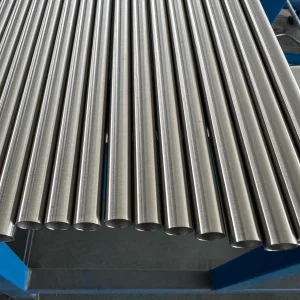
High-Quality Austenitic steel ASME SA269 · TP316L Manufacturers, Factories
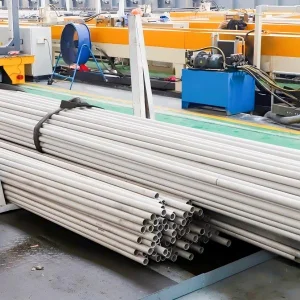
Custom Austenitic steel ASME SA213 · TP317L Supplier, Suppliers

