
Precision Austenitic & Special Alloy Tubing Products
Factory-direct tubular solutions engineered in compliance with ASTM, ASME, and EN specifications.

Custom Austenitic steel ASME SA213 · TP316L Supplier, Factories
View Details & Request Quote
Custom Titanium Tubes • Grade 12 • UNS R53400 Manufacturers, Product
View Details & Request Quote
Custom Austenitic steel ASME SA213 · TP304LN Manufacturer, Factory
View Details & Request Quote
High-Quality Austenitic Steels 321 • UNS S32100 • 1.4541 Manufacturers, Factories
View Details & Request Quote
Custom Nickel Alloy Tubes 825 • UNS N08825 • 2.4858 Suppliers, Product
View Details & Request Quote
Custom Nickel Alloy Tubes 800H • UNS N08810 • 1.4958 Factory, Products
View Details & Request Quote
High-Quality Austenitic Steels 316 • UNS S31600 • 1.4401 Factory, Product
View Details & Request Quote
High-Quality Austenitic Steels 304H • UNS S30409 • 1.4948 Manufacturer, Supplier
View Details & Request QuoteASME SA249 TP304 Technical Architecture & Specification
A granular breakdown of nominal alloy composition, mechanical performance standards, and code compliance for heat exchanger and condenser designs.
In modern industrial thermal engineering, selecting the correct tubular specification is the paramount decision governing plant safety, operating lifecycle, and heat transfer efficiency. ASME SA249 Grade TP304 (UNS S30400) represents the gold standard specification for nominal-wall-thickness welded tubes and heavy cold-worked welded tubes fabricated from nominal austenitic stainless steel grades. Specifically designed for critical heat exchange apparatus—such as boilers, superheaters, heat exchangers, feed water heaters, and surface condensers—SA249 TP304 balances mechanical ductility with exceptional intergranular corrosion resistance.
| Property Parameter | Chemical Composition / Standard Value | Engineering Impact & Compliance Note |
|---|---|---|
| Chromium (Cr) Content | 18.00% – 20.00% | Forms a self-healing passive Chromium Oxide ($Cr_2O_3$) layer providing atmospheric and chemical passivation. |
| Nickel (Ni) Content | 8.00% – 11.00% | Stabilizes the ductile Face-Centered Cubic (FCC) austenitic microstructure across cryogenic to high-temp ranges. |
| Carbon (C) Limit | Max 0.08% | Controlled to mitigate sensitization during high-temperature exposure and autogenous welding processes. |
| Tensile Strength ($\sigma_b$) | $\ge 515\text{ MPa } (75\text{ ksi})$ | Ensures robust structural integrity under severe internal pressure and thermal shock dynamics. |
| Yield Strength ($\sigma_{0.2}$) | $\ge 205\text{ MPa } (30\text{ ksi})$ | Provides high elastic deformation threshold during mechanical expansion into tubesheet grooves. |
| Hardness Limit | $\le 90\text{ HRB } (192\text{ HV})$ | Restricts work hardening; essential for effortless U-bending, flaring, and bead working without cracking. |
| Heat Treatment Route | Solution Annealed ($1040^\circ\text{C}-1120^\circ\text{C}$) | Rapid water quench redissolves chromium carbides into solid matrix, restoring maximum corrosion protection. |
Global Commercial Status & Industrial Demand Metrics
Analyzing the macro-economic and engineering drivers accelerating the adoption of custom SA249 TP304 stainless tubing worldwide.
Clean Energy & HVAC Infrastructure
With global decarbonization mandates, district heating plants, green hydrogen pre-heaters, and large-scale commercial HVAC chillers require lightweight, high-conductivity heat exchanger tubes. SA249 TP304 provides an optimal balance between initial capital expense and decades of maintenance-free service.
Petrochemical Heat Recovery
Downstream refining processes produce hot corrosive vapor streams containing sulfur trace elements and organic acids. Precision welded TP304 tubes replace carbon steel shell-and-tube bundles, reducing fouling factors and minimizing un-scheduled plant shutdowns.
Total Cost of Ownership Shift
Global EPC procurement managers are shifting away from heavy-wall seamless tubes toward high-precision cold-worked welded SA249 TP304 tubes. Modern automated TIG/Laser welding delivers seamless-equivalent joint efficiency (E=1.0) at a 20% to 35% reduced cost profile.
Localized Application Scenarios & Engineering Case Breakdown
From thermal power stations to hygienic pharmaceutical processing, explore how custom SA249 TP304 tubes adapt to real-world stress profiles.
A. Shell & Tube Heat Exchangers (Refineries)
Environment: High thermal cycling with steam-side condensed hydrocarbon vapor.
Challenge: Weld seam fatigue and stress corrosion cracking (SCC) at tubesheet joints.
SA249 Solution: Custom mill-annealed TP304 tubes featuring cold-bead working yield a smooth flush inner surface, eliminating stagnation pockets and minimizing crevice corrosion near tube-to-tubesheet expansions.
B. Sanitary Dairy & Beverage Pasteurization
Environment: Direct contact with liquid food matrices and aggressive CIP (Clean-in-Place) caustic/acid wash cycles.
Challenge: Bacterial bio-film accumulation in micro-pits.
SA249 Solution: Bright Annealed (BA) TP304 tubes with certified internal surface smoothness ($Ra \le 0.4\text{ }\mu m$) prevent organic adherence and withstand non-stop CIP sanitation cycles without surface degradation.
C. Surface Condensers & Feedwater Heaters
Environment: Thermal power station steam condensation under high vacuum.
Challenge: Steam impingement erosion and wall thinning over decades of continuous load.
SA249 Solution: Tight wall tolerance control ($\pm 5\%$) and 100% hydro-tested integrity ensure uniform thermal expansion, avoiding localized vibration fatigue in condenser tube bundles.
SA249 TP304 Manufacturing Technology & Quality Verification
From raw coil slitting to automated non-destructive testing, explore the 6-stage quality roadmap implemented inside our advanced Chinese manufacturing facility.
01. Premium Strip Inspection
Sourcing prime cold-rolled stainless steel coils (TISCO, Tsingshan) with 100% Spectro PMI composition check before continuous precision roll-forming.
02. Automated TIG/Laser Weld
Multi-cathode automatic TIG welding with inert Argon gas shielding preserves elemental stability without filler metal additions.
03. Cold Bead Working
In-line internal weld bead rolling and cold-drawing to homogenize grain structure across the weld metal and parent material zone.
04. In-Line Bright Annealing
Solution heat treatment at $1080^\circ\text{C}$ inside a 100% pure Hydrogen atmosphere furnace to ensure oxide-free, bright mirror surfaces.
05. 100% NDT & Hydro Testing
Full-length Eddy Current Examination per ASTM E426 alongside hydrostatic testing up to 20 MPa to ensure zero microscopic leak vectors.
06. MTC EN 10204 3.1 Certification
Final dimensional verification, surface roughness measurement, flattening/flaring tests, and complete material certification issue.
China Factory Supply Chain Resilience & Cost Efficiency
How localized industrial clusters and vertical integration enable superior lead times, custom engineering, and global price competitiveness.
In the modern international procurement landscape, agility and supply continuity are as vital as physical alloy quality. Our state-of-the-art manufacturing facility leverages China’s premier stainless steel industrial ecosystems, offering global EPC contractors and heat exchanger fabricators an unmatched competitive edge:
Direct Steel Mill Synergy
Located adjacent to world-leading stainless raw coil refineries, we secure priority heat-lot allocations of refined low-carbon 304 strip with master certifications, reducing raw material procurement cycles by over 40%.
Full In-House Tube Manipulation
We eliminate third-party processing markups by providing full custom bending, U-tube bending per TEMA standards, heat treatment of bends, finning, and tube end expansion directly on our factory floor.
Global Logistics Flexibility
Close proximity to major deep-water seaports (Shanghai / Ningbo) enables custom sea-worthy wooden crate packing, specialized end-capping, and rapid container dispatch with comprehensive customs clearance documentation.
Global Quality Assurance & Localized Technical Guidance
Rigorous compliance protocols engineered to meet North American, European, and Asia-Pacific pressure vessel codes.
Every meter of custom SA249 TP304 stainless steel tubing exported from our plant comes backed by complete physical, chemical, and pressure verification records. Our dedicated quality engineering department ensures compliance with international quality frameworks:
- ASME BPVC Section II Part A: Material specifications for boiler and pressure vessel code applications.
- EN 10204 Type 3.1 & 3.2 Certification: Full heat traceability, melt source tracking, chemical ladle analysis, and physical mechanical test reports.
- Third-Party Inspection Assurance: Regular visual, dimensional, and NDT witness audits carried out by international inspection bodies including TÜV, SGS, Bureau Veritas, and Lloyd's Register.
- Localized Engineering Consultations: Our multilingual technical sales support team assists with custom wall thickness calculations, TEMA bending radius selection, and material selection for high-corrosion environments.
Explore Additional Specialized Tube Grades
High-performance stainless, super austenitic, and nickel alloy tubing tailored to your specific operating conditions.
High-Quality Austenitic steel ASME SA269 · TP304 Factories, Products
View Details & Request Quote
Custom Austenitic steel ASME SA213 · TP317 Manufacturers, Products
View Details & Request Quote
Custom Austenitic steel ASME SA213 · TP316H Manufacturers, Products
View Details & Request Quote
Custom Nickel Alloy Tubes 20 • UNS N08020 • 2.4660 Supplier, Product
View Details & Request Quote
Custom Austenitic steel ASME SA312 · TP321 Suppliers, Product
View Details & Request Quote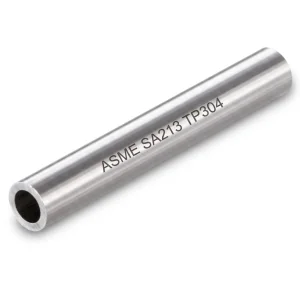
Custom Austenitic steel ASME SA312 · TP304 Stainless Steel Pipe Manufacturers, Supplier
View Details & Request Quote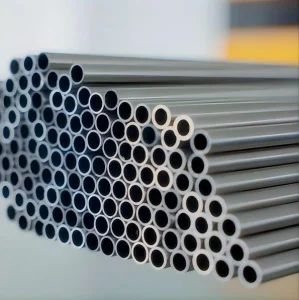
High-Quality ASME SA249 TP304 Welded Stainless Steel Tubes Manufacturer, Suppliers
View Details & Request Quote
Custom Austenitic steel ASME SA312 · TP304H Manufacturers, Factories
View Details & Request QuoteFrequently Asked Technical & Procurement Questions
Clear, authoritative responses addressing common engineering queries regarding ASME SA249 TP304 specification, manufacturing tolerances, and application limits.
Q1 What is the core engineering difference between ASME SA249 TP304 and ASTM A269 TP304?
While both standards cover austenitic stainless steel tubing, ASME SA249 specifically targets welded tubing for critical heat transfer equipment (boilers, superheaters, heat exchangers, condensers) and mandates strict post-weld solution annealing along with compulsory hydrostatic or eddy current testing. ASTM A269 is a general-service specification covering both seamless and welded tubing for general corrosion-resisting and low- or high-temperature service, without the specialized boiler code testing requirements enforced by SA249.
Q2 Can custom SA249 TP304 welded tubes be bent into U-tubes for shell-and-tube heat exchangers?
Yes. Custom SA249 TP304 tubes manufactured with controlled hardness ($\le 88\text{ HRB}$) and cold bead-worked weld seams are fully optimized for U-bending per TEMA (Tubular Exchanger Manufacturers Association) specs. Following the bending process, stress-relief heat treatment can be performed on the bend portion upon customer request to prevent stress corrosion cracking in high-temperature environments.
Q3 How does cold working the weld seam affect the pressure integrity of SA249 TP304 tubing?
Cold working the weld seam (bead reduction/rolling) homogenizes the cast dendritic structure of the weld zone, matching its yield strength, grain size, and mechanical ductility to the parent strip material. Subsequent solution annealing redissolves any precipitated carbides, restoring full corrosion resistance and delivering a weld joint factor ($E = 1.0$) equivalent to seamless tubing under ASME pressure calculation codes.
Q4 What is the maximum continuous working temperature for SA249 TP304 in boiler environments?
In oxidizing atmospheres, SA249 TP304 exhibits good scaling resistance up to $870^\circ\text{C}$ ($1600^\circ\text{F}$) for intermittent service and $925^\circ\text{C}$ ($1700^\circ\text{F}$) for continuous service. However, under ASME pressure vessel codes, design stress values for TP304 are typically restricted to temperatures below $425^\circ\text{C}$ ($800^\circ\text{F}$) to avoid sensitization and creep rupture risk, above which stabilized grades like TP321 or high-carbon TP304H are recommended.
Q5 What surface finishes can be customized for SA249 TP304 factory orders?
Our factory offers multiple surface treatments tailored to application requirements: Mill Annealed & Pickled (AP), Bright Annealed (BA) featuring a reflective mirror-like finish ($Ra \le 0.4\text{ }\mu m$), Mechanical Polish (180, 240, 320, 400, or 600 Grit), and Electro-Polished (EP) for high-purity pharmaceutical or cleanroom fluid conveyance lines.
Q6 What quality certification documents accompany factory orders of SA249 TP304 tubing?
Every shipment is accompanied by a certified EN 10204 3.1 Mill Test Certificate (MTC) detailing raw material heat number, chemical ladle analysis, mechanical test results (tensile, yield, elongation, hardness), flattening/flaring/flange test validation, NDT/Eddy Current inspection reports, and dimensional compliance records. Third-party EN 10204 3.2 inspection MTCs are available upon request.
