
Certified Schedule 10 Pipe Grades & Custom Tubing Solutions
Explore our primary inventory of high-yield, corrosion-resistant Schedule 10 stainless steel, duplex, and nickel alloy piping manufactured to rigorous ASME, ASTM, and EN standards.

High-Quality Austenitic steel ASME SA213 · TP347 Manufacturers, Supplier
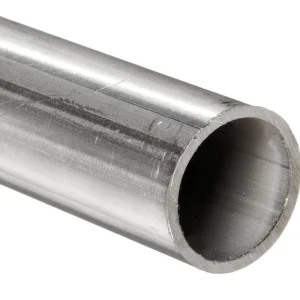
Custom Austenitic steel ASME SA312 · TP304H Manufacturers, Factories

Custom Austenitic Steels 310S • UNS S31008 • 1.4845 Supplier, Suppliers

Custom Austenitic steel ASME SA213 · TP316L Supplier, Factories

Custom Austenitic steel ASME SA312 · TP304 Stainless Steel Pipe Manufacturers, Supplier

Custom Austenitic steel ASME SA213 · TP316H Manufacturers, Products

High-Quality Super Duplex Steels 32760 • S32760 • 1.4501 Manufacturers, Suppliers

High-Quality Ferritic & Martensitic Steels 410 • UNS S44000 • 1.4512 Suppliers, Factories
Engineering Fundamentals of Custom Schedule 10 Stainless Steel Piping
In modern fluid dynamics and industrial chemical architecture, Schedule 10 (Sch 10 / Sch 10S) lightwall stainless steel piping represents the optimal intersection of material conservation, corrosion tolerance, and structural integrity. Standardized under ASME B36.19M and ASTM A312 / A249, custom Sch 10 pipes deliver substantial engineering efficiency across low-to-medium pressure applications.
Lightwall Dimensional Mechanics & Pressure Rating
Unlike standard heavy-wall pipes (Schedule 40 or Schedule 80), Schedule 10 pipes feature a reduced nominal wall thickness engineered specifically for optimized fluid transport and minimized structural tare weight. By applying Barlow's Formula for internal working pressure calculation:
P = (2 * S * t) / D
Where P represents internal working pressure, S denotes maximum allowable stress value per ASME B31.3, t is wall thickness, and D is outside pipe diameter. Engineers can precisely verify that custom Schedule 10 pipes manufactured from high-yield austenitic alloys (such as 316L, 317L, or Duplex 2205) provide robust safety factors while eliminating unnecessary alloy tonnage in industrial processing modules.
Custom Alloy Fabrication & Seamless/Welded Options
As a premier custom manufacturer and global supplier, Spezilla Tube Co., Ltd. produces Schedule 10 piping across two distinct manufacturing routes to match project-specific constraints:
- Automated Welded & Cold Drawn (W&D): Formed from high-precision austenitic strip with autogenous TIG/Laser welding, followed by cold drawing to ensure uniform wall concentricity, eliminated weld bead profile, and exceptional surface smoothness.
- Seamless Cold Finished (TP304/316/321/347): Produced via cold pilgering and drawing for ultra-critical high-temperature, high-purity, or lethal service applications where longitudinal welds are restricted by design codes.
Global Industry Trends Shaping Schedule 10 Stainless Steel Demand
The global industrial landscape is undergoing a structural transition toward decarbonization, green hydrogen distribution, high-purity microelectronics manufacturing, and modular offshore construction. These macro-trends have vastly expanded the technical requirements for custom Schedule 10 stainless steel piping.
1. Semiconductor & Cleanroom Utility Expansion
The global surge in semiconductor fabrication plants (Giga-fabs) across North America, Europe, and Asia has triggered unprecedented demand for ultra-clean lightwall stainless steel piping. Ultra-pure water (UPW), high-purity gas loops, and specialized chemical distribution systems rely on 316L Schedule 10 pipe featuring internal electropolishing (EP, Ra < 0.25 µm) to prevent micro-contamination and particulate accumulation.
2. Green Energy, LNG & Hydrogen Infrastructure
As energy systems shift to liquefied natural gas (LNG) regasification and green hydrogen, piping systems must withstand extreme cryogenic temperatures down to -196°C. Stabilized austenitic grades like TP347 and low-carbon dual-certified 304/304L and 316/316L Schedule 10 pipes provide optimal fracture toughness without undergoing ductile-to-brittle phase transitions.
3. Modularization of Offshore & Process Skids
Engineering, Procurement, and Construction (EPC) contractors are increasingly shifting from field fabrication to off-site skid module assembly. Lightwall Schedule 10 piping slashes static load weights on structural framing by up to 45%, significantly reducing logistics costs, crane capacity requirements, and offshore installation complexity.
Global Corporate Procurement Intent: Strategic TCO Optimization
Modern B2B procurement executives, EPC purchasing leads, and refinery maintenance managers no longer look solely at per-meter pipe costs. Modern procurement models focus on Total Cost of Ownership (TCO), lifecycle corrosion mitigation, risk transfer, and supply chain predictability.
CAPEX & Material Savings Engineering
By transitioning non-critical utility, low-pressure process, and cooling fluid lines from Schedule 40S to Schedule 10S, enterprise projects realize immediate raw material cost savings of 30% to 50%. In large-scale petrochemical developments, this design shift yields millions of dollars in material procurement reduction while maintaining full compliance with ASME B31.3 piping codes.
Furthermore, lightwall Schedule 10 pipes require significantly less heat input during field welding, reducing welding wire consumption, argon purging gas volumes, and man-hours per joint by over 35%.
Risk Mitigation & EN 10204 3.1 / 3.2 Traceability
Piping system failures lead to catastrophic unscheduled downtime, environmental penalties, and safety hazards. Global buyers mandate strict compliance with heat number traceability, positive material identification (PMI), hydrostatic pressure testing, and non-destructive eddy current or ultrasonic examination.
Every shipment from Spezilla includes comprehensive Mill Test Certificates (MTC) conforming to EN 10204 3.1, with optional independent third-party inspection (TUV, SGS, Lloyd's Register, Bureau Veritas) under EN 10204 3.2.
China Industry 4.0: Supply Chain Resilience & Production Advantages
Spezilla Tube Co., Ltd. leverages state-of-the-art Industry 4.0 smart manufacturing technologies across our Huzhou manufacturing bases, connected seamlessly with our Shanghai operation center to guarantee unmatched cost efficiency, speed, and metallurgical quality.
Integrated Raw Material Sourcing
Our strategic partnerships with top-tier raw steel producers (such as Baosteel, Tsingshan, and Yongxing) ensure access to ultra-clean refined master heats. Low residual element ratios (P < 0.025%, S < 0.005%) provide optimal weldability and superior intergranular corrosion resistance in Schedule 10 pipes.
Continuous Laser & TIG Auto-Welding
Utilizing multi-cathode online automatic TIG and high-power fiber laser welding lines equipped with real-time seam tracking and laser vision sensors. The automated process eliminates human error, producing a 100% full-penetration weld seam with zero oxidation or undercut.
Online Bright Annealing (1050°C - 1150°C)
Every Schedule 10 pipe passes through an inline protective pure hydrogen gas atmosphere bright annealing furnace. Rapid induction heating and gas quenching fully dissolve chromium carbides back into the austenitic matrix, restoring peak passive film corrosion resistance without surface oxidation or scaling.
Localized Application Scenarios & Industry Use Cases
Spezilla's custom Schedule 10 piping solutions are deployed globally across specialized sectors where demanding corrosive media, thermal cycling, and high cleanliness standards converge.
Scenario A: Middle East Seawater Desalination Plants
Environment: High-salinity Arabian Gulf feedwater, Reverse Osmosis (RO) pretreatment manifolds, and low-pressure brine discharge.
Solution: Custom Duplex 2205 (UNS S32205 / 1.4462) and Super Austenitic 904L Schedule 10S piping. High Pitting Resistance Equivalent Number (PREN ≥ 35) guarantees resistance against chloride pitting and crevice corrosion, while Sch 10 lightwall dimensions reduce skid weight on marine concrete pilings.
Scenario B: European Bio-Pharmaceutical Clean Utility Skids
Environment: Water for Injection (WFI) distribution loops, CIP/SIP (Clean-in-Place / Steam-in-Place) sanitary lines in compliance with ASME BPE standards.
Solution: ASME SA249 / SA312 TP316L Schedule 10 pipes featuring mechanically polished or electropolished internal surface finishes (Ra < 0.38 µm). Dual certified low-carbon chemistry prevents intergranular corrosion during orbital welding.
Scenario C: North American Chemical & Petrochemical Processing
Environment: Sulfuric, nitric, and organic acid transfer, heat exchanger interconnecting piping, low-pressure process vapor headers.
Solution: Titanium Grade 2 and Nickel Alloy 625 / C276 Schedule 10 pipes engineered for severe oxidizing and reducing environments where conventional 304/316 alloys experience rapid wall thinning.
Scenario D: APAC Pulp, Paper & Fiber Bleaching Facilities
Environment: Chlorine dioxide bleaching towers, black liquor recovery lines, and acidic wash effluent piping.
Solution: Titanium Gr. 2 (UNS R50400) and Super Duplex 2507 (UNS S32750) Schedule 10 piping delivering complete immunity to wet chlorine corrosion and stress corrosion cracking (SCC).
Schedule 10 Pipe Alloy Comparison & Engineering Properties
Select the appropriate Schedule 10 alloy grade based on chemical composition, mechanical strength, pitting resistance, and operating temperature range.
| Alloy Grade | UNS / EN Number | Yield Strength (MPa min) | Tensile Strength (MPa min) | PREN (Approx.) | Max Temp (°C) | Primary Industrial Service |
|---|---|---|---|---|---|---|
| 304 / 304L | S30400 / S30403 (1.4301 / 1.4307) | 205 | 515 | ~19 | 425°C | General fluid transport, food & beverage, potable water |
| 316 / 316L | S31600 / S31603 (1.4401 / 1.4404) | 220 | 515 | ~25 | 450°C | Chemical processing, marine, pharmaceutical skids |
| 321 / 321H | S32100 / S32109 (1.4541) | 205 | 515 | ~19 | 800°C | High-temperature exhaust, thermal energy, refinery flares |
| 347 / 347H | S34700 / S34709 (1.4550) | 205 | 515 | ~20 | 816°C | Heavy cyclic heating, power gen, furnace piping |
| 310S / 310H | S31008 / S31009 (1.4845) | 205 | 515 | ~25 | 1100°C | Extreme oxidation, heat exchangers, kilns, radiant tubes |
| Duplex 2205 | S31803 / S32205 (1.4462) | 450 | 655 | ~35 | 300°C | Chloride SCC, oil & gas, reverse osmosis desalination |
| Super Duplex 32760 | S32760 (1.4501) | 550 | 750 | ≥ 41 | 250°C | Offshore platforms, subsea manifolds, aggressive acids |
| Nickel Alloy 20 | N08020 (2.4660) | 241 | 551 | ~32 | 500°C | Sulfuric acid pickling, synthetic rubber, chemical synthesis |
* Note: PREN (Pitting Resistance Equivalent Number) = %Cr + 3.3(%Mo + 0.5%W) + 16%N. Mechanical values according to ASTM A312 / A249 specifications.
Specialized Schedule 10 Stainless Steel & Alloy Tubes
Complete your procurement specifications with our extended portfolio of precision heat exchanger tubes, duplex piping, and high-temperature alloy lines.

High-Quality Duplex Steels 2205 • S31803/S32205 • 1.4462 Manufacturer, Products

Custom Austenitic steel ASME SA213 · TP317 Manufacturers, Products

High-Quality Austenitic Steels 321 • UNS S32100 • 1.4541 Manufacturers, Factories

High-Quality Austenitic Steels 347H • UNS S34709 Product, Products

High-Quality Austenitic steel ASME SA269 · TP321 Supplier, Products

High-Quality Austenitic steel ASME SA213 · TP309S Suppliers, Product

Custom Austenitic steel ASME SA213 · TP304 Seamless Tube Manufacturer, Supplier

Custom Nickel Alloy Tubes 20 • UNS N08020 • 2.4660 Supplier, Product
Frequently Asked Questions: Custom Sch 10 Piping Solutions
Gain detailed engineering clarity on wall thickness tolerances, pressure ratings, welding procedures, and quality certifications for custom Schedule 10 stainless steel pipe.
1. How does Schedule 10 (Sch 10S) pipe wall thickness differ from Schedule 40 (Sch 40S)?
Schedule 10 (Sch 10S) represents a lightwall piping specification standardized under ASME B36.19M for stainless steel, duplex, and nickel alloys. For example, a 2-inch nominal pipe size (NPS 2") in Schedule 10S has a wall thickness of 2.77 mm (0.109 in), whereas Schedule 40S has a wall thickness of 3.91 mm (0.154 in). This ~29% reduction in wall thickness translates directly into lower weight, reduced material costs, and enhanced thermal heat transfer performance without sacrificing corrosion resistance in low-to-medium pressure systems.
2. What standards and manufacturing specifications govern Spezilla's Schedule 10 piping?
Our custom Schedule 10 stainless steel and alloy pipes are fully compliant with major international standards, including ASTM A312 / ASME SA312 (seamless and welded austenitic pipe), ASTM A249 / ASME SA249 (welded heat-exchanger tubes), ASTM A269 (general service tubing), ASTM A790 / A789 (duplex stainless steel), EN 10217-7 (welded stainless steel tubes for pressure purposes), and EN 10216-5 (seamless stainless steel tubes).
3. What Non-Destructive Testing (NDT) protocols are conducted before delivery?
Every production batch undergoes 100% Non-Destructive Testing (NDT) according to customer specs and design codes. This includes hydrostatic pressure testing (up to 250 bar), inline Eddy Current testing (ASTM E426 / EN 10246-2), Ultrasonic testing (UT) for wall thickness verification, Pneumatic underwater bubble testing, and Positive Material Identification (PMI) via X-ray fluorescence (XRF) spectroscopy to verify chemical composition.
4. Should I choose Welded & Drawn or Seamless Schedule 10 pipe for heat exchangers?
Welded & Drawn (W&D) Schedule 10 pipes offer superior wall thickness uniformity, concentricity, and exceptional internal surface finish at a more competitive cost structure—making them ideal for heat exchangers and condensers under ASTM A249/A688. Seamless Schedule 10 pipes (ASTM A213/A312) are typically recommended where high-pressure codes prohibit longitudinal welds or in severe cyclic thermal environments.
5. What specialized surface treatments can be applied to custom Schedule 10 pipes?
We provide custom surface finishes tailored to application requirements, including Mill Annealed & Pickled (AP), Bright Annealed (BA) in a pure hydrogen atmosphere, Mechanical Polishing (180 Grit, 240 Grit, 320 Grit, 400 Grit up to Ra < 0.4 µm), Electropolishing (EP) for ultra-high purity bio-pharma and semiconductor lines, and external protective coatings for transport.
6. How can engineering procurement teams request a custom quotation and MTC review?
Procurement teams can submit engineering datasheets, pipe schedules, dimensional drawings, or project MTOs directly to [email protected]. Our technical sales team provides comprehensive price quotations, standard compliance reviews, material availability, and sample Material Test Certificates (EN 10204 3.1) within 24 hours.
Ready to Optimize Your Industrial Piping Infrastructure?
Partner with Spezilla Tube Co., Ltd. for certified custom Schedule 10 stainless steel, duplex, and nickel alloy piping. Benefit from Industry 4.0 precision, EN 10204 3.1/3.2 full traceability, and global logistics support.
Request Technical Quote & MTC Consultation