
High-Performance Hydraulic & Instrumentation Alloys
Precision-drawn tubing manufactured under ISO 9001 and IATF 16949 standards, engineered to meet demanding hydraulic line specs across marine, aerospace, energy, and heavy machinery sectors.



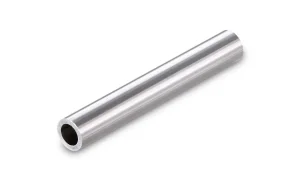

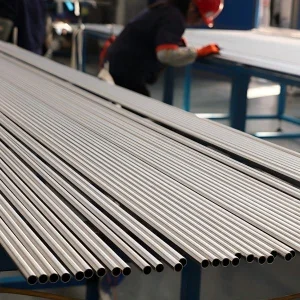

Next-Generation Stainless Hydraulic Tubing Innovations & Future Outlook
Modern hydraulic fluid power circuits operate under increasingly demanding conditions. As industrial equipment advances toward higher operating pressures (exceeding 700 bar / 10,000 psi), micro-miniaturization, and aggressive chemical exposure, traditional carbon steel hydraulic tubing fails to meet reliability benchmarks. The global transition toward precision-engineered stainless steel hydraulic tubing represents a quantum leap in fluid transfer safety, corrosion endurance, and lifecycle economics.
High-Pressure Hydrogen & Clean Energy Hydraulics
With the global shift toward hydrogen fuel cell mobility and heavy machinery, hydraulic lines must withstand hydrogen embrittlement (HE) at extreme pressures up to 100 MPa (1,000 bar). Advanced nickel-stabilized austenitic grades (such as modified 316L and 317L) and high-alloy nitrogen-strengthened duplex alloys are engineered with controlled austenite stability indices to resist lattice diffusion of atomic hydrogen under dynamic pressure surges.
Subsea & Offshore Ultra-Deepwater Hydraulics
Subsea umbilical control lines and ROV hydraulic actuators operate in saline environments under severe external hydrostatic loads. Modern metallurgical processing incorporates Super Duplex (UNS S32750/S32760) and Nickel Alloy 825/625 tubing with Pitting Resistance Equivalent Numbers (PREN > 42). These alloys deliver exceptional immunity to chloride stress corrosion cracking (SCC) and crevice attack at temperatures ranging from cryogenic levels up to 300°C.
Ultra-Clean Micro-Finish Internal Bore Surfaces
Next-generation proportional servo valves and high-speed hydraulic motors are hypersensitive to particulate contamination. Advanced cold-drawing combined with argon-shielded bright annealing (BA) produces an ultra-smooth internal surface finish ($Ra < 0.20\,\mu\text{m}$ / $8\,\mu\text{in}$). This micro-smooth surface eliminates fluid turbulence, reduces pressure drops, and prevents particle entrapment that causes premature hydraulic pump failures.
Macro-Industry Solutions: Custom Hydraulic Tubing Applications
Stainless steel hydraulic tubing acts as the circulatory system for heavy machinery, aerospace control systems, chemical processing plants, and marine vessels. Below is an engineering overview of key industry implementations:
1. Mobile Heavy Machinery & Mining Equipment
Excavators, underground mining rigs, and mobile cranes encounter severe mechanical shocks, vibration, and external abrasive exposure. Standard rigid steel pipes frequently rupture under cyclic impulse fatigue. Cold-drawn seamless stainless hydraulic tubes (ASTM A269/EN 10305-1) in 316L and 321 provide high yield strength coupled with high elongation specs ($> 35\%$), permitting tight-radius cold bending without wall thinning or cross-sectional ovality collapse.
2. Marine, Subsea & Offshore Oil & Gas
In marine steering systems, deck winches, and subsea Christmas tree control modules, salt spray and immersion create harsh pitting environments. Custom hydraulic lines utilizing UNS S31803 (Duplex 2205), UNS S32750 (Super Duplex 2507), and Monel 400 (UNS N04400) deliver high mechanical strength alongside zero pit propagation, guaranteeing leak-free operational security over multi-decade service cycles.
3. Aerospace, Defense & High-Speed Transit
Flight control hydraulic actuators, landing gear deployment lines, and braking systems require hydraulic tubing with high strength-to-weight ratios and elevated fatigue resistance. Precision Grade 2 and Grade 12 Titanium tubing, alongside high-temp stabilization grades like 347H and 321H, ensure thermal stability under extreme thermal cycling from cryogenic high-altitude temperatures up to engine manifold bleed-air conditions (+500°C).
4. Precision Semiconductor & Ultra-Pure Hydraulics
Cleanroom manufacturing and robotic fluidic systems mandate high cleanliness levels free of oil, grease, or particulate matter. Bright Annealed (BA) and Electropolished (EP) stainless steel tubing—specifically Super Austenitic 254SMO (UNS S31254) and 904L—guarantee zero outgassing and chemical inertness against aggressive synthetic hydraulic fluids and solvent flush regimes.
China Industry 4.0: Manufacturing Precision & Supply Chain Resilience
As a leading manufacturer and supplier of custom stainless hydraulic tubing based in Huzhou and Shanghai, Spezilla integrates digital manufacturing technology, automated cold-drawing lines, and vertical raw-material integration to deliver superior global supply chain value.
Computer-controlled multi-pass plug and die drawing benches maintain tight dimensional tolerances across outside diameter (OD) and wall thickness (WT), keeping eccentricity below 5% and achieving ISO h8/h9 tolerances.
Every tube undergoes automated inline Eddy Current Testing (ET), Hydrostatic pressure verification up to 600 bar, and dual-axis laser micrometer dimensional scanning to eliminate micro-cracks and pinhole defects.
Direct strategic partnerships with top-tier alloy melt shops guarantee steady raw material supply (mother hollows and coil strip). This structure shields global procurement partners from volatile nickel and molybdenum price swings.
Global Procurement Specifications & Technical Matrix
Selecting the correct hydraulic tubing specification requires balancing working pressure requirements, mechanical tolerances, bending radii, and corrosion parameters. Below is the reference engineering matrix for modern industrial procurement:
| Alloy Grade | UNS / EN Designation | Standard Specs | Yield Strength (MPa min) | Max Temp (°C) | Primary Hydraulic Application |
|---|---|---|---|---|---|
| Austenitic 316L | UNS S31603 / 1.4404 | ASTM A269 / EN 10305-1 | 205 | 400 | General industrial hydraulic lines, marine instrumentation |
| Austenitic 316Ti | UNS S31635 / 1.4571 | DIN 2391 / EN 10216-5 | 220 | 550 | High-temp hydraulic circuits, vibration impulse systems |
| Austenitic 321 / 321H | UNS S32100 / 1.4541 | ASTM A213 / ASME SA213 | 205 | 600 | Aerospace bleed air hydraulics, high-temp fluid power |
| Duplex 2205 | UNS S32205 / 1.4462 | ASTM A789 / EN 10217-7 | 450 | 280 | High-pressure marine subsea lines, heavy off-highway rigs |
| Super Duplex 32760 | UNS S32760 / 1.4501 | ASTM A789 / EN 10216-5 | 550 | 300 | Subsea umbilicals, ultra-high pressure oceanics (>700 bar) |
| Nickel Alloy 825 | UNS N08825 / 2.4858 | ASTM B704 / ASTM B163 | 240 | 540 | Downhole hydraulic control lines, sour gas ($H_2S$) service |
| Titanium Grade 2 | UNS R50400 / 3.7035 | ASTM B338 / DIN 17861 | 275 | 300 | Lightweight aerospace hydraulics, seawater cooling actuators |
Engineering Formula Notice: Barlow's Working Pressure Formula
To calculate the allowable internal working pressure ($P$) for custom hydraulic lines, engineers apply Barlow's Formula: $P = \frac{2 \cdot S \cdot t}{D} \cdot SF$ where $S$ = allowable stress (MPa), $t$ = nominal wall thickness (mm), $D$ = outside diameter (mm), and $SF$ = safety factor (typically 0.25 to 0.33 per ASME B31.3).
Localization Support, Quality Assurance & Global Compliance
Global enterprise buyers require seamless integration with regional engineering codes, strict quality documentation, and localized logistics support. Spezilla ensures total compliance across every shipment:
Traceable Certification
Every shipment is backed by EN 10204 3.1 Mill Test Certificates detailing heat chemistry, mechanical yield/tensile tests, micro-structure grain size inspection, flattening/flaring tests, and 100% non-destructive testing reports. EN 10204 3.2 third-party inspection (TUV, DNV, Lloyd's Register, ABS) is provided on request.
Regional Standard Alignment
We stock and manufacture hydraulic lines according to North American (ASTM A213, A269, ASME SA213, SAE J524, SAE J525), European (EN 10305-1, EN 10216-5, DIN 2391), and Japanese (JIS G3459) standard specifications, accommodating metric (mm) and imperial (inch) outer diameter sizing.
Export Packaging & Logistics
To safeguard high-precision bright annealed internal bores during ocean transit, tubes are fitted with plastic end-caps, anti-corrosion vapor-wrapper (VCI) sleeves, and packed in ISPM-15 compliant wooden cases or reinforced steel-frame crates with custom end-plug protection.
Engineering Q&A: Custom Stainless Hydraulic Tubing
Clear technical answers to common questions asked by procurement directors, metallurgical engineers, and hydraulic systems designers:
Seamless stainless tubing (manufactured to ASTM A213 / EN 10216-5) possesses no longitudinal weld seam, giving it dynamic fatigue resistance and uniform cross-sectional strength under high-frequency pressure pulsation (shock loads > 400 bar). Welded-and-Drawn (W&D) tubing (ASTM A249 / ASTM A269 cold drawn) undergoes significant cold working and bright annealing to fully recrystallize the weld zone; while cost-effective and offering excellent wall concentricity, seamless tubing remains the mandatory choice for critical safety high-pressure hydraulic circuits per ASME codes.
Internal surface roughness ($Ra$) directly impacts hydraulic fluid dynamics. A rough bore ($Ra > 0.8\,\mu\text{m}$) induces micro-turbulences, increasing pressure drops and fluid overheating. Furthermore, rough surfaces shed metallic micro-particles and trap contaminants, leading to catastrophic erosion of hydraulic pump pistons and proportional valve seals. Spezilla bright annealed hydraulic tubes feature an ultra-smooth internal bore ($Ra \le 0.2\,\mu\text{m}$), extending fluid filter life and maintaining laminar flow efficiency.
Grade 304 lacks molybdenum, making it susceptible to chloride pitting corrosion and stress corrosion cracking when exposed to road salts, marine air, or industrial condensation. Grade 316L contains 2.0-3.0% Molybdenum, raising its Pitting Resistance Equivalent Number (PREN) to ~25. Grade 316Ti adds titanium stabilization, which prevents chromium carbide precipitation during thermal cycling or orbital welding, preserving corrosion resistance in high-temperature hydraulic manifolds.
For standard cold bending using rotary draw or mandrel benders, the minimum centerline bending radius ($CLR$) should be at least $3 \times \text{Outside Diameter } (3D)$ to prevent wall flattening, micro-cracking, or internal ovality exceeding 8%. When using fully annealed 316L or 321 seamless hydraulic tubing, a bend radius of $2D$ can be achieved using precision mandrel bending tools with inner lubrication.
Yes. Spezilla operates automated cut-to-length lines providing precision straight lengths up to 25,000 mm (25 meters) with cut-end deburring and face squaring ready for compression fitting or orbital welding. We also supply custom U-bent tube bundles and continuous coil hydraulic lines for subsea umbilicals and downhole chemical injection systems.
Specialized Corrosion & High-Temp Stainless Alloys
Browse our additional certified stainless, super austenitic, and high-nickel alloy product families designed for heavy-duty industrial fluid systems.







Request a Custom Hydraulic Tubing Quote & Datasheet
Looking for specialized dimensions, custom bending tolerances, or mill certificate verification? Contact Spezilla's engineering sales team for rapid 24-hour technical evaluations and competitive global quotes.
