
Featured Custom Tubing & Alloy Products
Explore our premier selection of high-performance austenitic, super austenitic, ferritic, duplex, and nickel alloy tubing manufactured under rigorous ISO 9001 and ASME quality systems.
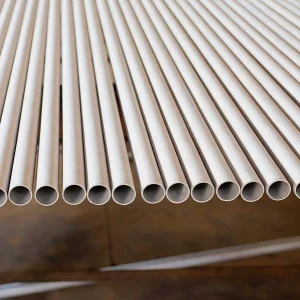
Custom Super austenitic steel ASME SA213 · S31254.SMO254 pipe Manufacturers, Products
View Product Details
High-Quality Ferritic & Martensitic Steels 410 • UNS S41000• 1.4512 Suppliers, Factories
View Product Details

High-Quality Super Duplex Steels 32760 • S32760 • 1.4501 Manufacturers, Suppliers
View Product Details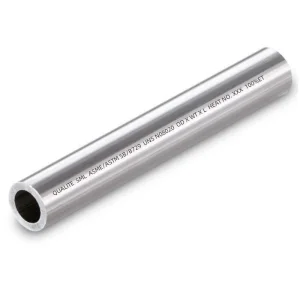


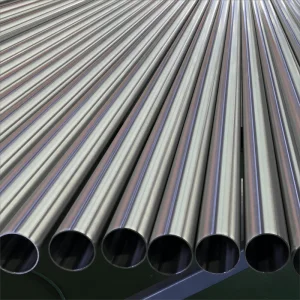
State-of-the-Art Custom Stainless Sanitary Tubing Manufacturing
Hygienic fluid transfer demands zero tolerance for bacterial entrapment, surface corrosion, or chemical leaching. Custom stainless sanitary tubing serves as the critical arterial network of modern sterile processing facilities.
In high-purity environments such as biopharmaceutical manufacturing, semiconductor processing, and hygienic food production, standard industrial piping is wholly inadequate. Custom stainless sanitary tubing is specifically engineered with ultra-smooth internal surfaces, precise dimensional tolerances, and strictly controlled metallurgy to facilitate complete Clean-in-Place (CIP) and Sterilize-in-Place (SIP) cycles.
Spezilla Tube Co., Ltd. brings over two decades of dedicated metallurgical mastery to the fabrication of high-purity welded, welded & cold-drawn (W&D), and seamless stainless steel tubing. By strictly limiting trace elements and controlling delta ferrite content (typically 1% to 3%), our sanitary tubing guarantees consistent orbital weldability, eliminating heat-affected zone (HAZ) cracking and micro-fissuring during field installation.
Global Trends Shaping Stainless Sanitary Tubing Development
Analyzing the macro shifts driving next-generation hygienic piping demand across North America, Europe, and Asia-Pacific market sectors.
Shift Toward Ultra-High Purity Electropolishing (EP)
Modern biomanufacturing facilities are moving from mechanical polishing (MP) toward Electropolished (EP) stainless tubing. Electropolishing removes iron spikes, enriches the chromium-to-iron ratio ($Cr/Fe \ge 1.5$), and achieves surface roughness values down to $Ra \le 0.25 \, \mu\text{m}$ ($10 \, \mu\text{in}$), drastically suppressing bio-film formation and rouging.
- Surface Finish: ASME BPE SF4 / SF5 / SF6 compliance
- Oxide Film: Enhanced passive layer thickness (> 20 Å)
Automated Orbital Welding Standardization
Global engineering, procurement, and construction (EPC) contractors now mandate strict sulfur chemistry control ($0.005\% \le S \le 0.017\%$) per ASME BPE S2 standards. This narrow range guarantees full penetration, uniform weld bead penetration, and zero drop-through during automated orbital TIG welding.
- Weld Geometry: Smooth internal bead without undercut
- Repeatability: Zero manual grind post-weld requirement
Super-Alloys for Aggressive Media
As chemical synthesis and API (Active Pharmaceutical Ingredient) processes utilize increasingly aggressive halides and acidic reagents, traditional 316L stainless is being complemented by Super Austenitics (6% Mo, 254SMO, 904L) and Nickel Alloys (Alloy 20, C276) to resist localized pitting and crevice corrosion.
- High PREN Value: PREN > 42 for extreme halide service
- Stress Corrosion Cracking: Complete immunity to chloride SCC
Global Procurement Demands & Quality Guarantees
Addressing the critical engineering, quality, and supply chain pain points encountered by global engineering teams and procurement officers.
| Procurement Risk / Challenge | Technical Impact on Facility | Spezilla Factory Solution & Information Gain |
|---|---|---|
| Micro-Pitting & Biofilm Accumulation | Internal surface micro-cavities host bacterial colonies, risking batch cross-contamination. | 100% inner diameter (ID) mechanical polishing and bright annealing (BA) achieving Ra ≤ 0.38 μm (15 μin), verified via profilometer. |
| Orbital Weld Defect & Penetration Failure | Inconsistent heat heats cause asymmetric weld beads, requiring costly pipe cut-outs. | Strict heats melted to 0.005–0.012% Sulfur content, ensuring balanced surface tension during TIG welding. |
| Material Substitution & Compliance Fraud | Substandard 304 or high-carbon 316 leads to intergranular corrosion in sterile lines. | 100% Positive Material Identification (PMI) testing, complete EN 10204 3.1 & 3.2 mill certificates with full heat traceability. |
| Ovality & Wall Thickness Variations | Mismatched wall alignment ruins automatic orbital clamp fit-up and gas purging efficiency. | Precision cold drawing and sink pass sizing maintaining wall thickness tolerances within ±5% and strict concentricity controls. |
| Rouging in Water For Injection (WFI) | Iron oxide discoloration contaminates high-purity water lines over extended heat exposure. | Controlled chemical passivation (citric/nitric) restoring a dense chromium-rich passive film oxide layer ($Cr/Fe \ge 1.5$). |
Macro Industry Engineering Solutions
Tailored sanitary tubing metallurgical profiles developed for world-class processing environments.
Biopharmaceutical & Sterile Process Piping
For Water for Injection (WFI), purified water loop distributions, and bioreactor harvest lines. Manufactured strictly to ASME BPE standards in 316L (UNS S31603) and 1.4404 / 1.4435 (Basler Standard with low ferrite).
- ASME BPE SF1 Mechanical Polished ID Ra ≤ 0.51 μm (20 μin)
- ASME BPE SF4 Electropolished ID Ra ≤ 0.38 μm (15 μin)
- Cleanroom vacuum plastic packaging with protective end-caps
Food, Dairy & Beverage Processing Systems
Designed to comply with 3-A Sanitary Standard 33-02 and EHEDG guidelines. Eliminates crevices in liquid food lines (dairy, brewery, beverage syrup, edible oils) to ensure frictionless cleaning under automated CIP fluids.
- 3-A Standard 304L & 316L bright annealed hygienic lines
- EN 10357 Dimensions Class A & B for European plant compatibility
- High mechanical ductility for smooth 1.5D and 2D mandrel bends
Semiconductor & Ultra-High Purity (UHP) Gas
Specialized VIM+VAR 316L double-melted stainless steel tubing engineered for semiconductor gas distribution, atomic layer deposition (ALD) tool hookups, and specialized chemical delivery manifolds.
- UHP Grade Electropolished ID Ra ≤ 0.13 μm (5 μin)
- Class 10 Cleanroom ultra-pure DI water washing and dry nitrogen purge
- Moisture level guaranteed < 10 ppb at point of use
Severe Chemical & Corrosive Acid Handling
Super Austenitic (S31254/254SMO, 904L) and Nickel Alloy (Alloy 20, Hastelloy C276) custom sanitary tubing crafted for aggressive organic acids, high-chloride process lines, and active chemical synthesis.
- Corrosion Resistant Pitting Resistance Equivalent (PREN ≥ 45)
- ASTM B515 / B622 / B676 standard compliance
- Resistant to sulfuric, phosphoric, and hydrofluoric process solutions
Sanitary Steel Grade & Surface Finish Guide
Compare mechanical, chemical, and surface parameters across our primary custom manufacturing spectrum.
| Material Grade | UNS / EN Standard | Surface Roughness (ID Ra) | Primary Finishing Process | Target Industry & Standard |
|---|---|---|---|---|
| TP304L | UNS S30403 / 1.4307 | ≤ 0.8 μm (32 μin) / ≤ 0.5 μm | Mechanical Polish / Bright Annealed | Food, Dairy, Brewery (3-A, ASTM A270) |
| TP316L | UNS S31603 / 1.4404 | ≤ 0.51 μm (20 μin) - SF1 | Precision Mechanical Polish | Pharma, Cosmetics (ASME BPE SF1) |
| TP316L EP | UNS S31603 / 1.4435 | ≤ 0.25 μm (10 μin) - SF4 | Electropolished + Passivated | Biotech WFI, API (ASME BPE SF4) |
| TP317L | UNS S31703 / 1.4438 | ≤ 0.38 μm (15 μin) | Bright Annealed + Passivated | Fine Chemical, Acid Process (ASTM A213) |
| S31254 (254SMO) | UNS S31254 / 1.4547 | ≤ 0.38 μm (15 μin) | Annealed & Pickled / EP Option | High-Chloride, Marine Biotech (ASTM A249) |
| Alloy 20 | UNS N08020 / 2.4660 | ≤ 0.38 μm (15 μin) | Cold Drawn & Bright Annealed | Sulfuric Acid Processing (ASTM B704) |
Localization Support, Standards & Quality Quality Control
Seamless international compliance with localized engineering documentation and export packing excellence.
Comprehensive Certification
Every shipment is furnished with full Mill Test Certificates (MTC) according to EN 10204 3.1. Independent third-party inspection (TUV, SGS, Lloyd's Register, Bureau Veritas) for EN 10204 3.2 certification is routinely executed upon client request.
Global Logistics & Packaging
Tubing ends are fitted with heavy-duty polyethylene caps to prevent dust and moisture ingress. Bundles are individually sleeved in plastic, desiccant-packed, and encapsulated in heat-treated ISPM 15 compliant wooden cases for safe sea or air freight.
Regulatory Code Alignment
Fully compliant with global hygienic frameworks: ASME BPE (USA), 3-A Sanitary (USA), EHEDG (Europe), EN 10357 / DIN 11850 (Germany), ISO 2037, and JIS G3447 (Japan). Simplifies validation paperwork for FDA and EMA regulatory audits.
Technical Roadmap & Future Engineering Outlook
How Spezilla is advancing sanitary tube manufacturing into the era of Industry 4.0 and advanced surface metallurgy.
100% Inline Laser Profilometry & AI Defect Mapping
We are integrating inline multi-axis laser profilometers across our cold-drawing and polishing lines. Real-time AI algorithms scan 100% of the internal and external tube surfaces, detecting microscopic draw lines, scratches, or wall variance instantly, guaranteeing zero-defect delivery.
Nanoscale Passive Layer Optimization
Through advanced electrochemical research, our R&D engineering team is refining electropolishing bath dynamics using eco-friendly organic acid electrolytes. This process produces an ultra-dense passive oxide layer with a chromium oxide concentration ($Cr_2O_3$) exceeding 85%, extending rouging resistance by up to 300% in hot WFI systems.
Additional Custom Stainless & Alloy Tubing Products
Explore the rest of our specialty tube catalog including high-temp nickel alloys, super duplex, and titanium tubes.

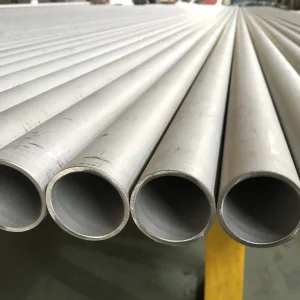


High-Quality Nickel Alloy Tubes 800HT • UNS N08811 • 1.4959 Manufacturer, Product
View Product Details


Frequently Asked Questions (Sanitary Tubing Engineering)
In-depth answers to long-tail procurement, metallurgical, and specification questions regarding custom stainless sanitary tubing.
While both specifications cover stainless steel tubing, ASTM A269 is a general specification for seamless and welded austenitic stainless steel tubing for general corrosion-resisting and low- or high-temperature service. It does not mandate strict surface roughness limits or controlled elemental chemistry for orbital welding.
In contrast, ASME BPE (Bioprocessing Equipment) is a comprehensive standard explicitly written for pharmaceutical and bioprocessing industries. ASME BPE imposes tight dimensional tolerances, controlled sulfur chemistry ($0.005\% \text{ to } 0.017\%$) for consistent orbital welding, strict surface roughness designations (e.g., SF1 Ra ≤ 0.51 μm, SF4 electropolished Ra ≤ 0.38 μm), and rigorous quality packaging requirements.
Sulfur acts as a surface-active agent during gas tungsten arc welding (GTAW / TIG). If two tube lengths with mismatched sulfur levels are joined via automatic orbital welding, the fluid motion inside the molten weld pool becomes asymmetric due to Marangoni convection forces. This leads to weld bead deflection, incomplete penetration, or excessive inner-diameter bead slump.
Spezilla strictly controls raw material heat chemistries to keep sulfur within 0.005% to 0.017%, ensuring perfectly symmetric, smooth, and full-penetration orbital weld beads without requiring filler metal.
Our mill produces several standardized internal surface finishes depending on customer application specifications:
- As Welded / Bright Annealed (BA): Ra ≤ 0.8 μm (32 μin)
- Mechanical Polish (MP) SF1: Ra ≤ 0.51 μm (20 μin)
- Mechanical Polish (MP) SF2: Ra ≤ 0.64 μm (25 μin)
- Electropolished (EP) SF4: Ra ≤ 0.38 μm (15 μin)
- Ultra-High Purity Electropolished (UHP): Ra ≤ 0.13 to 0.25 μm (5 to 10 μin)
Rouging refers to the formation of reddish-brown iron oxide particles on the internal surfaces of high-purity Water for Injection (WFI) and pure steam systems operating at elevated temperatures. It is caused by the breakdown of the chromium passive layer under continuous thermal oxidation and low ion content water exposure.
Rouging is prevented by specifying 316L or 1.4435 steel with high molybdenum content, performing electropolishing to maximize the chromium-to-iron ratio ($Cr/Fe \ge 1.5$), and executing chemical passivation treatment (using nitric or citric acid solutions) prior to system commissioning.
Every single length of custom stainless sanitary tubing undergoes 100% Non-Destructive Testing. Our quality assurance protocols include:
- Continuous Eddy Current Inspection: Executed per ASTM A1016 / EN 10246 to detect longitudinal and transverse weld defects.
- Hydrostatic or Pneumatic Underwater Pressure Testing: Verifies wall integrity under pressure up to 200 bar.
- Surface Profilometer Verification: Measures internal and external Ra values at multiple points.
- Endoscopic Borescope Inspection: Inspects internal weld bead profile and surface smoothness.
Yes. In addition to standard imperial sanitary sizes (0.5", 0.75", 1", 1.5", 2", 2.5", 3", 4", 6") and metric ISO/DIN dimensions (DN10 to DN150), Spezilla operates dedicated cold-drawing and cold-pilgering mills capable of fabricating non-standard outer diameters (from 4.00 mm up to 114.30 mm) and wall thicknesses (0.40 mm to 3.05 mm) tailored to custom equipment OEM blueprints.
Request Your Custom Sanitary Tubing Quote Today
Consult directly with our senior metallurgical engineers to determine the exact alloy grade, surface finish specification, and dimensional tolerances for your critical process application.
