
Featured Heavy-Wall Alloys & Precision Tubing
Explore certified high-performance alloy tubing manufactured to exact ASTM/ASME and EN specs for severe pressure and corrosion applications.

Custom Titanium Tubes • Grade 12 • UNS R53400 Manufacturers, Product

High-Quality Nickel Alloy Tubes 276 • UNS N10276 • 2.4819 Suppliers, Products

Custom Austenitic Steels 321H • UNS S32109 • 1.4878 Manufacturer, Products

Custom Nickel Alloy Tubes 800H • UNS N08810 • 1.4958 Factory, Products

Custom Titanium Tubes • Grade 1•UNS R50250 Product, Products

High-Quality Austenitic steel ASME SA269 · TP304 Factories, Products

High-Quality Nickel Alloy Tubes 800HT • UNS N08811 • 1.4959 Manufacturer, Product

High-Quality Austenitic Steels 309H • UNS S30909 Product, Products
Global Procurement Demand for Custom Thick Walled Piping Systems
Analyzing key growth drivers across deepwater energy extraction, nuclear generation, chemical processing, and ultra-high-pressure hydraulic systems.
Subsea & Offshore Energy
Global offshore oil and gas developments require thick-walled seamless and cold-drawn alloy piping capable of withstanding external hydrostatic pressures up to 300 bar (30 MPa) at ocean depths exceeding 3,000 meters. Pipeline wall-thickness-to-diameter ratios ($t/D \ge 0.1$) prevent radial buckling under combined thermal expansion, bending moments, and severe sour gas ($H_2S$) corrosive environments.
Supercritical Power Plants
Modern Ultra-Supercritical (USC) thermal and Generation IV nuclear power reactors operate at steam temperatures above 600°C and internal pressures surpassing 28 MPa. Standard thin-wall tubing experiences excessive creep strain. Specialized thick-walled austenitic grades (321H, 347H, 309H, 310S) and Nickel Alloys (800H/800HT) provide critical creep-rupture strength.
Severe Chemical Synthesis
High-pressure hydroprocessing, ammonia synthesis, and fertilizer plants utilize thick-walled nickel alloy (Inconel 625, Hastelloy C276) and duplex steel (2205, 2507) piping. These heavy-wall pressure boundaries absorb extreme pressure surges while offering superior Resistance to Chloride Stress Corrosion Cracking (SCC) and pitting.
Thick-Walled Stress Mechanics & Alloy Grade Optimization
Understanding circumferential (hoop) stress distribution, Lamé's equations, and alloy selection guidelines for thick-walled hollow sections.
Stress Distribution in Heavy-Wall Cylinders
When the ratio of outside diameter to inside diameter ($D_o / D_i$) exceeds 1.1, the assumption of uniform hoop stress used in thin-wall formulas (Barlow's Equation) leads to significant unsafe design errors. Engineers must apply Lamé's Equations to accurately model tangential ($\sigma_\theta$) and radial ($\sigma_r$) stress profiles across the wall gradient.
\sigma_{\theta,\text{max}} = P_i \cdot \frac{R_o^2 + R_i^2}{R_o^2 - R_i^2}
Where:
• $P_i$ = Internal Design Hydrostatic Pressure (MPa)
• $R_o$ = Outer Radius (mm), $R_i$ = Inner Radius (mm)
• Max Stress occurs at the innermost fiber ($r = R_i$)
By specifying custom thick-walled tubing produced via precision cold pilgering and cold drawing, Spezilla Tube Co., Ltd. achieves ultra-tight wall thickness variation control ($\le 5\%$), reducing peak stress concentrations and extending fatigue life under cyclic pressure loading.
Alloy Metallurgy & PREN Ratings
For chemical and marine environments, selecting the proper alloy grade depends heavily on the Pitting Resistance Equivalent Number (PREN), calculated via elemental weight percentages:
\text{PREN} = \% \text{Cr} + 3.3(\% \text{Mo} + 0.5\% \text{W}) + 16(\% \text{N})
- Austenitic (304/L, 316/L, 321H, 347H): PREN 19–25. Standard for general process lines, food & dairy, and heat exchangers up to 800°C.
- Duplex & Super Duplex (2205, 2507): PREN 35–43. Yield strength twice that of 316L, exceptional chloride SCC resistance in seawater RO systems.
- Nickel Superalloys (625, C276, 800H/HT): PREN 45–68+. Unmatched resistance to boiling nitric, hydrofluoric, and wet chlorine gases.
- Titanium Alloys (Grade 1, 2, 12): Immune to marine biofouling and ambient chloride attack via a dynamic self-healing $TiO_2$ passive oxide coating.
Thick-Walled Piping Grade & Property Specification
Direct technical comparison of key chemical, mechanical, and standard compliance parameters across factory product lines.
| Material Grade | UNS / EN Number | Yield Strength (MPa) | Tensile Strength (MPa) | Applicable Manufacturing Standards | Typical Industrial Service |
|---|---|---|---|---|---|
| Austenitic 304 / 304L | UNS S30400 / S30403 1.4301 / 1.4307 |
≥ 205 | ≥ 515 | ASTM A213, A249, A269, A312, EN 10217-7 | General fluid transfer, sanitary lines, low-pressure boilers |
| Austenitic 316 / 316L | UNS S31600 / S31603 1.4401 / 1.4404 |
≥ 220 | ≥ 520 | ASTM A213, A249, A269, A312, ASME SA312 | Chemical process lines, marine hardware, heat exchangers |
| Austenitic 321H | UNS S32109 1.4878 |
≥ 205 | ≥ 515 | ASTM A213, A312, ASME SA312, EN 10216-5 | High-temperature refinery service, superheaters (up to 870°C) |
| Austenitic 309H / 310S | UNS S30909 / S31008 1.4833 / 1.4845 |
≥ 205 | ≥ 515 | ASTM A213, A312, ASME SA213, EN 10296-2 | Furnace tubes, thermal oxidizers, radiant heater sleeves |
| Duplex 2205 | UNS S31803 / S32205 1.4462 |
≥ 450 | ≥ 655 | ASTM A789, A790, EN 10216-5, NACE MR0175 | Oil & gas sour fluid lines, high-pressure desalination piping |
| Nickel Alloy 625 | UNS N06625 2.4856 |
≥ 415 | ≥ 830 | ASTM B444, B704, B515, ASME SB444 | Subsea hydraulic control lines, severe acid gas headers |
| Nickel Alloy 800H / 800HT | UNS N08810 / N08811 1.4958 / 1.4959 |
≥ 170 | ≥ 450 | ASTM B407, B515, ASME SB407 | Petrochemical steam-methane reformers, ethylene cracking |
| Nickel Alloy C276 | UNS N10276 2.4819 |
≥ 355 | ≥ 750 | ASTM B619, B622, B626, ASME SB622 | Flue gas desulfurization (FGD), pharmaceutical reactors |
| Titanium Grade 1 / Grade 2 | UNS R50250 / R50400 3.7025 / 3.7035 |
≥ 170 / ≥ 275 | ≥ 240 / ≥ 345 | ASTM B338, B861, ASME SB338 | Power plant surface condensers, coastal seawater piping |
| Titanium Grade 12 | UNS R53400 3.7105 |
≥ 275 | ≥ 483 | ASTM B338, B861, ASME SB861 | High-temperature brine processing, chemical chlorination reactors |
Precision Manufacturing Routes & Quality Control
From raw hollow billet conditioning to certified finished piping, Spezilla controls the entire manufacturing value chain at our Huzhou and Shanghai production bases.
Seamless Cold Pilgering & Drawing
For heavy wall-to-diameter applications requiring zero weld seam vulnerabilities, our multi-pass cold pilgering mills reduce cross-sectional area by up to 75% in a single cycle. This process refines grain microstructure, yields exceptionally uniform wall thickness, and ensures surface roughness values down to Ra ≤ 0.4 µm.
Welded & Drawn (W&D) Processing
Combining high-speed orbital TIG/Laser autogenous welding with post-weld cold sink drawing over a precision mandrel. The weld seam undergoes 100% recrystallization during protective atmosphere bright annealing ($1050^\circ\text{C}-1180^\circ\text{C}$), rendering the weld zone indistinguishable from parent metal metallurgically.
Comprehensive Non-Destructive Testing
Every single thick-walled pipe length is subjected to rigorous non-destructive evaluation before release: 100% Eddy Current Inspection (ET per ASTM E426), Hydrostatic Testing up to 1000 bar, Ultrasonic Testing (UT per ASTM E213) for internal flaw detection, and PMI (Positive Material Identification) spectroscopic alloy verification.
Technology Roadmap & Future Industry Outlook (2025–2035)
Pioneering next-generation tubular technologies for the global energy transition, green hydrogen transport, and extreme subsea environments.
1. Green Hydrogen & High-Pressure $H_2$ Infrastructure
As the global energy economy transitions toward hydrogen, piping networks must withstand gaseous hydrogen pressures up to 70 to 100 MPa (700-1000 bar) without suffering Hydrogen Embrittlement (HE). Spezilla is actively developing modified austenitic 316LN and Nickel-Base Alloy piping with optimized nickel micro-segregation and ultra-low impurity levels (P ≤ 0.015%, S ≤ 0.005%) specifically engineered to eliminate hydrogen trap sites.
2. Digital Twin & AI-Driven Corrosion Monitoring
Future thick-walled piping installations will integrate smart sensor arrays embedded within outer protective jacketing. Utilizing finite element analysis (FEA) and machine learning algorithms, real-time stress state and localized wall thinning data can be streamed to digital twin models, enabling predictive maintenance prior to catastrophic high-pressure failures in remote offshore rigs.
3. Hybrid Additive-Forged Tubular Components
Combining hot-extruded seamless heavy-wall piping stock with Directed Energy Deposition (DED) 3D printing to create integrated heavy-wall branch connections, nozzles, and variable-thickness transition fittings without traditional high-risk circumferential girth welds.
4. Carbon-Neutral Zero-Emission Steelmaking
In compliance with international Scope 1, 2, and 3 ESG reporting requirements, Spezilla is transitioning raw material sourcing toward green hydrogen-reduced DRI (Direct Reduced Iron) stainless steel scrap melts, cutting total embodied carbon footprint per ton of tubing by over 65% by 2030.
Global Localization, Traceability & Quality Compliance
Ensuring absolute compliance with regional import frameworks, pressure vessel directives, and international trade protocols.
Full Heat Traceability & EN 10204 3.1/3.2
Every shipment of Spezilla thick-walled piping is accompanied by authentic Mill Test Certificates (MTC) according to EN 10204 Type 3.1. Independent third-party inspection (TÜV SÜD, DNV, SGS, Lloyd's Register) for Type 3.2 certification is routine upon request. Heat numbers are permanently laser-etched onto every pipe length.
International Regulatory Approval
Our manufacturing processes adhere to the European Pressure Equipment Directive (PED 2014/68/EU), ASME Boiler and Pressure Vessel Code (BPVC Section III / Section VIII Division 1 & 2), AD 2000-W0 pressure vessel regulations, and NACE MR0175/ISO 15156 sour gas standard specifications.
Custom Export Packaging & Logistics
To eliminate transport oxidation and ocean freight transit damage, all heavy-wall piping features plastic end caps, VCI anti-corrosion inner paper wrapping, heavy-duty wooden box crating, or ISPM-15 compliant fumigated plywood framework suitable for breakbulk and containerized shipment.
Custom Pressure Piping & Tube Product Series
Additional factory product lines engineered for specific ASME/ASTM pressure vessel, heat transfer, and structural piping requirements.

Custom Austenitic steel ASME SA312 · TP304 Stainless Steel Pipe Manufacturers, Supplier

High-Quality Austenitic steel ASME SA213 · TP309S Suppliers, Product

High-Quality Nickel Alloy Tubes 625 • UNS N06625 • 2.4856 Suppliers, Product

Custom Austenitic steel ASME SA312 · TP321 Suppliers, Product
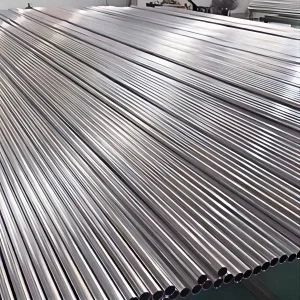
Custom Austenitic steel ASME SA213 · TP310S Manufacturer, Products

Custom Austenitic steel ASME SA213 · TP304 Seamless Tube Manufacturer, Supplier

High-Quality Duplex Steels 2205 • S31803/S32205 • 1.4462 Manufacturer, Products

High-Quality Austenitic Steels 347H • UNS S34709 Product, Products
Frequently Asked Engineering Questions (FAQ)
Expert insights on thick-walled piping procurement, pressure vessel standards, manufacturing tolerances, and alloy selection.
What defines a pipe or tube as "thick-walled" in industrial pressure design?
In mechanical and pressure vessel engineering, piping is classified as "thick-walled" when the ratio of its wall thickness to outside diameter ($t/D_o$) exceeds 10% (0.10), or when the ratio of outside diameter to inside diameter ($D_o/D_i$) is greater than 1.10. Under these conditions, radial stress ($\sigma_r$) and non-uniform hoop stress ($\sigma_\theta$) variations across the wall profile become mathematically significant, requiring Lamé's equations or ASME BPVC Section VIII Division 2 formulas rather than simple thin-wall approximations.
How does Spezilla control eccentricity in heavy-wall tubing production?
Wall thickness variation (eccentricity) is controlled through advanced cold pilgering and precision mandrel cold drawing. Spezilla utilizes ultrasonic wall monitoring during pilgering passes to maintain eccentricity within ±5% of nominal wall thickness, far exceeding standard ASTM/EN allowable tolerances (which permit up to ±10% to ±12.5%). This ensures uniform stress distribution under high internal pressures.
Should I select Seamless or Welded & Drawn (W&D) for severe heat exchanger service?
Seamless tubing (ASTM A213) is strictly mandated by nuclear and ultra-high-pressure design codes where longitudinal welds are prohibited by end-user specification. However, Welded & Drawn tubing (ASTM A249/A688) offers superior wall concentricity, tighter outer diameter tolerances, and lower cost. When subjected to full solution bright annealing, W&D tubing achieves complete grain boundary growth across the weld line, making its corrosion resistance virtually identical to seamless tubing.
What inspection documents are provided with custom thick-walled tubing orders?
Every shipment from Spezilla Tube Co., Ltd. includes an original EN 10204 Type 3.1 Mill Test Certificate (MTC) detailing complete chemical heat analysis, mechanical tensile/yield/elongation properties, hardness test values, hydrostatic or eddy current NDT results, and grain size verification. Third-party inspection certificates per EN 10204 Type 3.2 (certified by TÜV, DNV, SGS, or Lloyd's Register) are supplied upon agreement.
What custom size ranges and continuous straight lengths can Spezilla produce?
Spezilla produces custom tubing with outside diameters (OD) ranging from 4.00 mm to 114.30 mm, wall thicknesses (WT) from 0.40 mm to 3.05 mm (with custom heavy wall specs available on inquiry), and continuous straight lengths up to 25,000 mm (25 meters). U-bent configurations for feedwater heaters and condenser bundles are tailored to buyer radius drawings.
How do Titanium Grade 2 and Grade 12 compare for marine and chlorination service?
Titanium Grade 2 (UNS R50400) is unalloyed commercially pure titanium providing excellent ductility and complete immunity to ambient seawater corrosion. Titanium Grade 12 (UNS R53400) contains 0.3% Mo and 0.8% Ni, which significantly elevates Crevice Corrosion Resistance in high-temperature mineral acids, crevice conditions, and hot brine environments above 100°C where Grade 2 may experience localized breakdown.
