High-Performance Tubular Alloys & Standard Assemblies
Browse our precision-manufactured austenitic, duplex, ferritic, and titanium tubes engineered to exceed rigorous ASTM, ASME, and EN international quality standards.



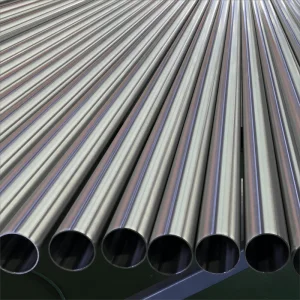


Technical Fundamentals of 304/304L/304H Stainless Steel Tubing
An in-depth metallurgical analysis of Grade 304 austenitic stainless steel, evaluating chemical stoichiometry, phase stability, mechanical integrity, and international standard compliance.
Metallurgical Composition and Microstructural Equilibrium
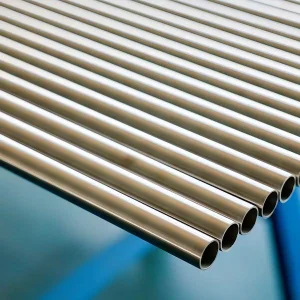
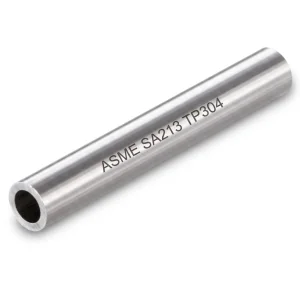
Type 304 stainless steel (UNS S30400 / EN 1.4301) represents the foundational 18/8 (18% chromium, 8% nickel) nominal composition within the austenitic alloy family. The inclusion of chromium establishes a self-healing, thermodynamically stable passive oxide film (Cr₂O₃) on the outer surface, imparting superior general corrosion resistance across mild atmospheric, chemical, and aqueous environments. Nickel stabilization maintains the face-centered cubic (FCC) austenitic crystal structure down to cryogenic temperatures, eliminating ductil-to-brittle transition temperature risks and providing outstanding toughness.
In industrial procurement, buyers must differentiate between the core variants: 304, 304L (UNS S30403 / EN 1.4307), and 304H (UNS S30409 / EN 1.4948). Grade 304L limits carbon content to a maximum of 0.030%, mitigating chromium carbide (Cr₂₃C₆) precipitation along grain boundaries during welding—commonly referred to as sensitization. This low-carbon chemistry eliminates intergranular corrosion risks in as-welded tubular fabrications. Conversely, Grade 304H controls carbon within 0.04%–0.10%, optimizing creep rupture strength and elevated temperature performance for elevated thermal services exceeding 525°C (977°F).
| Grade Variant | UNS Designation | EN Steel No. | Carbon (C) Max | Chromium (Cr) | Nickel (Ni) | Min Yield (0.2% Proof) | Min Tensile Strength |
|---|---|---|---|---|---|---|---|
| 304 Standard | UNS S30400 | 1.4301 | 0.08% | 17.5 - 19.5% | 8.0 - 10.5% | ≥ 205 MPa | ≥ 515 MPa |
| 304L Low Carbon | UNS S30403 | 1.4307 | 0.030% | 17.5 - 19.5% | 8.0 - 10.0% | ≥ 170 MPa | ≥ 485 MPa |
| 304H High Carbon | UNS S30409 | 1.4948 | 0.04 - 0.10% | 18.0 - 20.0% | 8.0 - 11.0% | ≥ 205 MPa | ≥ 515 MPa |
| 316L (Mo-Added) | UNS S31603 | 1.4404 | 0.030% | 16.0 - 18.0% | 10.0 - 14.0% | ≥ 220 MPa | ≥ 520 MPa |
Information Gain Engineering Note: When evaluating Pitting Resistance Equivalent Number (PREN = %Cr + 3.3×%Mo + 16×%N), Standard 304 scores approximately 18.0–19.0. For operating environments exposed to halides or chloride ion concentrations exceeding 200 ppm at elevated temperatures, engineering design protocols strongly suggest specifying 316L (PREN ~24.0) or Super Austenitic SMO254 to prevent localized pitting and crevice attack.
Seamless vs. Welded & Cold Drawn (W&D) Tube Architecture
Evaluating production routes, cold-work deformation ratios, microstructural recrystallization, and non-destructive examination criteria for critical pressure containment.
Seamless Tubing (ASTM A213 / A312)
Produced via hot rotary piercing followed by cold pilgering or multi-pass cold drawing. Eliminates longitudinal weld seams entirely, maximizing hoop stress integrity and making it the mandated specification for extreme pressure power generation boilers and high-pressure hydraulic lines.
Welded & Cold Drawn (ASTM A249 / A269)
Formed from continuous precision-rolled strip utilizing automatic Gas Tungsten Arc Welding (GTAW/TIG) or Laser welding. Following welding, tubes undergo heavy cold drawing over a floating plug or mandrel to achieve total weld bead homogenization, exceptional concentricity, and uniform wall thickness.
Bright Annealing Technology
Thermal treatment conducted at 1040°C–1150°C in an ultra-pure, 100% dry hydrogen or dissociated ammonia protective atmosphere. Rapid quenching prevents carbide precipitation while maintaining a mirror-bright surface finish (Ra ≤ 0.4 µm) without requiring acid pickling.
Non-Destructive Testing (NDT) & Quality Control Protocols
To guarantee zero-defect operational performance in thermal exchangers and fluid transportation networks, 100% of manufactured 304 stainless tubing undergoes stringent NDT evaluation. Eddy Current Testing (ECT) per ASTM E426 identifies surface and sub-surface discontinuities, while full-length hydrostatic testing (up to 200 bar / 2900 PSI) or pneumatic underwater testing verifies boundary integrity against micro-porosity and pinhole leaks.
China's Industrial Supply Chain Advantage & Manufacturing Ecosystem
How Spezilla leverages raw material integration, high-capacity automation, and Huzhou's specialized stainless steel tubing industrial cluster to deliver unmatched quality-to-cost efficiency.
Direct Primary Strip Sourcing
We source raw mother coil stock exclusively from tier-one steelmakers (TISCO, Tsingshan, Baosteel). Refined through Argon Oxygen Decarburization (AOD) and Vacuum Oxygen Decarburization (VOD) melt practices, our raw stock features ultralow non-metallic inclusion levels, ensuring seamless cold-drawing without micro-fissuring.
Huzhou Industrial Cluster Synergy
Located in the heart of China’s stainless tubing manufacturing hub in Huzhou, Zhejiang, our production facilities benefit from localized access to specialized tooling, precision cold-drawing equipment, and automated bright annealing lines, enabling rapid lead times and flexible production scaling.
Cost-to-Performance Optimization
By pairing high-speed multi-line GTAW welding with automated offline cold drawing and inline laser dimensional gauging, Spezilla delivers premium-grade tubing at a fraction of North American or Western European production costs without sacrificing code compliance.
Global Enterprise Procurement & Quality Assurance
Fully certified quality management protocols, mill test reporting, and third-party inspection integration tailored for international EPC contract requirements.
Traceability & EN 10204 3.1 / 3.2 Certification
Every single shipment of Spezilla 304 stainless tubing is accompanied by an authentic Mill Test Certificate (MTC) conforming strictly to EN 10204 3.1. MTC documentation explicitly detailed chemical heat analysis, mechanical tensile and yield testing, flattening and flaring deformation results, grain size determination (ASTM E112), intergranular corrosion test verification (ASTM A262 Practice E), and NDT non-destructive examination verification. For critical offshore, nuclear, or municipal projects, independent third-party verification (SGS, TUV, Bureau Veritas, Lloyd's Register) is available to issue EN 10204 3.2 certification.
| Specification Standard | Scope / Application Field | Size Range Capabilities (OD & WT) | Mandatory Quality Tests |
|---|---|---|---|
| ASTM A213 / ASME SA213 | Seamless Ferritic & Austenitic Boiler, Superheater, & Heat-Exchanger Tubes | OD: 6.35 mm - 114.3 mm WT: 0.89 mm - 8.0 mm |
Tension Test, Flattening, Flaring, Hardness, Hydrostatic or NDT, Grain Size |
| ASTM A249 / ASME SA249 | Welded Austenitic Steel Boiler, Superheater, Heat-Exchanger, & Condenser Tubes | OD: 9.52 mm - 76.2 mm WT: 0.50 mm - 3.05 mm |
Reverse Flattening, Flange Test, Reverse Bend, Weld Decay Test, ECT |
| ASTM A269 / ASME SA269 | Seamless and Welded Austenitic Stainless Steel Tubing for General Service | OD: 4.00 mm - 114.3 mm WT: 0.40 mm - 3.05 mm |
Flaring Test, Flattening Test, Hydrostatic or Nondestructive Electric Test |
| ASTM A270 / ASME SA270 | Seamless and Welded Austenitic Stainless Steel Sanitary Tubing | OD: 12.7 mm - 101.6 mm WT: 1.24 mm - 3.05 mm |
Surface Roughness Measurement (Ra inside/outside), Reverse Flattening, ECT |
| EN 10217-7 / EN 10216-5 | Welded & Seamless Stainless Steel Tubes for Pressure Purposes (PED 2014/68/EU) | OD: 6.00 mm - 114.3 mm WT: 0.50 mm - 4.00 mm |
Impact Test (at -196°C if required), Dimensional Inspection, Transverse Weld Test |
Localization Support & Secondary Fabrication Capabilities
Tailored manufacturing options ensuring plug-and-play installation for heat exchanger OEMs, Skid builders, and process equipment engineers.
Precision U-Bending Services
Formed to TEMA (Tubular Exchanger Manufacturers Association) standards with bending radii down to 1.5×OD. Post-bend localized solution annealing inside the U-bend transition zone eliminates residual tensile stresses and prevents stress corrosion cracking (SCC) during service.
Surface Polishing (Mechanical & EP)
Internal Bore Polishing (ID) and External Polishing (OD) options ranging from grit 180 to 600 grit. Electropolishing (EP) achieves ultra-smooth surface finishes down to Ra < 0.25 µm for ultra-clean semiconductor and high-purity pharmaceutical piping environments.
Export Packaging & Seaworthy Protection
Tubes up to 25 meters in straight length are protected with end plastic caps, wrapped in moisture-proof VCI (Vapor Corrosion Inhibitor) film, and packed into heavy-duty fumigated wooden cases lined with steel straps for transoceanic freight protection.
Localized Application Scenarios & Global Deployment
Deploying Spezilla 304 stainless tubing across demanding industrial sectors worldwide.
Chemical & Petrochemical Processing
Type 304 tubing is widely utilized in organic chemical synthesis, nitric acid storage lines, heat exchangers, and vessel cooling coils where resistance to moderately oxidizing acids and low atmospheric chloride exposure is mandatory.
Hygienic Food, Dairy, & Beverage Lines
Engineered to ASME BPE and ASTM A270 standards, our polished 304L stainless sanitary tubes ensure smooth flow paths, zero bio-film retention, and complete resistance to CIP (Clean-In-Place) caustic wash solutions.
Power Generation & Surface Condensers
Specified for feedwater heaters, auxiliary steam lines, and cooling loops. High thermal conductivity, excellent erosion resistance, and precise wall uniformities maximize heat transfer efficiency in fossil and renewable power infrastructure.
Industry Development Trends & Next-Generation Tubing
Strategic technology developments reshaping the global specialty stainless tubing sector over the next decade.
Ultra-High Purity (UHP) for Hydrogen & Microelectronics
As the global hydrogen economy scales, demand for specialized 304/304L UHP tubing capable of handling gaseous hydrogen at up to 70 MPa without hydrogen embrittlement is expanding rapidly, driving innovations in inner-bore electropolishing and cleanroom packaging.
Decarbonized Green Steel Sourcing
Leading EPC contractors are prioritizing low-carbon footprint tubing. Spezilla is integrating green hydrogen-reduced stainless raw materials and electric arc furnace (EAF) production lines powered by renewable energy to lower embodied Scope 3 carbon emissions.
AI-Driven Real-Time NDT Quality Control
Next-generation tube manufacturing lines integrate artificial intelligence vision inspection and continuous multi-channel laser gauging, detecting dimensional deviations down to ±0.005 mm during forming and drawing operations.
Frequently Asked Technical Questions (Q&A)
Expert engineering insights regarding selection, specification compliance, and operational performance of 304 stainless tubing.
What is the maximum continuous service temperature for 304 stainless tubing?
In continuous atmospheric service, 304 stainless tubing performs reliably up to 870°C (1600°F). For intermittent service exposed to rapid thermal cycling, the maximum temperature limit is 925°C (1700°F). However, if service operating temperatures fall between 425°C–860°C (800°F–1580°F), standard 304 is susceptible to carbide precipitation. For prolonged elevated-temperature service in this range, specify 304L (low carbon to prevent sensitization) or 321 / 347 (stabilized with titanium or niobium).
How does Spezilla verify resistance to intergranular corrosion for 304L tubing?
All 304L production lots undergo intergranular corrosion testing performed strictly in accordance with ASTM A262 Practice E (Copper-Copper Sulfate-16% Sulfuric Acid Test) or Practice C (Huey Test). Samples are sensitized (heated to 675°C for 1 hour) prior to acid immersion, followed by 180-degree bend testing. Samples showing zero micro-cracking or grain dropping are certified compliant for as-welded chemical service.
What is the structural difference between ASTM A213 and ASTM A269 304 tubing?
ASTM A213 explicitly covers seamless ferritic and austenitic steel boiler, superheater, and heat-exchanger tubes, mandating strict minimum wall thickness controls and specific elevated temperature mechanical properties. ASTM A269 covers seamless and welded austenitic tubing intended for general corrosion-resisting and low- or high-temperature service, governed by nominal wall thickness designations. For high-pressure boiler equipment, specify ASTM A213; for general chemical process piping, specify ASTM A269.
Can 304 stainless steel tubing be used in seawater or marine environments?
Direct exposure to seawater (chloride concentration ~19,000 mg/L) exceeds the corrosion resistance limits of Grade 304 (PREN ~18-19), leading to rapid pitting, crevice corrosion, and stress corrosion cracking (SCC). For marine and seawater surface condensers, engineers should select Super Austenitic S31254 (SMO254), Duplex 2205, Super Duplex 2507, or Titanium Grade 2 tubing.
Comprehensive Specialty Steel & Super Alloy Tubing
Explore our complete catalog featuring Super Duplex, Super Austenitic, Ferritic, and Custom Seamless configurations.