
Featured High-Temperature & Corrosion-Resistant Tubing
Precision-manufactured seamless, welded, and cold-drawn alloy tubes meeting rigorous ASME, ASTM, and EN standards with complete heat traceability.

Custom Nickel Alloy Tubes 400 • UNS N04400 • 2.4360 Manufacturer, Products

High-Quality Ferritic & Martensitic Steels 410 • UNS S41000• 1.4512 Suppliers, Factories

High-Quality Austenitic steel ASME SA269 · TP304L Suppliers, Product

High-Quality Austenitic Steels 304H • UNS S30409 • 1.4948 Manufacturer, Supplier

Custom Austenitic Steels 321H • UNS S32109 • 1.4878 Manufacturer, Products
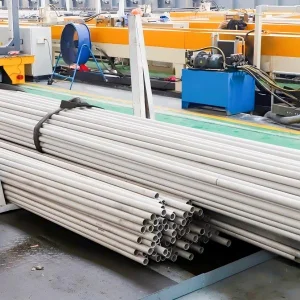
Custom Austenitic steel ASME SA213 · TP317L Supplier, Suppliers

High-Quality Titanium Tubes • Grade 3•UNS R50550 Factories, Product

Custom Austenitic steel ASME SA213 · TP316LN.UNS S31653 Manufacturers, Factory
Understanding 304H Stainless Steel: Metallurgy, Creep Strength & Grain Structure
Why UNS S30409 / 1.4948 is the industry standard for sustained thermal stress exceeding 538°C (1000°F).
Elevated Carbon Dynamics & Creep Resistance
Unlike standard 304 (UNS S30400) or low-carbon 304L (UNS S30403), 304H (UNS S30409 / EN 1.4948) is specially formulated with a controlled carbon content of 0.04% to 0.10%. This elevated carbon range provides vastly superior high-temperature tensile and yield strength, making it exceptionally resistant to creep rupture under continuous high-temperature pressure loads.
In thermal power plant boilers and catalytic cracking units operating above 500°C, low-carbon variants suffer microstructural collapse. 304H maintains structural integrity through carbide precipitation strengthening along grain boundaries when properly heat-treated.
ASTM Grain Size Control (ASTM No. 7 or Coarser)
A critical specification requirement dictated by ASME SA213 / ASTM A213 for 304H grade tubing is strict grain size regulation. Spezilla enforces a solution annealing temperature regime between 1040°C and 1150°C (1900°F to 2100°F) followed by rapid water quenching.
This process guarantees an average grain size of ASTM No. 7 or coarser. Coarse grains minimize grain-boundary sliding—the predominant mechanism of high-temperature creep deformation—ensuring extended operational lifespan in superheater and reheater tube banks.
Chemical & Mechanical Comparison Matrix
| Alloy Grade | UNS Designation | EN Standard | Carbon (C) % | Chromium (Cr) % | Nickel (Ni) % | Min. Grain Size | Max Temp (°C) |
|---|---|---|---|---|---|---|---|
| 304H Stainless | UNS S30409 | 1.4948 | 0.04 - 0.10 | 18.0 - 20.0 | 8.0 - 11.0 | ASTM No. 7 or Coarser | 816 °C (1500 °F) |
| 304 Stainless | UNS S30400 | 1.4301 | 0.08 Max | 17.5 - 19.5 | 8.0 - 10.5 | Not Specified | 425 °C (800 °F) |
| 304L Stainless | UNS S30403 | 1.4307 | 0.03 Max | 17.5 - 19.5 | 8.0 - 12.0 | Not Specified | 425 °C (800 °F) |
| 321H Stainless | UNS S32109 | 1.4878 | 0.04 - 0.10 | 17.0 - 19.0 | 9.0 - 12.0 | ASTM No. 7 or Coarser | 816 °C (1500 °F) |
| 316H Stainless | UNS S31609 | 1.4919 | 0.04 - 0.10 | 16.0 - 18.0 | 10.0 - 14.0 | ASTM No. 7 or Coarser | 816 °C (1500 °F) |
Global Procurement Intelligence: 304H Pipe Market Drivers
How energy transition, decarbonization mandates, and Total Cost of Ownership (TCO) are reshaping alloy pipe procurement.
Thermal Power Modernization & Ultra-Supercritical (USC) Steam
Global power generation facilities are undergoing massive upgrades to Ultra-Supercritical (USC) and Advanced USC designs to optimize fuel efficiency and curb CO2 emissions. 304H pipe and heat exchanger tubes remain the backbone for secondary superheaters, headers, and steam piping where steam pressures exceed 25 MPa and temperatures surpass 560°C.
Petrochemical Steam Methane Reforming (SMR)
With the rapid expansion of clean hydrogen production via Steam Methane Reforming (SMR) and refinery hydro-processing units, demand for high-carbon austenitic piping has escalated. 304H tubes withstand aggressive hydrocarbon gas environments and cyclic thermal expansion without experiencing thermal fatigue embrittlement.
Total Cost of Ownership (TCO) & Risk Mitigation
EPC contractors and plant engineers prioritize suppliers offering EN 10204 3.1/3.2 verified material. Unscheduled downtime in ammonia plants or power stations costs upwards of $100,000 per day. Investing in certified high-creep-strength 304H tubing eliminates premature thermal fracture and premature wall thinning risks.
Macro-Industry Solutions Powered by Spezilla 304H Tubing
Tailored piping configurations engineered for severe thermal stress, corrosive gases, and ultra-high pressure applications.
Boiler Superheaters & Radiant Reheaters
In power boilers, superheater tubes are exposed to direct flue gas radiation and high-velocity steam flow. Spezilla supplies seamless ASME SA213 TP304H tubes featuring tight dimensional OD tolerances, zero inner-diameter (ID) scale, and customized U-bend geometries.
- Eliminates inner wall steam oxidation up to 650°C steam output.
- Precision cold-worked surface finish reduces flue gas fly-ash erosion.
- Full solution annealing prevents intergranular stress corrosion cracking (IGSCC).
Petrochemical Pyrolysis & FCC Units
Fluid Catalytic Cracking (FCC) fractionators and ethylene furnace coils demand alloy tubing capable of resisting severe carburization and thermal cycling. 304H seamless pipe acts as an ideal medium, balancing mechanical toughness with thermal creep stability.
- High carbon content resists internal wall carburization under hydrocarbon crack gas.
- Superior tensile yield prevents pipe sag over long horizontal spans.
- Fully weldable using matching 308H consumables without pre-heat embrittlement.
Global Standards Compliance & Rigorous Quality Control
Every Spezilla 304H pipe undergoes strict multi-stage Non-Destructive Testing (NDT) to ensure zero-defect integrity before global export.
Global Certification Standards
Manufactured strictly in accordance with global pressure vessel codes:
- ASME SA213 / ASTM A213: Seamless Ferritic & Austenitic Alloy-Steel Tubes.
- ASME SA312 / ASTM A312: Seamless, Welded, & Heavily Cold Worked Austenitic Stainless Steel Pipes.
- EN 10216-5: Seamless Steel Tubes for Pressure Purposes (Grade 1.4948).
- PED 2014/68/EU: European Pressure Equipment Directive Compliance.
Complete NDT & Laboratory Inspection
To guarantee leak-proof reliability under high-temperature steam and gas service, 100% of our production line is verified through:
- Eddy Current Testing (ECT): Detects surface and sub-surface micro-cracks per ASTM E426.
- Hydrostatic Testing: Up to 30 MPa (4350 PSI) static liquid pressure test.
- Ultrasonic Testing (UT): Wall thickness uniformity & internal defect verification.
- Intergranular Corrosion Test: Per ASTM A262 Practice E.
Localization Support & MTC 3.1 / 3.2
We serve global EPC contractors with tailor-made logistics, localized documentation, and third-party inspection flexibility:
- EN 10204 3.1 MTC: Standard mill test certificate with heat chemical analysis & mechanical values.
- EN 10204 3.2 Certification: Independent third-party inspection (TUV, SGS, BV, Lloyd's Register).
- Custom export seaworthy packing (wooden cases, end caps, vapor corrosion inhibitor wrapping).
Technical Roadmap: The Next Generation of High-Temp Tubing
How Spezilla is advancing metallurgical precision, cold-drawing automation, and sustainable green manufacturing.
Nano-Carbide Micro-Alloying
Integrating trace additions of niobium, titanium, and nitrogen to form ultra-fine MX-type nano-precipitates within the 304H austenite matrix. This elevates long-term rupture life beyond 100,000 hours at 650°C without sacrificing weld ductility.
Automated Cold Pilgering & ID Polishing
Expanding our multi-pass cold pilgering lines to manufacture ultra-long continuous 304H heat exchanger tubes up to 25 meters in straight length, with inside diameter (ID) roughness controlled below Ra 0.4 µm for friction-free fluid transport.
Decarbonized Green Steel Production
Partnering with premium stainless steel melt shops utilizing electric arc furnaces (EAF) powered by renewable energy. Reducing carbon footprint across raw material sourcing, scrap recycling, and hydrogen-atmosphere bright annealing.
Explore Complete Stainless, Duplex & Nickel Alloy Range
Browse our extended product lines for specialized industrial, marine, and high-temperature furnace applications.

High-Quality Super Duplex Steels 2507 • S32750 • 1.4410 Manufacturer, Factories
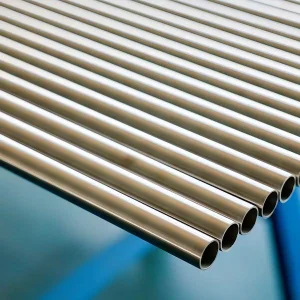
High-Quality Austenitic steel ASME SA213 · TP347 Manufacturers, Supplier

High-Quality Nickel Alloy Tubes 276 • UNS N10276 • 2.4819 Suppliers, Products

Custom Nickel Alloy Tubes 800H • UNS N08810 • 1.4958 Factory, Products
Custom Ferritic & Martensitic Steels 405 Stainless Steel Tubes, UNS S40500, 1.4002 Suppliers, Products

Custom Austenitic Steels 310H • UNS S31009 Manufacturers, Products

Custom Austenitic steel ASME SA213 · TP304 Seamless Tube Manufacturer, Supplier

Custom Austenitic steel ASME SA213 · TP316 Manufacturer, Product
Frequently Asked Questions: 304H Pipe & Industrial Tubing
Expert answers regarding engineering specifications, welding protocols, heat treatment, and procurement guidelines.
