
Precision Austenitic & Specialty Alloy Tubes
Explore our primary inventory of ultra-low carbon stainless steel, nickel alloy, and high-performance tubular solutions manufactured under strict ASTM, ASME, and EN specifications.



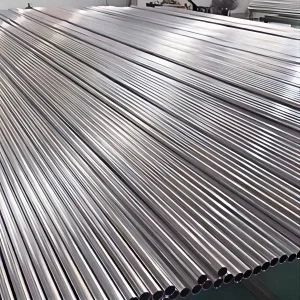




Metallurgical Fundamentals of 304L Stainless Steel Tubing
Understanding chemical composition controls, intergranular corrosion mitigation, microstructural stability, and mechanical property benchmarks in global industrial projects.
Intergranular Corrosion Mechanisms
When standard austenitic stainless steel is exposed to heat during welding, carbon diffuses rapidly toward grain boundaries, combining with chromium to form localized chromium carbide precipitates. This depletes the adjacent matrix of chromium below the critical 10.5% threshold required for passivity, triggering rapid intergranular attack in aggressive aqueous environments. 304L maintains grain boundary integrity, rendering post-weld solution annealing unnecessary for most process piping applications.
Dual Certification & Mechanical Strength
Historically, lower carbon contents resulted in reduced yield strength compared to standard 304. Modern advanced steelmaking practices (such as Argon Oxygen Decarburization - AOD and Vacuum Oxygen Decarburization - VOD) precise control of nitrogen addition (0.04-0.10%) allows modern mills to produce 304/304L dual-certified tubing. This delivers the superior intergranular corrosion immunity of 304L while matching the mechanical yield strength (≥ 205 MPa / 30 ksi) of standard 304.
Industry Trends & Demand Drivers for 304L Tubing
Analyzing macro-industrial transitions, decarbonization initiatives, and evolving specification trends shaping the global market for stainless tubing.
Hydrogen & Clean Energy Transition
As global energy infrastructure incorporates green hydrogen, ammonia synthesis, and carbon capture utilization and storage (CCUS), 304L tubing is selected for low-pressure conveyance lines and heat exchanger networks. Its microstructural stability under cryogenic temperatures (-196°C) and immunity to hydrogen embrittlement at ambient pressures make it a cost-effective alternative to higher-alloy materials in balance-of-plant systems.
Shift Towards Bright Annealed (BA) Finishes
Procurement departments are increasingly mandating continuous bright annealing under pure hydrogen atmospheres. Bright Annealed (BA) 304L tubes eliminate the traditional surface roughness associated with open-air annealing and acid pickling (AP), delivering an ultra-smooth internal diameter (ID Ra ≤ 0.4 µm) that prevents bio-film accumulation in biopharmaceutical lines and minimizes pressure drop in fluid handling systems.
HVAC-R & High-Efficiency Heat Exchangers
With strict global regulations phasing out hydrofluorocarbons (HFCs) in favor of natural refrigerants like $CO_2$ (R744), operating pressures in commercial refrigeration heat exchangers have escalated dramatically. Thin-wall welded and drawn 304L tubing provides the elevated burst-pressure margins and thermal conductivity required for trans-critical $CO_2$ gas coolers and evaporators.
Global Procurement Requirements & Risk Mitigation
Key criteria enterprise buyers, EPC contractors, and OEM engineering leads evaluate when vetting qualified 304L tube manufacturers.
| Evaluation Vector | Technical Standard / Protocol | Verification Mandate | Risk Avoidance Strategy |
|---|---|---|---|
| Dimensional Precision | ASTM A269 / ASTM A213 / EN 10357 | Laser micrometric outer diameter (OD) and ultrasonic wall thickness (WT) tracking | Prevents fit-up issues during automated orbital welding and tube-to-tubesheet expansion. |
| Corrosion Immunity | ASTM A262 Practice E / EN ISO 3651-2 | Copper-Copper Sulfate-16% Sulfuric Acid test for intergranular corrosion susceptibility | Guarantees zero micro-cracking or grain boundary degradation in welded heat-affected zones (HAZ). |
| Non-Destructive Testing | ASTM E426 / ASTM E213 / EN 10246-7 | 100% Eddy Current Testing (ECT) + Hydrostatic or Air-Under-Water Pneumatic testing | Identifies sub-surface longitudinal flaws, pinholes, and micro-porosity prior to shipment. |
| Traceability & MTC | EN 10204 Type 3.1 & 3.2 | Full heat-number stamping with chemical analysis, mechanical tension, and hardness reports | Ensures regulatory compliance under Pressure Equipment Directive (PED 2014/68/EU) and ASME Section VIII. |
China Factory 4.0: Supply Chain Resilience & Cost-Efficiency
How advanced automation, digitalized quality control, and integrated metallurgical clusters deliver unprecedented value to global buyers.
Automated Cold Drawing & Pilgering
Modern Chinese factories utilize multi-strand high-speed cold pilger mills and hydraulic cold drawing benches equipped with real-time digital monitoring. This process refines the grain structure of 304L hollows, producing exceptional wall uniformity (WT tolerance within ±7.5%), superb surface finishes, and enhanced mechanical strength via controlled strain hardening.
Continuous Hydrogen Bright Annealing
Equipped with inline optical pyrometers and automated gas mixture controls, continuous muffless hydrogen bright annealing furnaces heat-treat 304L tubes at 1040°C to 1120°C followed by rapid cooling. This completely dissolves carbides while protecting the metallic sheen, yielding clean, oxide-free surfaces without chemical pickling hazards.
Integrated Logistics & Port Connectivity
Strategic proximity to major deep-water ports like Shanghai and Ningbo-Zhoushan enables streamlined export clearance, specialized sea-worthy packaging (wooden crates with plastic end caps and vapor corrosion inhibitor paper), and reduced transit lead-times to Europe, the Americas, and Southeast Asia.
Localized Application Scenarios for 304L Tubing
From ultra-clean biopharmaceutical fluid transmission to heavy chemical processing, discover where 304L tubing excels.
Chemical & Petrochemical Processing
Specified under ASME SA312 / SA213 for heat exchangers, evaporators, and process piping carrying nitric acid (up to 65% concentration at ambient temperatures), organic acids, dilute sodium hydroxide, and sulfur-bearing refining streams.
Food, Beverage & Sanitary Piping
Manufactured to ASTM A270 and DIN 11850 sanitary tubing standards. Featuring mechanically polished or electropolished internal surfaces (Ra < 0.4 µm), 304L eliminates crevices where bacteria can harbor during Clean-In-Place (CIP) regimes in milk processing, brewing, and soft drink manufacturing.
Pharmaceutical & Biotech Water-for-Injection (WFI)
High-purity 304L tubes serve as high-integrity conveyance channels for USP Water-for-Injection and purified water distribution loops. The ultra-low carbon level resists corrosion caused by continuous thermal sanitization at 80°C–90°C.
Power Generation & Feedwater Heaters
Engineered under ASTM A249 / A688 as U-bent heat exchanger tubes for utility steam surface condensers and high-pressure feedwater heaters. 304L provides tight radius dimensional control and stress-relieved bends for reliable power plant operation.
Material Comparison: 304L vs Alternative Alloys
Select the optimal alloy grade based on pitting resistance, temperature threshold, weldability, and relative cost index.
| Alloy Grade | UNS / EN Number | PREN (Approx) | Max Temp (Air) | Chloride SCC Resistance | Relative Cost Index |
|---|---|---|---|---|---|
| 304L Stainless Steel | S30403 / 1.4307 | 19.0 | 870 °C / 1600 °F | Moderate | 1.0 (Baseline) |
| 316L Stainless Steel | S31603 / 1.4404 | 24.0 | 870 °C / 1600 °F | Good (2-3% Mo) | 1.35 - 1.45 |
| 321 Stainless Steel | S32100 / 1.4541 | 19.0 | 900 °C / 1650 °F | Moderate (Ti-Stabilized) | 1.25 - 1.35 |
| Duplex 2205 | S32205 / 1.4462 | 35.0 | 300 °C / 570 °F | Excellent | 1.70 - 1.90 |
| Nickel Alloy 600 | N06600 / 2.4816 | N/A | 1093 °C / 2000 °F | Superior | 4.50 - 5.50 |
*Note: PREN = %Cr + 3.3(%Mo) + 16(%N). Higher values denote superior localized pitting resistance in chloride environments. Relative Cost Index serves as an approximate baseline comparison.
High-Performance Alloy & Super Duplex Products
Explore our specialized tubular grades engineered for extreme temperature, high pressure, and severe chemical environments.








Frequently Asked Questions by Global Engineers
Expert answers to common technical queries regarding 304L tube specification, manufacturing routes, standards compliance, and testing.
Q1: What is the fundamental chemical difference between 304 and 304L stainless steel tubes?
The fundamental difference lies in carbon concentration. Standard 304 allows a maximum carbon content of 0.08%, whereas Grade 304L restricts carbon to a maximum of 0.030%. This extra-low carbon design prevents chromium carbide precipitation at grain boundaries during welding, guaranteeing immunity to intergranular corrosion in welded tubing networks.
Q2: When should engineers specify seamless 304L tubing over welded & drawn (W&D) tubing?
Seamless 304L tubing (ASTM A213 / A312) is recommended for extreme high-pressure services, elevated temperature regimes, or critical applications governed by design codes that specifically prohibit longitudinal weld joints. Welded & Drawn (W&D) tubing (ASTM A249 / A269) offers superior wall thickness concentricity, tighter dimensional tolerances, smoother internal surface finish, and cost-efficiencies ideal for heat exchangers and hydraulic lines.
Q3: Which international standards apply to 304L stainless steel tubes supplied globally?
Our 304L tubes comply with major global specifications including ASTM A213 (Seamless Boiler/Heat Exchanger), ASTM A249 (Welded Heat Exchanger), ASTM A269 (General Service/Instrumentation), ASTM A270 (Sanitary), ASTM A312 (Pipe), EN 10217-7 (Welded Steel Tubes for Pressure Purposes), EN 10216-5 (Seamless Pressure Tubes), and DIN 11850.
Q4: How does hydrogen bright annealing improve the quality of 304L tubing?
Bright Annealing (BA) heat-treats the tube inside a sealed, pure hydrogen atmosphere at temperatures exceeding 1040°C followed by rapid cooling. Unlike conventional air annealing which forms a dark oxide scale requiring acid pickling, bright annealing produces a reflective, oxide-free surface finish, preserves clean internal diameters, and preserves maximum corrosion resistance.
Q5: What non-destructive testing (NDT) procedures are performed before shipment?
Every production lot undergoes 100% Non-Destructive Testing. This includes continuous Eddy Current Testing (ECT) per ASTM E426 to detect longitudinal flaws, hydrostatic pressure testing to verify structural strength under ASME code limits, or pneumatic air-under-water testing to ensure zero micro-porosity leakage.
Q6: Can 304L tubing be used in seawater or high-chloride environments?
Grade 304L has a nominal PREN (Pitting Resistance Equivalent Number) of ~19.0, making it suitable for fresh water, potable water, and low-chloride industrial streams (< 200 ppm $Cl^-$ at room temperature). For brackish water or seawater environments, higher-alloyed grades such as 316L (PREN ~24.0), Duplex 2205 (PREN ~35.0), Super Austenitic 904L, or Titanium Grade 2 are recommended to prevent localized pitting and crevice corrosion.
Q7: What mill documentation accompanies certified 304L tubing orders?
Shipments are accompanied by an EN 10204 3.1 Mill Test Certificate (MTC) documenting chemical ladle analysis, mechanical tensile and yield testing, flattening/flaring test results, grain size per ASTM E112, non-destructive test results, and heat treatment logs. Independent third-party inspection certificates (EN 10204 3.2) by TUV, SGS, or Lloyd's Register are available upon request.
