
High-Performance Chemical Process Tubing Solutions (Part 1)
Explore our certified alloy product lines engineered for extreme thermal transfer, acid concentration, and high-pressure fluid containment. All tubes are supplied with EN 10204 3.1 / 3.2 Mill Test Certificates.


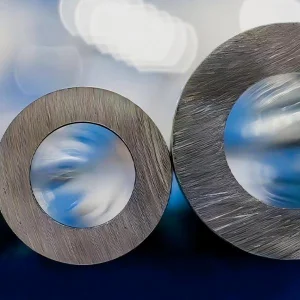





Next-Generation Tubing Infrastructure for Modern Chemical Processing Applications
Chemical processing plants operate under some of the world's most aggressive thermodynamics and corrosive dynamics. Selecting high-integrity tubing is the frontline defense against catastrophic plant shutdowns, environmental degradation, and capital loss.
Information Gain Metric: Traditional specifying guidelines heavily favor basic 304L/316L grades. However, empirical chemical process data reveals that upgrading to specialized heat-treated alloys (such as ASME SA213 TP317L, Hastelloy C276, or Incoloy 800HT) increases long-term equipment Mean Time Between Failures (MTBF) by upwards of 340% under severe halide exposure.
Strategic Advantages of Chinese Factories in Chemical Processing Tubing Production
China’s specialty tubing and process equipment manufacturing sector has evolved from volume-focused output into a high-precision, tech-driven powerhouse offering unprecedented metallurgical integrity and supply security.
Fully Integrated Industrial Clusters
Chinese manufacturing hubs (such as Huzhou and Shanghai operation centers) integrate raw material smelting, seamless tube pilgering, precision cold drawing, and bright annealing lines within localized geographic radii. This eliminates supply chain friction and speeds up emergency project lead times.
Advanced Metallurgy & Vacuum Annealing
State-of-the-art Chinese factories utilize continuous VOD (Vacuum Oxygen Decarburization) and AOD (Argon Oxygen Decarburization) refining, combined with modern inert-gas bright annealing furnaces. This achieves ultra-clean internal surface roughness (Ra < 0.4 µm) crucial for chemical purity.
Stringent QA/QC & International Approvals
Tier-1 Chinese manufacturers adhere strictly to ASME, ASTM, EN, ISO 9001, ISO 14001, and PED 2014/68/EU directives. Standard quality assurance includes 100% Non-Destructive Testing (NDT), ultrasonic testing, hydrostatic pressure testing up to 1000 bar, and intergranular corrosion testing per ASTM A262 Practice E.
Global Industry Trends Reshaping Chemical Processing Alloys
The global chemical processing market is experiencing a profound transformation driven by decarbonization, green chemistry transitions, extreme environment processing, and digital twin technology integration.
1. Green Hydrogen & Clean Ammonia Syntheses
As global energy transitions toward green hydrogen, chemical plants require specialized tubing capable of withstanding high-pressure hydrogen embrittlement (HE). Stabilized austenitic grades like 347/347H and nickel-based Alloy 625/800HT are becoming the mandatory baseline for high-temperature synthesis reactors.
2. Ultra-High Purity (UHP) Microelectronics Wet Chemicals
The semiconductor boom demands electronic-grade chemical reagents (e.g., UP-grade hydrofluoric and sulfuric acids). Equipment fabricators are moving from traditional plastics toward ultra-smooth, electro-polished (EP) super-austenitic 904L, 6Mo (UNS S31254), and Hastelloy C276 tubes to prevent ion leaching.
3. Severe Halide & Seawater Cooling Adoption
With freshwater conservation mandates, coastal chemical complexes increasingly use seawater for cooling medium circuits. This shifts material demand sharply toward Titanium Grade 2, Super Duplex UNS S32750/S32760, and Nickel Alloys to prevent biofouling-induced pitting.
Localized Application Scenarios in Modern Chemical Production
Every chemical unit operation presents distinct thermodynamic stress profiles. Below is an engineering overview of critical process units and their optimum alloy tubing selection.
PTA (Purified Terephthalic Acid) Plants
Service Conditions: Acetic acid solvent, bromide catalysts, temperatures reaching 220°C under high pressure.
Optimal Solution: Titanium Grade 2 and Austenitic SA213 TP317L. Titanium provides complete immunity to organic acid oxidation containing halide catalysts, whereas TP317L offers a cost-effective choice for medium-temperature recovery condensers.
Sulfuric & Phosphoric Acid Concentration
Service Conditions: Highly oxidizing to reducing acid concentrations across aggressive boiling regimes.
Optimal Solution: Super Austenitic 904L (UNS N08904) and Nickel Alloy C276 (UNS N10276). High copper additions in 904L deliver exceptional resistance to sulfuric acid across all concentration levels up to 70°C.
Ethylene & Olefin Pyrolysis Crackers
Service Conditions: Thermal cracking radiant coils operating above 900°C–1050°C, high carburization environment.
Optimal Solution: High-temperature alloys including Nickel Alloy 800HT (UNS N08811) and Stainless Steel 310S/309S. Excellent creep-rupture strength and resistance to internal coke formation.
EV Lithium Battery Material Precursor Synthesis
Service Conditions: Nickel-Cobalt-Manganese (NCM) sulfate digestion reactors with high chloride and iron impurity background.
Optimal Solution: Duplex 2205 (UNS S32205) and Super Duplex 2507. Double the yield strength of standard austenitic steel allows thinner tube walls for maximum heat exchange efficiency.
Chlor-Alkali & Chlorine Liquefaction Units
Service Conditions: Wet chlorine gas, sodium hypochlorite, caustic soda evaporators.
Optimal Solution: Nickel Alloy 400 (UNS N04400) and Titanium Grade 2. Monel 400 offers unmatched resistance to anhydrous hydrofluoric acid and caustic alkalis up to high temperatures.
High-Pressure Feed Water & Steam Condensers
Service Conditions: High pressure steam, thermal cycling, boiler feedwater oxygen scavengers.
Optimal Solution: ASME SA213 TP316H, TP321, and Ferritic 405/439 stainless steel tubes in U-bend configurations for stress relief in tube sheets.
Comprehensive Chemical Application Alloy Selection Matrix
Compare mechanical properties, Pitting Resistance Equivalent Number (PREN), allowable thermal ranges, and primary standards across major chemical engineering tube grades.
| Alloy Grade | UNS / Werkstoff | Key Standards | PREN Rating | Max Temp (°C) | Corrosion Environment Suitability |
|---|---|---|---|---|---|
| Austenitic TP317L | UNS S31703 / 1.4438 | ASME SA213 / SA249 | ~29.0 | 550°C | High organic acids, dilute sulfuric, acetic acid vapors |
| Austenitic 347 / 347H | UNS S34700 / 1.4550 | ASME SA213 / EN 10216-5 | ~20.5 | 800°C | High-temperature stabilized service, steam reheaters |
| Nickel Alloy 800HT | UNS N08811 / 1.4959 | ASTM B407 / B515 | ~22.0 | 1100°C | Carburization, nitriding, ethylene cracking gas |
| Super Duplex 32760 | UNS S32760 / 1.4501 | ASTM A789 / A790 | > 42.0 | 300°C | High-pressure acidic brine, sour gas (NACE MR0175) |
| Nickel Alloy C276 | UNS N10276 / 2.4819 | ASTM B622 / B626 | > 68.0 | 1040°C | Severe wet chlorine, ferric/cupric chlorides, hot acids |
| Super Austenitic 904L | UNS N08904 / 1.4539 | ASTM B677 / B674 | ~36.0 | 400°C | Concentrated sulfuric acid, phosphoric acid, halides |
| Nickel Alloy 400 | UNS N04400 / 2.4360 | ASTM B163 / B165 | N/A (Monel) | 550°C | Hydrofluoric acid, non-oxidizing salts, alkalis |
| Titanium Grade 2 | UNS R50400 / 3.7035 | ASTM B338 / B861 | Passive Oxide | 300°C | Seawater, oxidizing nitric acid, wet chlorine gas |
Global Enterprise Procurement Needs & Quality Protocols
EPC contractors, international chemical conglomerates, and process equipment OEMs follow rigorous criteria when procuring specialty tubing from global manufacturers.
1. Total Material Traceability & Certification
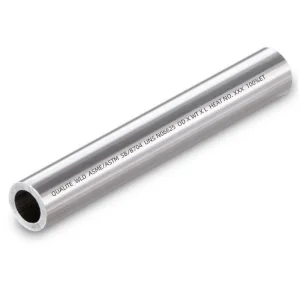
Global buyers mandate EN 10204 3.1 or 3.2 mill certificates. Every individual tube length must be stencil-marked with heat number, melt origin, outer diameter, wall thickness, and specification standard to guarantee complete auditability.
2. NACE & Severe Environment Compliance
For oil refining, petrochemical, and sour gas applications, tubing must comply with NACE MR0175 / ISO 15156. Hardness levels, heat treatment state (solution annealed and rapidly quenched), and intergranular corrosion tests are verified to prevent sulfide stress cracking.
3. Third-Party Independent Inspections
Leading procurement teams require raw material verification by independent inspection agencies such as TÜV, SGS, Lloyd's Register, or Bureau Veritas prior to export packaging and shipment.
High-Performance Chemical Process Tubing Solutions (Part 2)
Discover our nickel alloy, super duplex, and low-carbon austenitic tubing series customized for severe chemical environments.





Frequently Asked Questions by Chemical Engineers & Buyers
Detailed answers to critical specification, manufacturing, and alloy selection questions commonly encountered during process equipment design.
