
Featured Alloy Heat Exchanger Tubing (Items 1–8)
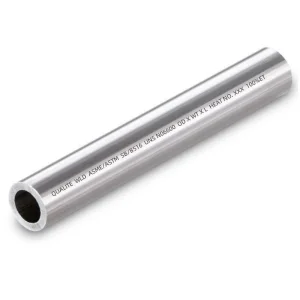
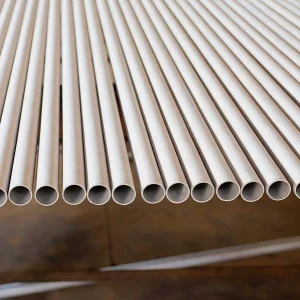
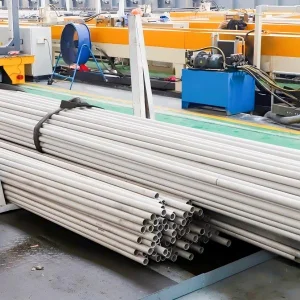
Precision-engineered nickel alloy, super austenitic, and high-temperature stainless steel heat exchanger tubes certified for extreme pressure and aggressive thermal processing.




Global Heat Exchanger Tube Market & Metallurgical Evolution
The global industrial energy landscape is undergoing a systemic shift toward higher thermodynamic efficiency, extreme fluid aggressiveness, and zero-carbon thermal exchange architectures. As primary heat exchangers, feedwater heaters, and condensers operate under heightened temperatures and pressures, specifying high-gain alloy tubing has transitioned from a routine procurement step to a critical engineering risk mitigation strategy.
Thermal Decarbonization
Modern petrochemical and power recovery plants require heat exchangers capable of operating at temperatures exceeding 850°C. Standard 304/316 alloys are increasingly replaced by stabilized high-carbon grades (TP310H, TP347H) and nickel superalloys (Inconel 600, Hastelloy C276) to prevent creep strain and thermal fatigue.
Chloride & Acid Mitigation
Seawater desalination, offshore oil rigs, and flue gas condensation demand high Pitting Resistance Equivalent Number (PREN > 40) alloys. Super Austenitic S31254 (254SMO) and Duplex S32750 deliver exceptional barrier defense against chloride-induced stress corrosion cracking (SCC).
Tight Dimensional Tolerances
Automated orbital welding and high-density tubesheet layout require ultra-precise outer diameter (OD) and wall thickness (WT) uniformity. Welded & Drawn (W&D) processes achieve concentricity tolerances within ±0.05 mm, minimizing pressure drop and vibration risks.
Chemical Composition & Performance Metrics by Alloy Grade
Choosing the ideal heat exchanger tube alloy requires balancing mechanical yield strength, thermal conductivity, and localized corrosion resistance (PREN = %Cr + 3.3%Mo + 16%N). Review our comprehensive engineering data below.
| Material Grade | UNS / EN Number | Nominal Composition | PREN Rating | Max Operating Temp | Primary Industrial Application |
|---|---|---|---|---|---|
| Nickel Alloy 600 | UNS N06600 / 2.4816 | 72% Ni, 15.5% Cr, 8% Fe | N/A (Nickel Base) | 1150 °C (2100 °F) | Nuclear steam generators, chemical processing, furnace tubes |
| Super Austenitic 254SMO | UNS S31254 / 1.4547 | 20% Cr, 18% Ni, 6.1% Mo, 0.2% N | ≥ 43 | 400 °C (750 °F) | Seawater cooling, flue gas desulfurization (FGD), bleach plants |
| Austenitic TP310S / TP310H | UNS S31008 / 1.4845 | 25% Cr, 20% Ni (High C in 310H) | ~ 25 | 1050 °C (1920 °F) | High-temperature heat exchangers, radiant tubes, boiler reheaters |
| Austenitic TP317L | UNS S31703 / 1.4438 | 19% Cr, 13% Ni, 3.5% Mo | ~ 29 | 450 °C (840 °F) | Chemical condensers, paper pulp digesters, textile dyeing lines |
| Austenitic TP304LN / TP316LN | UNS S30453 / S31653 | 18% Cr, 10% Ni, N-Strengthened | 19 – 25 | 550 °C (1020 °F) | Cryogenic pressure vessels, high-strength fluid transport |
| Monel Alloy 400 | UNS N04400 / 2.4360 | 67% Ni, 30% Cu, 2% Fe | N/A (Ni-Cu Alloy) | 480 °C (900 °F) | Feedwater heaters, marine heat exchangers, hydrofluoric acid units |
* Note: PREN (Pitting Resistance Equivalent Number) calculations are based on standard chemical tolerances. For custom metallurgical heat treatments (Bright Annealing, Solution Annealing) and exact mill test certificates (EN 10204 3.1/3.2), contact our engineering desk.
Enterprise Procurement Integrity & Testing Protocol
Global EPC contractors and refinery operators enforce non-negotiable standards when sourcing heat exchanger tubing. A single micro-crack or wall variation can cause catastrophic thermal plant shutdown. SPEZILLA implements an exhaustive 7-tier quality control architecture.
Non-Destructive Testing (NDT) Protocol
Every meter of tubing manufactured passes full-length online Eddy Current Testing (ECT) per ASTM E426 / EN 10246-2 to detect subsurface longitudinal or transverse imperfections. Ultrasonic Testing (UT per ASTM E213) is performed on thick-wall seamless tubes for nuclear and super-critical steam applications.
Hydrostatic & Pneumatic Proof Testing
Tubes are subjected to hydrostatic pressure testing up to 20 MPa (3000 psi) in accordance with ASME SA1016/SA1016M. Pneumatic underwater air-test at 1.0–1.5 MPa ensures zero pinhole leaks along cold drawn weld zones prior to bundle assembly.
Controlled Atmosphere Bright Annealing
To eliminate internal stresses from cold drawing and restore maximum corrosion resistance, tubes undergo continuous bright annealing in pure hydrogen gas at temperatures up to 1150°C. This eliminates surface oxidation, preserving a smooth mirror finish (Ra < 0.4 µm).
Comprehensive Mill Certification (EN 10204 3.1 / 3.2)
Shipments are accompanied by authentic EN 10204 3.1 MTC documentation including Positive Material Identification (PMI), chemical ladle analysis, mechanical tensile/yield testing, intergranular corrosion test (ASTM A262 Practice E), and grain size analysis.
Sector-Specific Heat Exchanger Solutions
Tailored alloy selection and structural design engineered to solve specific operational challenges across heavy industries.
Petrochemical & Refining
Challenge: Severe naphtha hydrotreating, polythionic acid SCC, and amine cracking.
Solution: ASME SA213 TP317L & SA312 TP321. Stabilized titanium addition prevents chromium carbide precipitation at heat-affected zones during long operating cycles.
Seawater Desalination (MSF/MED)
Challenge: High-velocity brine impingement and crevice corrosion in marine thermal distillers.
Solution: Super Austenitic S31254 (254SMO) & Nickel Alloy 600. High molybdenum content provides immunity to pitting in high-salinity hot brine environments.
Power Generation & Feedwater
Challenge: Ultra-supercritical boiler reheaters operating under cyclic thermal stress.
Solution: ASME SA213 TP310H & TP347. High carbon modification ensures high creep-rupture strength at temperature profiles exceeding 650°C.
Localized Regulatory Compliance & Export Logistics Safeguards
Navigating regional pressure vessel regulations requires stringent documentation and specialized export packaging. SPEZILLA guarantees seamless compliance across North America, Europe, the Middle East, and Asia-Pacific.
North America (ASME)
Full conformance with ASME Boiler and Pressure Vessel Code (BPVC) Section II (Materials) & Section VIII Division 1. Stamped mill test reports per SA213/SA249/SA312 specifications.
European Union (PED)
Certified under Pressure Equipment Directive (PED) 2014/68/EU by notified bodies. Material specification compliant with EN 10217-7 (welded) and EN 10216-5 (seamless) stainless tubing.
Middle East (NACE/Sour)
Compliance with NACE MR0175/ISO 15156 for sour gas service. Hardness testing controlled below 22 HRC to eliminate sulfide stress cracking in Aramco/ADNOC project environments.
Export Seaworthy Packaging
Tubes are fitted with plastic end caps, wrapped in vapor corrosion inhibitor (VCI) paper, and packed in heavy-duty wooden cases (ISPM 15 fumigated) to prevent sea-freight oxidation.
Technology Roadmap: Next-Generation Heat Exchanger Tubing
As global industrial processes target net-zero emissions, heat exchanger tubing must adapt to green hydrogen carrier fluid transport, supercritical CO2 (sCO2) cycles, and ultra-compact micro-channel heat exchange systems.
Hydrogen Embrittlement Barrier Tech
Developing micro-alloyed nickel-iron boundary coatings that block hydrogen atom permeation at high pressures (up to 70 MPa), safeguarding clean hydrogen heat exchangers from delayed hydride cracking.
Enhanced Surface Profiling (Integrally Finned)
Precision cold-rolling of external low-fins and internal helical ribbing increases effective heat transfer surface area by up to 300% without increasing the overall shell-and-tube footprint.
AI-Driven Defect Detection
Integrating continuous multi-frequency laser optical scanners and AI pattern recognition onto drawing lines to detect surface micro-voids smaller than 10 microns in real-time.
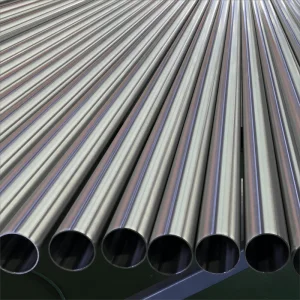
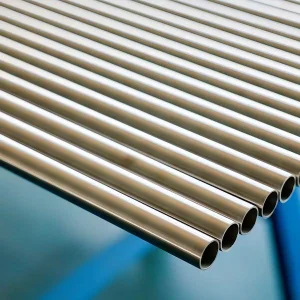
Featured Austenitic & Nickel Alloy Tubing (Items 9–16)
Standard, low-carbon, and titanium-stabilized heat exchanger tubes designed for sanitary, chemical, and high-pressure steam distribution systems.






Frequently Asked Technical Questions (Engineering FAQ)
In-depth authoritative answers to key procurement and metallurgic queries faced by heat exchanger design engineers and supply chain directors.
