
1. Global Commercial Landscape & Industrial Market Dynamics
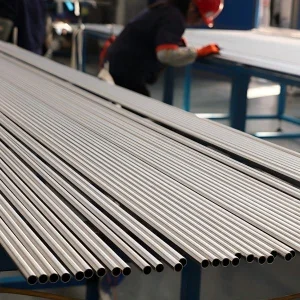
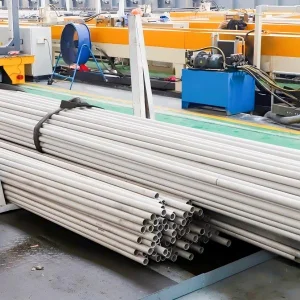
Commercially pure nickel tubing—predominantly categorized under UNS N02200 (Nickel 200) and UNS N02201 (Nickel 201)—represents a foundational material tier in severe chemical processing, chlor-alkali refining, aerospace propulsion fluid channels, and green hydrogen electrolysis infrastructure. Unlike standard stainless steels or even solid copper-nickel alloys, pure nickel provides near-absolute resistance to highly alkaline media, anhydrous caustic salts, and dry halogen gases across elevated thermal regimes.
The international supply chain for pure nickel tubes is heavily governed by stringent purity metrics, precision wall uniformity demands, and metallurgical certification under international standards such as ASTM B161, ASTM B163, ASTM B725, and ASME SB-161. Global procurement teams evaluate suppliers not merely on raw tonnage capacity, but on their ability to execute vacuum induction melting (VIM) paired with electroslag remelting (ESR), ensuring micro-cleanliness devoid of non-metallic inclusions.
As heavy chemical industries modernize toward zero-carbon emissions and closed-loop chemical recycling, the demand for high-integrity, seamless, and bright-annealed pure nickel tubing continues to surge. Crucial growth drivers include:
Chlor-Alkali & Caustic Concentration
High-concentration sodium hydroxide (NaOH) and potassium hydroxide (KOH) evaporators demand UNS N02200/N02201 heat exchanger tubes to eliminate stress corrosion cracking (SCC) inherent to 300-series austenitic stainless steels.
Green Hydrogen Electrolyzers (AWE)
Alkaline Water Electrolysis (AWE) plants operating at 30-40% KOH electrolyte concentration rely on nickel tubing for high electrical conductivity, low overpotential, and extreme resistance to nascent hydrogen embrittlement.
Halogen & Fluorine Processing
Pure nickel develops a tenaciously adherent protective fluoride or chloride passivation film, rendering UNS N02200 tubes essential for hydrofluoric acid production and elemental fluorine gas transmission.
2. Technical Metallurgy: UNS N02200 (Ni 200) vs. UNS N02201 (Ni 201)
Understanding the distinct thermal boundary between UNS N02200 and UNS N02201 is paramount for engineering design. While both grades share a minimum nickel content of 99.0%, the critical differentiator lies in carbon stoichiometry:
- Nickel 200 (UNS N02200 / W.Nr. 2.4066): Standard commercially pure nickel with carbon controlled to max 0.15%. Suitable for service temperatures below 315°C (600°F).
- Nickel 201 (UNS N02201 / W.Nr. 2.4068): Low-carbon variant held strictly to max 0.02% carbon. This low carbon baseline prevents intergranular graphitization—the precipitation of free carbon/graphite at grain boundaries between 315°C and 760°C—which drastically embrittles standard Nickel 200.
Chemical Composition Comparison (ASTM B161 / B163 Standard Limit)
| Grade / Alloy | UNS Designation | Werkstoff Nr. | Ni (%) min | C (%) max | Cu (%) max | Fe (%) max | Mn (%) max | Si (%) max | S (%) max |
|---|---|---|---|---|---|---|---|---|---|
| Nickel 200 | UNS N02200 | 2.4066 | 99.0 | 0.15 | 0.25 | 0.40 | 0.35 | 0.35 | 0.010 |
| Nickel 201 | UNS N02201 | 2.4068 | 99.0 | 0.02 | 0.25 | 0.40 | 0.35 | 0.35 | 0.010 |
Mechanical & Physical Properties (Annealed Tubing Condition)
| Property Parameter | UNS N02200 (Nickel 200) | UNS N02201 (Nickel 201) | Engineering Impact / Benefit |
|---|---|---|---|
| Tensile Strength (MPa) | 462 - 550 | 400 - 500 | High structural integrity in high-pressure conduits. |
| Yield Strength 0.2% (MPa) | 148 - 200 | 100 - 150 | Excellent cold workability, bending, and flaring. |
| Elongation A5 (%) | 40 - 55 | 45 - 60 | Superior ductility for complex tight-radius U-bends. |
| Thermal Conductivity (W/m·K) | 70.2 (at 20°C) | 74.9 (at 20°C) | Higher heat transfer rates than stainless steel (15 W/m·K). |
| Electrical Resistivity (µΩ·cm) | 9.6 | 8.5 | Optimal for high-current tubular busbars and heaters. |
| Curie Temperature (°C) | 360 | 360 | Ferromagnetic properties fade predictably above Curie point. |
3. Manufacturing Metallurgy & Precision Fabrication Routes
Achieving ultra-smooth internal bores, defect-free walls, and precise dimensional tolerances in pure nickel tubing requires dedicated cold working and thermal processing equipment. Spezilla and leading tier-one manufacturers utilize two main production routes tailored to application severity:
Seamless Pure Nickel Tubing (ASTM B161 / B163)
Extruded from solid VIM/VAR billets, seamless tubes undergo cold pilgering and precision bench drawing. The absence of a longitudinal weld seam offers maximum burst pressure security, perfect for high-pressure hydrogen lines and critical heat exchangers.
Welded & Drawn Pure Nickel Tubing (ASTM B725 / B730)
Formed from cold-rolled pure nickel strip using automated Gas Tungsten Arc Welding (GTAW/TIG) or Laser Welding without added filler metal. Subsequently cold drawn over a mandrel (DOM) to completely recrystallize the weld seam, yielding near-seamless structural uniformity.
Bright Annealing & Surface Passivation
Heat treatment takes place in continuous hydrogen atmosphere muffle furnaces at 750°C - 850°C. Pure dry hydrogen removes surface oxides without requiring chemical acid pickling, achieving an mirror-like Bright Annealed (BA) finish with Ra < 0.4 µm.
Quality Assurance & Inspection Protocols
Every batch of pure nickel tubing undergoes non-destructive testing (NDT) to ensure zero defect rates under high operational pressure:
Eddy Current Test (ECT)
Executed per ASTM E426 to detect surface and sub-surface longitudinal or transverse flaws along 100% of the tube length.
Hydrostatic Testing
Pressurized up to 200 bar (2900 psi) according to ASTM B751 to verify wall yield integrity and leak tightness.
Ultrasonic Testing (UT)
Measures continuous wall thickness variations and identifies micro-laminations within the tube body.
Grain Size & Flare Test
Metallographic grain size verification (ASTM E112) plus 60° tube end flaring test to ensure defect-free tube sheet expanding.
4. Application Engineering: Operational Use Cases for Pure Nickel Tubes
Pure nickel tubes are deployed across harsh chemical environments where alternative alloy families suffer from pitting, stress cracking, or heavy metal contamination:
1. Caustic Soda Evaporator U-Bundles
In membrane-cell chlor-alkali plants, caustic soda (NaOH) is concentrated from 33% to 50%+ and up to 99% molten anhydrous state. At temperatures exceeding 180°C, nickel 201 seamless U-tubes provide unmatched resistance to caustic stress corrosion cracking, yielding service lifespans exceeding 25 years.
2. Synthetic Fiber & Viscose Rayon Production
The spinning bath in viscose rayon processing involves concentrated sodium hydroxide and bath liquor. Iron contamination must be kept under 5 ppm to prevent yarn discoloration. Pure nickel 200 tubing prevents iron leaching while standing up to caustic washing cycles.
3. High-Purity Fluorine & Halogen Lines
In uranium enrichment (UF6 production) and fluorine gas synthesis, dry fluorine reacts with Nickel 200/201 to form a dense nickel fluoride (NiF2) protective layer. This film stops continuous halide attack, outperforming titanium and standard stainless steels.
4. Electronic Cathodes & Thermal Sheaths
Small-diameter Nickel 200 capillary tubes (OD 0.5mm - 3.0mm) are widely used in electron tube cathodes, thermocouple sheathing, and precision sensor bodies due to their controlled electrical resistance and high thermal response.
5. Food & Pharmaceutical Processing
Where ultra-pure fatty acid processing, sodium salt concentration, or sterile alkaline cleaning-in-place (CIP) regimens occur, bright annealed pure nickel tubes eliminate ionic leaching and ensure sanitary purity.
6. Aerospace & Defense Fluid Lines
Used in liquid rocket engine propulsion assemblies for carrying corrosive oxidizers and high-temperature gases where magnetic consistency and structural integrity at cryogenic levels are required.
5. Alloy Selection Engineering Matrix: Pure Nickel vs. Alternatives
Selecting between Commercially Pure Nickel, Nickel-Copper (Monel 400), Nickel-Chromium (Inconel 600), and Super Austenitic Stainless Steel depends heavily on environment pH, halide concentration, redox potential, and temperature:
| Corrosive Medium / Environment | Pure Nickel (Ni 200/201) | Monel 400 (UNS N04400) | Inconel 600 (UNS N06600) | Super Austenitic (904L / 254SMO) |
|---|---|---|---|---|
| Caustic Soda (NaOH) > 50% Hot | ★ Outstanding (Industry Standard) | Moderate (Risk of SCC at high temp) | Good (Higher cost than Ni 200) | Poor (Rapid SCC failure) |
| Dry Fluorine & HF Gas (>200°C) | ★ Excellent (Forms NiF2 passive film) | Excellent | Fair | Unsuitable |
| Hydrochloric Acid (HCl) Reducing | Fair in dilute cold acid | ★ Superior in air-free HCl | Fair | Good in low concentration |
| High Temp Oxidation (>800°C) | Moderate (Ni 201 max 600°C) | Poor (Oxidizes above 500°C) | ★ Superior (Up to 1150°C) | Fair (Max 400°C - 500°C) |
| Seawater & Marine Pitting | Good (Low fouling) | ★ Excellent | Good | ★ High PREN (PREN > 42) |
6. Technology Roadmap & Future Metallurgy Outlook (2025–2035)
As energy generation transitions toward green hydrogen and advanced nuclear reactors, pure nickel tube manufacturing is undergoing rapid technological advancement. Key milestones shaping the future of pure nickel tubing include:
Phase 1: Ultra-High Purity (99.99% Ni) Capillary Tubing
Development of semiconductor-grade ultra-pure nickel tubing with inner surface roughness Ra < 0.15 µm, eliminating gas outgassing in atomic layer deposition (ALD) chemical delivery systems.
Phase 2: Next-Gen AWE Electrolyzer Tubing Integration
Optimization of cold-drawn UNS N02201 micro-grooved internal surface tubing to optimize fluid dynamics and mass transfer efficiency in multi-megawatt green hydrogen electrolysis stacks.
Phase 3: Molten Salt Reactor (MSR) Nuclear Conduits
Advanced low-carbon pure nickel and modified nickel-molybdenum tubing designed to resist molten fluoride salt corrosion in Gen IV nuclear power plants operating continuously above 650°C.
Phase 4: Closed-Loop Recycled Nickel Supply Chain
Implementation of 100% recycled scrap VIM melting practices reduces the embodied carbon footprint of pure nickel tube fabrication by 65% while maintaining certified ASTM mechanical metrics.
7. Frequently Asked Questions (Engineering Procurement & Technical Q&A)
Answers to critical metallurgical, procurement, and fabrication questions regarding pure nickel tubing:
- ASTM B161 / ASME SB-161: Standard Specification for Nickel Seamless Pipe and Tube.
- ASTM B163 / ASME SB-163: Standard Specification for Seamless Nickel and Nickel Alloy Condenser and Heat-Exchanger Tubes.
- ASTM B725 / ASME SB-725: Standard Specification for Welded UNS N02200/N02201 Pipe.
- ASTM B730 / ASME SB-730: Standard Specification for Welded Nickel and Nickel Alloy Tube.