
Featured Industrial Schedule 40 & Precision Pipe Series
Explore our certified range of seamless and welded pipes engineered to resist severe corrosive, high-pressure, and high-temperature operating environments.

High-Quality Nickel Alloy Tubes 625 • UNS N06625 • 2.4856 Suppliers, Product
View Product Details
High-Quality Austenitic steel ASME SA213 · TP316Ti Suppliers, Product
View Product Details
High-Quality Nickel Alloy Tubes 800HT • UNS N08811 • 1.4959 Manufacturer, Product
View Product Details
Custom Austenitic steel ASME SA312 · TP321 Suppliers, Product
View Product Details
Custom Austenitic steel ASME SA312 · TP304 Stainless Steel Pipe Manufacturers, Supplier
View Product Details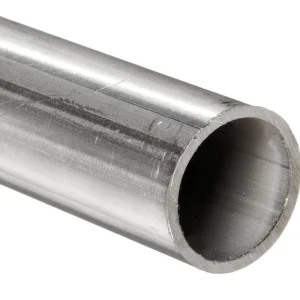
Custom Austenitic steel ASME SA312 · TP304H Manufacturers, Factories
View Product Details
High-Quality Super Duplex Steels 2507 • S32750 • 1.4410 Manufacturer, Factories
View Product Details
High-Quality Titanium Tubes • Grade 3•UNS R50550 Factories, Product
View Product DetailsExecutive Summary & Fundamentals of Schedule 40 Stainless Steel Piping
Understanding wall thickness ratios, pressure ratings, structural integrity formulas, and standardized dimensional standards (ASME B36.19M vs ASME B36.10M).
Dimensional Standardization: ASME B36.19M vs ASME B36.10M
In industrial piping infrastructure, Schedule 40 stainless steel pipe represents the standard wall thickness specification for nominal pipe sizes (NPS) ranging from NPS 1/8 (DN 6) up to NPS 30 (DN 750). Governed primarily by ASME B36.19M (Stainless Steel Pipe) and ASME B36.10M (Welded and Seamless Wrought Steel Pipe), the "S" suffix—such as Schedule 40S—denotes stainless steel metrics optimized to offer maximum structural resistance while minimizing overall alloy weight.
Unlike schedule designation for carbon steel, Schedule 40S provides specific wall thicknesses engineered to prevent localized stress concentration under dynamic hydraulic pressure. Procuring authentic Sch 40 stainless steel pipe from accredited mills ensures dimensional compliance with ASTM A312, ASME SA312, and EN 10216-5/EN 10217-7.
Internal Pressure Calculation & Barlow's Formula
Determining the maximum allowable working pressure (MAWP) for a Schedule 40 stainless steel pipe is critical to process plant safety. Engineers apply modified versions of Barlow’s Formula combined with ASME B31.3 Process Piping design factors:
Where P = Internal Working Pressure (PSI), S = Allowable Stress Value (PSI per ASME B31.3), t = Nominal Wall Thickness minus mill tolerance (-12.5%), E = Longitudinal Weld Joint Quality Factor (1.00 for seamless, 0.85 for welded), D = Outside Diameter (in), and Y = Temperature Coefficient.
Schedule 40 Stainless Steel Pipe Dimensional & Pressure Matrix (ASME B36.19M)
| NPS Size (Inches) | DN (Nominal mm) | Outside Dia (OD mm) | Sch 40 Wall (t mm) | Weight (kg/m - 304L) | Est. MAWP @ 20°C (316L Seamless PSI) | Hydrostatic Test Pressure (PSI) |
|---|---|---|---|---|---|---|
| NPS 1/2" | DN 15 | 21.34 mm | 2.77 mm | 1.27 kg/m | 4,150 PSI | 6,200 PSI |
| NPS 3/4" | DN 20 | 26.67 mm | 2.87 mm | 1.69 kg/m | 3,420 PSI | 5,100 PSI |
| NPS 1" | DN 25 | 33.40 mm | 3.38 mm | 2.50 kg/m | 3,210 PSI | 4,800 PSI |
| NPS 1-1/2" | DN 40 | 48.26 mm | 3.68 mm | 4.05 kg/m | 2,410 PSI | 3,600 PSI |
| NPS 2" | DN 50 | 60.33 mm | 3.91 mm | 5.44 kg/m | 2,050 PSI | 3,100 PSI |
| NPS 3" | DN 80 | 88.90 mm | 5.49 mm | 11.30 kg/m | 1,940 PSI | 2,900 PSI |
| NPS 4" | DN 100 | 114.30 mm | 6.02 mm | 16.08 kg/m | 1,670 PSI | 2,500 PSI |
| NPS 6" | DN 150 | 168.28 mm | 7.11 mm | 28.26 kg/m | 1,330 PSI | 2,000 PSI |
*Note: MAWP calculations based on ASME B31.3 allowable stress values for ASTM A312 TP316L seamless pipe at ambient temperature. Actual burst pressure is typically 4x working pressure.
Material Grade Synergy: Austenitic, Duplex & High Nickel Alloys
Matching Schedule 40 wall dimensions with advanced metallurgy to prevent pitting, intergranular corrosion, chloride stress-corrosion cracking (SCC), and thermal creep.
Austenitic Stainless Steels (304/L, 316/L, 321/H, 317L)
Austenitic grades constitute the majority of global Schedule 40 installations. TP304/304L (UNS S30400/S30403) offers cost-effective corrosion resistance in general fluid handling, potable water, and architectural piping.
For enhanced chloride media, TP316/316L (UNS S31600/S31603) incorporates 2.0-3.0% Molybdenum, elevating the Pitting Resistance Equivalent Number (PREN) to ~25. TP321/321H utilizes Titanium stabilization to eliminate chromium carbide precipitation during welding at temperatures between 427°C and 816°C.
- ASTM A312 / ASME SA312 Specifications
- Low-carbon "L" grades prevent sensitization
- Cryogenic toughness down to -196°C
Duplex & Super Duplex (2205 S32205, 2507 S32750)
Combining equal proportions of ferrite and austenite phases, Duplex UNS S31803 / S32205 (1.4462) provides nearly twice the yield strength of standard 316L (Rp0.2 ≥ 450 MPa vs 220 MPa). This permits engineers to down-gauge pipe wall thickness while maintaining equivalent pressure ratings.
Super Duplex UNS S32750 / Alloy 2507 (1.4410) achieves a PREN ≥ 42 due to high Molybdenum (3.5-4.5%), Chromium (24-26%), and Nitrogen (0.24-0.32%), rendering Schedule 40 pipes immune to chloride stress-corrosion cracking in subsea offshore environments.
- ASTM A790 / ASME SA790 Compliant
- PREN values reaching 42-45
- Exceptional resistance to H2S sour gas environments
Specialty Nickel Alloys & Titanium (Alloy 625, 800HT, Ti Gr. 2)
Where standard stainless steels fail, high-performance alloys step in. Inconel Alloy 625 (UNS N06625 / 2.4856) features a Nickel-Chromium matrix strengthened by Molybdenum and Niobium, providing exceptional strength from cryogenic temperatures to 982°C.
Incoloy 800HT (UNS N08811) resists carburization and nitriding in petrochemical cracking furnaces. Titanium Grade 2 / UNS R50400 offers lightweight immunity to sea water corrosion in coastal power stations and desalination plants.
- ASTM B444 / B407 / B338 Specifications
- PREN > 50 for extreme acid service
- Zero pitting rate in ambient marine exposure
Comparative Chemical & Mechanical Matrix for Sch 40 Alloys
| Alloy Grade | UNS / EN Designation | Chromium (Cr) % | Nickel (Ni) % | Moly (Mo) % | Yield Strength (MPa min) | Tensile Strength (MPa min) | PREN Rating |
|---|---|---|---|---|---|---|---|
| TP304L | S30403 / 1.4307 | 18.0 - 20.0 | 8.0 - 12.0 | - | 205 MPa | 485 MPa | ~19.0 |
| TP316L | S31603 / 1.4404 | 16.0 - 18.0 | 10.0 - 14.0 | 2.00 - 3.00 | 240 MPa | 515 MPa | ~25.0 |
| TP321H | S32109 / 1.4878 | 17.0 - 19.0 | 9.0 - 12.0 | Ti: 4x(C+N) min | 205 MPa | 515 MPa | ~19.5 |
| Duplex 2205 | S32205 / 1.4462 | 22.0 - 23.0 | 4.5 - 6.5 | 3.00 - 3.50 | 450 MPa | 655 MPa | ~35.0 |
| Super Duplex 2507 | S32750 / 1.4410 | 24.0 - 26.0 | 6.0 - 8.0 | 3.00 - 5.00 | 550 MPa | 750 MPa | ≥ 42.0 |
| Alloy 625 | N06625 / 2.4856 | 20.0 - 23.0 | 58.0 min | 8.00 - 10.00 | 415 MPa | 827 MPa | ≥ 51.0 |
Global Market Trends & Strategic Procurement Insights
Navigating raw material price volatility, LME nickel index hedging, supply chain risk management, and Total Cost of Ownership (TCO) optimization.
1. Decarbonization & Green Energy Transition Drives Demand
The global push toward net-zero targets is accelerating demand for Schedule 40 stainless steel pipe within zero-emission hydrogen generation facilities, carbon capture, utilization, and storage (CCUS) projects, and nuclear power plant life extension programs.
Green hydrogen transport conduits require high-purity, seamless TP316L or Duplex 2205 Sch 40 pipes to prevent hydrogen embrittlement under continuous high-pressure gaseous distribution.
2. Total Cost of Ownership (TCO) vs Initial CAPEX
While initial procurement costs for Schedule 40 stainless steel pipe exceed standard carbon steel (e.g., A106 Grade B), lifetime cost analysis demonstrates a substantial return on investment (ROI). Carbon steel lines often require frequent anti-corrosion coatings, cathodic protection, and replacement within 8 to 12 years in aggressive marine environments.
Conversely, Schedule 40 austenitic or duplex piping systems offer maintenance-free operational life exceeding 45 years, eliminating unplanned downtime losses in continuous refining plants.
3. Strategic Supply Chain & Alloy Surcharge Management
Global EPC contract managers must mitigate raw material volatility linked to London Metal Exchange (LME) Nickel and Moly pricing index fluctuations. Leading Schedule 40 suppliers provide fixed-price contractual options through mill billet hedging.
Additionally, establishing dual-sourcing partnerships with Tier-1 certified factories guarantees short lead times, standardized EN 10204 3.1 mill test certificates, and compliance with anti-dumping regulations across European and North American markets.
Macro Industry Solutions & Application Framework
Customized piping configurations tailored to specific industrial stressors: high-pressure fluid power, chemical processing, offshore exploration, and sanitary processing.
In upstream exploration and downstream refining, piping systems encounter wet hydrogen sulfide (H2S), carbon dioxide (CO2), and high-concentration chlorides under severe thermal stress. Standard carbon steel suffers rapid sulfide stress cracking (SSC).
Solution: Implementing Schedule 40 pipes manufactured from Duplex 2205 (S32205) or Nickel Alloy 625 (N06625). These pipes comply with NACE MR0175/ISO 15156 hardness limits (≤28 HRC for 2205), preventing catastrophic hydrogen-induced step-wise cracking in sour gas flare headers and hydrocracker unit lines.
Chemical synthesis lines transporting aggressive acids (sulfuric, nitric, organic) demand strict corrosion immunity and zero contamination. Ultra-clean pharmaceutical production lines additionally require ultra-smooth internal bore surfaces to prevent bio-film accumulation.
Solution: Schedule 40 TP316L and TP317L pipes with internal electropolishing (EP) achieving surface roughness Ra ≤ 0.25 µm (10 µin). Compliant with ASME BPE standards, these pipes withstand rigorous Clean-in-Place (CIP) and Steam-in-Place (SIP) sterilization cycles.
Supercritical fossil-fuel plants, combined-cycle gas turbine (CCGT) recovery steam generators, and nuclear primary loops operate under extreme steam temperatures (>550°C) and cyclic mechanical stress.
Solution: High-carbon stabilized Schedule 40 TP304H, TP316H, and TP321H pipes engineered to ASTM A312/A213. Controlled carbon content (0.04-0.10%) provides superior long-term creep rupture strength under severe pressure differentials.
Seawater intake systems and high-pressure Reverse Osmosis (SWRO) brine discharge piping face aggressive localized pitting and crevice corrosion under continuous high-salinity flow conditions.
Solution: Super Duplex 2507 (S32750) and Titanium Grade 2 Schedule 40 piping. With PREN ratings exceeding 42 and zero pitting rates in warm seawater, these materials eliminate pipe wall thinning and catastrophic seam erosion.
Quality Control, Non-Destructive Testing (NDT) & Certification
Every length of Schedule 40 stainless steel pipe undergoes rigorous non-destructive evaluation, chemical verification, and third-party mill inspection.
1. Non-Destructive Testing (NDT)
To guarantee 100% volumetric weld integrity and wall uniformity, factory quality assurance routines execute mandatory NDT procedures per ASTM A999 / EN 10246:
- Hydrostatic Testing: Internal pressure testing up to 10,000 PSI verifying structural yield safety factors.
- Eddy Current Examination (ET): Automated electromagnetic inspection conforming to ASTM E426 for seamless/welded defects.
- Ultrasonic Testing (UT): Full-wall shear-wave UT according to ASTM E213 for critical subsea and nuclear piping.
- Radiographic Testing (RT): X-ray inspection of longitudinal weld seams for welded Schedule 40 lines.
2. Metallurgical & Corrosion Testing
Sample coupons from each heat lot undergo destructive metallurgical evaluation to confirm phase balance and corrosion resistance:
- Intergranular Corrosion (IGC): ASTM A262 Practice E (Monypenny Strauss test) and Practice A (oxalic acid etch).
- Pitting Corrosion Testing: ASTM G48 Method A ferric chloride immersion test for Duplex and Super Duplex grades.
- Positive Material Identification (PMI): X-ray fluorescence (XRF) and Optical Emission Spectrometry (OES) verification on 100% of finished pipes.
3. International Accreditation & MTC
All shipments ship with comprehensive documentation guaranteeing full origin-to-site heat traceability:
- EN 10204 3.1 Certification: Certified factory inspection reports detailing exact heat chemistry, mechanical tests, and hardness values.
- EN 10204 3.2 Certification: Independent third-party inspection (TUV, DNV, Lloyd's Register, SGS, ABS) co-signed certification.
- Global Compliance: ISO 9001:2015, PED 2014/68/EU Pressure Equipment Directive, AD 2000-W0 certification for European vessel fabrication.
Technology Roadmap & Next-Generation Manufacturing Outlook
Pioneering smart manufacturing technologies, ultra-precise laser welding, automated ultrasonic wall mapping, and green decarbonized steelmaking.
High-Precision Laser Hybrid Welding Lines
Transitioning from traditional TIG (GTAW) and Plasma Arc Welding (PAW) to advanced Fiber Laser-Arc Hybrid Welding systems. This process reduces heat-affected zone (HAZ) width by up to 60%, drastically minimizing grain growth and maintaining optimal ferrite-austenite phase balance in Duplex Schedule 40 pipes without filler metal dilution.
Real-Time In-Line Thickness & Concentricity Mapping
Integrating continuous multi-axis laser displacement sensors and electromagnetic acoustic transducers (EMAT) directly on cold-drawing bench lines. This AI-driven feedback system provides sub-micron dimensional tracking, eliminating wall thickness eccentricities and enforcing uniform Schedule 40 tolerances across 25-meter pipe lengths.
Decarbonized EAF Metallurgy & Scope 1-3 Traceability
Partnering with premium stainless steel melt shops utilizing 100% Electric Arc Furnaces (EAF) powered by renewable energy and recycled scrap metal. Modern Schedule 40 pipe production achieves up to 75% reduction in embodied carbon footprint, complete with Verified Environmental Product Declarations (EPD).
Explore Additional Specialty Alloy & Stainless Steel Products
Select from our complete range of high-nickel, super austenitic, titanium, and heat-exchanger grade piping products.

High-Quality ASME SA249 TP304 Welded Stainless Steel Tubes Manufacturer, Suppliers
View Product Details
High-Quality Titanium Tubes • Grade 2 • UNS R50400 Factories, Products
View Product Details
Custom Austenitic Steels 321H • UNS S32109 • 1.4878 Manufacturer, Products
View Product Details
Custom Nickel Alloy Tubes 825 • UNS N08825 • 2.4858 Suppliers, Product
View Product Details
Custom Austenitic steel ASME SA213 · TP317L Supplier, Suppliers
View Product Details
High-Quality Austenitic Steels 316 • UNS S31600 • 1.4401 Factory, Product
View Product Details
Custom Austenitic Steels 316Ti • UNS S31635 • 1.4571 Manufacturer, Products
View Product Details
Custom Austenitic steel ASME SA213 · TP316L Supplier, Factories
View Product DetailsFrequently Asked Questions by Industrial Engineers & Buyers
Expert solutions addressing dimensional selection, pressure boundaries, material selection trade-offs, and compliance documentation.
