
Featured Specialty Alloy & Stainless Tubing Products (Batch 01)
Preserved OEM Lineup





Metallurgical Foundations of Seamless 304 Stainless Steel Tubing
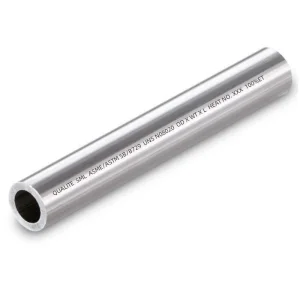
Grade 304 (UNS S30400 / EN 1.4301) represents the foundational 18/8 austenitic chromium-nickel stainless steel alloy specified globally for seamless pressure tubing. Unlike welded alternatives, seamless 304 tubing is extruded and cold-worked from solid round billets, eliminating longitudinal weld seams and eliminating localized heat-affected zone (HAZ) corrosion risks.
Austenitic Microstructure Stability
Maintained via precision control of Nickel (8.0%–10.5%) and Chromium (18.0%–20.0%). The face-centered cubic (FCC) crystal structure exhibits non-magnetic characteristics in annealed conditions and offers superior cryogenic toughness down to -196°C.
Passivation & PREN Dynamics
Forms an instantaneous, self-healing Chromium Oxide (Cr₂O₃) passive layer upon exposure to oxygen. With an average Pitting Resistance Equivalent Number (PREN) of ~19.0, seamless 304 provides optimal resistance in clean, neutral, and mildly corrosive fluid media.
High-Pressure Integrity
Absence of a seam yields isotropic mechanical properties. The uniform grain distribution allows seamless 304 tubing to withstand working pressures up to 30% higher than welded tubing of identical wall thickness under ASME BPVC Section VIII guidelines.
Chemical Composition & Mechanical Property Specifications
| Specification | C (%) | Mn (%) max | Cr (%) | Ni (%) | Yield Tensile (MPa) min | Ultimate Tensile (MPa) min | Elongation (%) min |
|---|---|---|---|---|---|---|---|
| ASTM A213 / TP304 | 0.08 max | 2.00 | 18.0 - 20.0 | 8.0 - 11.0 | 205 | 515 | 35 |
| ASTM A269 / TP304L | 0.03 max | 2.00 | 17.5 - 19.5 | 8.0 - 12.0 | 170 | 485 | 35 |
| EN 10216-5 / 1.4301 | 0.07 max | 2.00 | 17.5 - 19.5 | 8.0 - 10.5 | 210 | 520 - 720 | 40 |
| ASME SA213 / TP304H | 0.04 - 0.10 | 2.00 | 18.0 - 20.0 | 8.0 - 11.0 | 205 | 515 | 35 |
China Industry 4.0: Modern Manufacturing & Supply Chain Dominance
Chinese seamless stainless steel tubing mills have transformed from high-volume foundries into fully digitized Industry 4.0 smart facilities. By integrating artificial intelligence into billet heating, cold-pilgering line control, and continuous bright annealing, tier-1 Chinese manufacturers deliver unparalleled dimensional precision alongside massive supply chain resilience.
Multi-Roll Cold Pilgering
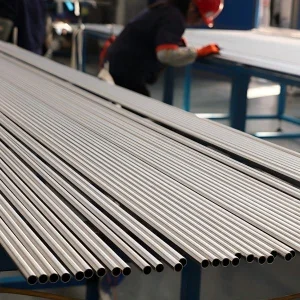
Utilizes advanced multi-roller cold reduction mills to reduce cross-sectional wall thickness and diameter simultaneously. This process refines grain boundary structure, yields mirror-smooth interior surface roughness (Ra < 0.4 µm), and guarantees strict concentricity.
In-Line AI Wall Thickness Monitoring
Integrated ultrasonic laser sensors continuously scan the tubing profile in real-time during processing. Any concentricity deviation exceeding 0.01 mm automatically triggers real-time roll adjustment, eliminating human error in mass production runs.
End-to-End Vertical Integration
From raw stainless melt stock selection to final hydro-testing and seaworthy wooden box packaging, domestic hubs maintain tight raw material reserves, insulating international buyers from global nickel price volatility and lead-time shocks.
Macro-Industry Solutions & Heavy Engineering Applications
High-grade seamless 304 stainless steel tubing serves as the backbone for critical fluid control, heat transfer, and structural systems across primary global infrastructure sectors.
Oil, Gas & Petrochemical Processing
Deploys ASTM A213 Grade TP304 seamless tubes in refineries, heat exchangers, boiler superheaters, and chemical process lines. Resists organic acids, sulfurized compounds, and moderate thermal cracking media up to 816°C.
Sanitary Food, Beverage & Pharmaceuticals
Utilizes ASTM A270 compliant seamless 304/304L tubing with mechanically polished or electropolished inner diameters. Prevents bacterial entrapment, facilitates Clean-in-Place (CIP) cycles, and complies with FDA and 3-A sanitary standard directives.
Semiconductor & Ultra-High Purity (UHP) Gas Lines
Bright annealed (BA) seamless 304 tubing guarantees zero outgassing, extremely low particle counts, and smooth gas delivery pathways essential for high-yield microchip fabrication cleanrooms.
Global Enterprise Procurement Requirements & Total Cost of Ownership (TCO)
For EPC contractors, procurement directors, and OEMs, evaluating seamless 304 tubing vendors requires rigorous verification beyond unit price per meter. Total Cost of Ownership is heavily impacted by raw material origin, non-destructive testing rigor, packaging safety, and documentation authenticity.
Mill Test Certificate (MTC) Compliance
Complete traceability down to the raw material heat number is non-negotiable. Qualified suppliers supply EN 10204 3.1 certificates standard, detailing chemical heat analysis, mechanical yield/tensile tests, micro-hardness ratings, and grain size verification. Independent 3.2 inspection (TÜV, SGS, Lloyd’s) must be available upon request.
Non-Destructive Testing (NDT) Rigor
Every meter of seamless tubing must undergo hydrostatic pressure testing (up to 200 bar/2900 psi minimum) or 100% Eddy Current Testing (ECT) in accordance with ASTM E426 standards to guarantee zero micro-pinholes, longitudinal flaws, or sub-surface micro-fissures.
Protective Packaging & Logistics Integrity
Seamless 304 tubes require plastic end caps, individual poly-sheathing, vapor-corrosion inhibitor (VCI) wrapping, and heavy-duty ISPM-15 compliant heat-treated wooden crate packing to prevent ocean-freight surface abrasion and atmospheric salt contamination.
Technical Roadmap & Future Outlook (2026–2035)
The next decade of seamless 304 stainless steel tubing technology is shaped by green decarbonization, ultra-precise surface engineering, and digital twin manufacturing integration.
Hydrogen Economy Compatibility
Engineers are optimizing seamless 304/304L internal grain boundaries to minimize hydrogen embrittlement susceptibility for medium-pressure hydrogen transport networks and refueling station infrastructure.
Decarbonized Green Steel Production
Leading manufacturers are transitioning to hydrogen-reduced direct reduced iron (DRI) and 100% electric arc furnace (EAF) melting powered by renewable energy, reducing embodied CO₂ per ton of tubing by up to 65%.
Nano-Scale Surface Engineering
Development of laser-pulsed nanoscale passivating textures that double pitting corrosion resistance while drastically reducing fluid friction losses in high-velocity cooling hydraulic loops.
Localization Support & Global Compliance Assurance
Navigating cross-border regulatory frameworks requires a manufacturer that understands both regional engineering codes and international trade compliance mandates.
Pressure Equipment Directive (PED 2014/68/EU)
Full certification under Module H ensures seamless 304 tubing can be legally imported and integrated into pressure vessels and piping installations throughout the European Economic Area (EEA).
ASME Boiler & Pressure Vessel Code (Section II Part A)
Compliance with ASME SA213 guarantees that material specifications, heat treatment procedures, and hydrostatic limits adhere precisely to North American energy and plant safety standards.
NACE MR0175 / ISO 15156 Sour Service
For upstream energy operations, specialized cold-worked and annealed seamless 304 tubing undergoes sulfide stress cracking (SSC) verification to meet strict hardness and chemical impurity thresholds.
Featured Specialty Alloy & Stainless Tubing Products (Batch 02)
Preserved OEM Lineup




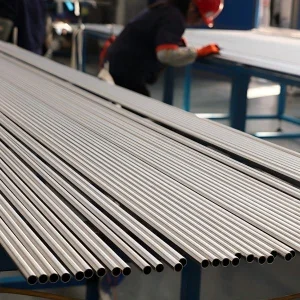
Frequently Asked Questions (FAQ) — Procurement & Engineering
Mining the most critical technical queries from global engineering teams, project managers, and quality assurance specialists.
ASTM A213 specifies seamless ferritic and austenitic alloy-steel boiler, superheater, and heat-exchanger tubes where strict minimum wall thickness, mechanical tension testing, and elevated pressure/temperature performance are mandatory. ASTM A269 covers nominal-wall seamless and welded austenitic stainless steel tubing designed for general corrosion-resisting and low/high-temperature service, focusing more heavily on dimensional accuracy, surface finish, and flare tests.
Seamless 304 tubing features a completely homogenous grain matrix across its entire circumference without a longitudinal weld seam. Welded tubing, even when cold worked, can retain localized microstructural variations in the heat-affected zone (HAZ) which can act as stress-concentration points under severe cyclic pressure or preferential pathways for intergranular corrosion in aggressive acid/chloride environments.
Grade 304L limits carbon content to a maximum of 0.030% (versus 0.080% max in standard 304). This low carbon variant prevents chromium carbide precipitation at grain boundaries during welding or heat exposure in the sensitization temperature range (425°C–860°C), making 304L the preferred choice for heavy-wall welded field assemblies where post-weld solution annealing is impractical.
Common finishes include Annealed & Pickled (AP), Bright Annealed (BA), and Electropolished (EP). AP finish provides standard industrial cleanliness with an oxide-free surface; BA finish utilizes a pure hydrogen atmosphere furnace to produce a bright, highly smooth surface ideal for sanitary lines; EP finish electrochemically removes micro-peaks on the inner diameter (down to Ra < 0.15 µm) for semiconductor UHP systems.
Barlow's Formula states P = (2 * S * t) / D, where P = internal fluid pressure, S = allowable stress value of 304 stainless steel at operating temperature (typically ~137 MPa at room temp per ASME code), t = nominal wall thickness, and D = outside diameter. Seamless tubing permits higher working pressure due to a seamless joint factor (E = 1.0).
