
Specialty Nickel Alloy & Austenitic Tube Range
Explore our foundational precision seamless and drawn tubing inventory engineered to EN 10204 3.1/3.2 mill certification standards.







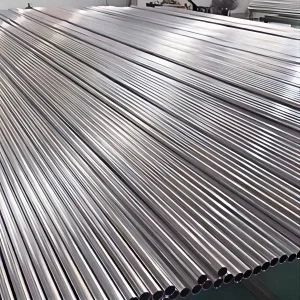
The Engineering Dynamics of Small Diameter Precision Seamless Tubing
A comprehensive analysis on metallurgical integrity, micro-tolerance cold pilgering, and global procurement paradigms for high-pressure industrial fluid control.
1. The Micro-Tubing Metallurgical Paradigm
In modern high-value industrial manufacturing, small diameter precision seamless tubing (typically defined as tubes with an outer diameter ranging from 0.5 mm up to 25.4 mm, with wall thicknesses down to 0.08 mm) represents the critical vascular network of advanced mechanical and chemical systems. Unlike standard structural piping or commercial welded tubing, micro-precision tubing operates under severe thermodynamic and mechanical constraints: ultra-high internal hydraulic pressure, localized crevice corrosion, rapid thermal cycling, and stringent purity requirements.
The elimination of a longitudinal weld seam is not merely a geometric preference; it is a fundamental thermodynamic necessity. Seamless tubing eliminates the micro-structural inhomogeneity, heat-affected zone (HAZ) grain coarsening, and preferential intergranular corrosion paths inherent in welded tubing. Through advanced cold-drawing and cold-pilgering processes, the grain structure of austenitic stainless steel, duplex alloys, and nickel superalloys is work-hardened and subsequently recrystallized during bright annealing, yielding isotropic mechanical strength and superior fatigue resistance.
2. Technological Drivers & Global Market Trends (2025–2035)
The global market for precision seamless tubing is experiencing a structural pivot driven by four major mega-trends across high-tech industries:
Green Hydrogen Economy
Hydrogen gas delivery systems demand ultra-dense seamless stainless steel (such as TP316L and 2507 Super Duplex) capable of resisting hydrogen embrittlement at operating pressures reaching 70 to 100 MPa in refuel dispensations.
Semiconductor Fabs (UHP Gas)
Ultra-High Purity (UHP) gas distribution lines require seamless nickel alloys and 316L VIM/VAR steel with internal surface roughness Ra < 0.15 µm to eliminate particle generation and outgassing during microchip fabrication.
Deepwater Oil & Gas Umbilicals
Subsea control lines operating under hydrostatic depths exceeding 3,000 meters rely on continuous coiled seamless Duplex (UNS S31803/S32205) and Super Duplex (UNS S32750) tubing to resist aggressive chloride pitting.
Material Performance & Metallurgy Comparison Matrix
Comprehensive technical breakdown of alloy families, chemical compositions, and service envelope specifications.
| Alloy Grade | UNS / W.Nr. Standard | PREN Value | Tensile Strength (MPa) | Primary Industrial Application Envelope |
|---|---|---|---|---|
| Austenitic 304 / 304L | UNS S30400 / 1.4301 | ~19.0 | ≥ 515 | General fluid transfer, instrumentation lines, food & beverage sanitary tubing. |
| Austenitic 316L / SA269 | UNS S31603 / 1.4404 | ~25.0 | ≥ 485 | Chemical process lines, marine instrumentation, hydraulic control systems. |
| High-Temp 310S / 310H | UNS S31008 / 1.4845 | ~27.0 | ≥ 515 | High-temperature heat exchangers, furnace burner tubes, thermal processing up to 1100°C. |
| Duplex 2205 | UNS S32205 / 1.4462 | ≥ 35.0 | ≥ 655 | Offshore oil & gas, desalination high-pressure lines, sour gas processing. |
| Super Duplex 2507 | UNS S32750 / 1.4410 | ≥ 42.0 | ≥ 750 | Subsea umbilical lines, extreme chloride environments, marine defense systems. |
| Nickel Alloy 400 | UNS N04400 / 2.4360 | N/A (Monel) | ≥ 480 | Hydrofluoric acid alkylation plants, marine boiler feedwater heaters, seawater piping. |
| Nickel Alloy 825 | UNS N08825 / 2.4858 | ≥ 31.0 | ≥ 586 | Sulfuric acid production, downhole oil well tubing, nuclear fuel reprocessing. |
| Nickel Alloy 800H | UNS N08810 / 1.4958 | N/A (Incoloy) | ≥ 450 | Petrochemical steam/hydrocarbon reforming, high-temperature creep resistance >600°C. |
China Industry 4.0: Supply Chain Resilience & Manufacturing Edge
Combining state-of-the-art cold pilgering, real-time laser concentricity monitoring, and vertically integrated alloy supply chains.
Smart Multi-Roll Cold Pilgering
Our intelligent cold pilger mills utilize multi-axis CNC deformation dynamics, achieving dimensional concentricity tolerances within ±0.01 mm while eliminating surface micro-fissures.
Automated Full-Length NDT
Every single millimeter of seamless tube undergoes continuous inline Eddy Current Testing (ECT) and high-frequency Ultrasonic Testing (UT) compliant with ASTM E426 and EN 10246 standards.
Vertical Raw Material Traceability
Partnering directly with Tier-1 master melt suppliers (Baosteel, Tsingshan) ensures zero tramp element contamination, certified grain refinement, and 100% heat heat-code traceability.
Precision Manufacturing & Quality Assurance Process
From solid round billet to bright annealed ultra-fine precision tubing: an uncompromising 6-stage engineering route.
Billet Drilling
Deep-hole gun drilling of solid master alloy rounds to ensure perfect concentric hollow starting cores.
Cold Pilgering
Iterative cold reduction passes using high-precision die mandrels to shrink diameter and wall thickness.
Bright Annealing
Vacuum or pure hydrogen protective atmosphere heat treatment at 1050°C–1150°C to restore corrosion resistance.
Precision Drawing
Micro-plug cold drawing to establish final outer diameter tolerances down to ±0.01 mm.
Electropolishing
Optional interior electropolishing (EP) achieving mirror-finish bores (Ra ≤ 0.15 µm) for semiconductor service.
100% Inspection
Eddy current, hydrostatic pressure testing up to 1500 Bar, dimensional laser scanning, and MTC EN 10204 3.1 issuance.
Frequently Asked Questions (Technical Sourcing FAQ)
In-depth engineering answers for procurement specialists, quality assurance directors, and design engineers.
Why choose small diameter seamless tubing over micro-welded tubing for critical applications?
Micro-welded tubing, despite advances in laser and TIG welding, inevitably retains a longitudinal thermal gradient zone (HAZ) where alloy elements such as Chromium and Molybdenum can segregate into intermetallic phases (such as Sigma phase in duplex alloys). Seamless small diameter tubing offers completely isotropic mechanical strength across the entire circumference, eliminates risk of longitudinal weld decay, and provides significantly higher internal hydrostatic burst pressure ratings—making it mandatory for aerospace, subsea umbilical, and gas chromatography lines.
What outer diameter (OD) and wall thickness (WT) tolerances can your factory maintain?
Through multi-pass cold pilgering and specialized micro-plug cold drawing, our factory routinely achieves outer diameter tolerances of ±0.01 mm to ±0.03 mm for standard industrial runs, and down to ±0.005 mm for specialized capillary tube requirements. Wall thickness tolerances are held within ±5% to ±7.5%, far exceeding standard ASTM A213 or EN 10216-5 commercial specifications.
What surface finishes are available for small diameter precision tubing?
We supply four standard surface finish conditions tailored to end-use requirements: (1) AP (Annealed & Pickled) for standard industrial chemical lines; (2) BA (Bright Annealed) processed under hydrogen atmosphere yielding a smooth, oxidation-free surface; (3) MP (Mechanically Polished) for decorative or hygienic tubing; and (4) EP (Electropolished) yielding an ultra-clean, passivated internal bore with surface roughness Ra ≤ 0.15 µm specifically engineered for ultra-high purity (UHP) semiconductor gas systems.
How does EN 10204 3.1 mill certification differ from 3.2 certification for international shipments?
EN 10204 3.1 certification is issued by our factory's independent Quality Assurance department, validating that chemical composition, heat numbers, tensile properties, hardness, and NDT test results strictly conform to the ordered purchase order and international standards. EN 10204 3.2 certification requires dual validation by both our factory QA inspector AND an independent third-party inspection agency (such as Bureau Veritas, SGS, TUV, or Lloyd's Register) who witness testing firsthand prior to container loading.
Can small diameter nickel alloy tubes withstand high-temperature sulfur oxidation?
Yes. Nickel superalloys such as Alloy 800H (UNS N08810) and Alloy 625 (UNS N06625) are explicitly formulated with high Chromium and Aluminum/Titanium micro-alloying additions that form a self-healing, adherent protective oxide scale (Cr2O3/Al2O3) at temperatures up to 1100°C. This prevents catastrophic sulfidation, carburization, and metal dusting in steam methane reforming and petrochemical cracking environments where 304/316 stainless steels rapidly fail.
Super Duplex & Specialized Alloy Seamless Solutions
Complete your procurement requirements with our high-performance corrosion-resistant product series.








Partner With China's Premier Precision Seamless Tube Manufacturer
Contact our engineering sales team today for custom dimensional tolerances, specialty alloy consultation, or to request a comprehensive mill test certificate (EN 10204 3.1/3.2) quote.
Request Technical Quote & Consultation