
High-Performance Alloy Tubes for South African Industrial Applications
Engineered to handle abrasive minerals in the Bushveld Igneous Complex, extreme thermal cycling in Secunda GTL plants, and aggressive marine environments along the KwaZulu-Natal coastline.
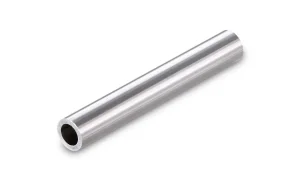
Ideal for coastal power plants (Deneysville, Richards Bay) and aggressive acidic slurry transport in mining operations.

High-temperature creep resistance for superheater and reheater tubes in Eskom thermal power stations.

Niobium-stabilized grade preventing intergranular corrosion during heavy-wall welding in petrochem units.

Precision instrumentation and hydraulic lines resistant to pitting corrosion in chemical plants.
South Africa's Heavy Industrial & Energy Metallurgy Demand Dynamics
Analysis of material degradation factors, regional procurement bottlenecks, and structural shifts toward cost-stable, high-chromium ferritic and martensitic steel grades.
Operational Realities in South African Plants
South Africa represents a unique industrial market characterized by extreme operating environments. From the world’s largest synthetic fuels complex at Sasol Secunda and Sasolburg (Coal-to-Liquids and Gas-to-Liquids) to the extensive coal-fired power fleet managed by Eskom (including Medupi, Kusile, and Lethabo stations), piping systems face severe thermal stress, abrasive coal dust slurry, and sulfur-rich flue gas condensate.
Furthermore, the platinum and chromium mining hubs of Rustenburg, Mokopane, and Polokwane (Bushveld Igneous Complex) demand tubing materials capable of resisting cyclic hydraulic pressure alongside chemical abrasion during mineral separation and smelting.
- Thermal Fatigue Resistance: Ferritic steels (e.g., 409L, 439, 444) exhibit lower coefficients of thermal expansion compared to austenitic 300-series, significantly reducing weld seam cracking in cyclic heat exchangers.
- Chloride Stress Corrosion Cracking Immunity: Due to their Body-Centered Cubic (BCC) crystal structure, ferritic stainless steels are virtually immune to chloride-induced SCC commonly caused by recycled industrial cooling water in arid Gauteng and Free State provinces.
- Abrasion & High Hardness Requirements: Martensitic stainless steels (e.g., 410, 420) offer high quench-hardenability up to 50+ HRC, essential for valve stems, mine pump shafts, and hydro-transport wear liners.
Ferritic vs. Martensitic Stainless Steels: Microstructure & Alloy Performance
Understanding crystal lattices, stabilization mechanisms, and mechanical transformation parameters for severe industrial specification.
| Steel Grade | UNS / EN Standard | Microstructure | Nominal Chemical Composition (%) | Yield Strength (MPa) | Max Service Temp (°C) | Key Application in South Africa |
|---|---|---|---|---|---|---|
| Type 405 | UNS S40500 / 1.4002 | Ferritic | 11.5-14.5 Cr, 0.08 C, 0.10-0.30 Al | ≥ 205 | 650 °C | Petroleum refining vapor lines, annealing boxes, turbine casings. |
| Type 409L | UNS S40900 / 1.4512 | Ferritic | 10.5-11.7 Cr, Ti Stabilized, Low C | ≥ 175 | 600 °C | Automotive exhaust manifolds, power station coal conduit ducts. |
| Type 430 | UNS S43000 / 1.4016 | Ferritic | 16.0-18.0 Cr, 0.12 C max | ≥ 260 | 800 °C | Nitric acid plants, interior architectural trim, heat exchangers. |
| Type 439 | UNS S43035 / 1.4510 | Ferritic | 17.0-19.0 Cr, Ti/Nb Stabilized | ≥ 205 | 850 °C | Power station feedwater heaters, sugar mill evaporators. |
| Type 444 | UNS S44400 / 1.4521 | Ferritic | 17.5-19.5 Cr, 1.75-2.5 Mo, Ti+Nb | ≥ 275 | 1000 °C | Solar hot water tanks, coastal brewery equipment, chemical tanks. |
| Type 410 | UNS S41000 / 1.4006 | Martensitic | 11.5-13.5 Cr, 0.15 C | ≥ 290 (Annealed) | 650 °C | Mine dewatering pump shafts, valve components, high-stress fasteners. |
| Type 420 | UNS S42000 / 1.4021 | Martensitic | 12.0-14.0 Cr, 0.15-0.40 C | ≥ 345 (Annealed) | 500 °C | Industrial cutlery, slurry valve gates, turbine blading in Eskom units. |
Engineering Note: Dual Stabilization (Ti + Nb) in Ferritic Steels
When specifying ferritic steel tubes like 439 or 444 for heavy-duty welding in South Africa’s petrochem refineries, dual stabilization with Titanium (Ti) and Niobium (Nb) locks up interstitial Carbon and Nitrogen atoms. This prevents Chromium Carbide precipitation along grain boundaries during GTAW/TIG welding, completely eliminating intergranular corrosion in post-weld heat-affected zones (HAZ) without requiring expensive post-weld solution annealing.
China Industry 4.0 Infrastructure: Delivering Precision & Resilience to South Africa
Bridging Chinese smart manufacturing excellence with Southern African industrial procurement requirements.
Automated Laser & TIG Welding Lines
State-of-the-art continuous roll-forming mills equipped with multi-torch TIG and high-frequency laser welding systems ensure 100% penetration welds with zero internal oxidation, maintaining uniform wall thickness (WT tolerances down to ±0.03mm).
Full NDT Inspection Protocols
Every single ferritic and martensitic tube manufactured undergoes online Eddy Current Testing (ECT) per ASTM E426, Hydrostatic Testing up to 20 MPa, and Ultrasonic Testing (UT) to detect sub-surface flaws before international dispatch.
Direct Maritime Logistics to Durban & Cape Town
Optimized supply chain routes from Ningbo and Shanghai ports directly to Port of Durban and Cape Town Harbor reduce transit lead times by up to 14 days, supported by complete customs documentation and EN 10204 3.1 / 3.2 inspection certificates.
Overcoming Local South African Stock Shortages & Long Lead Times
Industrial maintenance managers at South African processing plants often face immense downtime risks due to localized shortages of specialized steel tubing grades such as ASTM A268 TP405 or TP444. Local distributors typically carry basic 304/316 structural tube stock, leaving specialized heat exchanger and condenser lines vulnerable during emergency shutdowns. Our Industry 4.0 smart factory setup in China allows for rapid custom production runs (with minimum order quantities as low as 500 meters) and expedited ocean air-freight options directly to O.R. Tambo International Airport or Durban Port.
Targeted Application Scenarios Across South African Industries
Specific metallurgical deployments solving thermal, mechanical, and corrosive degradation challenges.
1. Petrochemical & Synthetic Fuel (Sasol Facilities)
In high-sulfur synthetic gas cooling loops and hydrocracking process heat exchangers, ASTM A268 Grade 405 (UNS S40500) seamless and welded tubes offer outstanding resistance to polythionic acid stress corrosion cracking during maintenance turnarounds, where traditional 304L stainless steels fail catastrophically.
2. Eskom Coal-Fired Power Station Retrofits
High-temperature low-alloy reheaters and economizer heat exchangers utilize stabilized Type 439 (UNS S43035) tubing. Its low thermal expansion matches carbon steel headers, dramatically reducing localized thermal stress on tube-to-tubesheet joint welds while providing superior resistance to wet flue gas dew-point corrosion.
3. Platinum & Gold Mining Slurry Infrastructure
In deep-level mining operations within the Witwatersrand Basin and platinum refineries in Limpopo, quenched and tempered Type 410 / Type 420 martensitic steel tubes serve as critical slurry pump barrels and high-pressure hydraulic line casings due to their high yield strength (> 550 MPa) and resistance to particle erosion.
4. Automotive OEM Supply Chain (Eastern Cape & Gauteng)
With major automotive assembly plants located in Rosslyn (Pretoria), Gqeberha (Port Elizabeth), and East London, our ASTM A554 / EN 10296-2 Type 409L ferritic tubes supply tier-1 exhaust manufacturers with superior formability for mandrel bending and hydroforming operations.
Specialized Austenitic, Duplex & Martensitic Products for International Procurement
Complete alloy tube selection compliant with ASTM A213, ASTM A269, ASTM A268, ASTM B338, and EN 10216-5 standards.

High-molybdenum content for superior resistance to severe chemical pitting environments.

Hastelloy C276 equivalent for ultra-aggressive acid flue gas desulfurization systems.

904L alloy tubing designed for sulfuric acid concentration units and phosphatic fertilizer plants.

Titanium-stabilized 316 grade offering high thermal creep stability up to 800 °C.

Standard low-carbon sanitary and process tubing for South African food, dairy & beverage plants.

PREN > 42 for extreme off-shore gas platform and seawater desalination RO pressure vessels.

Incoloy 800 equivalent offering high strength and resistance to oxidation & carburization.

Specialized 12% Cr steel with Aluminum addition to prevent hardening upon cooling from elevated temperatures.
Frequently Asked Questions: Ferritic & Martensitic Steel Tubing
Addressing engineering specifications, compliance certifications, and ocean freight logistics to Southern Africa.
Optimize Your Processing Plant's Metallurgy & Supply Chain Today
Connect directly with Spezilla's senior metallurgical engineering team to request custom tube dimensions, technical datasheets, or instant mill-direct quotation for the South African market.
