
Featured High-Performance Alloys for Sydney Infrastructure
Precision-engineered tubular and structural alloy products certified for marine atmosphere exposure, heavy thermal processing, and rigorous mechanical stress across Greater Sydney industrial hubs.




Executive Technical Whitepaper: Sydney's Specialised Steel Ecosystem
As Australia’s primary financial and industrial engine, the Greater Sydney metropolitan area and New South Wales (NSW) industrial corridors—spanning from the Botany Industrial Park and Kurnell Energy Hub to the Western Sydney Aerotropolis and the Illawarra manufacturing precinct—are undergoing a seismic structural upgrade. Modern industrial developments across Western Sydney (Wetherill Park, Smithfield, Erskine Park) and critical coastal energy installations demand next-generation materials engineered to withstand aggressive coastal microclimates, severe thermal cycling, high mechanical wear, and stringent environmental compliance under AS/NZS standards.
In this evolving industrial landscape, Ferritic and Martensitic Stainless Steels have transitioned from alternative alloys to critical engineering pillars. Unlike traditional 300-series austenitic steels (such as 304 and 316), which remain susceptible to nickel price volatility and chloride-induced Stress Corrosion Cracking (SCC), ferritic stainless steels (400-series: 409L, 430, 439, 444) provide a nickel-free or low-nickel crystalline architecture with high thermal conductivity and low thermal expansion coefficients. Concurrently, martensitic stainless steels (410, 420, 431, 440C) deliver exceptional wear resistance, high yield strength, and heat-treatable hardness crucial for Sydney’s precision machining, hydraulic power, and heavy equipment sectors.
Global procurement teams sourcing for Sydney projects face a dual challenge: maintaining strict structural integrity within marine-influenced coastal environments (Port Jackson, Botany Bay) while optimizing life-cycle costs. As a leading manufacturer and specialized exporter serving Sydney stockists, EPC contractors, and original equipment manufacturers (OEMs), our manufacturing facilities deliver direct factory-backed compliance, full EN 10204 3.1/3.2 heat traceability, and tailored metallurgical processing designed specifically for Australian operating environments.
Microstructural Fundamentals: Ferritic vs. Martensitic Stainless Steels
Understanding the crystal lattice behavior of 400-series stainless steels is essential for Sydney project managers specifying materials for high-temperature heat exchangers, automotive exhaust mufflers, structural cladding, or high-load mechanical shafts.
Ferritic Steels (BCC Matrix)
Ferritic stainless steels possess a Body-Centered Cubic (BCC) crystal lattice, containing chromium between 10.5% and 30%. Because they contain little to no nickel, ferritics are non-hardenable by heat treatment but offer complete immunity to Chloride Stress Corrosion Cracking (SCC). Their low thermal expansion coefficient matches carbon steel, dramatically reducing stress under cyclic thermal conditions.
Martensitic Steels (BCT Transformation)
Martensitic stainless steels feature a higher carbon content (0.10% to 1.2%) combined with 12% to 18% Chromium. Upon austenitizing and rapid quenching, the material transforms into a Body-Centered Tetragonal (BCT) martensite structure. Subsequent tempering allows precise control over yield strength, toughness, and abrasion resistance up to 60 HRC.
Stabilization Mechanics (Ti / Nb)
Modern high-performance ferritics (e.g., Grade 439, 444) utilize dual stabilization with Titanium (Ti) and Niobium (Nb). This ties up interstitial Carbon and Nitrogen, preventing Chromium Carbide precipitation at grain boundaries during welding, thereby ensuring intergranular corrosion resistance in marine environments.
Comprehensive Material Selection Matrix for Sydney Procurement
| Steel Grade | EN / UNS Standard | Lattice / Type | Yield Strength (MPa) | Tensile Strength (MPa) | Thermal Conductivity (W/m·K) | Primary Sydney Application Fit |
|---|---|---|---|---|---|---|
| Grade 409L | 1.4512 / S40900 | Ferritic (Low C) | ≥ 220 | 380 - 560 | 25.8 | Automotive Exhaust, Mine Tubing, HVAC Enclosures |
| Grade 430 | 1.4016 / S43000 | Ferritic (16-18% Cr) | ≥ 260 | 450 - 600 | 26.1 | Architectural Panels, Food Equipment, Appliances |
| Grade 439 | 1.4510 / S43900 | Ferritic (Ti-Stabilized) | ≥ 250 | 430 - 600 | 25.0 | Sugar Refinery Heat Exchangers, Solar Thermal Tubes |
| Grade 444 | 1.4521 / S44400 | Ferritic (18Cr-2Mo) | ≥ 310 | 450 - 650 | 26.8 | Sydney Coastal Water Tanks, Desalination Pre-treatment |
| Grade 410 | 1.4006 / S41000 | Martensitic (12% Cr) | ≥ 290 (Annealed) | ≥ 450 (Tempered) | 24.9 | Pump Shafts, Valve Seats, Turbine Components |
| Grade 420 | 1.4021 / S42000 | Martensitic (High C) | ≥ 345 (Annealed) | ≥ 650 (Hardened) | 24.2 | Shear Blades, Wear Plates, Hydraulic Actuators |
| Grade 431 | 1.4057 / S43100 | Martensitic (+Ni) | ≥ 600 | 800 - 1050 | 20.2 | Marine Fasteners, Port Botany Dock Components |
Sector-Specific Engineering Implementations in Greater Sydney
1. Sydney Coastal & Marine Water Infrastructure
Sydney’s coastal environment presents severe chloride microclimates. Grade 444 ferritic stainless steel (containing 18% Chromium and 2% Molybdenum) delivers a Pitting Resistance Equivalent Number (PREN ≥ 24.5), outperforming Grade 304 and matching Grade 316 in chloride pitting resistance, while eliminating stress corrosion cracking risks in hot water storage systems and desalination auxiliary pipelines across Port Botany and Kurnell.
2. Energy Transformation & Hydrogen Corridors
With NSW investing heavily in the Hunter Valley and Illawarra green hydrogen hubs adjacent to Sydney, stabilized ferritic tubing (such as ASTM A268 Grade 439/444) serves as the primary fluid transfer medium for high-temperature gas heat exchangers. Its low thermal expansion reduces thermal fatigue stress during dynamic power cycling.
3. Heavy Manufacturing & Mining OEM Components
Engineering suppliers in Wetherill Park, Blacktown, and Campbelltown require high-strength martensitic bars and heavy-wall tubes (Grades 410, 420, and 431) for severe mechanical service. Quenched and tempered martensitic steels provide high torque resistance for drive shafts, hydraulic piston rods, and mining conveyor pins operating under heavy abrasive dust conditions across regional NSW projects.
Need Custom Mill Specifications for Sydney Projects?
Request detailed material data sheets, mill test reports (EN 10204 3.1), and expedited sea freight schedules to Sydney.
Quality Assurance & Australian Standards Compliance (AS/NZS)
Procuring specialty steel in Sydney requires rigid adherence to Australian national standards and international mechanical engineering codes. Substandard structural or pressure tubing can lead to catastrophic site failures and costly project delays under NSW building codes.
AS/NZS 4673 & AS 1210 Alignment
Our ferritic and martensitic steel tube and bar products adhere to AS/NZS 4673 (Cold-formed stainless steel structures) and AS 1210 (Unfired Pressure Vessels). Mechanical properties including 0.2% proof stress, tensile elongation, and flattening/flaring capabilities are thoroughly verified per batch.
Comprehensive Non-Destructive Testing
Every tube lot destined for Sydney factories undergoes 100% Non-Destructive Testing (NDT), including Eddy Current Testing (per ASTM E426), Hydrostatic Pressure Testing up to 20 MPa, and Ultrasonic Testing for heavy-wall martensitic hollow bars to ensure zero subsurface flaws.
NATA & EN 10204 3.1 / 3.2 Traceability
All shipments ship complete with original Mill Test Certificates (MTC) conforming to EN 10204 3.1, detailing chemical heat analysis, heat-treatment temperature curves, and grain size verification. Third-party inspection (SGS, TÜV, Lloyd's Register) for EN 10204 3.2 certification is routinely facilitated upon request.
Logistics Roadmap & Strategic Buffer Stock Strategy for NSW
Navigating global supply chain volatility demands robust logistics planning. For project engineers and purchasing leads operating in Sydney, our factory-to-site supply chain strategy optimizes lead times, minimizes port congestion overhead at Port Botany, and protects operations against price shocks.
Port Botany Direct Shipping Corridors
Utilizing direct maritime freight lanes into Port Botany, Sydney, our export department maintains streamlined customs clearance documentation, timber packaging conforming to ISPM 15 heat-treatment standards for Australian biosecurity (DAFF), and plastic-capped tube protection against ocean ambient humidity.
Decarbonized Stainless Steel Manufacturing
Aligned with Australia’s net-zero transition goals, our mill facilities incorporate Electric Arc Furnace (EAF) technology powered by renewable energy tariffs, producing low-carbon-footprint ferritic and martensitic steels that satisfy Sydney green infrastructure tenders.
Custom Cut-to-Length & Processing
To assist fabricators in Western Sydney who face high local labor rates, we provide factory-executed precision cutting (± 0.5mm tolerance), end beveling, centerless grinding, and custom heat treatment (annealing, hardening, tempering) prior to international dispatch.
Extended Product Range Supplied to Sydney & NSW Industry
Explore our full catalog of high-grade austenitic, super-austenitic, duplex, super-duplex, and specialized nickel/titanium tubing manufactured to international standards.

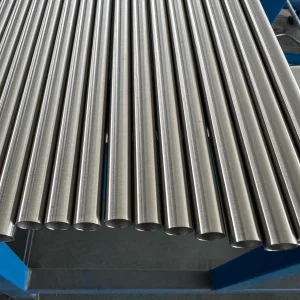






Engineering & Procurement Advisory for Sydney Buyers
Partner with a World-Class Ferritic & Martensitic Steel Factory
Whether you are bidding on major NSW infrastructure tenders, replacing heat exchanger bundle tubing in Botany, or manufacturing OEM automotive components in Western Sydney, our metallurgical team provides direct technical consultation and competitive factory pricing.
