
High-Performance Super Austenitic Alloy Solutions
Specially calibrated for Swedish industrial standards (SS-EN 10216-5 / SS-EN 10217-7), offering unmatched resistance against chloride pitting and crevice corrosion.

Super Austenitic Steels 904L • UNS N08904 • 1.4539 Tubes (Sweden Spec)

Super Austenitic Steels 254SMO • UNS S31254 • 1.4547 Tubes for Nordic Marine

Super Austenitic Steel ASME SA269 · N08904 Heat Exchanger Tubing
High-Integrity 254SMO UNS S31254 Heavy Wall Tubes (Pulp & Paper Spec)
1. Sweden Market Landscape: Demand Dynamics for Super Austenitic Steels
Sweden has long stood at the global forefront of high-end metallurgical innovation and chemical processing excellence. From the paper mills along the Gulf of Bothnia (such as those in Piteå and Sundsvall) to the petro-chemical complexes in Stenungsund and marine engineering hubs along the West Coast (Västra Götaland), Swedish industrial operations face extremely aggressive operational environments. Conventional standard austenitic grades—such as 304L (1.4307) and 316L (1.4404)—frequently succumb to severe localized corrosion, including chloride-induced Pitting Corrosion, Crevice Corrosion, and Stress Corrosion Cracking (SCC) under elevated operating temperatures.
To withstand these extreme conditions, Swedish engineering procurement specialists and plant operators increasingly specify Super Austenitic Stainless Steels. Materials defined by high Pitting Resistance Equivalent Numbers (PREN ≥ 42 to 45)—most notably 254 SMO (UNS S31254 / 1.4547), 904L (UNS N08904 / 1.4539), and AL-6XN (UNS N08367)—have transitioned from specialized problem-solvers to standardized baseline materials across key Nordic sectors:
Sulphite & Sulfate Pulp Bleaching
Sweden’s paper and pulp processing plants rely on bleach plants utilizing chlorine dioxide ($ClO_2$), ozone, and acidic washes. Super austenitic steels prevent rapid crevice corrosion beneath flange gaskets and heat exchanger tube sheets.
Baltic Sea Marine & Scrubbers
The low-salinity yet highly acidic environment created by Exhaust Gas Cleaning Systems (EGCS / Marine Scrubbers) operating in Swedish waters demands materials that withstand hot acidic wash-water ($pH < 2.5$) contaminated with sulfur species.
Green Hydrogen & Chemical Infrastructure
Sweden's aggressive decarbonization initiatives (Fossil Free Sweden) drive demand for high-purity, corrosion-resistant tubing in green hydrogen electrolyzers, synthetic fuel synthesis, and circular chemical recycling units.
2. Metallurgy Deep-Dive: Material Science & Information Gain Data
Super Austenitic Steels are high-alloyed austenitic stainless steels engineered with significant additions of Chromium (19–21%), Nickel (17–25%), Molybdenum (6–7%), and Nitrogen (0.18–0.25%). The synergistic combination of Molybdenum and Nitrogen dramatically accelerates passive film repassivation in acidic media containing chloride ions.
The mathematical evaluation of pitting resistance is governed by the Pitting Resistance Equivalent Number (PREN) formula:
$$PREN = \%Cr + 3.3(\%Mo + 0.5 \times \%W) + 16 \times \%N$$
While standard 316L achieves a modest PREN of ~25, 254SMO achieves a PREN exceeding 42, allowing it to perform seamlessly in environments previously reserved exclusively for costly Nickel Alloys (such as Alloy C276 or Alloy 625).
| Alloy Grade | UNS / EN Standard | Nominal Chemistry (% Cr - Ni - Mo - N) | PREN Rating | Critical Pitting Temp (CPT per ASTM G48) | Yield Strength (RP0.2 MPa) |
|---|---|---|---|---|---|
| Super Austenitic 254SMO | UNS S31254 / 1.4547 | 20.0 Cr - 18.0 Ni - 6.1 Mo - 0.20 N | ≥ 42.5 | 65°C - 70°C | ≥ 300 MPa |
| Super Austenitic 904L | UNS N08904 / 1.4539 | 20.0 Cr - 25.0 Ni - 4.5 Mo - Cu additions | ≥ 36.0 | 45°C - 50°C | ≥ 220 MPa |
| Super Duplex 2507 | UNS S32750 / 1.4410 | 25.0 Cr - 7.0 Ni - 4.0 Mo - 0.27 N | ≥ 42.0 | 60°C - 65°C | ≥ 550 MPa |
| Standard 316L | UNS S31603 / 1.4404 | 17.0 Cr - 10.0 Ni - 2.1 Mo | ~ 25.0 | 15°C - 20°C | ≥ 220 MPa |
Engineering Takeaway: While Super Duplex 2507 yields higher mechanical strength, Super Austenitic 254SMO offers superior ductility, structural stability at elevated temperatures, and superior weldability without the risk of brittle intermetallic phase precipitation ($\sigma$-phase) during thermal cycling.
3. Chinese Factory Efficiency & Supply Synergy for Swedish Buyers
For Swedish industrial EPCs and original equipment manufacturers (OEMs), procuring specialty tubing from European stockists often introduces extended lead times (24–36 weeks) and substantial price premiums. Spezilla Tube Co., Ltd. addresses these pain points by integrating high-precision manufacturing, strategic raw material sourcing, and end-to-end quality control.
Manufacturing Excellence: The Spezilla Advantage
Operating from our modern manufacturing base in Huzhou, Zhejiang, and coordinated via our Shanghai international logistics center, Spezilla applies advanced cold-pilgering and bright annealing processes tailored to rigid ASTM/EN specifications:
- Cold Pilgering & Precision Drawing: Achieves tight outer diameter ($OD$) and wall thickness ($WT$) tolerances down to $\pm 0.05\text{ mm}$, guaranteeing uniform heat exchange coefficient across long tube bundles.
- Atmospheric Bright Annealing (BA): Solution heat treatment conducted under pure Hydrogen ($H_2$) atmosphere at $1150^\circ\text{C} - 1200^\circ\text{C}$ followed by rapid cooling, completely eliminating surface oxidation and preserving maximum passivity.
- Comprehensive Quality Inspection: Every batch shipped to Gothenburg or Stockholm ports is covered by EN 10204 3.1 Mill Test Certificates. Third-party inspection (TÜV, DNV, Lloyd’s Register, Bureau Veritas) according to EN 10204 3.2 is regularly supplied upon request.
4. Global & Local Industrial Application Scenarios in Sweden
Super Austenitic Steels supplied by Spezilla are deployed across critical infrastructure sectors in Sweden and globally:
1. Offshore Energy & Seawater Desalination
In North Sea and Baltic Sea installations, 254SMO tubes are mandated for seawater-cooled condensers, high-pressure piping in reverse osmosis (RO) desalination systems, and umbilical tubing bundles due to resistance against bio-fouling and localized pitting.
2. Chemical Processing & Phosphoric Acid
904L tubing provides superior performance in handling concentrated sulfuric acid ($H_2SO_4$), phosphoric acid manufacturing, and acetic acid distillation columns, outperforming standard 316L by an operational factor of 4x to 6x.
5. Global Procurement Requirements & Technical Compliance Guide
When issuing Requests for Quotation (RFQs) for Super Austenitic Steels in the European market, buyers must specify key international standards to ensure mechanical and chemical compliance:
- Seamless Tubing Standards: ASTM A213 / ASME SA213 (Seamless Ferritic and Austenitic Alloy-Steel Boiler, Superheater, and Heat-Exchanger Tubes), EN 10216-5 (Stainless Steel Tubes for Pressure Purposes).
- Welded & Cold-Drawn Standards: ASTM A249 / ASME SA249 (Welded Austenitic Steel Boiler, Heat-Exchanger, and Condenser Tubes), ASTM A269 (Seamless and Welded Austenitic Stainless Steel Tubing for General Service), EN 10217-7.
- Corrosion Testing Verification: Intergranular corrosion testing according to ASTM A262 Practice E and Critical Pitting Corrosion testing per ASTM G48 Method A/B.
6. Frequently Asked Questions (FAQ) - Technical & Procurement
Explore Complementary Alloy & Stainless Steel Products
From high-temperature heat exchanger tubes to corrosion-resistant nickel alloys and duplex grades for global industrial projects.

High-Quality Austenitic Steels 304H • UNS S30409 • 1.4948 Manufacturer

Custom Nickel Alloy Tubes 800 • UNS N08800 • 1.4876 Tubing
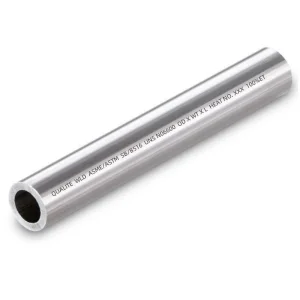
High-Quality Nickel Alloy Tubes 600 • UNS N06600 • 2.4816 Series

Custom Nickel Alloy Tubes 825 • UNS N08825 • 2.4858 Tubes

Custom Nickel Alloy Tubes 400 • UNS N04400 • 2.4360 Monel Tubing
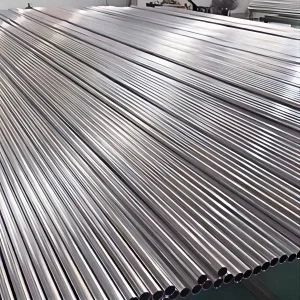
Custom Austenitic Steel ASME SA213 · TP310S High-Temp Tubing

High-Quality Super Duplex Steels 2507 • S32750 • 1.4410 Tubing

Custom Austenitic Steels 321H • UNS S32109 • 1.4878 Products
Require High-Grade Super Austenitic Tubing for Swedish Operations?
Send your engineering datasheets, dimensional requirements, or RFQs today. Our engineering sales team delivers comprehensive quotes and technical guidance within 24 hours.
Send Inquiry Now