
Featured 2.5-Inch & Precision Stainless Steel Tubing
Explore our certified mill inventory covering ASME/ASTM austenitic, super austenitic, and titanium alloy tubing solutions.





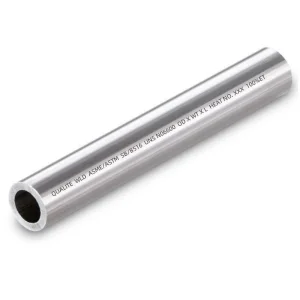


1. Engineering Architecture of 2.5-Inch Stainless Steel Pipe Systems
In modern industrial fluid transport, chemical processing, and thermal management engineering, the 2.5-inch stainless steel pipe represents a critical dimensional boundary. It balances optimal volume flow rate with structural rigidity and thermal dissipation efficiency. However, specifying a "2.5-inch pipe" requires precise distinction between standard Nominal Pipe Size (NPS 2.5 / DN 65) and 2.5-inch Outside Diameter (OD) tubing, as their dimensional frameworks, wall thickness tolerances, and manufacturing codes differ fundamentally.
An NPS 2.5 pipe features a standardized Outside Diameter of 2.875 inches (73.03 mm), whereas a true 2.5-inch OD tube measures exactly 2.500 inches (63.50 mm) on the exterior wall. Understanding this distinction is vital for design engineers selecting piping for ASME B31.3 process piping systems, heat exchangers, or high-pressure hydraulic loops. Our advanced manufacturing facility specializes in custom wall thickness, precision tolerances, and tailored alloy compositions for both dimensional paradigms.
| Dimensional Standard | Nominal Size / OD | Actual OD (mm / in) | Common Schedules / WT | Applicable Manufacturing Standards |
|---|---|---|---|---|
| NPS 2.5 (Pipe) | 2-1/2" Nominal | 73.03 mm / 2.875" | SCH 10S (3.05mm), SCH 40S (5.16mm), SCH 80S (7.01mm) | ASME SA312, ASTM A312, EN 10216-5 |
| 2.5" OD Tubing | 2.500" Tube OD | 63.50 mm / 2.500" | BWG 18 (1.24mm) to BWG 10 (3.40mm) / Custom WT | ASME SA269, SA213, ASTM A249, ASTM B338 |
| Metric Precision Pipe | 65 mm Metric | 65.00 mm / 2.559" | 1.5 mm to 6.0 mm Wall Thickness | EN 10217-7, DIN 17458, ISO 1127 |
| Sanitary Hygiene Tube | 2.5" Sanitary | 63.50 mm / 2.500" | 1.65 mm (0.065") / 2.11 mm (0.083") | ASTM A270, 3-A Sanitary Standards, DIN 11850 |
1.1 Manufacturing Routes: Seamless vs. Welded & Cold Drawn (W&D)
Selecting the correct production methodology for a 2.5 stainless steel pipe directly dictates the component's bursting pressure, fatigue resistance, surface roughness, and cost structure:
- Seamless (SMLS) Pipes (ASME SA312 / SA213): Produced via hot extrusion or rotary piercing followed by cold pilgering or drawing. Seamless 2.5-inch pipes eliminate the longitudinal weld seam, offering maximum pressure ratings and total compliance with high-stress environments such as nuclear reactors, offshore oil & gas risers, and severe chemical boilers.
- Welded & Cold Drawn (W&D) Tubing (ASME SA249 / SA269): Fabricated using automated continuous roll-forming and TIG/Plasma welding, followed by heavy cold working over a mandrel (plug drawn). This process refines the weld bead grain structure until it matches the parent metal, yielding exceptional wall concentricity, mirror-like inner surface smoothness (Ra < 0.4 µm), and outstanding thermal transfer efficiency for shell-and-tube heat exchangers.
- As-Welded (EFW / GTAW) Pipes: Cost-effective solution for non-critical fluid transport, architectural structures, and low-pressure municipal applications. Manufactured under strict online eddy-current monitoring and automatic dimension calibration.
State-of-the-Art Alloy Performance Metrics
Engineered to withstand extreme thermal gradients, aggressive media pitting, and intense mechanical fatigue.
Austenitic Grade Portfolio
Covers standard TP304/304L, high-temperature TP321 with titanium stabilization, low-carbon TP316L, and nitrogen-strengthened TP316LN (UNS S31653). Ideal for cryogenics, nitric acid handling, and general chemical synthesis.
Super Austenitic & 6Mo Alloys
Featuring 904L (UNS N08904 / 1.4539) and UNS S31254 with Molybdenum contents above 4.5-6.0%. Delivers extraordinary pitting resistance (PREN ≥ 43) in severe sulfuric acid, phosphoric acid, and wet chlorine media.
Duplex & Super Duplex Alloys
Including UNS S31803 / S32205 (Duplex 2205) and UNS S32750 (Super Duplex 2507). Combines high mechanical yield strength (~450 MPa) with immunity to chloride stress corrosion cracking (SCC).
High-Nickel Superalloys
Encompassing Alloy 800/800H (UNS N08800/N08810), Alloy 600 (UNS N06600), and Hastelloy C276 (UNS N10276). Engineered for high-temperature carburizing, oxidation, and reducing chemical environments up to 1100°C.
Titanium Tubing Solutions
Supplying commercially pure Grade 3 (UNS R50550) and alloyed Grade 12 (UNS R53400, Ti-0.3Mo-0.8Ni). Offers unmatched strength-to-weight ratio and immunity to marine biofouling and seawater erosion.
Custom Fabrication & Bending
Precision U-bending, coil forming, end-flaring, hydroforming, and bright annealing (BA) treatment under pure hydrogen atmosphere to prevent surface oxidation and preserve corrosion resistance.
2. Competitive Edge of Custom 2.5 Stainless Steel Pipe Sourcing from China
The global industrial supply chain for high-performance piping has undergone a structural transformation. Procurement leaders from North America, Europe, the Middle East, and Asia-Pacific increasingly turn to premier Chinese specialty mills like Spezilla for their 2.5-inch stainless steel pipe requirements. This shift is driven not merely by cost efficiencies, but by advanced technical capability, vertical raw material integration, and rigorous compliance with international standards.
2.1 Upstream Raw Material Security and Billet Control
A superior stainless steel pipe begins with pristine metallurgy. Our manufacturing ecosystem partners directly with Tier-1 raw material conglomerates such as Baosteel, Tsingshan Holding Group, and Yongxing Special Stainless Steel. By utilizing VOD (Vacuum Oxygen Decarburization) and AOD (Argon Oxygen Decarburization) refined round billets and cold-rolled coil strips, we ensure ultra-low residual element levels (P < 0.025%, S < 0.005%). This guarantees superior weldability, high PREN ratings, and exceptional mechanical ductility during downstream bending and expanding operations.
2.2 Cold Pilgering and Advanced Bright Annealing Facilities
Our Huzhou production base houses multi-roll cold pilgering mills capable of achieving wall thickness tolerances within ±5% on 2.5-inch pipes—significantly tighter than the standard ASTM A312 requirement of ±12.5%. Following cold processing, pipes undergo inline bright annealing in a 100% pure hydrogen atmosphere furnace at temperatures reaching 1080°C–1120°C, followed by rapid gas quenching. This fully dissolves chromium carbides back into the austenitic matrix, eliminating intergranular corrosion susceptibility while preserving a clean, bright, scale-free surface.
2.3 Complete In-House Testing and EN 10204 3.1 / 3.2 Traceability
Quality assurance is embedded in every stage of our production protocol. Every 2.5-inch pipe batch is subjected to comprehensive Non-Destructive Testing (NDT) and destructive mechanical validation prior to release:
- Hydrostatic Testing: 100% tested at pressures up to 20 MPa (2900 PSI) in accordance with ASTM A999 / A1016 requirements.
- Eddy Current (ET) & Ultrasonic Testing (UT): Full-body automated ET inspects for micro-surface defects and longitudinal cracks; UT verifies internal wall integrity and thickness uniformity.
- PMI Verification: X-ray Fluorescence (XRF) Positive Material Identification performed on 100% of finished pipes to prevent grade mix-ups.
- Corrosion Validation: Intergranular corrosion testing per ASTM A262 Practice E (Strauss test) and Pitting Corrosion testing per ASTM G48.
- Mill Certification: Fully documented EN 10204 3.1 Mill Test Certificates supplied with complete heat numbers, chemical heats, mechanical results, and grain size analysis. Third-party EN 10204 3.2 inspection (TÜV, SGS, BV, Lloyd's Register) available upon contract request.
3. Global Industry Trends Shaping Stainless Steel Pipe Demand
The global transition toward green energy, decarbonization, and advanced chemical manufacturing has redefined the technical expectations placed on 2.5 stainless steel piping systems. Modern piping designs are no longer evaluated solely on nominal strength, but on life-cycle sustainability, zero-leak performance, and chemical stability under aggressive operational conditions.
3.1 Hydrogen Economy and Ultra-Pure Fluid Transport
As green hydrogen production expands rapidly, specialized piping for high-pressure gaseous hydrogen and cryogenic liquid hydrogen transport has become paramount. Standard austenitic alloys can suffer from hydrogen embrittlement under extreme pressures. Consequently, modified austenitic grades like TP316LN (UNS S31653)—with high nickel and nitrogen contents—are increasingly specified for 2.5-inch hydrogen distribution manifolds. The nitrogen addition elevates yield strength while maintaining stable austenite crystal structure at sub-zero cryogenic temperatures (-196°C).
3.2 Decarbonization in Desalination and Offshore Energy
To combat water scarcity, mega-scale Reverse Osmosis (SWRO) desalination plants require high-pressure piping manifolds capable of resisting high chloride concentrations (salinity > 35,000 ppm). Super Duplex 2507 (UNS S32750) 2.5-inch pipes have largely superseded standard 316L due to their high Pitting Resistance Equivalent Number (PREN > 42) and double the yield strength, enabling thinner pipe wall designs without compromising pressure integrity, thereby reducing structural skid weight.
3.3 Digital Inspection and Automated Laser Weld Monitoring
Industry 4.0 automation has reshaped tube mill production. High-frequency laser seam tracking systems monitor the welding puddle in real time during TIG/Plasma manufacturing of 2.5-inch welded pipes. Paired with AI-driven Eddy Current signal analysis, defect detection sensitivity has reached sub-millimeter scales, ensuring that zero-defect pipes reach global installation sites.
Macro Solutions Across Key Global Sectors
Tailored engineering packages engineered to satisfy demanding operational environments.
Petrochemical & Oil Refining
High-pressure 2.5-inch TP321 and TP316L pipes used in hydrocracker heat exchangers, catalytic reforming units, and flare lines. Formulated to resist hydrogen attack, polythionic acid SCC, and sulfur compound corrosion at elevated temperatures.
Power Generation & Feedwater
ASME SA213 TP304LN and Ferritic 444 U-bent 2.5-inch tubing supplied for high-pressure thermal power plant feedwater heaters. Designed with precision bending radii and stress-relief annealing to prevent fatigue failure under cyclic thermal loads.
Pharmaceutical & Bio-Processing
Ultra-pure 2.5-inch sanitary tubing compliant with ASTM A270 ASME BPE standards. Electropolished internal finish (Ra < 0.25 µm) ensures zero bacterial entrapment and seamless Clean-In-Place (CIP) and Sterilize-In-Place (SIP) operations.
4. Strategic Procurement Guide for Global Engineering Buyers
Procuring custom 2.5-inch stainless steel pipe products across international borders requires a meticulous risk-mitigation framework. Engineering contractors (EPCs) and OEM buyers must evaluate suppliers not only on per-meter pricing, but on total landed cost, quality verification protocols, and logistical reliability.
4.1 Essential Technical Specifications to Include in RFQs
To avoid miscommunication and order delays, every Request for Quotation (RFQ) for custom 2.5-inch pipe should explicitly define the following seven parameters:
- Dimensional Standard: Specify whether NPS 2.5 (OD 73.03mm) or 2.5" OD Tubing (63.50mm) is required.
- Wall Thickness / Schedule: Define exact WT in millimeters or standard Schedule (e.g., SCH 10S, SCH 40S, 2.11mm BWG 14).
- Material Grade & Standard: e.g., ASTM A312 TP316L, ASME SA269 TP321, or ASTM B338 Grade 2 Titanium.
- Manufacturing Route: Seamless (SMLS), Welded & Cold Drawn (W&D), or As-Welded.
- Surface Condition & Delivery State: Bright Annealed (BA), Annealed & Pickled (AP), Mechanical Polish (180/320/400 Grit), or Electropolished (EP).
- Non-Destructive Testing Requirements: Specify Hydrostatic pressure, Eddy Current test standard (ASTM E426), or Ultrasonic test standard (ASTM E213).
- Certification Requirements: EN 10204 3.1 or EN 10204 3.2 with designated Third-Party Inspection agency.
4.2 Export Packaging and Ocean Freight Protection
Transoceanic shipping exposes stainless steel pipes to marine salt spray, humidity condensation, and physical handling damage. Standard export protection at Spezilla includes individual plastic cap end sealing, seaworthy fumigated wooden box encasement, heavy-duty plastic wrapping, and internal silica gel desiccant packs. Outer bundling with steel straps and edge protectors prevents deflection during crane loading.
High-Performance & Special Grade Piping Solutions
Discover our advanced super austenitic, duplex, super duplex, and nickel alloy product ranges.








Frequently Asked Questions (FAQ)
Detailed technical answers to common questions regarding custom 2.5-inch stainless steel pipe selection, manufacturing standards, and international delivery.
What is the exact outer diameter difference between NPS 2.5 pipe and 2.5" OD tube?
An NPS 2.5 (DN 65) pipe has a standardized outer diameter of 2.875 inches (73.03 mm), governed by ASME B36.19M / ASME B36.10M. In contrast, a 2.5-inch OD tube has an exact outer diameter of 2.500 inches (63.50 mm). Tubes are typically specified by outside diameter and wall thickness (or BWG gauge), whereas pipes are specified by nominal pipe size and Schedule number (e.g., SCH 10S, SCH 40S).
When should I specify TP316LN (UNS S31653) instead of standard TP316L for 2.5-inch piping?
TP316LN is an enhanced version of 316L fortified with 0.10% to 0.16% Nitrogen. Nitrogen acts as a potent solid-solution strengthener, raising the minimum 0.2% yield strength from 170 MPa (316L) to 240 MPa without reducing impact toughness or ductility. Choose TP316LN for high-pressure cryogenic lines, heavy-wall pressure vessels under ASME Section VIII, or hydrogen gas piping where higher design allowable stresses are required at both ambient and elevated temperatures.
How does Bright Annealing (BA) compare to Annealed & Pickled (AP) finish on 2.5 stainless pipes?
Bright Annealing (BA) heat-treats the pipe in a sealed furnace with pure hydrogen/argon gas, preventing surface oxidation and resulting in a mirror-like, ultra-smooth outer and inner finish. Annealed & Pickled (AP) heat-treats the pipe in open air followed by acid pickling (hydrofluoric/nitric bath) to remove oxide scale, creating a satin matte finish. BA is preferred for sanitary, semiconductor, and high-purity fluid applications, while AP is common for industrial chemical transport.
What testing procedures ensure 2.5-inch Nickel Alloy 600 or Hastelloy C276 pipes are defect-free?
All high-nickel alloy pipes undergo mandatory 100% Hydrostatic testing per ASTM B704/B515 or 100% Eddy Current Inspection per ASTM E426. Additionally, we perform Microstructural Grain Size evaluation (ASTM E112), Chemical PMI analysis, Ultrasonic thickness scanning, and Intergranular Corrosion tests according to ASTM G28 to ensure maximum integrity in severe oxidizing/reducing chemical service.
Can Spezilla manufacture non-standard wall thicknesses for 2.5-inch titanium pipes?
Yes. Utilizing advanced cold pilgering and plug-drawing processes, we produce custom wall thicknesses ranging from 0.8 mm up to 6.5 mm for Titanium Grade 3 (UNS R50550) and Grade 12 (UNS R53400) pipes, compliant with ASTM B338 / ASTM B861 standards for marine condensers and desalination evaporator units.
What is the typical production lead time for custom 2.5 stainless steel pipe orders?
Standard mill lead time for custom production (including cold drawing, solution annealing, NDT inspection, and certification) is 20 to 35 calendar days depending on alloy availability. Accelerated fast-track production is available for project emergency replacements, backed by sea or air freight door-to-door shipping options.
