
Featured Precision Alloy & Titanium Tubing Products (Part 1)
Explore our core engineering portfolio certified under ISO 9001, PED 2014/68/EU, and ASME SA213/SA269/B338 specifications.
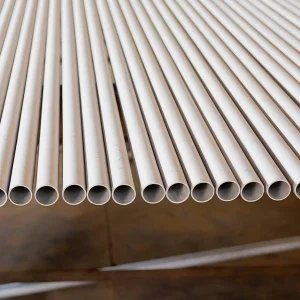
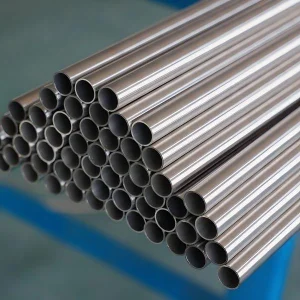



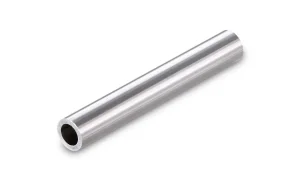

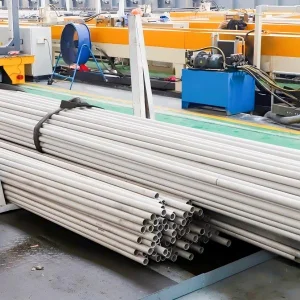
Executive Summary: The Strategic Significance of 25mm Titanium Tubing
In modern industrial process thermodynamics, the outer diameter metric of 25mm (equivalent to approximately 0.984 inches or standardized 1-inch OD nominal sizing) represents the universal architectural sweet-spot for shell-and-tube heat exchangers, surface condensers, nuclear power cooling loops, and high-pressure chemical reactors. Modern titanium processing plants specialize in custom 25mm seamless and welded titanium tubes engineered to withstand hyper-aggressive media including wet chlorine gas, nitric acid, organic chlorides, and high-velocity marine seawater environments.
Titanium’s exceptional strength-to-weight ratio combined with its spontaneous formation of a dense, self-healing, adherent surface oxide film (primarily TiO₂) guarantees near-zero corrosion rates in oxidizing solutions. When customized to an exact 25mm outer diameter with wall thickness profiles ranging from ultra-thin 0.5mm (for thermal efficiency) to heavy-wall 2.5mm (for structural pressure containment), these tubes supersede conventional copper-nickel alloys, duplex stainless steels, and austenitic 316L grades in lifetime lifecycle cost efficiency (LCC).
Commercially Pure (CP) Grades
Grade 1 & Grade 2 (UNS R50400): Unalloyed titanium offering maximum ductility, supreme cold formability, and unmatched resistance to oxidizing and chloride-heavy media. Grade 2 is the premier material of choice for industrial desalination and power plant condensers.
Alpha-Beta & Modified Titanium Alloys
Grade 7 (Ti-Pd) & Grade 12 (Ti-0.3Mo-0.8Ni): Specially formulated with palladium or nickel-molybdenum micro-additions to resist severe crevice corrosion in hot, reducing acid environments where CP grades experience breakdown.
Structural & Aerospace Grade 9
Grade 9 (Ti-3Al-2.5V): Near-Alpha alloy providing 20-50% higher tensile strength than CP Grade 2 while maintaining cold formability, widely utilized in high-pressure hydraulic tubing and marine subsea risers.
Global Commercial Landscape & Procurement Dynamics
The global consumption of 25mm titanium tubing is experiencing an unprecedented structural expansion, driven by mega-scale industrial transitions across five prime engineering sectors:
1. Desalination & Coastal Infrastructure
As water scarcity intensifies across the Middle East (GCC region), North Africa, and Southern Europe, Multi-Stage Flash (MSF) and Reverse Osmosis (RO) energy recovery installations rely heavily on 25mm thin-wall Grade 2 titanium tubes. Their immunity to microbiologically influenced corrosion (MIC) and pitting in hypersaline water eliminates unscheduled plant shutdowns.
2. Chemical Process Industries (CPI)
In chemical manufacturing—specifically Purified Terephthalic Acid (PTA), Chlor-Alkali electrolysis, and acetic acid synthesis—25mm titanium heat exchanger tubes prevent cataclysmic fluid cross-contamination. Their chemical resistance reduces maintenance downtime from months to routine annual checks.
3. Offshore Oil & Gas and Subsea Systems
With deepwater exploration shifting to sour crude wells rich in H₂S and CO₂, 25mm titanium Grade 9 and Grade 12 hydraulic umbilical lines provide complete immunity to sulfide stress cracking (SSC) under high mechanical tension.
4. Green Hydrogen & Electrolyzer Stack Cooling
The global decarbonization transition requires heavy-duty cooling loops for Proton Exchange Membrane (PEM) and Alkaline electrolyzers. 25mm custom titanium tubing prevents ionic contamination of ultra-pure deionized water loops.
Industry Trends: Next-Gen Titanium Tube Manufacturing
The manufacturing paradigms for precision 25mm titanium tubes have evolved significantly past standard cold-drawing. Leading modern factories deploy sophisticated metallurgy techniques to guarantee grain structure homogeneity and extreme dimensional concentricity.
High-Precision Cold Pilgering
Unlike basic die drawing, multi-roll cold pilgering subjects the 25mm titanium tube hollow to simultaneous radial compression and axial elongation over a tapered mandrel. This process refines the Alpha-titanium crystal lattice, eliminating directional grain boundary weaknesses and enhancing yield strength by up to 15%.
Automated Continuous TIG / Plasma Welding
For welded 25mm titanium tubes (ASTM B338 Grade 2), automated high-frequency TIG welding under full inert argon chamber trailing shields prevents atmospheric oxygen or nitrogen embrittlement. Weld seam matching achieved is 100% equivalent to base metal mechanical integrity.
Vacuum Bright Annealing (VBA)
Recrystallization heat treatment performed in ultra-high vacuum electric furnaces (10⁻⁴ Torr) at temperatures up to 750°C restores maximum ductility, leaving the inner and outer surfaces 100% free of scale, oxide discoloration, or carbon residue.
Engineering Specification & Material Property Comparison
| Titanium Grade | UNS Standard | Yield Strength (MPa) | Tensile Strength (MPa) | Elongation (%) | Primary Corrosion Environment |
|---|---|---|---|---|---|
| Grade 1 (CP) | UNS R50250 | 170 – 310 | 240 Min | ≥ 24% | Maximum formability; explosive cladding, delicate plate exchangers. |
| Grade 2 (CP) | UNS R50400 | 275 – 450 | 345 Min | ≥ 20% | Standard industrial workhorse; marine condensers, CPI heat exchangers. |
| Grade 7 (Ti-Pd) | UNS R52400 | 275 – 450 | 345 Min | ≥ 20% | Reducing chemical acids, hot hydrochloric/sulfuric acid blends. |
| Grade 9 (3Al-2.5V) | UNS R56320 | 483 Min | 620 Min | ≥ 15% | High pressure hydraulic, subsea tubing, aerospace fluid lines. |
| Grade 12 (Ti-Mo-Ni) | UNS R53400 | 345 Min | 483 Min | ≥ 18% | High temperature crevice corrosion resistance in brine & chlorides. |
China Industry 4.0: Supply Chain Resilience & Manufacturing Efficiency
The concentration of advanced titanium refining and precision tube fabrication in China’s specialized industrial clusters (such as Huzhou and Shanghai hubs) has re-engineered global purchasing economics for customized 25mm tubing.
Vertical Raw Material Integration
Chinese 4.0 smart factories leverage direct integration with domestic titanium sponge reduction plants. By verifying chemical purities at the raw ingot stage (controlling Fe, C, N, H, and O impurity PPM levels), mills guarantee strict compliance before billet extrusion even begins.
AI Optical & Ultrasonic NDT Lines
Modern Chinese factories integrate automated real-time online non-destructive testing (NDT). Multi-channel Eddy Current Testing (ECT) combined with Ultrasonic Testing (UT) detects longitudinal, transverse, and subsurface flaws down to 0.05mm micro-defects at full production velocity.
Unrivaled Agility & Customized Cut Lengths
Unlike rigid traditional Western steel mills requiring 6-month lead times, China Industry 4.0 manufacturers handle custom dimensional tolerances (e.g., 25mm OD ± 0.05mm wall uniformity) with rapid turnarounds, offering straight lengths up to 25 meters or complex continuous coils.
Localized Field Application Scenarios & Engineering Field Reports
Scenario A: Nuclear Power Surface Condensers
Environment: High-velocity brackish ocean water cooling loops.
Solution: Custom welded ASTM B338 Grade 2 titanium tubes (25mm OD x 0.71mm WT x 18,000mm length).
Result: Complete eradication of tube erosion-corrosion at tube sheet inlets, extending condenser operational lifespans past 40 years without tube plugging.
Scenario B: PTA Chemical Reactor Reboilers
Environment: Acetic acid, bromide catalysts, elevated temperatures (190°C).
Solution: Seamless ASME SB 338 Grade 12 titanium tubes (25mm OD x 1.65mm WT).
Result: Superior resistance to crevice corrosion under heat exchanger baffles, preventing toxic solvent leaks and avoiding costly unscheduled shutdowns.
Scenario C: Subsea Offshore Hydraulic Umbilicals
Environment: Extreme hydrostatic outer pressure, sour crude internal flow (H₂S).
Solution: Cold-drawn seamless Titanium Grade 9 (Ti-3Al-2.5V) tubes (25mm OD x 2.11mm WT).
Result: Lightweight tubing reducing floating platform payload while supporting burst pressures exceeding 600 bar.
Featured Precision Alloy & Titanium Tubing Products (Part 2)
Browse our expanded line of high-temperature austenitic, super austenitic, and specialized corrosion-resistant tube products.








Frequently Asked Questions: Technical Engineering & Factory Procurement
Clear, definitive technical answers curated by our metallurgical engineering team to streamline global procurement decisions.
