
Featured High-Precision Tubular Grade Products
Directly sourced mill-certified seamless and welded stainless steel, super austenitic, and nickel alloy tubes compliant with ASME SA249, SA213, SA269, and ASTM standards.
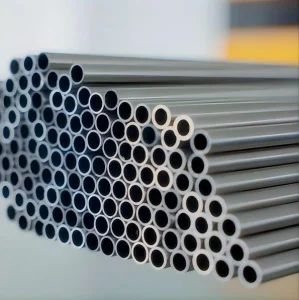
High-Quality ASME SA249 TP304 Welded Stainless Steel Tubes Manufacturer, Suppliers
View Product Specifications


High-Quality Austenitic Steels 317L • UNS S31703• 1.4438 Suppliers, Factory
View Product Specifications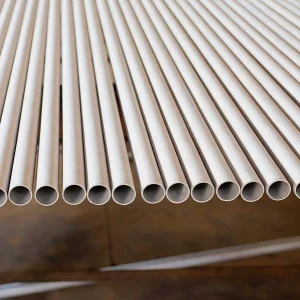
Custom Super austenitic steel ASME SA213 · S31254.SMO254 pipe Manufacturers, Products
View Product Specifications
High-Quality Austenitic steel ASME SA269 · TP316L Manufacturers, Factories
View Product Specifications

Macro Industry Landscape & Global Commercial Reality of 304 Piping
A comprehensive evaluation of the global 304 stainless steel pipe market dynamics, supply chain risk mitigation, raw material pricing volatility, and green manufacturing mandates.
Global Sourcing Trends & Demand Drivers
Type 304 (UNS S30400 / 1.4301) austenitic stainless steel represents over 50% of all stainless steel produced globally. In energy transformation, pharmaceutical manufacturing, food processing, and chemical synthesis, engineering teams face stringent requirements for operational safety, corrosion resistance, and structural longevity. Sourcing custom 304 stainless steel pipes requires evaluating suppliers not merely as stockists, but as technically competent manufacturing partners capable of delivering verified grain refinement, exact dimensional tolerances, and full heat traceability.
Raw Material Volatility & ESG Compliance
The global stainless steel pipe market is heavily influenced by London Metal Exchange (LME) price movements for primary nickel and ferro-chromium. Premium 304 pipe manufacturers utilize electric arc furnace (EAF) smelting paired with Argon Oxygen Decarburization (AOD) refining to ensure tight control over interstitial elements. Furthermore, environmental regulations (EU CBAM and Scope 1–3 emissions limits) are prompting Tier-1 manufacturers to transition toward scrap-intensive production routes with green hydrogen bright annealing facilities.
Custom OEM vs. Commodity Stock Procurement
Standard off-the-shelf pipes often fall short of meeting specialized industrial tolerances, such as orbital welding readiness, ultra-smooth internal surfaces ($R_a < 0.4\ \mu\text{m}$), or restricted chemical bands (e.g., controlled carbon levels for high-temperature creep strength). Precision-engineered 304 stainless pipes bridge this gap by offering customized outer diameters (OD), wall thicknesses (WT), exact cut-to-length options, and specific heat treatment profiles designed for seamless field integration.
Metallurgical Engineering Specifications: Grade 304 / 304L / 304H Matrix
Detailed technical breakdown of chemical composition, mechanical properties, and corrosion mechanics essential for structural and process engineers.
Understanding the microstructural nuances between standard 304, low-carbon 304L, and high-carbon 304H is essential to avoiding premature failure due to intergranular corrosion (sensitization) or stress corrosion cracking (SCC). The table below outlines the governing chemical limits and mechanical baselines per ASTM A312, ASTM A249, and ASME SA213 standards.
| Grade Designation | UNS / EN Number | Carbon (C) % | Chromium (Cr) % | Nickel (Ni) % | Manganese (Mn) % | Silicon (Si) % | Nitrogen (N) % |
|---|---|---|---|---|---|---|---|
| TP304 | UNS S30400 / 1.4301 | 0.08 max | 18.0 - 20.0 | 8.0 - 11.0 | 2.00 max | 0.75 max max | 0.10 max |
| TP304L | UNS S30403 / 1.4307 | 0.030 max | 17.5 - 19.5 | 8.0 - 12.0 | 2.00 max | 0.75 max | 0.10 max |
| TP304H | UNS S30409 / 1.4948 | 0.04 - 0.10 | 18.0 - 20.0 | 8.0 - 11.0 | 2.00 max | 0.75 max | -- |
| 304LN | UNS S30453 / 1.4311 | 0.030 max | 17.5 - 19.5 | 8.5 - 11.5 | 2.00 max | 0.75 max | 0.10 - 0.16 |
| Specification | Form / Process | Tensile Strength (MPa) min | Yield Strength 0.2% (MPa) min | Elongation in 2" % min | Hardness Max (HRB / HV) |
|---|---|---|---|---|---|
| ASTM A312 TP304 | Seamless / Welded Pipe | 515 | 205 | 35 | 90 HRB / 200 HV |
| ASTM A249 TP304 | Welded Heat Exchanger Tube | 515 | 205 | 35 | 90 HRB / 200 HV |
| ASME SA213 TP304 | Seamless Boiler Tube | 515 | 205 | 35 | 90 HRB / 200 HV |
| EN 10216-5 1.4301 | Seamless Process Tube | 500 - 700 | 210 | 40 | 190 HV max |
Sensitization & Intergranular Attack
When standard Grade 304 is exposed to temperatures between 450°C and 850°C (such as during welding or slow cooling), chromium carbide ($\text{Cr}_{23}\text{C}_6$) precipitates at grain boundaries. This depletes chromium levels below the 10.5% threshold required for passivity. Low-carbon Grade 304L prevents this precipitation, eliminating the need for post-weld solution annealing.
Pitting & Crevice Corrosion Limits
The Pitting Resistance Equivalent Number (PREN) for Grade 304 typically ranges from 18 to 20 ($\text{PREN} = \% \text{Cr} + 3.3\% \text{Mo} + 16\% \text{N}$). Grade 304 performs reliably in potable water and mild industrial atmospheres containing under 200 mg/L chloride at ambient temperatures, though molybdenum-bearing grades like 316L or 2205 duplex are recommended for high-chloride environments.
High-Temperature Creep Performance (304H)
In power generation boilers and refinery fired heaters operating above 525°C, high-carbon 304H provides essential creep resistance and rupture strength. Controlled grain sizes (ASTM No. 7 or coarser) ensure microstructural stability under sustained stress at elevated temperatures.
Manufacturing Routes & Advanced Customization Capabilities
Comparing seamless, autogenous welded, and cold redrawn (W&D) tubular manufacturing workflows for specialized OEM projects.
1. Seamless Pipe Route (SML)
Produced via hot extrusion or rotary piercing followed by multi-pass cold pilgering or cold drawing. Seamless 304 pipes eliminate weld seam vulnerabilities, making them ideal for high-pressure, critical-service applications per ASTM A312/A213.
- Highest burst strength & structural uniformity
- Ideal for high-pressure hydraulic & steam lines
- Precise wall thickness control down to 0.40mm
2. Welded Pipe Route (WLD)
Formed from continuous precision-rolled stainless steel strip and joined using TIG (GTAW), Plasma Arc (PAW), or high-frequency Laser Welding without filler metals (autogenous). Certified per ASTM A249/A312.
- Superior wall thickness concentricity
- Cost-effective for long straight pipeline runs
- 100% online Eddy Current non-destructive tested
3. Welded & Drawn Route (W&D)
Welded tubes undergo cold drawing over a plug or mandrel to work-harden the weld seam, completely refining its micro-structure to match the parent metal. This provides seamless-like performance at a competitive price point.
- Completely smooth internal weld seam bead
- Tightest dimensional tolerance (ISO D4/T4)
- Widely used in feed water heaters & U-bend bundles
Custom Processing & Surface Treatment Capabilities
Bright Annealing (BA)
Heat treated in a hydrogen atmosphere furnace to maintain a mirror-like finish ($R_a < 0.25\ \mu\text{m}$) without scale formation.
Electro-Polishing (EP)
Anodic electrochemical smoothing that removes surface impurities and enriches chromium layers for ultra-clean semiconductor and pharma applications.
Precision U-Bending
Custom U-bent tubes per ASTM A688 with stress relief annealing on bend radii to prevent stress corrosion cracking in shell and tube heat exchangers.
Beveling & End Prep
Precision orbital cut end preparation, square cut, flanged ends, or 37.5° beveling per ASME B16.25 for automated field welding.
Compliance, Quality Assurance Protocols & Factory Audit Matrix
Verification frameworks and non-destructive testing (NDT) pipelines guaranteeing zero-defect delivery across global export markets.
1. EN 10204 3.1 & 3.2 Traceability
Every batch of custom 304 pipes ships with an EN 10204 3.1 Mill Test Certificate (MTC) detailing melt chemical analysis, heat treatment charts, mechanical test results, and hydrostatic/NDT verification. Independent third-party inspection (TUV, SGS, Lloyd's Register) for EN 10204 3.2 compliance is available upon request.
2. NDT & Hydrostatic Testing
100% non-destructive testing includes Eddy Current Testing (ASTM E426) for longitudinal surface seam flaws, Ultrasonic Testing (ASTM E213) for internal flaws, and Hydrostatic Testing at pressures up to 300 bar per ASME SA530 standards.
3. Intergranular Corrosion Testing
Batch samples undergo mandatory corrosion qualification tests per ASTM A262 Practice E (Copper-Copper Sulfate-16% Sulfuric Acid Test) or Practice A (Oxalic Acid Etch) to verify that material sensitization has not occurred during manufacturing.
Localized Application Scenarios & Industrial Engineering Case Studies
How leading global engineering firms specify and install custom 304 stainless steel pipes in specialized operating environments.
Chemical & Petrochemical Processing
Custom 304/304L seamless pipes serve as transport lines for nitric acid synthesis, organic acid handling, and refinery heat exchangers. Low carbon content prevents grain boundary degradation in welded acid transport lines exposed to continuous thermal cycling.
Sanitary Food, Beverage & Brewery Piping
In dairy and beverage processing, 304 stainless steel tubes with mechanical or electro-polished inner diameters ($R_a < 0.4\ \mu\text{m}$) eliminate bacterial entrapment zones. Compatibility with CIP (Clean-In-Place) caustic wash routines ensures long-term operational hygiene.
Power Generation & Feedwater Heaters
ASME SA249 TP304 welded and cold-drawn U-tubes are specified in power station feedwater heaters and steam surface condensers. Excellent thermal conductivity coupled with resistance to wet steam erosion ensures stable thermal performance.
Cryogenic LNG Transfer Lines
Unlike ferritic steels that exhibit ductile-to-brittle transition at low temperatures, 304's face-centered cubic (FCC) austenitic crystal structure maintains exceptional impact toughness at cryogenic temperatures as low as -196°C (77 K).
Automotive Exhaust & EGR Coolers
Thin-wall 304 stainless steel tubing is cold formed into automotive exhaust manifolds and Exhaust Gas Recirculation (EGR) coolers. Resistance to hot exhaust gases and acidic condensate extends system service life.
Architectural & Structural Tubular Systems
Polished 240-grit or 400-grit 304 stainless steel structural pipes are used in modern architectural glazing supports, high-durability handrails, and outdoor industrial infrastructure requiring aesthetic appeal and low maintenance.
Technology Roadmap: Next-Generation Tubular Manufacturing Innovations
Emerging technological advances in smart pipe manufacturing, automated NDT inline inspection, and zero-carbon processing (2026–2035).
AI-Powered Online Weld Seam Defect Detection
Integration of real-time machine vision paired with high-frequency infrared thermography during TIG/Laser autogenous welding. Micro-voids, offset seams, and keyhole instabilities are detected instantly, adjusting arc parameters within milliseconds.
100% Green Hydrogen Bright Annealing Furnaces
Transition from cracked ammonia ($N_2/H_2$) to 100% pure green hydrogen atmosphere furnaces powered by renewable energy. This eliminates surface nitriding risks and reduces Scope 1 carbon footprints by up to 85% across factory locations.
Ultra-Clean Surface Engineering & Nanoscale Passivation
Implementation of atmospheric plasma passivation technologies that create continuous, defect-free oxide films ($Cr_2O_3 > 3.0\text{ nm}$ thickness) without hazardous acid picking waste streams, fulfilling global environmental compliance mandates.
Frequently Asked Questions (FAQ) & Engineering Guidance
Detailed answers to technical procurement questions regarding custom 304 pipe sourcing, standard compliance, and manufacturing options.
Q1: What is the primary operational difference between ASTM A312 TP304 and ASME SA249 TP304?
ASTM A312 is the standard specification for seamless, welded, and heavily cold worked austenitic stainless steel pipes intended for high-temperature and general corrosive service (typically nominal pipe sizes NPS 1/8 to NPS 30). ASME SA249 specifically covers welded austenitic steel tubes designed for critical heat exchangers, condensers, and boiler tube applications where wall thickness concentricity, tight outer diameter tolerances, flare testing, flange testing, and reverse bend testing are mandatory.
Q2: When should I specify 304L over standard 304 for custom pipe fabrication?
Grade 304L (low carbon, 0.030% max) should be specified whenever the pipe will undergo field welding without subsequent post-weld solution annealing. Standard Grade 304 (0.08% max carbon) is vulnerable to carbide precipitation in the Heat Affected Zone (HAZ) during welding, which can trigger intergranular corrosion in aggressive liquid media. 304L prevents carbide precipitation, preserving corrosion resistance throughout welded joints.
Q3: How does cold drawing over a plug (W&D) enhance welded 304 pipe performance?
Cold redrawing reduces both the tube diameter and wall thickness simultaneously using a precision die and internal plug. This plastic deformation homogenizes the cast dendritic structure of the weld seam, aligning grain boundaries with the parent strip metal. The result is a smooth internal bead ($R_a < 0.4\ \mu\text{m}$), increased yield strength, and precise wall thickness uniformity across the tube's entire length.
Q4: What surface finishes can custom 304 stainless pipe factories supply?
Factories supply several surface conditions based on project specs: As-Welded/Mill Finish, Annealed & Pickled (AP), Bright Annealed (BA) featuring a specular mirror finish, Mechanically Polished (180, 240, 320, 400 grit), and Electro-Polished (EP) for ultra-clean semiconductor, biopharmaceutical, and high-purity gas applications.
Q5: Can 304 stainless steel pipe handle marine atmospheric exposure?
Grade 304 performs adequately in mild coastal environments with minimal airborne salinity. However, in direct seawater exposure, high-salinity spray, or stagnant chloride environments, 304 can suffer pitting and crevice corrosion due to its moderate PREN (~19). For direct marine or seawater contact, Grade 316L (PREN ~24), 2205 Duplex (PREN ~35), or Super Duplex/Titanium Grade 2 are recommended.
Comprehensive Tubular Product Lineup
Explore our full line of mill-certified custom austenitic, titanium, and heat-resistant stainless steel pipes engineered for high-temperature and aggressive fluid environments.

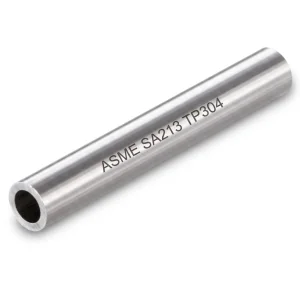
Custom Austenitic steel ASME SA312 · TP304 Stainless Steel Pipe Manufacturers, Supplier
View Product Specifications
High-Quality Austenitic Steels 321 • UNS S32100 • 1.4541 Manufacturers, Factories
View Product Specifications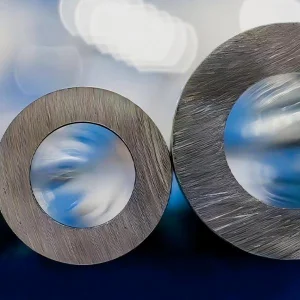

Custom Austenitic steel ASME SA213 · TP304 Seamless Tube Manufacturer, Supplier
View Product Specifications

Partner With Certified Custom 304 Stainless Steel Pipe Manufacturers
Whether your project requires straight lengths up to 25 meters, specialized U-bend heat exchanger bundles, or precision orbital-welding-ready ends, our technical sales engineers provide comprehensive quote turnarounds within 24 hours.
