
PED Certified Specialty Tube Series (Part I)
Explore certified pressure equipment tubing manufactured to stringent European Directive standards with EN 10204 3.1/3.2 mill test traceability.


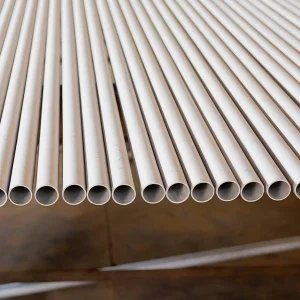





1. Executive Summary & Regulatory Framework of PED 2014/68/EU
Understanding the statutory compliance for pressure boundary materials across the European Economic Area (EEA) and global process industries.
The Pressure Equipment Directive 2014/68/EU (PED) standardizes regulatory requirements across the EU single market for pressure equipment operating at maximum allowable pressures (PS) exceeding 0.5 bar. For engineering procurement leads, plant designers, and EPC contractors, securing certified tubing and stainless steel piping that fully satisfies Annex I (Essential Safety Requirements - ESRs) is not merely a legal mandate; it is the fundamental safeguard against catastrophic mechanical failure in high-energy fluid containment systems.
Annex I Essential Safety Requirements
PED 2014/68/EU mandates strict metallurgical integrity, non-destructive testing (NDT), ductility limits (minimum elongation after fracture ≥ 14%), and impact energy values (charpy-V impact strength ≥ 27 J at minimum design temperature).
EN 10204 3.1 & 3.2 Certification
Compliance requires material manufacturers to hold quality systems certified by an authorized Notified Body (NoBo) under PED Annex I, Section 4.3, accompanied by EN 10204 3.1 independent inspection certificates or 3.2 third-party validated documentation.
Pressure equipment components—ranging from seamless heat exchanger tubes to heavy-wall process pipes—are classified into risk categories (SEP, Category I, II, III, and IV) based on fluid safety groups (Group 1 Hazardous vs. Group 2 Non-hazardous), state of media (gas/liquid), and the product of pressure and volume ($PS \times V$) or nominal diameter ($PS \times DN$). Specialized manufacturers like Spezilla Tube Co., Ltd. operate certified quality assurance systems under Module H/H1 and EN ISO 9001, verifying that every production lot of austenitic, duplex, nickel alloy, and titanium tubing fully aligns with European harmonized standards such as EN 10217-7, EN 10216-5, and ASME SA213/SA312/SA269.
2. Global Commercial & Macro Industrial Landscape
Examining supply chain trends, decarbonization mandates, and high-performance material demand across global energy sectors.
The global process and energy infrastructure sectors are experiencing a monumental paradigm shift driven by stringent decarbonization targets, green hydrogen integration, LNG re-gasification infrastructure expansions, and aggressive chemical processing environments. As operating pressures and thermal gradients escalate, the baseline requirements for piping materials have migrated beyond conventional 304/316 austenitic stainless steels toward high-PREN (Pitting Resistance Equivalent Number) alloys, including Super Duplex 2507, Super Austenitic 904L, Nickel Alloys (800H, 825, 400), and Titanium Grades 3 & 12.
Furthermore, international EPC projects demand dual-certification compliance, bridging American ASME/ASTM codes with European EN/PED standards. Procurement teams must navigate complex geopolitical supply chains, volatile raw nickel and molybdenum markets, and rigorous quality audit criteria to prevent catastrophic stress corrosion cracking (SCC), intergranular corrosion (IGC), and creep rupture in field applications.
3. Technical Architecture & Material Selection Matrix
Comprehensive comparative analysis of certified alloy tubing families, metallurgical characteristics, and standardized applications.
Selecting the precise alloy grade under PED 2014/68/EU guidelines requires balancing chemical compatibility, mechanical properties, thermal expansion coefficients, and total life-cycle cost. Below is the technical breakdown of key alloys engineered for certified pressure piping systems:
| Alloy Grade | UNS / EN Designation | Material Classification | Core Metallurgical Benefit | Primary Industrial Service |
|---|---|---|---|---|
| Ferritic 405 | UNS S40500 / 1.4002 | Ferritic Stainless | Low-expansion, non-hardenable by heat treatment, high resistance to chloride SCC. | Petroleum refining vessel linings, quenching racks, steam service. |
| Nickel Alloy 800H | UNS N08810 / 1.4958 | High-Temp Nickel Iron Chromium | Controlled carbon & grain size; exceptional creep rupture strength > 600°C. | Ethylene pyrolysis furnaces, steam methane reformers, nuclear piping. |
| Austenitic 304/304L | UNS S30400/S30403 (1.4301/1.4307) | Austenitic Stainless | Standard 18Cr-8Ni balance, superior weldability, high cryogenic toughness. | General fluid transfer, food & beverage, biopharm process piping. |
| Austenitic 317L | UNS S31703 / 1.4443 (1.4438) | High-Mo Austenitic Stainless | Increased Mo (3-4%) content providing elevated pitting and crevice corrosion resistance. | Flue gas desulfurization (FGD), chemical processing, dye synthesis. |
| Austenitic 347/347H | UNS S34700/S34709 (1.4550/1.4551) | Niobium Stabilized Stainless | Nb-stabilized to prevent chromium carbide precipitation and IGC during high-temp exposure. | High-temperature boiler tubes, superheaters, radiant coils. |
| Super Austenitic 904L | UNS N08904 / 1.4539 | Super Austenitic (4.5% Mo + Cu) | High Cu addition offering complete immunity to sulfuric acid at warm concentration ranges. | Sulfuric & phosphoric acid production, seawater cooling systems. |
| Titanium Grade 12 & 3 | UNS R53400 / UNS R50550 | Titanium & Ti-Mo-Ni Alloy | Low density, high strength-to-weight ratio, immune to natural seawater pitting. | Desalination plants, marine condensers, offshore hydrocarbon processing. |
| Super Duplex 2507 | UNS S32750 / 1.4410 | 25Cr Super Duplex Stainless | High PREN (> 42), double the yield strength of austenitic 316L, extreme SCC resistance. | Offshore oil & gas sour service, high-pressure reverse osmosis (SWRO). |
| Nickel Alloy 400 & 825 | UNS N04400 / N08825 (2.4360/2.4858) | Monel & Incoloy Superalloys | Exceptional resistance to hydrofluoric acid, reducing media, and sulfuric acid. | Marine engineering, acid pickling heaters, chemical reactors. |
Advanced Manufacturing & NDT Verification Pathways
Achieving full PED 2014/68/EU compliance requires stringent control of the cold drawing, bright annealing, and inspection routes. Seamless and welded tubes undergo automated continuous non-destructive examination (NDE) methods:
- Eddy Current Testing (ECT): Performed to EN ISO 10893-2 or ASTM E426 to detect longitudinal and transverse surface imperfections.
- Hydrostatic Pressure Testing: 100% verified to hold calculated design pressure without leakage or permanent deformation per ASME SA450 / EN 10246.
- Ultrasonic Examination (UT): Specified for heavy-wall tubing under EN ISO 10893-10 to detect internal volumetric flaws and laminar defects.
- Intergranular Corrosion Testing: Verified in accordance with ASTM A262 Practice E/A or ISO 3651-2 to eliminate sensitization risks.
4. Localized Support & Compliance Assurance
Bridging international engineering codes with localized regional pressure safety regulations across Europe, the Americas, and Asia-Pacific.
AD 2000-Merkblatt (Germany)
Full compliance with W2, W7, and W10 material data sheets required for pressure vessel construction throughout Germany and Central Europe, supported by NoBo certification.
PMA (Particular Material Appraisal)
For non-harmonized material grades (e.g., custom ASME/ASTM alloys), our engineering team prepares comprehensive PMA dossiers approved by Notified Bodies to satisfy PED Annex I rules.
ASME / EN Dual Harmonization
Seamless technical crossover between ASME Boiler & Pressure Vessel Code (BPVC) Section II/VIII and EN 13480 / EN 13445 metallic industrial piping standards.
Global project execution demands local compliance guarantee. Manufacturers supplying PED-approved tubing maintain complete heat traceability from original steel melt to final non-destructive testing. Every batch shipped to Europe, North America, or Middle Eastern energy hubs includes comprehensive EN 10204 3.1 certification detailing heat chemical analysis, mechanical tension test results, hardness values, intergranular corrosion test reports, and non-destructive examination logs.
5. Localized Industrial Application Scenarios
Real-world engineering implementations of custom PED certified stainless steel pipe and super alloy tubing.
Scenario A: Offshore LNG Regasification Units
Material Selection: Super Duplex UNS S32750 (2507) & Titanium Grade 12.
Challenge: Extremely high hydrostatic pressures combined with continuous exposure to cryogenic LNG (-162°C) and aggressive marine chloride environments.
Engineering Solution: PED 2014/68/EU Category IV certified seamless tubing featuring a PREN > 42. Cold-drawn and solution-annealed to ensure zero micro-phase precipitation and superior impact resistance at sub-zero temperatures.
Scenario B: Steam Methane Reforming (SMR) Furnaces
Material Selection: Custom Nickel Alloy 800H (UNS N08810 / 1.4958).
Challenge: Continuous operation exceeding 750°C, high thermal fatigue, and carburization risk under high-pressure synthesis gas conditions.
Engineering Solution: Strictly controlled (Al + Ti) chemistry and grain size (ASTM 5 or coarser) to maximize creep-rupture ductility. Certified to ASME SA213 / PED Annex I ESRs.
Scenario C: Ultra-Pure Biopharmaceutical Process Lines
Material Selection: ASME SA269 / EN 10357 TP304L & TP316L Stainless Tubes.
Challenge: Elimination of biofilm entrapment, strict roughness limits ($Ra < 0.4\,\mu\text{m}$), and resistance to aggressive CIP/SIP steam sterilization cycles.
Engineering Solution: Mechanically polished and electropolished interior surfaces with 100% bright annealing (BA) under hydrogen atmosphere, meeting PED Category I/II safety criteria.
Scenario D: Concentrated Sulfuric Acid Production
Material Selection: Super Austenitic 904L (1.4539) & Nickel Alloy 825.
Challenge: Severe general corrosion and pitting attack in warm, highly acidic media containing halides.
Engineering Solution: Custom wall thickness tubing with 4.5% molybdenum and added copper content, tested against ASTM A262 Practice E to guarantee maximum service longevity.
6. Technology Roadmap & Future Outlook (2025–2035)
Pioneering advancements in digital metallurgical tracking, green steel melting, and high-energy laser welding.
Zero-Carbon Steelmelting
Integration of hydrogen direct reduced iron (H2-DRI) and renewable electric arc furnace (EAF) melting to reduce the embodied carbon footprint of PED-certified tubing by up to 75%.
AI-Driven Inline NDE
Real-time machine vision and multi-frequency ultrasonic array algorithms monitoring weld seam geometry, wall thickness eccentricity, and sub-surface porosity during continuous mill operations.
Digital Material Passports
Blockchain-backed material certificates matching EN 10204 3.1/3.2, providing tamper-proof heat history from raw melt to field installation for automated regulatory compliance.
As global industrial processing trends toward higher efficiency and zero emissions, pressure containment infrastructure will increasingly demand ultra-high purity alloys, hyper-duplex steels (PREN > 48), and additive-manufactured seamless fittings. Manufacturers adhering to PED 2014/68/EU guidelines continue to advance heat treatment precision, ultra-low carbon controls, and advanced surface functionalization to meet these next-generation challenges.
PED Certified Specialty Tube Series (Part II)
Browse our extensive portfolio of high-alloy, super duplex, nickel alloy, and titanium pressure piping products.




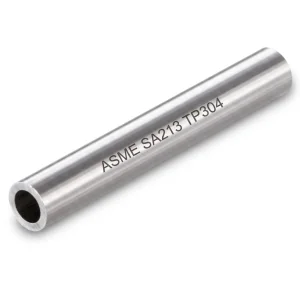



7. Comprehensive Technical Q&A (FAQ)
Addressing core engineering, regulatory, procurement, and metallurgical questions regarding PED 2014/68/EU piping certification.
