
Featured Custom Tubing Solutions
Explore our standard and custom-engineered alloy tubes produced to stringent ASTM, ASME, and EN specifications with complete material certification.


High-Quality Ferritic & Martensitic Steels 410 • UNS S41000• 1.4512 Suppliers, Factories
View Product Details
High-Quality Super Duplex Steels 32760 • S32760 • 1.4501 Manufacturers, Suppliers
View Product Details
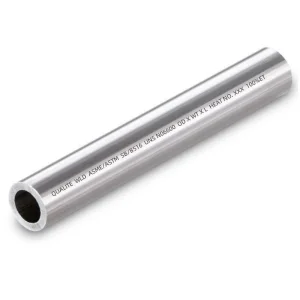
High-Quality Nickel Alloy Tubes 600 • UNS N06600 • 2.4816 Manufacturer, Manufacturers
View Product Details


1. Global Commercial & Industrial Status: The Shift Toward Ultra-Alloys
Analyzing macro trends, industrial escalation in harsh environments, and the strategic imperative of custom nickel tubing in next-generation processing infrastructure.
The global processing industry is undergoing a monumental paradigm shift. As chemical synthesis processes push to higher pressures, subsea oil and gas extraction reaches extreme depths, and thermal power generation shifts toward supercritical regimes, standard austenitic stainless steels (such as 304L and 316L) frequently encounter mechanical and chemical boundaries. In environments characterized by concentrated chlorides, hot organic acids, high-pressure hydrogen, and aggressive sulfur compounds, catastrophic failures driven by Chloride Stress Corrosion Cracking (CSCC), pitting, and crevice degradation result in billions of dollars in unplanned downtime annually.
Consequently, engineering firms, EPC (Engineering, Procurement, and Construction) contractors, and original equipment manufacturers (OEMs) worldwide are increasingly standardizing on custom nickel alloy tubing. Nickel-chromium-molybdenum matrices provide structural stability, high thermal conductivity, low thermal expansion, and unparalleled passivity across extreme electrochemical potentials. From deep-sea umbilical systems to high-temperature green hydrogen electrolyzer stacks, custom nickel alloy tubing represents the cornerstone of modern industrial reliability.
Severe Chemical Synthesis
Processes involving boiling nitric acid, acetic acid catalysts, hydrofluoric solutions, and wet chlorine gas demand tailored nickel formulations like Hastelloy® C276 and Alloy 625 to prevent localized dissolution and wall thinning.
Clean Energy Transition
Supercritical CO2 loops, concentrated solar power receivers, and high-temperature steam electrolysis units rely on Incoloy® 800H/800HT tubes for superior creep-rupture strength above 600°C.
Subsea & Marine Operations
Offshore oil platforms and seawater desalination plants utilize Incoloy® 825 and Monel® 400 for control tubing exposed to high ambient sulfide levels and hyper-saline brine recirculators.
2. Metallurgy, Engineering Specifications & Chemical Profiles
Understanding the microstructural mechanics of custom nickel tubing alloys: Inconel®, Incoloy®, Hastelloy®, and Monel® formulations.
The primary advantage of custom nickel alloy tubing lies in its versatile atomic structure. Nickel exhibits a face-centered cubic (FCC) crystal structure that remains stable from cryogenic temperatures up to its melting point. This matrix accepts significant solid-solution strengthening elements—such as Chromium (Cr) for oxidation resistance, Molybdenum (Mo) and Tungsten (W) for pitting resistance, and Iron (Fe) or Cobalt (Co) for mechanical enhancement—without undergoing brittle phase transformations.
| Alloy Grade | UNS / W.Nr. | Nominal Chemical Composition | Tensile / Yield (MPa) | Max Temp (°C) | Key Corrosion Profile |
|---|---|---|---|---|---|
| Inconel 600 | UNS N06600 / 2.4816 | 72% Ni, 15.5% Cr, 8% Fe | 550 / 240 | 1093°C | Immune to chloride-ion stress corrosion cracking; excellent high-temp oxidation resistance. |
| Inconel 625 | UNS N06625 / 2.4856 | 58% Ni, 21.5% Cr, 9% Mo, 3.6% Nb | 830 / 415 | 982°C | Exceptional resistance to pitting/crevice corrosion, fatigue strength, and marine chloride environments. |
| Incoloy 800HT | UNS N08811 / 1.4959 | 32% Ni, 21% Cr, 45% Fe, (Al+Ti control) | 500 / 170 | 1100°C | Controlled grain size for maximum creep-rupture performance at elevated industrial temperatures. |
| Incoloy 825 | UNS N08825 / 2.4858 | 42% Ni, 21.5% Cr, 3% Mo, 2.2% Cu | 580 / 240 | 540°C | Outstanding resistance to reducing/oxidizing acids, phosphoric acid, and sulfuric environments. |
| Hastelloy C276 | UNS N10276 / 2.4819 | 57% Ni, 16% Cr, 16% Mo, 4% W | 750 / 355 | 1040°C | Premier choice for aggressive wet chlorine, ferric/cupric chlorides, and strong acid mixtures. |
Pitting Resistance Equivalent Number (PREN) Insights
For nickel-chromium-molybdenum alloys, resistance to localized pitting corrosion is mathematically evaluated via PREN: PREN = %Cr + 3.3(%Mo + 0.5%W) + 16%N. While standard 316L achieves a PREN of ~25, Alloys like Inconel 625 and Hastelloy C276 achieve PREN values exceeding 50 and 68 respectively, providing virtually complete immunity to localized marine brine attack.
3. China Industry 4.0: Supply Chain Resilience & Smart Factory Advantages
How state-of-the-art Chinese manufacturing bases integrate digital metallurgy, precision cold pilgering, and continuous bright annealing to yield unparalleled cost-efficiency and quality assurance.
Over the past decade, China’s specialty steel and nickel alloy manufacturing infrastructure has undergone a comprehensive technological transformation. Modern Chinese production hubs have moved beyond basic fabrication to establish fully digitized, smart-factory ecosystems operating under strict ISO 9001, ISO 14001, and IATF 16949 quality control systems.
VIM + ESR Melting Control
By leveraging Vacuum Induction Melting (VIM) coupled with Electroslag Remelting (ESR), raw ingot chemistry is controlled down to parts-per-million (ppm) levels, eliminating inclusions and ensuring grain uniformity.
Multi-Roll Cold Pilgering
Automated multi-roll cold reduction mills refine dimensional tolerances for outside diameter (OD) and wall thickness (WT) down to ±0.05 mm, producing ultra-smooth interior surface finishes (Ra < 0.4 µm).
Hydrogen Bright Annealing
Continuous inline hydrogen-atmosphere furnaces heat treat custom tubing at temperatures reaching 1180°C. This eliminates oxidation scaling, preserving a mirror-like finish without the need for acid pickling.
Furthermore, China's end-to-end supply chain integration—from localized raw material refining to specialized custom tube bending and non-destructive examination (NDE)—enables dramatic lead-time reductions. Where Western mills frequently quote 16 to 24 weeks for custom alloy tube production, advanced Chinese manufacturers consistently deliver certified, fully compliant batches within 4 to 6 weeks, providing global buyers with superior supply chain agility.
4. Enterprise Sourcing & Total Cost of Ownership (TCO) Optimization
A strategic blueprint for procurement officers, EPC sourcing leads, and quality directors to minimize lifetime risk and optimize capital expenditures.
When procuring high-performance nickel alloy tubing, evaluating options solely on initial per-meter cost (CAPEX) can lead to misleading conclusions. In critical heat exchanger bundles, offshore platform lines, or furnace coils, tube failure results in exponential costs: lost production revenue, emergency maintenance crew mobilization, toxic chemical containment, and environmental fines.
The TCO Equation
Total Cost of Ownership = Purchase Price + Installation Cost + Maintenance + Failure Risk - Scrap Value. Specifying a custom Alloy 625 tube with a 25-year service life versus replacing a 316L tube every 3 years reduces net operational costs by up to 65% over the asset lifecycle.
Essential QA/QC Documentation
Global procurement teams must mandate full traceability. Every order of custom nickel tubing must be accompanied by an EN 10204 3.1 Mill Test Certificate (MTC) detailing heat chemistry, mechanical pull tests, hydrostatic pressure logs, and grain size analysis.
Third-Party Inspection (TPI)
For high-risk offshore or nuclear applications, certified EN 10204 3.2 inspection involving independent third-party agencies (such as TÜV, SGS, Lloyd's Register, or DNV) ensures 100% compliance with client specifications prior to dispatch.
5. Localized Industrial Application Scenarios
Where custom nickel alloy tubing delivers mission-critical reliability across diverse operating environments.
Oil & Gas Subsea Umbilicals
Installed at seabed depths exceeding 2,000 meters, continuous coiled custom Incoloy® 825 and Inconel® 625 tubes convey hydraulic fluid, methanol, and chemical inhibitors to wellheads without risk of sour-gas (H2S) pitting.
Chemical Reactor Heat Exchangers
Custom U-bent Hastelloy® C276 tubes inside shell-and-tube heat exchangers efficiently cool aggressive reactants, offering immunity to chloride-induced localized attack and micro-fissuring.
Nuclear & Power Boiler Tubes
Inconel® 600 and Incoloy® 800HT straight steam generator tubes withstand intense neutron bombardment, thermal cycling, and high-velocity steam erosion without degradation.
6. Technical Comparison: Seamless vs. Welded & Cold Drawn (W&D) Tubing
Selecting the optimal tube structure based on design code pressure limits, wall uniformity, and budget objectives.
| Evaluation Parameter | Seamless Nickel Alloy Tubes (ASTM B167 / B444 / B163) | Welded & Cold Drawn (W&D) Tubes (ASTM B704 / B705) |
|---|---|---|
| Manufacturing Process | Extruded hollow billet followed by cold pilgering and drawing. No longitudinal weld seam exists. | Precision strip roll-formed, TIG/Laser welded autogenously, followed by cold drawing over a mandrel. |
| Pressure Rating | Maximum allowable design pressure rating (ASME Code Factor E = 1.0). Ideal for ultra-high pressures (> 5,000 PSI). | Design factor typically E = 0.85 unless 100% radiographed/NDT tested to achieve E = 1.0 equivalence. |
| Wall Thickness Uniformity | Concentricity tolerance typically ±10% to ±12.5% of nominal wall thickness due to extrusion drift. | Superior concentricity tolerance (±5% or better) inherited from precision cold-rolled strip feed. |
| Internal Surface Roughness | Standard cold drawn surface finish (Ra 0.8–1.2 µm), requiring mechanical polishing for sanitary grades. | Exceptionally smooth ID finish (Ra 0.4–0.6 µm) achieved directly after mandrel drawing and bright annealing. |
| Cost & Lead-Time | Higher production cost, complex raw billet lead times, higher material waste during extrusion. | Cost-effective (15–30% savings), rapid raw strip availability, faster cold-drawing production cycles. |
Additional Specialty Alloy Tubing
Browse our complete catalog of high-nickel, super-austenitic, super-duplex, and titanium alloy tubing engineered for specialized industrial service.
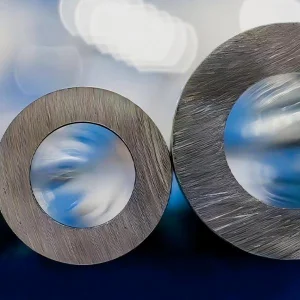

High-Quality Super Austenitic Steels 254SMO • UNS S31254 • 1.4547 Factory, Factories
View Product Details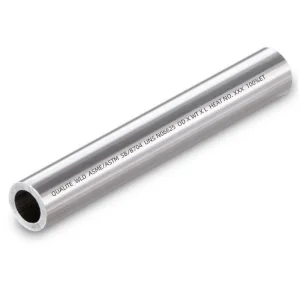


High-Quality Nickel Alloy Tubes 800HT • UNS N08811 • 1.4959 Manufacturer, Product
View Product Details
Custom Ferritic & Martensitic Steels 405 Stainless Steel Tubes, UNS S40500, 1.4002 Suppliers, Products
View Product Details
7. Enterprise Technical FAQ: Procurement & Engineering Insights
Addressing common technical inquiries regarding custom nickel alloy tube manufacturing tolerances, material selection, testing standards, and compliance.
Q1: What standard dimensional tolerances apply to custom nickel alloy tubing?
Custom nickel alloy tubes are typically produced to international standards such as ASTM B163 (for heat exchanger tubes), ASTM B444 / B167 (for seamless pipe/tube), and EN 10216-5. Standard OD tolerances range from ±0.08 mm to ±0.15 mm for cold drawn precision tubing. Wall thickness tolerances are generally controlled within ±10%. Custom tight tolerances (down to ±0.03 mm OD) can be produced upon request for specialized instrument or hydraulic applications.
Q2: How do I decide between Inconel 625 and Incoloy 825 for a chemical process line?
Selection depends primarily on the aggressive agent and operating temperature. Incoloy® 825 (42% Ni, 21.5% Cr, 3% Mo, 2.2% Cu) is highly cost-effective for sulfuric, phosphoric, and organic acid environments up to ~540°C. Inconel® 625 (58% Ni, 21.5% Cr, 9% Mo, 3.6% Nb) offers significantly higher strength, higher Molybdenum content, and a higher PREN (>50), making it superior for extreme pitting, crevice corrosion, and high-temperature service up to 982°C.
Q3: What non-destructive testing (NDT) procedures are performed on custom nickel tubes?
To ensure zero defect delivery, 100% of custom nickel alloy tubes undergo non-destructive inspection. Standard testing includes continuous Eddy Current Testing (ECT) per ASTM E426 or Ultrasonic Testing (UT) per ASTM E213 for flaw detection. Additionally, hydrostatic pressure testing up to 10,000 PSI (or pneumatic testing under water) and Positive Material Identification (PMI) via X-ray fluorescence (XRF) spectroscopy are performed prior to release.
Q4: Are heat treatment certifications provided with U-bent nickel alloy tubes?
Yes. When custom nickel alloy tubes are bent into U-shapes for heat exchanger bundles, the cold-worked bend area undergoes localized stress-relief heat treatment or full solution annealing (per ASTM A688 / B163 requirements). MTC documentation explicitly includes post-bending heat treatment temperature charts and hardness verification across the bend radius.
Q5: Why choose hydrogen bright annealing over conventional mill pickling?
Hydrogen bright annealing takes place in a controlled, oxygen-free pure hydrogen environment. This prevents surface oxidation from forming, producing a chemically clean, mirror-smooth ID and OD surface finish without acid etching. Pickling, by contrast, creates surface micro-roughness that can harbor contaminants and accelerate pitting initiation in high-purity or hygienic environments.
Q6: How does Chinese manufacturing offer significant lead-time advantages?
Integrated Chinese manufacturing centers maintain dedicated raw material master heats (VIM/ESR ingots and hollows) for quick re-drawing. Supported by automated multi-roll cold pilger mills and continuous hydrogen annealing lines operating 24/7, production cycles are streamlined. Global buyers benefit from reduced delivery times—often within 4 to 6 weeks—complete with EN 10204 3.1/3.2 MTC compliance and full logistics support.
