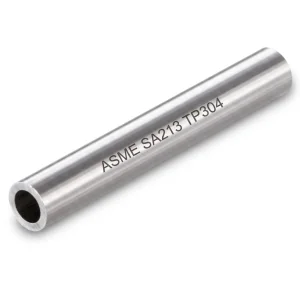
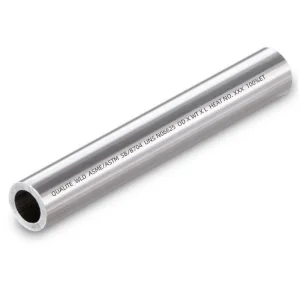
Explore our core catalog of certified seamless, welded, and cold-drawn stainless steel and nickel alloy pipe products engineered for ultra-pure, sanitary, and critical fluid transport applications globally.

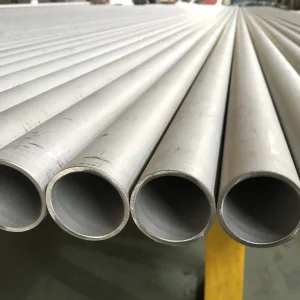






In high-purity industrial fluid management, the choice of piping hardware dictates contamination thresholds, process efficiency, and long-term operating costs. As global biopharmaceutical manufacturing, ultra-pure food and beverage processing, and semiconductor chemical delivery systems accelerate toward unprecedented purity metrics, Custom Sanitary Stainless Pipe Suppliers & Factory engineering has evolved beyond simple dimensions into advanced metallurgy, surface chemistry, and automated fabrication precision.
Sanitary stainless piping differs fundamentally from commercial process piping. While standard ASTM A312 structural or industrial pipe prioritizes bulk mechanical strength and general fluid transport, sanitary stainless tubing—compliant with ASTM A270, ASME BPE, DIN 11850, and ISO 2037—is specifically manufactured to eliminate internal surface anomalies, crevice corrosion triggers, micro-porosity, and bacterial adherence sites. Modern processing plants require full Clean-In-Place (CIP) and Steam-In-Place (SIP) compatibility, demanding internal surface roughness ($Ra$) values down to ultra-smooth electropolished finishes below 0.38 $\mu$m (15 $\mu$in).
Global supply chains increasingly demand green steel initiatives. Leading sanitary pipe factories now utilize low-carbon electric arc furnace (EAF) melting techniques combined with argon-oxygen decarburization (AOD) and vacuum induction melting (VIM) to ensure pristine elemental chemistry, low non-metallic inclusions, and reduced embedded carbon footprints.
To guarantee repeatable, automated orbital welding results without weld-pool shift or penetration asymmetry, sanitary grade TP316L chemistry is restricted to controlled sulfur levels between 0.005% and 0.017% per ASME BPE standard provisions, dramatically reducing micro-fissuring risks.
Custom sanitary stainless steel pipe production requires specialized manufacturing routes. Depending on pressure requirements, system fluid dynamics, and industry specifications, pipes are produced via either seamless cold-pilgering/drawing or precision continuous TIG/Laser welding combined with bead reduction and cold drawing.
| Alloy Grade | UNS / EN Designation | Pitting Resistance (PREN) | Primary Sanitary Application | Key Metallurgical Characteristic |
|---|---|---|---|---|
| TP304L | UNS S30403 / 1.4307 | 18.5 – 20.0 | Food & Beverage, Dairy, Brewery Lines | Low-carbon non-magnetic austenite; excellent general formability. |
| TP316L | UNS S31603 / 1.4404 | 23.0 – 25.5 | Biopharm WFI, High-Purity CIP/SIP | 2.0-3.0% Molybdenum addition prevents chloride pitting corrosion. |
| TP316L (BPE Grade) | UNS S31603 (Low S) | 24.0 – 26.5 | Ultra-Pure Bio-Pharma Process Lines | Controlled sulfur (0.005-0.017%) optimized for automated orbital welding. |
| AL-6XN / 6Mo | UNS N08367 / 1.4547 | ≥ 43.0 | High-Saline Food, Buffer Prep, Acids | Super-austenitic 6% Moly alloy resisting severe pitting and crevice attack. |
| Super Duplex 2507 | UNS S32750 / 1.4410 | ≥ 42.0 | High-Pressure Sanitary Desalination & Media | Dual-phase ferritic-austenitic structure delivering double mechanical yield strength. |
High-precision autogenous TIG (GTAW) or plasma-laser welding produces seamless-equivalent weld beads. The internal weld bead is mechanically flush-rolled and cold worked to remove micro-ridges where bio-films can anchor.
Thermal heat treatment conducted inside a 100% pure hydrogen atmosphere ($>-50^\circ\text{C}$ dew point) prevents heat tint oxidation. This restores full ductility and recrystallizes the austenitic grain matrix without requiring acid pickling.
Welded & Drawn (W&D) tubing undergoes plug or mandrel drawing to enforce uniform wall thickness tolerances ($\pm 5\%$) and precise outside diameter (OD) dimensional control required by automatic welding clamps.
In high-purity biopharmaceutical and hygienic fluid applications, internal surface finish is the primary defense against bacterial fouling, biofilm growth, and rouge formation. Mechanically polished surfaces retain microscopic peaks and valleys. In contrast, Electropolishing (EP) electrochemically dissolves surface micro-projections, yielding a mirror-like finish while enriching the passive chromium layer.
ASME BPE categorizes internal surface finish designations based on maximum roughness average ($Ra$):
- SF1: Mechanical Polish $Ra \le 0.51 \mu\text{m}$ ($20 \mu\text{in}$)
- SF2: Mechanical Polish $Ra \le 0.64 \mu\text{m}$ ($25 \mu\text{in}$)
- SF3: Mechanical Polish $Ra \le 0.76 \mu\text{m}$ ($30 \mu\text{in}$)
- SF4 (Standard EP): Electropolished $Ra \le 0.38 \mu\text{m}$ ($15 \mu\text{in}$)
- SF5: Electropolished $Ra \le 0.51 \mu\text{m}$ ($20 \mu\text{in}$)
- SF6: Electropolished $Ra \le 0.64 \mu\text{m}$ ($25 \mu\text{in}$)
Electropolishing combined with controlled citric or nitric acid passivation removes free iron particles ($Fe$) from the surface matrix, elevating the Chromium-to-Iron ratio ($Cr/Fe$) above 1.5.
Auger depth profiling verifies an oxide layer depth $> 20$ Ångströms, providing immunity against pinhole pitting and thermal oxidation under aggressive 121°C Steam-In-Place (SIP) thermal cycling.
As a dedicated original equipment manufacturer and custom sanitary stainless pipe factory supplier, engineering capabilities extend far beyond stock tubing bundles. We provide tailor-made, project-specific fabrication for tier-1 engineering companies and OEM plant equipment builders worldwide.
Ultra-pure Water for Injection (WFI), purified water distribution loops, and fermentation vessels require low-sulfur ASME BPE TP316L EP tubing ($Ra \le 0.38 \mu\text{m}$) bagged in cleanroom-compliant double polyethylene sleeves.
Compliant with 3-A Sanitary Standard 33-03 and EHEDG guidelines. Mechanically polished TP304L/316L pipes engineered for milk, juice, soft drink, and brewery pasteurization systems resistant to CIP alkaline wash cycles.
Ultra-High Purity (UHP) gas transfer lines using electropolished 316L VIM-VAR (Vacuum Induction Melt - Vacuum Arc Remelt) material with moisture levels below 1 ppb and zero particle generation.
Procurement directors and quality assurance managers evaluating bulk sanitary pipe suppliers must balance Total Cost of Ownership (TCO) against compliance risks. A single uncertified pipe batch installed in a sterile bioprocessing loop can lead to catastrophic contamination, product recalls, and multi-million-dollar plant shutdowns.
Every production heat undergoes non-destructive and destructive testing prior to release:
- 100% Eddy Current Testing (ASTM A1016): Detects internal/external longitudinal seam discontinuities.
- Hydrostatic Testing: Pressure verified up to 200 bar (2900 psi).
- PMI Material Verification: X-ray Fluorescence (XRF) alloy chemistry confirmation.
- Boroscopic Inspection: 360-degree internal video camera examination for weld bead uniformity.
- Mechanical Flaring & Flattening: Verifies wall ductility without micro-fracturing.
All shipments are issued with genuine Mill Test Reports (MTR) compliant with EN 10204 3.1 certification. Independent 3.2 third-party inspections (SGS, TÜV, Lloyd's Register, Bureau Veritas) are routinely executed to validate:
- Ladle chemistry melt analysis and product check.
- Grain size determination (ASTM E112 ≥ 7).
- Intergranular corrosion testing (ASTM A262 Practice E).
- Surface roughness profilometer trace recordings.
As industry 4.0 automation merges with high-purity metallurgical processing, the future of custom sanitary pipe manufacturing is being reshaped by three major technological breakthroughs:
Development of thin-film piezo-electric sensor layers embedded into external pipe walls to monitor real-time biofilm growth, wall erosion, and CIP chemical concentration levels without breaching internal sterile fluid boundaries.
Transitioning high-tier pharmaceutical lines toward double-vacuum-melted (VIM + VAR) TP316L alloys featuring total non-metallic inclusion ratings near zero, suppressing rouge formation under high-temperature WFI circulation.
Integrating artificial intelligence vision algorithms with 4K laser boroscopy during factory production to automatically detect surface defects down to 1 micron, ensuring flawless zero-defect delivery.
While both specifications cover seamless and welded austenitic stainless steel tubing for general service, ASTM A270 is dedicated specifically to sanitary applications. ASTM A270 mandates stringent internal surface finish requirements ($Ra$ limits), detailed visual/boroscopic surface inspection, specialized dimensional tolerance controls for orbital welding, and thorough cleaning/packaging procedures to prevent organic contamination. Standard ASTM A269 does not guarantee internal mechanical or electropolished surface roughness metrics unless custom-ordered.
Sulfur acts as a surface-tension modifying agent during arc welding. Variable or ultra-low sulfur levels ($< 0.003\%$) alter Marangoni convection currents inside the molten weld pool, causing fluid to flow outward rather than inward. This results in shallow, wide weld penetration or weld-wandering. By controlling sulfur strictly between 0.005% and 0.017%, automated orbital welding machines achieve consistent, full-penetration butt welds with symmetrical internal bead geometry without micro-fissuring.
Mechanical polishing cuts and deforms surface metal, creating micro-scratches, stress risers, and embedding microscopic polishing compounds into the steel surface. Electropolishing is a reverse-galvanic electrochemical process that micro-machines high spots, removes embedded contaminants, stress-relieves the surface skin, and selectively dissolves iron over chromium. This elevates the surface $Cr/Fe$ ratio from $\approx 1.0$ to $\ge 1.5$, producing an ultra-passivated oxide film ($\approx 20-30$ Å) that provides vastly superior resistance to pitting, biofilm adhesion, and rouging.
Delta ferrite is a magnetic phase that forms in austenitic stainless steel during solidification. A small ferrite content (typically 3 to 10 Ferrite Number / FN) is desirable in raw welded tubing to prevent hot cracking during mill fabrication. However, excessive ferrite ($> 10 \text{ FN}$) can transform into brittle sigma phase during heat treatment or suffer selective corrosion attack in severe chemical environments. Custom sanitary pipe suppliers carefully balance chromium/nickel equivalents (via Schaeffler or WRC-1992 diagrams) to maintain ideal ferrite levels.
Standard TP316L (PREN $\approx 25$) performs admirably in pure water, dairy, and low-chloride media. However, in applications involving high temperatures combined with aggressive chlorides—such as salty food processing (ketchup, soy sauce, cheese brine), acidic buffer preparation, or hot saline solutions—TP316L suffers chloride stress corrosion cracking (SCC) and severe pitting. Specifying AL-6XN (PREN $\ge 43$) or Super Duplex 2507 (PREN $\ge 42$) provides complete immunity to chloride SCC while maintaining hygienic sanitary cleanability.
Review additional custom piping grades manufactured in our specialized factory facilities, meeting rigorous ASTM, ASME, DIN, and EN industrial specifications.