
Featured Austenitic & Specialty Alloy Tubing
Precision-engineered tubular products manufactured to strict ASTM, ASME, and EN standard tolerances.
-
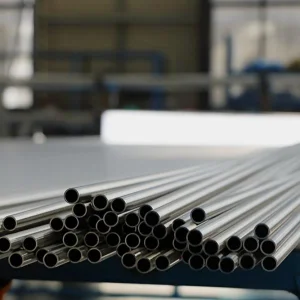
High-Quality Austenitic steel ASME SA213 · TP321 Manufacturer, Supplier
-

Custom Nickel Alloy Tubes 800 • UNS N08800 • 1.4876 Manufacturer, Products
-

Custom Austenitic Steels 310S • UNS S31008 • 1.4845 Supplier, Suppliers
-

Custom Nickel Alloy Tubes 825 • UNS N08825 • 2.4858 Suppliers, Product
-

Custom Nickel Alloy Tubes 400 • UNS N04400 • 2.4360 Manufacturer, Products
-
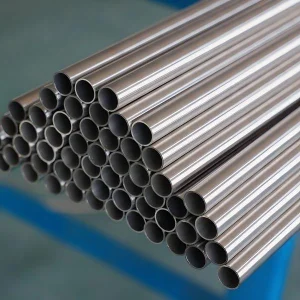
High-Quality Austenitic steel ASME SA213 · TP304H Manufacturer, Products
-

High-Quality Austenitic steel ASME SA269 · TP321 Supplier, Products
-

Custom Austenitic steel ASME SA312 · TP304L Suppliers, Factories
Executive Summary & Metallurgical Foundations of SS 304 Tubing
An in-depth analysis of UNS S30400 / EN 1.4301 material composition, structural mechanics, and corrosion dynamics for global EPC buyers.
Chemical Phase Microstructure
Stainless steel Grade 304 is an austenitic iron-chromium-nickel alloy governed by the face-centered cubic (FCC) crystal lattice. This specific crystal matrix provides remarkable toughness from cryogenic temperatures up to elevated heat regimes. The presence of minimum 18% Chromium guarantees the formation of a self-healing, microscopic Chromium Oxide (Cr₂O₃) passive layer upon exposure to oxygen, delivering robust defense against atmospheric and chemical oxidation.
Key Standards: ASTM A213, ASTM A249, ASTM A269, ASTM A312Corrosion Resistance Metrics
Grade 304 exhibits superior performance across a broad spectrum of atmospheric environments and many corrosive media. However, in environments containing chloride ions (such as marine zones or concentrated saline processing), 304 is subject to localized pitting and crevice corrosion. Engineers must evaluate the Pitting Resistance Equivalent Number (PREN), typically ranging between 18.0 and 20.0 for Standard 304, when designing critical fluid transport systems.
Max Operating Temp: 870°C (Intermittent) / 920°C (Continuous)| Element / Grade Specification | Carbon (C) | Chromium (Cr) | Nickel (Ni) | Manganese (Mn) | Silicon (Si) | Phosphorus (P) | Sulfur (S) |
|---|---|---|---|---|---|---|---|
| SS 304 (UNS S30400) | 0.08% Max | 18.00 - 20.00% | 8.00 - 10.50% | 2.00% Max | 0.75% Max | 0.045% Max | 0.030% Max |
| SS 304L (UNS S30403) | 0.030% Max | 17.50 - 19.50% | 8.00 - 12.00% | 2.00% Max | 0.75% Max | 0.045% Max | 0.030% Max |
| SS 304H (UNS S30409) | 0.04 - 0.10% | 18.00 - 20.00% | 8.00 - 10.50% | 2.00% Max | 0.75% Max | 0.045% Max | 0.030% Max |
Global Industry Trends & Procurement Demands (2025–2030)
How macro-economic shifts, decarbonization mandates, and supply chain diversification shape modern stainless steel pipe sourcing.
Green Steel & Carbon Footprint Reduction
International EPC contractors increasingly demand EPD (Environmental Product Declarations) for custom SS 304 pipes. Factories utilizing Electric Arc Furnaces (EAF) powered by renewable energy are gaining significant supply advantages in European and North American markets.
Ultra-Precision & Tight Tolerances
High-tech automation, semiconductor cleanrooms, and pharmaceutical skids require SS 304 pipes with specialized bright annealed (BA) or electro-polished (EP) inner surfaces, featuring surface roughness as smooth as Ra < 0.25 µm.
Resilient Dual-Sourcing Strategies
To mitigate tariff volatilities and logistical bottlenecks, enterprise procurement divisions are forming long-term contractual partnerships directly with fully integrated manufacturing mills offering mill test certificates (EN 10204 3.1/3.2).
Custom Manufacturing Process Routes & Tolerances
From cold drawing seamless billets to automated TIG/Laser welded pipe production, examine our precision processing pathways.
1. Seamless SS 304 Pipe Fabrication
Cold Pilgering and Cold Drawing processes transform continuous hollow bar billets into high-pressure seamless tubing under ASTM A213 / A312 standards. Seamless pipes eliminate longitudinal weld seams, offering higher structural integrity under elevated pressure regimes (calculated using Barlow's Formula).
- Outside Diameter (OD): 4.00 mm to 114.30 mm
- Wall Thickness (WT): 0.50 mm to 12.00 mm
- Heat Treatment: Solution Annealed at 1040°C - 1100°C followed by rapid water quench
2. Welded & Drawn (W&D) SS 304 Tubing
Formed from precision-rolled steel strip using automatic autogenous TIG or Plasma arc welding without filler metal. Post-weld, the pipe undergoes cold drawing over a plug (DOM) to completely refine the weld bead, delivering precise concentricity and smooth interior surfaces.
- Applicable Standards: ASTM A249, ASTM A269, EN 10217-7
- Weld seam 100% Eddy Current & Hydrostatic tested
- Superior wall thickness uniformity compared to seamless routes
| Standard Specification | OD Tolerance Range | Wall Thickness Tolerance | Ovality Limit | Straightness Tolerance |
|---|---|---|---|---|
| ASTM A269 / A213 | ±0.10 mm (OD < 12.7 mm) to ±0.20 mm | ±10% of nominal wall | Within OD tolerance bandwidth | 1.0 mm per 1000 mm length |
| ASTM A312 (Nominal Pipe) | +0.40 mm / -0.80 mm (NPS 1/8 to 1-1/2) | -12.5% of nominal wall | Per ASME B36.19M code | 3.0 mm per 3000 mm length |
| EN 10216-5 / EN 10217-7 | Class D3 (±0.75% or ±0.3 mm) | Class T3 (±10% or ±0.2 mm) | Max 1.5% of actual OD | 0.0015 × total length |
Macro-Industry Solutions & Engineered Deployments
Tailored technical configurations of SS 304 pipes across demanding global sector infrastructure.
Chemical & Petrochemical Skids
Used for non-severe acid fluid transport, organic chemicals, and process steam lines. Custom SS 304 pipes prevent product contamination while resisting stress-corrosion cracking below 60°C operating thresholds.
Food, Dairy & Sanitary Piping
Conforming to ASTM A270 standards with mechanically polished internal diameters (Ra < 0.4 µm) to eliminate bacterial traps. Essential for CIP (Clean-in-Place) and SIP (Sterilize-in-Place) process systems.
Power Generation & Heat Exchangers
Custom U-bend and straight feed-water heater tubes engineered per ASTM A249 / A213. Designed for thermal endurance, low creep rates, and minimal wall thinning during precision mandrel bending.
Localized Support, Compliance & Quality Auditing
Rigorous non-destructive testing, international certification, and seamless regional procurement support.
Non-Destructive Testing (NDT) Protocols
Every custom SS 304 pipe batch undergoes 100% mandatory quality verification in accordance with international buyer standards prior to dispatch:
- Hydrostatic Testing: Pressures up to 20 MPa maintained to verify zero micro-leakage.
- Eddy Current Inspection (ET): Per ASTM E426 to detect internal/external longitudinal defects.
- Ultrasonic Testing (UT): Per ASTM A388 for heavy-wall seamless pipe integrity verification.
- PMI Verification: X-Ray Fluorescence (XRF) alloy chemistry confirmation on every length.
Global Logistics & Regional Compliance
Navigating cross-border steel regulations with certified expertise and full documentation packages:
- EN 10204 3.1 & 3.2 MTC: Fully traceable heat number logs with independent TUV/SGS 3rd party sign-offs.
- Import Tariff Compliance: HS Code 7304.41 (Seamless) & 7306.40 (Welded) optimized logistics.
- Export Packaging: Seaworthy wooden cases, plastic end-caps, hex-bundled with protective wrapping.
- Regional Warehousing: Strategic stocking centers in Asia and Europe for short lead-time delivery.
Technological Roadmap & Future Outlook
Pioneering next-generation manufacturing technology for high-performance stainless steel tubing.
Phase 1: Automated Smart AI Quality Monitoring
Implementation of real-time machine vision and thermal imaging along the welding seam to detect micro-porosity at mill speeds over 30 m/min.
Phase 2: Ultra-Clean Hydrogen Energy Tubing
Developing low-sensitization SS 304/304L variants customized for high-pressure hydrogen refueling infrastructure, minimizing hydrogen embrittlement risks.
Phase 3: Zero-Emissions Closed-Loop Manufacturing
Transitioning heat treatment bright annealing furnaces to 100% green hydrogen combustion, eliminating fossil-fuel emissions across the mill line.
Frequently Asked Questions (Engineering Consultation)
Expert answers to key technical and procurement queries for custom SS 304 pipes.
What is the difference between standard SS 304, 304L, and 304H pipes?
The primary distinction lies in Carbon content. SS 304L (Low Carbon, ≤ 0.030%) prevents carbide precipitation during welding, preserving corrosion resistance along the heat-affected zone (HAZ) without requiring post-weld annealing. SS 304H (High Carbon, 0.04-0.10%) provides higher creep and tensile strength at temperatures exceeding 500°C. Standard SS 304 balances both for general structural and fluid applications.
Should I choose Seamless or Welded SS 304 pipes for my project?
Seamless pipes (ASTM A213/A312) are required for extreme high-pressure services, high-temperature boilers, or where design codes strictly prohibit longitudinal welds. Welded pipes (ASTM A249/A269) offer superior wall thickness uniformity, tighter dimensional concentricity, smoother inner surfaces, and a significantly lower cost structure for heat exchangers and process lines.
How is the maximum working pressure of a custom SS 304 pipe calculated?
Working pressure is calculated using Barlow's Formula: P = (2 × S × t) / (D × SF), where P is allowable pressure, S is allowable stress value at operating temperature, t is nominal wall thickness, D is outside diameter, and SF is the safety factor (typically 1.5 to 4.0 depending on ASME B31.3 piping codes).
Can SS 304 pipes withstand seawater or high-chloride environments?
Standard SS 304 is susceptible to pitting corrosion in water containing chloride concentrations above 200 ppm, especially at elevated temperatures. For marine or seawater service, we recommend upgrading to SS 316L (containing 2-3% Molybdenum), Duplex 2205, or Super Austenitic 254SMO / Titanium grades.
What surface finishes can your factory provide for custom orders?
We provide As-Welded, Annealed & Pickled (AP), Bright Annealed (BA), Mechanical Polish (180, 240, 320, 400 grit), and Electro-Polished (EP) surfaces. Surface roughness can be certified down to Ra < 0.25 µm (10 µin) for high-purity applications.
High-Performance & Super Alloy Tube Selection
Explore our complete range of Super Austenitic, Duplex, Super Duplex, and Titanium tubular products.
-

High-Quality Super Austenitic Steels 254SMO • UNS S31254 • 1.4547 Factory, Factories
-

Custom Austenitic Steels 310H • UNS S31009 Manufacturers, Products
-

High-Quality Austenitic steel ASME SA213 · TP316Ti Suppliers, Product
-

Custom Austenitic steel ASME SA312 · TP321 Suppliers, Product
-

High-Quality Super Austenitic Steels 904L • UNS N08904 • 1.4539 Suppliers, Factory
-

High-Quality Titanium Tubes • Grade 3•UNS R50550 Factories, Product
-

High-Quality Super Duplex Steels 2507 • S32750 • 1.4410 Manufacturer, Factories
-
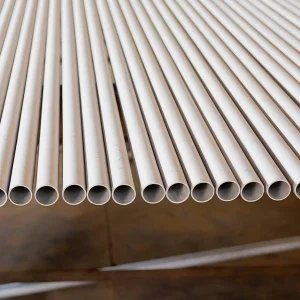
High-Quality Austenitic steel ASME SA269 · TP304 Factories, Products
