
High-Performance Austenitic & Nickel Alloy Coiled Tubes
Explore our primary certified alloy coil tubing solutions engineered to ASTM/ASME standards for severe process conditions.
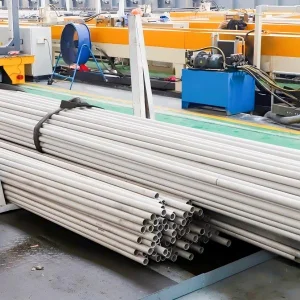







Global Business & Industrial Landscape of Stainless Steel Coil Tubing
The global demand for high-integrity continuous stainless steel (SS) coil tubes has undergone a structural expansion over the past decade. Driven by escalating operating pressures, aggressive chemical environments, and the need for zero-down-time infrastructure in subsea oil & gas, hydrogen refueling systems, geothermal energy, and ultra-pure analytical instrumentation, stainless steel coiled tubing has evolved from a niche specialty product into a critical engineering component. Leading custom stainless steel coil tube manufacturers and suppliers play an indispensable role in ensuring fluid delivery security across demanding international sectors.
Traditional straight-length piping systems require frequent mechanical fittings, orbital field welds, and complex non-destructive testing (NDT) at every connection point. In contrast, continuous long-length coiled tubes—engineered in seamless or welded & cold redrawn configurations—drastically eliminate leak paths, minimize mechanical fitting counts by up to 85%, and optimize fluid dynamics by offering smooth, uninterrupted internal bore topographies. The economic advantage of continuous coiled tubing manifests in rapid installation cycles, reduced maintenance overhead, and elevated systemic safety margins.
Market dynamic analysis indicates that North American and European sectors emphasize high-specification alloys such as UNS N08825 (Incoloy 825), Super Austenitic UNS N08904 (904L), and Duplex UNS S32205 for sour gas service and marine subsea umbilical lines. Simultaneously, rapid industrial expansion in the Asia-Pacific and Middle Eastern regions has driven massive volume requirements for standard austenitic grades including ASME SA213 TP316L, TP304L, and TP347 for heat exchangers, chemical processing plants, and boiler feed water systems.
Industry Growth Trends & Technological Evolution
Discover how advanced metallurgy, continuous cold-drawing, and smart quality monitoring redefine coil tube manufacturing excellence.
Continuous Plug Drawing (Plug-Drawn Coils)
Seamless coiled tubing production utilizes floating plug cold drawing over long lengths to achieve precise wall thickness control, tight outer diameter (OD) tolerances, and homogeneous mechanical yield strength throughout the coil length.
Bright Annealing (BA) Atmosphere Technology
Processing coiled tubing through pure hydrogen bright annealing furnaces at temperatures exceeding 1050°C prevents oxidation, removes residual drawing lubricant carbon, and yields a mirror-like finish with zero scale contamination.
Continuous Inline Eddy Current & Hydro-Testing
Advanced manufacturers integrate 100% full-length non-destructive Eddy Current Inspection (per ASTM E426) alongside inline hydrostatic pressure testing up to 10,000 PSI to guarantee micro-crack-free structural integrity.
Metallurgical Selection & Dimensional Specification Matrix
Selecting the precise chemical composition and thermal treatment state for stainless steel coil tubing dictates its operational lifespan. Grade selection must balance Pitting Resistance Equivalent Number (PREN), tensile strength, intergranular corrosion susceptibility, and working temperature limits. Below is a structural engineering matrix comparing key alloy grades supplied by leading custom manufacturers.
| Alloy Grade | UNS / EN Standard | Applicable Specs | PREN Rating | Primary Corrosion Advantage | Typical Applications |
|---|---|---|---|---|---|
| TP316L | S31603 / 1.4404 | ASME SA213 / SA269 | 23.0 - 25.0 | Resists general corrosion & chloride pitting | Hydraulic lines, instrumentation, F&B |
| TP317L | S31703 / 1.4438 | ASME SA213 / SA269 | 28.0 - 30.0 | Higher Mo content for aggressive acid media | Flue gas desulfurization, chemical process |
| TP347 / TP347H | S34700 / 1.4550 | ASME SA213 / SA312 | N/A (Stabilized) | Columbium-stabilized against chromium carbide loss | High-temp heat exchangers, steam lines |
| Alloy 825 | N08825 / 2.4858 | ASTM B704 / B515 | 31.0 - 35.0 | Exceptional resistance to H2S sour gas & SCC | Downhole chemical injection, subsea umbilicals |
| Alloy 600 | N06600 / 2.4816 | ASTM B163 / B516 | High Ni Matrix | Immune to chloride stress corrosion cracking | Nuclear steam generators, furnace tubing |
| 904L (Super SS) | N08904 / 1.4539 | ASME SA269 / SA213 | 34.0 - 36.0 | High copper addition for sulfuric acid resistance | Phosphoric acid processing, seawater cooling |
Calculated Burst Pressure & Wall Thickness Engineering Formulas
When calculating allowable working pressures ($P$) for custom coiled tubes, engineers utilize Barlow's Formula modified for allowable stress values defined in ASME B31.3:
Where S represents allowable material stress at operating temperature (PSI/MPa), t is nominal wall thickness, D is outer diameter, and E is quality factor for seamless (1.0) or welded (0.85) tubing. Custom suppliers manufacture coil tubes in wall thicknesses ranging from 0.40 mm up to 3.05 mm, and outer diameters from 4.00 mm to 114.30 mm, catering to high-pressure pneumatic, hydraulic, and process requirements.
Localized Application Scenarios & Engineering Field Integration
From subsea control lines to hydrogen refueling systems, custom coiled tubing delivers continuous performance.
1. Subsea Umbilicals & Downhole Chemical Injection
In offshore energy extraction, seamless Alloy 825 and Duplex S32205 continuous coil tubes are encased inside multi-core subsea umbilicals. They convey scale inhibitors, methanol, and demulsifiers into high-pressure subsea wells up to 3,000 meters deep without risk of joint failure.
2. Analytical & Chromatography Instrumentation
High-performance liquid chromatography (HPLC) and gas sampling systems require ultra-bright annealed (BA) TP316L tubing. The continuous smooth inner diameter (ID) minimizes fluid friction, sample tailing, and trace gas absorption, ensuring sub-ppm measurement accuracy.
3. High-Pressure Hydrogen Refueling Infrastructure
Hydrogen gas transport operating at 70 MPa (700 bar) requires specialized heavy-wall stainless coiled tubes (TP316/316L) tested for hydrogen embrittlement immunity. Continuous lengths eliminate leak paths in station dispenser panels and cooling circuits.
Technology Roadmap & Future Outlook (2025–2035)
The continuous evolution of coiled tubing production technology centers on three critical pillars: ultra-long jointless continuous lengths, high-entropy resistant alloys (HEAs), and AI-assisted real-time NDT defect recognition.
1. Advanced Laser Orbital Weld Jointing for Endless Coils
Where reel capacity requires lengths exceeding single-billet extrusion capacity (e.g., beyond 3,000 meters), top suppliers employ fully automated orbital TIG or fiber laser strip-joining prior to cold redrawing. Post-weld heat treatment ensures microstructural homogeny, rendering the seam structurally indistinguishable from parent metal under tensile strain.
2. Digital Twin Fabrication & Automated Coil Spooling
Modern production facilities implement IoT-enabled spooling machinery equipped with real-time laser micrometer arrays. Outer diameter dimensions, ovality, and wall thickness are continuously scanned at 1,000 Hz, recording a digital geometric twin for every meter of tube delivered on wooden, plastic, or steel spools.
Macro Industry Solutions: Integrated Coiled Tubing Assemblies
Beyond raw coiled tube manufacturing, leading suppliers provide customized value-added engineering solutions. These macro integration services transform coiled tubing into turnkey sub-assemblies for instant field deployment:
- Pre-Swaged Tube Bundles & Encapsulation: Coiled tubes bundled with heat-tracing cables, PVC jackets, or insulated polyurethane outer sheaths for thermal maintenance in cold-climate processing plants.
- Orbital End-Fitting Integration: Pre-flared or pre-welded high-pressure fitting terminations (e.g., Swagelok style, NPT thread adapters, or autoclave high-pressure cones) pressure-tested prior to shipment.
- Purged & Sealed Nitrogen Packaging: Internal bore cleaning to ASTM A632 standards, purged with 99.999% dry nitrogen, and capped with heavy-duty end plugs to guarantee zero particulate or moisture ingress during transoceanic shipping.
Seamless & Welded Stainless Steel Tube Series
Complete your procurement specifications with our heavy-duty austenitic, ferritic, and specialized nickel alloy products.








Engineering Questions & Technical FAQ
Expert answers to critical procurement, manufacturing, and specification inquiries.
Seamless coiled tubing (produced per ASTM A213 or A269) contains zero longitudinal welds, offering superior burst pressure limits and complete resistance to localized weld seam corrosion. Welded and cold redrawn coiled tubing (per ASTM A249 / A688) offers exceptional wall thickness concentricity and tighter dimensional tolerances at a cost-effective price point, suitable for high-volume heat exchangers and standard process lines.
Depending on outer diameter and wall thickness, seamless coiled tubes can be drawn in single continuous lengths up to 1,000 meters (3,280 ft). When continuous strip-welding and redrawing processes are utilized, continuous coil lengths exceeding 2,000 to 3,000 meters can be delivered on custom wooden or steel reels.
Bright Annealing takes place under a controlled inert gas (pure hydrogen) atmosphere. It prevents the formation of oxide scale on both the inner and outer surface. Because pickling acids are not required, the resulting surface is smoother (Ra ≤ 0.2–0.4 µm), reducing bio-fouling, contaminant adhesion, and localized pitting in sanitary or high-purity chemical applications.
Every order is issued with EN 10204 3.1 Mill Test Certificates detailing chemical analysis, tensile and yield strength, elongation, hardness, flattening, flaring, microstructural grain size examination, continuous Eddy Current test results, and hydrostatic test verification. Independent EN 10204 3.2 third-party inspection (TUV, SGS, Lloyd's) is available upon request.
As a general engineering rule of thumb, the recommended minimum centerline bend radius (CLR) for stainless steel coiled tubing is 3 to 5 times the tube outer diameter ($3D$ to $5D$) for manual bending, or $2D$ when using precision mandrel bending tools, preventing tube wall flattening or ovality beyond acceptable ASME B31.3 limits.
Request a Custom Coiled Tubing Quotation
Need technical guidance on alloy selection, wall thickness calculation, or continuous spool packaging? Our engineering sales team responds within 24 hours with certified specifications and competitive manufacturer pricing.
