
Featured Precision Stainless Steel & Alloy Micro Tubing
Explore our factory-direct precision tubing inventory, engineered for chemical process, heat exchanger, and analytical instrumentation applications.


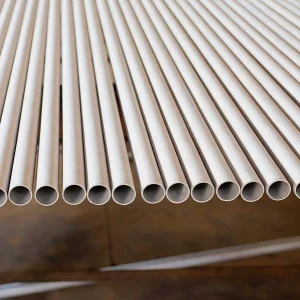


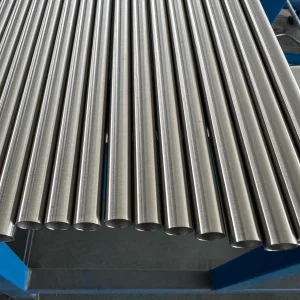


Custom Stainless Steel Micro Tubing: Technical Paradigm & Global Procurement Context
In modern advanced engineering, ultra-small diameter stainless steel tubing—commonly designated as micro tubing or precision capillary tubing—serves as the foundational conduit for critical fluidics, gas delivery, and structural micro-mechanisms.
Dimensional Precision
Manufacturing micro tubing requires refined cold-drawing technology (floating plug and sink drawing) to achieve outer diameters as small as 0.20 mm with wall thicknesses down to 0.05 mm. Dimensional consistency directly dictates micro-fluidic flow rates and burst pressure ratings.
Metallurgical Integrity
Utilizing high-purity melt chemistries—including vacuum induction melted (VIM) and vacuum arc remelted (VAR) alloys—prevents inclusions, micro-cracks, and grain boundary precipitation during intensive cold-reduction schedules.
Surface & Bore Finish
Internal surface roughness ($Ra$) is critical in medical cannulas and HPLC chromatography columns. Hydrogen bright annealing and electropolishing (EP) minimize dead volumes, prevent protein binding, and stop micro-turbulence.
Global Procurement Analysis for Micro Stainless Tubing
The global industrial landscape is experiencing an unprecedented surge in demand for custom micro tubing driven by miniaturization across biomedical engineering, high-efficiency analytical instruments, aerospace sensors, and green hydrogen technology.
Biomedical & Surgical Cannula
Medical device original equipment manufacturers (OEMs) require 316L and 304L stainless micro tubes for endoscopic instruments, biopsy needles, infusion catheters, and micro-injection systems. Strict compliance with ISO 13485 and biocompatibility testing is non-negotiable. Key technical parameters focus on burr-free electrochemical cutting, high column strength, and bendability without ovality or buckling.
Chromatography & Fluidics (HPLC/UHPLC)
In analytical chemistry, ultra-high-performance liquid chromatography (UHPLC) systems demand micro capillary tubing capable of handling pressures exceeding 15,000 PSI (1,000 bar). Micro bores must possess extraordinary concentricity and smooth inner walls ($Ra < 0.2\,\mu\text{m}$) to eliminate sample carryover, peak broadening, and baseline noise in critical diagnostic procedures.
Hydrogen Energy & Fuel Cells
As the global hydrogen economy scales, high-pressure hydrogen dispensing stations and fuel cell micro-heat exchangers require micro-tubes that resist hydrogen embrittlement. Austenitic stainless steel grades with high nickel equivalent numbers (e.g., TP316L, TP321, and alloy 800H/800HT) provide high fatigue resistance under cycling thermal and pressure stresses.
Technical Specification Matrix: Micro Tubing Alloys vs. Performance Indicators
| Grade Designation | UNS / EN Standard | Tensile Strength (MPa) | Yield Strength (MPa) | PREN Value | Primary Industrial Application |
|---|---|---|---|---|---|
| TP316L (Low Carbon) | UNS S31603 / 1.4404 | ≥ 485 | ≥ 177 | ~25 | Medical needles, HPLC columns, marine sensors |
| TP304L (Standard Micro) | UNS S30403 / 1.4307 | ≥ 485 | ≥ 177 | ~19 | General capillary, sheath heaters, automotive lines |
| TP321 (Titanium Stabilized) | UNS S32100 / 1.4541 | ≥ 515 | ≥ 205 | ~19 | High-temp aerospace, engine sensors, exhaust micro-tubing |
| TP347 (Niobium Stabilized) | UNS S34700 / 1.4550 | ≥ 515 | ≥ 205 | ~19 | High-temperature chemical processing, nuclear instrumentation |
| 254SMO (Super Austenitic) | UNS S31254 / 1.4547 | ≥ 650 | ≥ 300 | ≥ 43 | Seawater micro-cooling, aggressive acid fluidics |
| Incoloy 800HT (Nickel Alloy) | UNS N08811 / 1.4959 | ≥ 500 | ≥ 170 | N/A | Petrochemical furnace micro-tubes, high-creep environments |
Technical Roadmap: From Raw Hollows to Sub-Micron Precision
Producing micro stainless tubing requires specialized machinery, proprietary lubricants, multi-pass cold drawing techniques, and continuous inline thermal processing.
1. Micro Cold Drawing
Tubes undergo multiple cold-drawing passes utilizing custom tungsten carbide or diamond dies. Cold working increases mechanical strength via work hardening while refining dimensional tolerance to micrometric levels.
2. Hydrogen Annealing
To eliminate cold-work stress and restore ductility and corrosion resistance, tubes are bright annealed in a pure hydrogen protective atmosphere at temperatures exceeding 1,050°C, preventing surface oxidation.
3. Electrochemical Cut
Conventional mechanical sawing deforms micro-tubes and leaves internal burrs. We utilize electrochemical cutting (ECC) and precision laser cutting to yield burr-free, square cut edges with zero ID collapse.
4. Non-Destructive NDT
Each batch undergoes 100% inline Eddy Current Testing (ECT) per ASTM E426, combined with hydrostatic or pneumatic bubble testing to guarantee zero pinholes or longitudinal weld discontinuities.
Global Factory Footprint & Custom OEM Manufacturing Capabilities
Spezilla Tube Co., Ltd. operates state-of-the-art production facilities optimized for precision tube drawing, ultra-clean processing, and global logistics dispatch.
End-to-End Quality Traceability
Every shipment is backed by EN 10204 3.1 or 3.2 Inspection Certificates, providing full material heat number traceability from raw melting ingot to final packaged micro-tubes. Chemical analysis, mechanical tensile values, micro-hardness, and intergranular corrosion test results (ASTM A262 Practice E) are fully documented.
Secondary Fabrication Services
Beyond straight tubing, our factories offer extensive secondary fabrication: precision bending (U-bends, coils, serpentine shapes), flaring, swaging, slotting, chamfering, and custom tip grinding (pencil point, lancet cut, deflecting bevels) designed strictly per buyer engineering drawings.
ISO Class 7 Cleanroom Packaging
For ultra-high purity (UHP) electronics and medical applications, micro tubes undergo ultrasonic cleaning with deionized water, followed by hot nitrogen drying and sealing in double polyethylene bags inside an ISO Class 7 cleanroom environment to prevent particulate contamination during export transit.
International Standards & Compliance Assurance
Our manufacturing protocols adhere strictly to recognized global engineering specifications, ensuring seamless integration into multi-national supply chains.
ASTM A632
Standard specification for seamless and welded austenitic stainless steel tubing for general micro-diameter service.
ASTM A269 / A213
Seamless and welded stainless steel tubing for general corrosion resistance and elevated pressure/temperature boiler service.
ISO 13485 & 9001
Comprehensive quality management system certifications covering medical device component fabrication and general industrial quality control.
RoHS & REACH
Full compliance with European Union chemical safety standards, guaranteeing zero hazardous substances or heavy metal contamination.
Custom Alloy & High-Temperature Micro Tubing Products
Discover our specialized high-temperature, nickel alloy, and super austenitic tube inventory for demanding engineering solutions.








Frequently Asked Questions & Procurement Guidelines
Expert answers to critical engineering, manufacturing, and procurement inquiries regarding stainless steel micro tubing.
Micro tubing (often called capillary tubing) typically refers to small-diameter precision tubes with an Outside Diameter (OD) ranging from 0.20 mm to 6.00 mm (0.008 inches to 0.236 inches) and wall thicknesses from 0.05 mm to 0.50 mm. They are characterized by tight dimensional tolerances (often within ±0.005 mm) and high internal surface finish requirements for fluidic accuracy.
Seamless micro tubes are produced from extruded hollow billets, offering superior pressure ratings and eliminating potential longitudinal weld discontinuities—ideal for critical medical implants and extreme pressure gas systems. Welded & Drawn (W&D) micro tubes start from precision cold-rolled strip, automated TIG/Laser welded, and subsequently cold-drawn over a plug. W&D tubes offer superior wall thickness concentricity, lower cost, and smooth internal surface finishes after drawing.
In High-Performance Liquid Chromatography (HPLC), a rough internal surface creates micro-turbulences and dead zones, causing sample dispersion, peak broadening, and baseline distortion. In medical needles and catheter lines, smooth internal walls prevent blood cell hemolysis, minimize protein adhesion, and lower pressure drops during high-viscosity fluid delivery.
Standard mechanical blade cutting crushes micro tubing and leaves heavy internal burrs. Spezilla utilizes Electrochemical Cutting (ECC), laser micro-machining, and high-precision abrasive wheel cutting with secondary ultrasonic deburring. This ensures 90° square cut ends with zero internal lumen reduction or burr formation.
For operating temperatures above 550°C (1,022°F), stabilized austenitic grades such as TP321 (titanium stabilized) and TP347 (niobium stabilized) prevent intergranular chromium carbide precipitation. For extreme temperatures exceeding 800°C (1,472°F), nickel-iron-chromium alloys such as Incoloy 800H / 800HT (UNS N08811) or 310S stainless steel provide exceptional oxidation resistance and creep strength.
All orders are dispatched with comprehensive EN 10204 3.1 Material Test Certificates (MTC) detailing melt heat numbers, chemical composition (Ladle analysis), mechanical properties (Tensile, Yield, Elongation), hardness tests, non-destructive Eddy Current inspection results, and dimensional verification reports. Independent third-party inspection (EN 10204 3.2) by TÜV, SGS, or Lloyd's Register is available upon request.
