
Explore our core manufacturing catalog of high-performance austenitic, duplex, super austenitic, and specialty alloy tubes engineered for rigorous global industrial deployments.

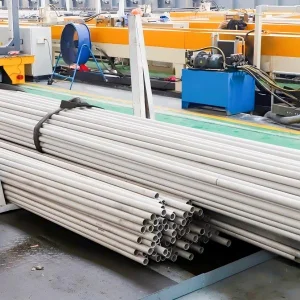




Custom Ferritic & Martensitic Steels 405 Stainless Steel Tubes, UNS S40500, 1.4002 Suppliers, Products
View Specification

Understanding the elemental synergies, phase stability, and corrosion chemistry that make custom Grade 316 tubing the global standard for demanding liquid and gas conveyance.
The Molybdenum Advantage (2.0% - 3.0%)
Grade 316 is an austenitic chromium-nickel stainless steel enriched with 2.0% to 3.0% Molybdenum (Mo). Molybdenum dramatically enhances resistance to localized pitting and crevice corrosion caused by chloride ions in seawater, brackish water, and industrial chemical solutions. Compared to standard 304 stainless steel, custom 316 tubing forms a far more stable passive chromium-molybdenum oxide film (Cr2O3 / MoO3) that rapidly self-heals when damaged in oxygen-bearing environments.
Intergranular Corrosion Immunity (316L & 316Ti)
In high-temperature welding or stress relief, standard carbon stainless steels suffer chromium carbide precipitation at grain boundaries (between 425°C and 860°C), creating chromium-depleted zones susceptible to intergranular attack (sensitization). As a dedicated factory, we produce Low Carbon 316L (C ≤ 0.030%) and Titanium-Stabilized 316Ti (UNS S31635 / 1.4571). The addition of titanium ties up carbon as insoluble TiC particles, ensuring full grain-boundary integrity during heavy welding and thermal processing.
Mechanical Toughness & Cryogenic Stability
The austenitic face-centered cubic (FCC) crystal structure of 316 tubing guarantees exceptional impact strength and ductile-to-brittle transition resistance across sub-zero cryogenic regimes (down to -196°C) up to elevated thermal limits of 870°C. Cold-drawing processes systematically elevate tensile strength (Rm ≥ 580 MPa) and yield strength (Rp0.2 ≥ 240 MPa) while maintaining excellent cold-bendability and flaring behavior.
| Alloy Grade | UNS / EN Standard | Chromium (Cr) % | Nickel (Ni) % | Molybdenum (Mo) % | Carbon (C) Max | PREN Value | Primary Industrial Service |
|---|---|---|---|---|---|---|---|
| 316 Stainless | UNS S31600 / 1.4401 | 16.0 - 18.0 | 10.0 - 14.0 | 2.0 - 2.5 | 0.08% | ~23.1 | General chemical conveyance, architectural & marine lines |
| 316L Low Carbon | UNS S31603 / 1.4404 | 16.5 - 18.5 | 10.0 - 13.0 | 2.0 - 2.5 | 0.030% | ~24.2 | Heavy welded heat exchangers, biopharma, cleanroom UHP |
| 316Ti Stabilized | UNS S31635 / 1.4571 | 16.5 - 18.5 | 10.5 - 13.5 | 2.0 - 2.5 | 0.08% (Ti 5x C) | ~24.5 | High-temperature exhaust lines, automotive, chemical coils |
| 316LN High Nitrogen | UNS S31653 / 1.4429 | 16.5 - 18.5 | 11.0 - 14.0 | 2.0 - 3.0 | 0.030% (N 0.1-0.16) | ~26.8 | Cryogenic pressure vessels, subsea hydraulic control lines |
The global market for custom 316 and 316L stainless steel tubing continues to experience robust growth, driven by stringent environmental regulations, aggressive energy transition projects, and rising quality requirements in ultra-clean manufacturing sectors.
North American Precision Procurement Trend
In the United States and Canada, custom 316L tubing demand is anchored by chemical processing infrastructure updates, green hydrogen pilot facilities, and semiconductor mega-fab construction. Engineers prioritize strict compliance with ASTM A269 (for general corrosion-resisting service) and ASTM A213 (for seamless boiler, superheater, and heat-exchanger tubes). Mill Test Certificates (MTC) conforming to EN 10204 3.1 with complete heat traceability are mandatory prerequisites for project approval.
European Union Energy & Pharma Directives
The European landscape mandates compliance with the Pressure Equipment Directive (PED 2014/68/EU) and AD 2000-W2/W10 standards. Key demand stems from offshore wind farm hydraulic control modules, modular pharmaceutical plants, and seawater desalination plants along the Mediterranean basin. Seamless cold-drawn 316Ti and 316LN tubes are overwhelmingly specified due to strict safety factors and prolonged service-life mandates exceeding 30 years.
Asia-Pacific Industrial Expansion
As the manufacturing hub of global heavy industry, the Asia-Pacific region demonstrates surging volume consumption across refining mega-complexes, LNG receiving terminals, and automotive exhaust systems. Precision manufacturers offering custom OD (from 4.00mm to 114.30mm) and wall thickness customization (0.40mm to 3.05mm) provide vital cost efficiency without compromising material purity or corrosion resistance.
Key technology shifts and market dynamics driving the next generation of custom stainless steel tubing manufacturing and factory capabilities.
1. Clean Energy & Hydrogen Storage Infrastructure
The global transition to green hydrogen requires piping systems capable of enduring ultra-high operating pressures (350 to 700 bar) and resisting hydrogen embrittlement. Custom 316LN and cold-worked high-nickel 316L seamless tubes provide the exact crystal structure stability necessary to prevent micro-fracturing in hydrogen refuelers and fuel-cell stack interconnects.
2. Ultra-High Purity (UHP) Electropolishing Demands
Modern semiconductor fabrication plants (fabs) and biopharmaceutical fermenters demand internal tube surfaces with Ra values down to 0.13 - 0.25 µm. Achieving this level of smoothness requires bright annealing in a 100% pure dry hydrogen atmosphere followed by precision mechanical honing and electropolishing (EP) to eliminate micro-cavities where contaminants or bacteria can hide.
3. Decarbonized Zero-Emission Tube Manufacturing
Leading global buyers now require green steel credentials. As an advanced factory, we leverage induction heating, closed-loop water cooling systems, and green electric annealing furnaces to reduce embodied carbon per ton of finished tubing, helping EPC contractors meet strict Scope 3 carbon emission reduction targets.
Engineered applications across critical global infrastructure where failure is not an option.
Solution A: Shell & Tube Heat Exchanger Bundles
Challenge: Thermal stress, differential expansion, and aggressive cooling water corrosion leading to premature tube breach.
Engineered Solution: Custom ASTM A249 / ASTM A213 Grade 316L U-bent tubes with precision-controlled wall thickness tolerances (±7.5%). Post-bending full solution annealing restores corrosion resistance in the bend radius, eliminating residual stress that invites chloride stress corrosion cracking (SCC).
Solution B: Subsea Hydraulic & Instrumentation Lines
Challenge: Extreme external hydrostatic pressure combined with sour gas (H2S) exposure in deepwater oil wells.
Engineered Solution: Heavy-wall seamless 316LN / 316Ti coiled tubing supplied in continuous lengths up to 25,000 meters without orbital welds. Meets NACE MR0175 / ISO 15156 standards for sour service durability.
Solution C: Sanitary Food, Beverage & Dairy Processing
Challenge: Strict FDA, 3-A, and EHEDG hygienic standards preventing product residue buildup and batch contamination.
Engineered Solution: Mechanically polished Grade 316L sanitary tubes conforming to ASTM A270 / DIN 11850. Features ID surface roughness Ra < 0.4 µm, compatible with rapid Clean-in-Place (CIP) and Sterilize-in-Place (SIP) cycles.
Solution D: Marine Desalination & Seawater Cooling
Challenge: High-velocity saline water causing erosion-corrosion and severe pitting in coastal power stations.
Engineered Solution: High-molybdenum (Mo ≥ 2.5%) 316L welded & drawn tubes subjected to 100% eddy current testing and 1.5x working pressure hydrostatic verification prior to dispatch.
From raw mother hollow selection to non-destructive testing, our fully integrated factory route ensures total batch consistency and zero-defect quality.
Stage 1: Mother Tube Selection & PMI Verification
Every manufacturing cycle begins with prime mother hollows and raw strip sourced exclusively from tier-1 steel mills. 100% Positive Material Identification (PMI) via X-ray Fluorescence (XRF) spectroscopy confirms exact chemical composition before processing.
Stage 2: Precision Cold Pilgering & Drawing
Tubes are cold-drawn or pilgered over precision mandrels to achieve exact outer diameter (OD) and inner wall dimensions. Cold working refines grain structure, enhances dimensional concentricity, and increases yield strength.
Stage 3: Bright Annealing (1040°C - 1150°C)
Tubes pass through continuous electric bright annealing furnaces under a high-purity dry hydrogen atmosphere. Rapid cooling restores full austenitic ductility and prevents scale formation, eliminating the need for aggressive acid pickling.
Stage 4: 100% Non-Destructive Testing (NDT)
Finished tubes undergo mandatory Eddy Current Testing (per ASTM E426 / EN 10246-2) and Hydrostatic Pressure Testing. Pneumatic underwater air-decay testing guarantees zero micro-pinhole leaks.
Stage 5: Surface Honing & Polishing
Mechanical polishing heads produce custom external grit finishes (180 grit, 240 grit, 320 grit, up to 400 grit mirror finish) or ultra-smooth interior bores tailored for sanitary or hydraulic applications.
Stage 6: EN 10204 3.1 / 3.2 Certification
Every shipment is accompanied by a comprehensive Mill Test Certificate detailing chemical ladle analysis, mechanical tension tests, flattening/flaring results, grain size, and NDT compliance. Third-party inspection (TUV, SGS, Lloyd's Register) available upon request.
We engineer and manufacture custom 316 tubing strictly aligned with regional building codes, engineering frameworks, and industrial standards.
| Standard Code | Region / Organization | Manufacturing Scope | Key Dimensional & Testing Criteria |
|---|---|---|---|
| ASTM A213 / ASME SA213 | United States / ASME | Seamless Austenitic Alloy Boiler & Heat Exchanger Tubes | Strict minimum wall thickness rules, high-temperature stress rupture limits, hydrostatic testing. |
| ASTM A249 / ASME SA249 | United States / ASME | Welded Austenitic Steel Boiler, Superheater & Heat Exchanger Tubes | Reverse bend tests, weld seam decay tests, 100% eddy current non-destructive examination. |
| ASTM A269 / ASME SA269 | North America / Global | Seamless & Welded Austenitic Tubing for General Service | Nominal wall thickness, flaring, flange, hardness, and corrosion testing (ASTM A262 Practice E). |
| EN 10217-7 / EN 10216-5 | European Union (CEN) | Welded & Seamless Stainless Steel Tubes for Pressure Purposes | PED 2014/68/EU compliant, AD 2000-W2 certification, longitudinal tensile and Charpy impact tests. |
| ASTM A270 / DIN 11850 | Global Sanitary Code | Seamless & Welded Austenitic Stainless Steel Sanitary Tubing | Controlled inner surface roughness Ra ≤ 0.4µm, chemical surface passivation, protective end capping. |
Pioneering advancements in smart tube manufacturing, advanced surface functionalization, and high-performance alloy engineering.
1. Real-Time AI Ultrasonic Wall Thickness Monitoring
Our upcoming production line upgrades integrate real-time laser-ultrasonic sensors along the cold drawing bench. By taking 10,000 wall-thickness measurements per second, closed-loop AI drivers dynamically adjust drawing dies to achieve ultra-tight wall tolerances within ±3%, reducing material waste and optimizing heat transfer efficiency in aerospace and nuclear applications.
2. Nano-Structured Anti-Fouling Internal Passivation
Collaborating with metallurgical research institutes, our R&D team is developing atomic-layer passivated 316L inner bore surfaces. By creating a hydrophobic titanium-doped nanostructure, mineral scaling and biofilm accumulation inside cooling water heat exchangers can be reduced by up to 65%, extending maintenance intervals substantially.
3. Advanced High-Entropy Alloy (HEA) Hybrids
To push beyond traditional 316 limits without prohibitive costs, future product lines will feature micro-alloyed 316 variant coatings featuring Cobalt, Tungsten, and Nitrogen additions for extreme acid environments, providing a cost-effective alternative to nickel alloys like C276.
Direct answers from our metallurgical engineering team regarding custom 316 tubing selection, manufacturing capabilities, and quality assurance.
What is the practical difference between standard 316, 316L, and 316Ti tubing?
Standard 316 contains up to 0.08% carbon, providing robust strength for general applications. 316L (Low Carbon) restricts carbon to 0.030% max, eliminating carbide precipitation during welding and rendering it ideal for heavy-wall welded assemblies. 316Ti contains titanium additions (at least 5x carbon content) to stabilize carbon up to 800°C, making it superior for elevated-temperature thermal cycles and engine exhaust lines.
Should I specify Seamless or Welded & Drawn 316 tubing for a heat exchanger?
Welded & Drawn (W&D) tubes under ASTM A249 offer exceptional wall concentricity, uniform heat transfer, and lower cost. They undergo cold working and bright annealing to fully integrate the weld bead into the parent metal structure. Seamless tubes under ASTM A213 are mandated when project design codes explicitly forbid longitudinal welds or when operating pressures exceed critical limits (e.g., above 300 bar).
What outer diameter (OD) and wall thickness ranges can your factory manufacture?
Our factory produces custom 316/316L tubing with outside diameters ranging from 4.00 mm to 114.30 mm and wall thicknesses from 0.40 mm to 3.05 mm. Straight lengths can be manufactured up to 25,000 mm (25 meters). Coiled tubing and custom bent U-tubes are produced to customer drawings.
How does 316 tubing perform in marine environments compared to 304 stainless?
Because 316 contains 2.0-3.0% Molybdenum, its Pitting Resistance Equivalent Number (PREN) is ~23-25, compared to ~19 for 304. In splash zones, marine mist, and saline water, 304 quickly develops pitting corrosion and tea-staining, whereas 316 maintains long-term structural integrity and surface appearance.
What documentation and inspection certificates accompany shipments?
Every order is issued with a certified EN 10204 3.1 Mill Test Certificate (MTC) stating melt heat numbers, precise chemical ladle composition, mechanical tensile/yield results, hardness values, intergranular corrosion testing (ASTM A262), and 100% NDT inspection reports. Independent third-party EN 10204 3.2 inspection (SGS, TUV, BV) is fully supported.
Complete overview of our titanium, nickel alloy, super austenitic, and specialized high-temp stainless steel tubing options manufactured to custom client tolerances.



High-Quality Nickel Alloy Tubes 600 • UNS N06600 • 2.4816 Manufacturer, Manufacturers
View Specification


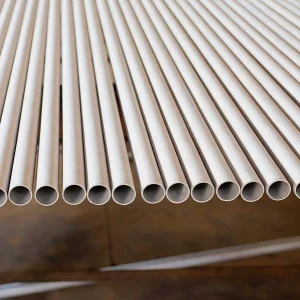
Custom Super austenitic steel ASME SA213 · S31254.SMO254 pipe Manufacturers, Products
View Specification
High-Quality Super Austenitic Steels 904L • UNS N08904 • 1.4539 Suppliers, Factory
View Specification