
Explore our premium catalog of engineered seamless and welded alloy pipes, customized to strict ASME/ASTM specifications for global chemical transfer systems.

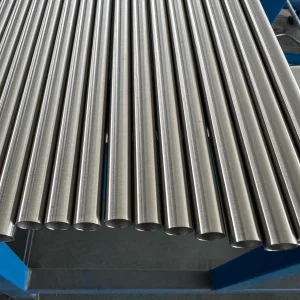

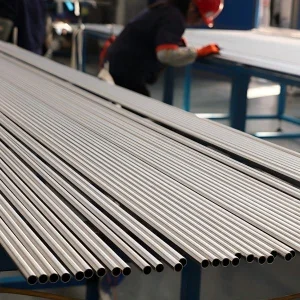
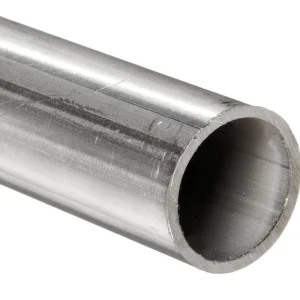



In modern industrial chemical manufacturing, fluid containment and transport infrastructure represent the critical boundary between process productivity and catastrophic environmental failure. Transferring aggressively corrosive, high-temperature media—such as concentrated nitric, sulfuric, hydrochloric, and hydrofluoric acids, wet chlorine gas, organic acid mixtures, and chloride-laden process streams—requires piping materials engineered far beyond conventional austenitic stainless steels.
Bespoke nickel alloy piping systems engineered by specialized manufacturers serve as the primary defensive barrier against severe chemical degradation mechanisms. These specialized materials exhibit exceptionally low degradation rates when subjected to Pitting Corrosion, Crevice Corrosion, Intergranular Stress Corrosion Cracking (IGSCC), and high-velocity Erosion-Corrosion. This technical whitepaper explores the physical metallurgy, process manufacturing mechanics, international compliance frameworks, and supply chain strategies driving high-efficiency global chemical fluid transfer.
Nickel possesses a face-centered cubic (FCC) crystal lattice that maintains outstanding ductility, toughness, and metallurgical stability from cryogenic temperatures up to extreme heat above 1000°C. When alloyed with precise stoichiometric ratios of Chromium (Cr), Molybdenum (Mo), Iron (Fe), Copper (Cu), and Tungsten (W), nickel alloy pipes form a self-healing passive oxide film ($Cr_2O_3$, $MoO_2$, $NiO$) that resists breakdown under intense chemical attack.
Featuring 57% Nickel, 16% Chromium, and 16% Molybdenum plus 4% Tungsten, Alloy C-276 is regarded as the premier versatile corrosion-resistant material. It resists ferric and cupric chlorides, hot contaminated mineral acids, solvents, chlorine, formic and acetic acids, acetic anhydride, and wet chlorine gas. Its low carbon content minimizes carbide precipitation during welding, preserving resistance to intergranular corrosion in as-welded joints.
Solid-solution strengthened by Molybdenum (9%) and Niobium/Tantalum (3.6%), Inconel 625 delivers high mechanical fatigue resistance alongside exceptional corrosion stability. It exhibits immunity to chloride-induced stress corrosion cracking and handles a wide range of severely oxidizing to non-oxidizing chemical environments.
Designed with added Titanium (0.6–1.2%) and Copper (1.5–3.0%), Alloy 825 offers targeted resistance to sulfuric and phosphoric acid solutions. The high nickel composition combined with molybdenum and copper provides superb resistance to reducing environment acid media while preventing stress cracking in seawater loops.
| Alloy Grade | UNS / EN Standard | Nominal Composition | PREN Rating | Primary Fluid Transfer Applications |
|---|---|---|---|---|
| Hastelloy C-276 | UNS N10276 / 2.4819 | Ni-57%, Cr-16%, Mo-16%, W-4%, Fe-5% | > 68 | Wet Chlorine, Mixed Acids, Fine Chemical Processing, Sour Gas Transfer |
| Inconel 625 | UNS N06625 / 2.4856 | Ni-58%, Cr-21.5%, Mo-9%, Nb-3.6% | ~ 51 | Seawater Cooling, Supercritical Organic Fluids, High-Temp Pyrolysis |
| Incoloy 825 | UNS N08825 / 2.4858 | Ni-42%, Fe-30%, Cr-21.5%, Mo-3%, Cu-2% | ~ 31 | Sulfuric Acid Reboilers, Phosphoric Acid Production, Pickling Lines |
| Monel 400 | UNS N04400 / 2.4360 | Ni-63%, Cu-31%, Fe-2.5%, Mn-2% | N/A | Hydrofluoric Acid Alkylation, Caustic Soda Evaporators, Brine Piping |
| Hastelloy B-3 | UNS N10675 / 2.4600 | Ni-65%, Mo-28.5%, Cr-1.5%, Fe-1.5% | N/A (Reducing) | Pure Pure Hydrochloric Acid Synthesis at All Concentrations & Temps |
Producing bespoke nickel alloy piping requires uncompromising control over cold working, heat treatment, and surface finishing processes. Unlike generic piping, bespoke chemical transfer lines must adhere to strict internal diameter (ID) roughness specifications ($Ra < 0.4 \mu m$ or smooth pickling) to prevent boundary layer turbulent drag, localized media stagnation, and biofilm/scale build-up.
Cold rolling using multi-roll pilger mills reduces wall thickness eccentricity to within ±5% while refining the grain matrix structure. This process increases tensile yield strength and eliminates internal residual stresses, ensuring flawless structural integrity during severe thermal cycling.
Heat treatment performed at temperatures between 1040°C and 1180°C, followed by rapid water quench or argon cooling, fully redissolves secondary precipitates ($\sigma$-phase, $M_{23}C_6$ carbides). This reinstates maximum thermodynamic passivity across both base metal and weld heat-affected zones (HAZ).
Internal surface electropolishing reduces micro-asperities. For high-velocity chemical transfer, smooth ID profiles minimize flow resistance, preventing erosion-corrosion caused by high Reynolds number turbulent eddies carrying suspended chemical solids.
Bespoke nickel alloy piping systems are deployed across diverse global industrial ecosystems, each presenting distinct thermodynamic and regulatory challenges. Customization ensures seamless integration into complex chemical process units worldwide.
In major refining and petro-chemical complexes throughout Texas and Louisiana, bespoke Hastelloy C-276 and Inconel 625 pipes are heavily utilized in sour gas sweetening units, ethylene dichloride (EDC) production, and chlor-alkali plants where hydrogen chloride gas and wet chlorine demand total corrosion protection.
Across Germany (Rhine-Ruhr industrial zone), Antwerp, and Rotterdam, chemical manufacturers demand strict compliance with EU REACH regulations and EN 13480 metallic industrial piping codes. Bespoke nickel alloy tubing provides zero-leakage security for toxic chemical intermediates and high-purity pharmaceutical acid loops.
Mega-scale PTA (Purified Terephthalic Acid) plants and high-temperature thermal seawater desalination facilities in Saudi Arabia, UAE, China, and South Korea rely on titanium and super-nickel alloys to resist high-temperature bromide-containing organic acid slurry media.
Chinese precision tube and pipe manufacturers have established an integrated supply chain ecosystem that delivers significant cost, speed, and quality advantages for global chemical engineering buyers.
Direct strategic partnerships with top-tier master alloy melters ensure immediate access to fully certified, vacuum-induction melted (VIM) and electroslag remelted (ESR) nickel hollows and billets, drastically shortening raw material lead times.
Modern Chinese facilities integrate smart Manufacturing Execution Systems (MES) with automatic dimensional laser sensors, continuous eddy-current inspection, and automated bright annealing control, guaranteeing zero defect propagation across batch runs.
Capitalizing on streamlined manufacturing workflows, advanced tooling, and high-volume raw material procurement, Chinese mills offer bespoke wall thickness tolerances, custom bending radii (U-bends), and special end prep configurations at competitive price points.
The global transition toward green hydrogen, carbon capture, utilization, and storage (CCUS), and ultra-high purity semiconductor chemistry is driving technological evolution in nickel alloy pipe manufacturing.
Next-generation non-destructive testing utilizes real-time machine learning algorithms paired with Full Matrix Capture (FMC) Ultrasonic testing to inspect 100% of the pipe wall volume for micro-voids, inclusion clusters, or sub-surface wall discontinuities.
Developing high-pressure nickel alloy seamless pipes optimized for zero hydrogen embrittlement during long-distance transmission of pure gaseous hydrogen and high-temperature supercritical $CO_2$ fluid loops.
To guarantee zero failure in mission-critical chemical fluid transfer, every bespoke pipe undergoes exhaustive quality testing aligned with global engineering standards, including ASME B31.3, EN 10204, ASTM B163, B167, B407, B423, B444, B622, and B677.
100% Positive Material Identification (PMI) via X-ray Fluorescence (XRF) and Optical Emission Spectrometry (OES) to confirm exact element percentages (Ni, Cr, Mo, W, Cu, Ti).
Intergranular corrosion testing (ASTM G28 Methods A & B / ASTM A262 Practice E), tensile, yield, elongation, and micro-hardness testing across all master heat lots.
Hydrostatic pressure testing up to 200 bar alongside Eddy Current (ASTM E426) and Pneumatic Under Water Testing to guarantee leak-free containment.
Complete material traceability with EN 10204 3.1 Mill Test Certificates (MTC) supplied as standard, with independent third-party verification (SGS, TÜV, Bureau Veritas) for EN 10204 3.2 compliance.
Discover our extended line of precision engineered tubing solutions for thermal, chemical, structural, and sanitary fluid handling systems.








Find detailed engineering answers regarding material selection, manufacturing tolerances, inspection standards, and custom fabrication capability.
Request a Custom Engineering Consultation & Technical Quote
Partner with our metallurgy and engineering specialists to select, design, and manufacture bespoke nickel alloy piping solutions tailored to your specific chemical processing environment.
