
Precision Stainless Steel & Austenitic Alloy Tubing Catalog
Explore our factory-direct precision engineered tubular solutions manufactured strictly to ASME, ASTM, and EN standards with EN 10204 3.1/3.2 certification.
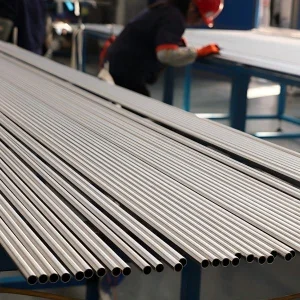
Custom Austenitic steel ASME SA213 · TP321H Manufacturer, Supplier

High-Quality Austenitic Steels 304H • UNS S30409 • 1.4948 Manufacturer, Supplier

High-Quality Duplex Steels 2205 • S31803/S32205 • 1.4462 Manufacturer, Products

Custom Austenitic Steels 316L • UNS S31603 • 1.4404 Manufacturer, Factories
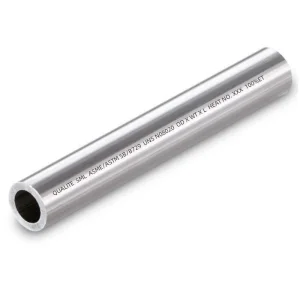
Custom Nickel Alloy Tubes 20 • UNS N08020 • 2.4660 Supplier, Product
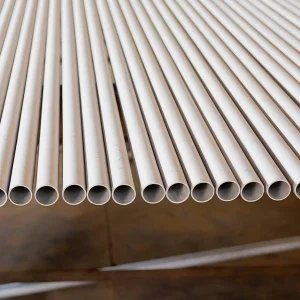
High-Quality Austenitic steel ASME SA269 · TP304 Factories, Products

High-Quality Ferritic & Martensitic Steels 410 • UNS S41000• 1.4512 Suppliers, Factories

Custom Austenitic steel ASME SA213 · TP316LN.UNS S31653 Manufacturers, Factory
1. Global Landscape of High Nickel Alloy Tubes in Modern Process Industries
Analysing structural shifts, demand catalysts, and chemical stability requirements across extreme operating environments.
High nickel alloy tubes represent the apex of metallurgical engineering in modern process industries. Unlike standard austenitic stainless steels (such as 304L or 316L) which suffer rapid degradation when exposed to severe chloride stress corrosion cracking (SCC), hot inorganic acids, and high-temperature oxidation, nickel-base alloys maintain structural integrity due to their face-centered cubic (FCC) austenitic matrix stabilized by high nickel concentrations (>30% to >72%).
The global commercial demand for high nickel alloy tubular products is experiencing unprecedented expansion driven by four major industrial catalysts:
Energy Transition & Green Hydrogen
High-nickel tubing (such as Incoloy 800H and Hastelloy C-276) is vital for high-temperature solid oxide electrolyzer cells (SOEC), steam methane reformers (SMR), and supercritical $CO_2$ power cycles demanding resistance to creep rupture above 750°C.
Deepwater Sour Gas Processing
Offshore oil extraction in sour gas fields containing extreme concentrations of $H_2S$, $CO_2$, and elemental sulfur requires seamless Inconel 625 and Alloy 825 OCTG tubing immune to sulfide stress cracking (SSC) under NACE MR0175/ISO 15156 guidelines.
Information Gain Insight: The distinction between standard stainless steel and high nickel alloys lies in the Ni-Cr-Mo metallurgical synergy. Molybdenum prevents localized pitting (CPT > 85°C), Chromium provides a self-healing passive $Cr_2O_3$ film, and Nickel suppresses phase transformation into brittle martensite under heavy cold drawing.
2. China Factory Efficiency & Engineering Advantages in High Nickel Alloy Production
How state-of-the-art Chinese manufacturing centers have optimized vacuum metallurgy, cold pilgering precision, and total cost of ownership (TCO).
VIM + ESR Double Vacuum Melting
Chinese factories utilize integrated Vacuum Induction Melting (VIM) followed by Electro-Slag Remelting (ESR) or Vacuum Arc Remelting (VAR). This guarantees ultraclean chemistry, minimizing gas content ($O_2, N_2, H_2 < 10\text{ ppm}$) and non-metallic inclusions.
Ultra-Precision Cold Pilgering
Utilizing high-speed cold pilger mills with die-controlled reduction rates exceeding 70% per pass. This process refines grain size to ASTM 8-10, yielding seamless nickel alloy tubes with wall thickness tolerances controlled within ±5%.
25–40% TCO Optimization
Through fully integrated industrial supply clusters in Zhejiang and Jiangsu, domestic Chinese factories optimize raw material yield, energy consumption during bright annealing, and lead times by up to 45% compared to European counterparts.
Historically, high-nickel superalloys were dominated by North American and Western European specialty mills. However, over the past decade, leading Chinese manufacturers like Spezilla Tube have executed significant capital expenditures in automated cold-drawing benches, multi-roll cold pilger mills, offline continuous eddy-current and ultrasonic testing lines, and hydrogen-shielded bright annealing furnaces.
The core advantage of procuring nickel alloy tubes from China is not merely cost—it is process control, customization elasticity, and strict compliance with global technical specifications (ASME SB-163, SB-167, SB-444, SB-668, EN 10216-5). Chinese manufacturing hubs can rapidly scale production from small-batch custom alloy orders to kilometer-scale heat exchanger tube bundles without quality degradation.
3. Comprehensive Technical Matrix: High Nickel & Corrosion-Resistant Alloys
Direct comparison of key chemical compositions, equivalent standards, corrosion indices, and maximum operating temperatures.
| Alloy Grade | UNS / W.Nr. | Nominal Composition (%) | PREN / CPT Index | Max Temp (°C) | Key Corrosion Resistance |
|---|---|---|---|---|---|
| Nickel Alloy 20 | UNS N08020 / 2.4660 | 35Ni - 20Cr - 3.5Cu - 2.5Mo | PREN ~30 | 500°C | Exceptional resistance to hot sulfuric acid ($H_2SO_4$) curing |
| Inconel 600 | UNS N06600 / 2.4816 | 72Ni - 15.5Cr - 8Fe | High Temp Base | 1150°C | Immune to chloride SCC; superior oxidation & nitriding resistance |
| Inconel 625 | UNS N06625 / 2.4856 | 58Ni - 21.5Cr - 9Mo - 3.6Nb | PREN > 50 | 980°C | Outstanding pitting/crevice corrosion immunity in marine & sour environments |
| Incoloy 800H/HT | UNS N08810 / 1.4958 | 32Ni - 21Cr - 45Fe - (Al+Ti) | High Creep Strength | 1000°C | Resists carburization, thermal cycling, and high-temperature oxidation |
| Incoloy 825 | UNS N08825 / 2.4858 | 42Ni - 21.5Cr - 3Mo - 2Cu | PREN ~31 | 540°C | Resists reducing and oxidizing acids, stress-corrosion cracking |
| Hastelloy C-276 | UNS N10276 / 2.4819 | 57Ni - 16Cr - 16Mo - 4W | PREN ~68 | 1040°C | Extreme immunity to wet chlorine gas, hypochlorites, and ferric chloride |
| Monel 400 | UNS N04400 / 2.4360 | 67Ni - 31Cu - 1.5Fe | Seawater Specialist | 480°C | Rapid flow hydro-erosion resistance in marine & hydrofluoric acid service |
4. Localized Application Scenarios for High Nickel Alloy Tubing
Where failure is not an option: Field performance analysis across primary industrial processing sectors.
Chemical & Petrochemical Processing
In pickling systems, organic acid production, and fluorochemical synthesis, standard stainless steels fail rapidly due to localized pitting and stress corrosion. Alloy 20 (UNS N08020) and Hastelloy C-276 tubing are specified in reboilers, condensers, and piping headers handling hot sulfuric, nitric, and hydrofluoric acid mixtures.
Power Generation & Nuclear Feedwater Heaters
High-pressure steam generators and U-bent heat exchangers in nuclear power reactors utilize Inconel 600 / Inconel 690 seamless tubes. Their high resistance to primary water stress corrosion cracking (PWSCC) guarantees decadal operational safety under combined mechanical vibration and high thermal flux.
Desalination & Marine Offshore Systems
Seawater evaporators, reverse osmosis (RO) high-pressure manifolds, and subsea hydraulic control lines leverage Monel 400 and Inconel 625 tubes. Monel 400 exhibits non-fouling properties and zero corrosion rate in high-velocity brackish and marine environments.
Aerospace & Industrial Gas Turbines
Precision thin-wall Inconel 625 fuel injection tubes and hydraulic lines operate under extreme cyclic thermal shock (-196°C to +850°C), retaining structural ductility without embrittlement over thousands of engine burn hours.
5. Global Enterprise Procurement & Non-Destructive Quality Assurance Protocols
A rigorous guide to verifying metallurgical compliance, non-destructive testing (NDT), and mill certification.
International engineering procurement contractors (EPCs) procuring high nickel alloy tubes must execute multi-layered Quality Assurance (QA) and Quality Control (QC) protocols to eliminate the risks of micro-cracking, wall eccentricity, and intergranular phase precipitation.
Essential Quality Verification Steps:
- Positive Material Identification (PMI): 100% X-ray Fluorescence (XRF) testing on every individual tube prior to packing to ensure zero cross-contamination of nickel and molybdenum content.
- 100% Hydrostatic & Eddy Current Testing (ECT): Hydrostatic testing conducted at pressures up to 100 MPa (14,500 psi) in accordance with ASTM A1016/A1016M, accompanied by automated digital Eddy Current flaw detection.
- Intergranular Corrosion (IGC) Testing: Mandatory testing under ASTM G28 (Method A & B) for nickel-rich alloys or ASTM A262 Practice E to verify that solution annealing completely dissolved chromium carbide precipitates.
- Dimensional & Surface Profilometry: Bore scope inspection of inner surface (ID) roughness ($Ra < 0.4\,\mu\text{m}$ for bright annealed precision tubing) and wall thickness variation.
- Mill Test Certificates (MTC): Full compliance with EN 10204 3.1 or independent 3.2 inspection (certified by Lloyd's Register, TUV, DNV, or SGS).
Reliability Assurance: Every high nickel alloy tube exported by top-tier Chinese manufacturers is packed in seaworthy, steel-framed plywood cases with moisture-proof VCI wrapping and plastic end caps to preserve tube cleanliness during transoceanic transit.
6. Future Industry Trends: Advanced Superalloys & Digitalized Manufacturing
Emerging technology vectors reshaping nickel alloy tube development over the next decade.
AI-Driven Cold Drawing Defect Detection
Real-time optical laser sensors and acoustic emission algorithms detect surface micro-fissures during the drawing process, automatically adjusting die speeds to eliminate human error.
Low-Carbon Nickel Refining
Integration of green hydrogen reductants in nickel smelting facilities, lowering the scope 1 and 2 carbon footprint of nickel alloy tube manufacturing by up to 35%.
Supercritical $CO_2$ Specific Alloys
Commercialization of next-generation high-entropy alloys (HEA) capable of withstanding $sCO_2$ environments at 750°C and 30 MPa with zero wall degradation.
Super Austenitic, Ferritic & Specialty Nickel Tubing Solutions
Direct supply options engineered for extreme acidic, severe marine, and high-temperature furnace applications.
Custom Super austenitic steel ASME SA213 · S31254.SMO254 pipe Manufacturers, Products

Custom Austenitic steel ASME SA312 · TP304H Manufacturers, Factories

Custom Austenitic Steels 309S • UNS S30908 • 1.4833 Factories, Products
Custom Ferritic & Martensitic Steels 405 Stainless Steel Tubes, UNS S40500, 1.4002 Suppliers, Products

High-Quality Austenitic Steels 317L • UNS S31703• 1.4438 Suppliers, Factory

Custom Titanium Tubes • Grade 1•UNS R50250 Product, Products

Custom Nickel Alloy Tubes 400 • UNS N04400 • 2.4360 Manufacturer, Products
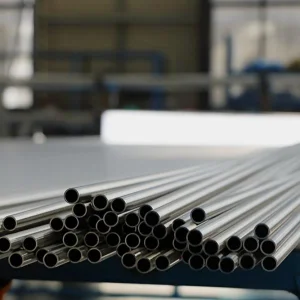
High-Quality Austenitic steel ASME SA213 · TP321 Manufacturer, Supplier
7. Engineering FAQ: Purchasing & Manufacturing Insights
In-depth responses to frequent technical queries from procurement directors and metallurgical engineers.
