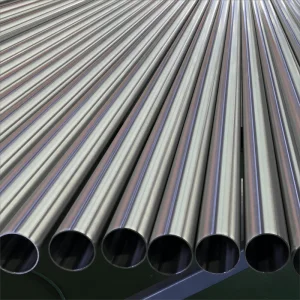
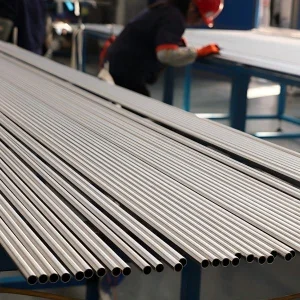
Precision Engineering Solutions for Extreme Environments
Select certified seamless and welded tube specifications optimized for cracking towers, hydrotreaters, and aggressive chemical processing units.







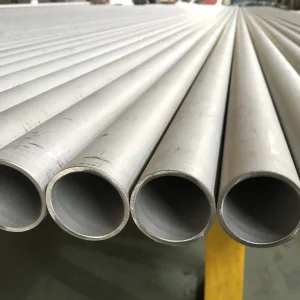
Petrochemical Tubing Degradation Architecture
Failure Analysis & Structural Integrity in Severe Process Units
The Evolving Demands of Modern Petrochemical Processing
Global petrochemical refining operations require robust tubular infrastructure engineered to withstand combined thermodynamic stress, cyclic thermal fatigue, and extreme chemical oxidation. Selecting a qualified high-quality petrochemical industry use supplier is critical for maintaining zero-unscheduled-downtime operations across refining, olefin synthesis, and gas processing complexes.
Modern downstream refineries operate under elevated temperatures and pressures to maximize conversion yields from heavy sour crudes. Tubular components deployed in hydrotreating units, catalytic reforming loops, and ethylene pyrolysis furnaces face severe degradation mechanisms. Standard stainless steels often succumb to localized pitting, polythionic acid stress corrosion cracking (PASCC), and high-temperature creep embrittlement. As global processing standards align with zero-emission mandates, tubular suppliers must deliver cold-worked, vacuum-annealed, and non-destructively tested corrosion-resistant alloys (CRAs) certified under rigorous international standards such as ASME SA213, SA249, SA312, and ASTM B163/B407.
Chloride Stress Corrosion Cracking (CSCC) Mitigation
Chloride-induced SCC remains a major cause of failure in heat exchangers exposed to cooling water, steam condensates, and hydrocarbon streams containing trace salts. Austenitic stainless steels like standard TP304L and TP316L experience rapid transgranular cracking under tensile stress at temperatures exceeding 60°C in chloride-rich media.
To mitigate CSCC risks, leading manufacturers supply high-nickel and high-molybdenum alloys, including Super Austenitic 254SMO (UNS S31254) and Nickel Alloy 825 (UNS N08825). The elevated nickel matrix (>30%) stabilizes the austenitic phase, rendering the alloy virtually immune to chloride-driven cracking while maintaining high ductility and weldability.
High-Temperature Creep and Sulfidation Resistance
In thermal cracking units, ethylene pyrolyzers, and steam methane reformers, tubing operates at skin temperatures ranging from 650°C to 1100°C. Under these condition, mechanical strength relies heavily on grain boundary stability and carbide precipitation hardening.
Controlled carbon austenitic grades such as TP310H (UNS S31009), TP347H (UNS S34700), and Alloy 800HT (UNS N08811) are engineered with precise titanium/niobium additions and coarse grain size (ASTM No. 5 or coarser). This microstructure prevents creep deformation, limits carburization, and resists sulfur-bearing gas attack during continuous high-temperature exposure.
Petrochemical Alloy Engineering Selection Matrix
Comprehensive technical breakdown of corrosion-resistant alloys, high-temperature stainless steels, and nickel alloys supplied to major global refineries and EPC projects.
| Alloy Grade | UNS / EN Standard | PREN Rating | Max Temp (°C) | Primary Industrial Petrochemical Applications |
|---|---|---|---|---|
| Nickel Alloy 400 | UNS N04400 / 2.4360 | N/A (Ni-Cu) | 480°C | Hydrofluoric acid (HF) alkylation units, crude distillation overhead condensers, salt water exchangers. |
| Austenitic 310H | UNS S31009 / 1.4845 | ~25 | 1150°C | Ethylene pyrolysis furnaces, radiant coil tubing, thermal reformers, fluidized bed combustors. |
| Super Austenitic 904L | UNS N08904 / 1.4539 | >34 | 400°C | Sulfuric acid production, phosphate processing, brackish water heat exchangers, organic synthesis. |
| Stabilized TP316Ti | UNS S31635 / 1.4571 | ~25 | 800°C | Intergranular corrosion prevention in welded process lines, PTA plants, high-temp chemical reactors. |
| High-Temp TP347H | UNS S34700 / 1.4550 | ~22 | 850°C | Catalytic cracking steam superheaters, hydrocracker reboilers, heavy oil upgrading refinery loops. |
| Nickel Alloy 800 / 800HT | UNS N08811 / 1.4959 | N/A (High Ni-Fe-Cr) | 1000°C | Ethylene dichloride (EDC) cracking furnaces, steam methane reforming, hydroprocessing heaters. |
| Super Austenitic 254SMO | UNS S31254 / 1.4547 | >43 | 450°C | High-chloride cooling circuits, offshore topside heat exchangers, flue gas desulfurization (FGD) scrubbers. |
| Nickel Alloy 825 | UNS N08825 / 2.4858 | >31 | 540°C | Sour gas (H2S/CO2) handling, phosphoric acid evaporators, sour water strippers, hydroprocessing exchangers. |
PREN Formulation & Assessment
The Pitting Resistance Equivalent Number (PREN) evaluates resistance to localized pitting corrosion in chloride-containing media:
For severe petrochemical environments, specifying seamless tubing with a PREN > 40 ensures high protection against localized crevice attack.
Stabilization via Ti & Nb
Titanium (TP316Ti, TP321H) and Niobium (TP347H) additions tie up interstitial carbon as stable MC carbides. This prevents Chromium Carbide precipitation along grain boundaries during welding or service between 450°C and 850°C, eliminating sensitization and Intergranular Corrosion (IGC).
Full Solution Annealing
Factory processing requires rapid water quenching or bright hydrogen annealing from temperatures above 1040°C–1150°C. This homogenizes the microstructure, redissolves secondary phases (like Sigma phase), and optimizes ductility for U-bending and tube-to-tubesheet expansion.
Localized Petrochemical Application Scenarios & Industrial Integration
Deployment strategies for specialized tubing across regional energy hubs, mega-refineries, and downstream chemical complexes.
Middle East & Gulf Coast Refinement Complexes
High-ambient temperatures combined with high-salinity seawater intake create challenging conditions for cooling infrastructure. Major refining centers in Jubail, Yanbu, and Abu Dhabi rely on Super Austenitic 254SMO and Titanium Grade 2 heat exchanger tubes to replace legacy copper-nickel alloys. These alloys offer superior erosion-corrosion resistance and zero pitting in high-sulfur crude overhead condensers.
Furthermore, sour oil processing plants requiring NACE MR0175 / ISO 15156 compliance extensively deploy Nickel Alloy 825 (UNS N08825) seamless tubing for downhole control lines, multi-phase flowlines, and sour gas stripping columns.
North American Shale & Gulf Coast Hydroprocessing
The expansion of ethane crackers and LNG export terminals along the U.S. Gulf Coast has increased demand for cold-drawn high-pressure tubing. Heavy crude upgrading and hydrocracking units operating at 150 to 200 bar require continuous-length ASME SA213 TP347H and TP316L tubing.
Suppliers supply fully certified U-bent heat exchanger tubes with post-bend stress-relief heat treatment to prevent hydrogen-induced cracking (HIC) and stress corrosion in the bend zones.
European Green Hydrogen & Petrochemical Decarbonization
European refineries transitioning toward bio-feedstock co-processing and green hydrogen integration require elevated material performance. High-temperature electrolysis units and steam-methane reformers integrated with Carbon Capture and Storage (CCS) demand Nickel Alloy 800HT (UNS N08811) and Alloy 600 tubing.
These materials resist hydrogen embrittlement under extreme pressure cycling and maintain microstructural integrity during continuous service up to 1000°C.
Asia-Pacific Mega-Ethylene Crackers & Integrated Chemical Parks
In chemical parks across Zhoushan, Guangdong, and Singapore, modern 1.5M-ton/year steam cracking crackers rely on large-diameter and thin-wall stainless tubing. Custom ASME SA312 TP316L and SA269 TP310H tubes are utilized for quench oil coolers, high-pressure steam superheaters, and ethylene transfer lines.
Tight dimensional tolerances (wall thickness variation < 8%) and smooth internal surface roughness (Ra < 0.4 µm) help optimize fluid dynamics and reduce coking rates.
Technical Roadmap & Technological Outlook (2025–2035)
Pioneering advancements in cold deformation processing, metallurgical quality control, and zero-defect non-destructive testing for the next generation of energy infrastructure.
Ultra-Clean Cold Pilgering
Advanced multi-roll cold pilgering technology achieves up to 75% area reduction in a single pass. This processrefines grain structure, delivers tight wall concentricity (±5%), and produces high-precision bore finishes without internal weld seams.
Continuous Bright Annealing
Transitioning to continuous inline bright annealing under 100% pure high-purity hydrogen atmosphere eliminates surface oxide scaling. This preserves chromium content at the tube surface, maximizing corrosion resistance without aggressive acid pickling.
AI-Driven NDT Inspection
Integrating multi-frequency Eddy Current Testing (ECT), Automated Ultrasonic Testing (AUT), and Hydrostatic Testing up to 300 bar directly into the processing line ensures 100% volumetric and surface flaw detection per ASTM E426 and E213 standards.
Decarbonization Materials Horizon: Clean Energy Transition
By 2030, downstream chemical production will increasingly integrate with green hydrogen transport and high-pressure carbon capture networks. Tubing manufacturers are enhancing material purity by adopting Vacuum Induction Melting (VIM) and Electro-Slag Remelting (ESR). These refining methods lower tramp element content (S, P, O < 0.005%), improving resistance to hydrogen-induced micro-cracking and supercritical CO2 corrosion.
Chinese Smart Factory Supply Chain Resilience & Cost-Efficiency
Leveraging end-to-end industrial integration, automated manufacturing hubs, and robust logistics to streamline international procurement.
China's stainless steel and nickel alloy manufacturing ecosystems provide key strategic advantages for global EPC contractors and petrochemical plant operators. Through full supply chain integration—from raw material melting and continuous billet casting to cold drawing, heat treatment, and final non-destructive testing—Chinese factories offer reliable delivery schedules and competitive total cost of ownership (TCO).
Vertical Raw Material Integration
Direct integration with tier-one master alloy melt shops guarantees chemical composition consistency. Strict control of minor elements (such as Co, V, Cu, and residual gases) ensures predictable weldability and repeatable heat-treatment response across large production batches.
Advanced Automation & Precision
Modern manufacturing centers utilize high-speed cold draw benches, automated pilger mills, and digitally monitored heat-treating furnaces. Smart manufacturing protocols minimize human error, optimize yields, and reduce lead times by 30% to 40% compared to legacy mills.
Agile Global Logistics Coordination
Located near major port infrastructure in Shanghai and Ningbo, export-oriented suppliers manage end-to-end logistics. Customized seaworthy packaging (including wooden cases with plastic end caps and vapor corrosion inhibitor wraps) ensures material protection during ocean transport.
Quality Assurance, International Compliance & Technical E-E-A-T
Adhering to strict international testing protocols, independent third-party inspections, and comprehensive heat traceability per EN 10204 3.1/3.2.
Global Standard Compliance Matrix
All petrochemical-grade products undergo rigorous quality verification to meet international project specifications:
- ASME / ASTM: SA213 (Seamless Boiler/Superheater), SA249 (Welded Heat Exchanger), SA312 (Seamless/Welded Pipe), SA269 (General Service), ASTM B163 (Condenser/Heat Exchanger Nickel Tubes), ASTM B407 / B423.
- EN / DIN: EN 10216-5 (Seamless Stainless Steel Tubes for Pressure Purposes), EN 10217-7 (Welded Tubes), EN 10296-2, EN 10357.
- Sour Service & Pressure Equipment: NACE MR0175 / ISO 15156, Pressure Equipment Directive (PED 2014/68/EU), AD 2000-W0.
Rigorous Quality Testing Protocols
Before dispatch, every production lot undergoes full mechanical, physical, and microstructural testing:
- Non-Destructive Testing (NDT): 100% Eddy Current Inspection (ASTM E426) and Hydrostatic Testing up to 300 bar or Ultrasonic Testing (ASTM E213).
- Corrosion Testing: Intergranular Corrosion (IGC) per ASTM A262 Practice E/A, Pitting Resistance per ASTM G48 Method A.
- Mechanical Verification: Tensile, Yield, Elongation, Hardness (Rockwell/Vickers), Flaring, Flattening, and Reverse Bend Testing.
- Certification: Full EN 10204 3.1 Mill Test Certificates (MTC) with complete heat chemical analysis; EN 10204 3.2 certified by independent inspection agencies (SGS, TÜV, DNV, BV) available on request.
Petrochemical Engineering & Technical Procurement FAQ
Detailed answers to technical questions commonly raised by EPC engineers, plant metallurgists, and global procurement managers.
Certified Petrochemical Plant Tubing
Review technical specifications for high-alloy stainless, super austenitic, and nickel tubing solutions.