
Precision Stainless Steel & Alloy Pipe Series
Engineered to meet ASME SA213, SA312, and international EN standards with certified surface roughness tolerances for demanding industrial pipelines.

Custom Austenitic steel ASME SA213 · TP316 Manufacturer, Product

Custom Austenitic Steels 316L • UNS S31603 • 1.4404 Manufacturer, Factories

Custom Austenitic steel ASME SA213 · TP316LN.UNS S31653 Manufacturers, Factory

Custom Nickel Alloy Tubes 800H • UNS N08810 • 1.4958 Factory, Products
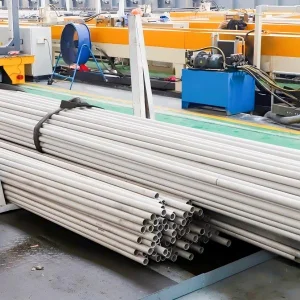
Custom Austenitic steel ASME SA213 · TP317L Supplier, Suppliers

Custom Austenitic steel ASME SA213 · TP304 Seamless Tube Manufacturer, Supplier

Custom Austenitic steel ASME SA312 · TP304L Suppliers, Factories

Custom Nickel Alloy Tubes 20 • UNS N08020 • 2.4660 Supplier, Product
The Paradigm of High-Quality Polished Stainless Pipe Manufacturing
Modern industrial systems require unprecedented fluid cleanliness, ultra-low surface roughness (Ra), and high resistance to localized pitting and stress corrosion cracking.
Core Industry Insight: High-performance polished stainless steel pipes serve as the fundamental backbone of zero-contamination fluid transportation networks. As industrial automation transitions into Industry 4.0, a premier polished stainless pipe factory must balance raw material metallurgy (austenitic, super austenitic, nickel alloys, titanium) with advanced mechanical polishing (MP), bright annealing (BA), and electro-polishing (EP) methodologies.
Surface Metrology & Roughness (Ra)
Surface finishing is no longer merely aesthetic; it directly governs bio-fouling resistance and fluid dynamics. Leading factories utilize automated multi-head polishing lines to consistently achieve inner diameter (ID) roughness below Ra 0.2 µm (8 µin), drastically reducing biofilm adherence in sanitary pipelines.
Passive Chromium Oxide Passivation
Mechanical polishing distorts surface crystal lattices. Quality-oriented manufacturers integrate controlled chemical passivation (citric/nitric formulations) to optimize the Cr/Fe ratio (Cr/Fe ≥ 1.5), ensuring complete resistance against chloride-induced micro-pitting.
Dimensional Tolerance Control
Strict outer diameter (OD) and wall thickness (WT) uniformity guarantees seamless orbital welding in high-purity processing plants. Factories operating under ASTM A269/A270 standards implement laser micrometers for 100% continuous online dimensional verification.
Technological Innovations Shaping Polished Pipe Manufacturing
As global sectors transition toward clean energy, biomanufacturing, and advanced semiconductors, procurement criteria for polished piping have evolved significantly.
| Finish Specification | Processing Route | Surface Roughness (Ra) | Microstructural Integrity | Primary Industrial Sector |
|---|---|---|---|---|
| Mechanical Polish (MP) 180-320 Grit | Automated Abrasive Belt / Flap Wheel | 0.40 µm – 0.80 µm (16–32 µin) | Cold worked skin layer with uniform grain orientation | Food & Dairy, Architecture, General Fluid Systems |
| Bright Annealed (BA) + MP | Cold Drawing + Hydrogen Atmosphere Anneal | 0.25 µm – 0.40 µm (10–16 µin) | Oxide-free, fully recrystallized grain structure | Pharmaceutical Process Lines, Heat Exchangers |
| Electro-Polished (EP) High Purity | Anodic Electrochemical Dissolution | < 0.13 µm – 0.20 µm (5–8 µin) | Enriched Cr/Fe ratio, featureless mirror topography | Semiconductor Ultra-Pure Gas, Bio-WFI Systems |
| Super Duplex / Nickel Alloy Polish | Custom Chemical Etch + Diamond Compound | 0.15 µm – 0.30 µm (6–12 µin) | Phase balance optimized (50/50 Ferrite/Austenite) | Desalination, Offshore Oil & Gas, Chemical Reactors |
Key Industry Drivers in Global Sourcing
The global demand for high-grade polished stainless pipes is experiencing structural expansion driven by three key technological shifts:
- Ultra-High Purity (UHP) Gas Systems: Semiconductor fabs require zero outgassing and micro-particle-free pipe walls. High-purity polished 316L and 316LN pipes are subjected to 100% helium leak testing and particle counting.
- Decarbonization & Green Hydrogen: High-pressure hydrogen transport lines mandate smooth polished interiors to eliminate micro-cavities that could promote hydrogen embrittlement.
- Clean-in-Place (CIP) & Sterilize-in-Place (SIP) Compliance: In biotech facilities, internal surface defects trigger cross-contamination risks. Smooth polished pipes drastically reduce cleaning chemical consumption and operational cycle times.
China Industry 4.0: Modern Manufacturing & Cost-Efficiency Advantages
How modern Chinese tube manufacturing hubs leverage end-to-end industrial integration, automated quality gates, and massive scale to deliver global value.
Fully Integrated Raw Material Ecosystem
Chinese factories situated in major stainless hubs (such as Zhejiang and Jiangsu) maintain direct partnerships with tier-1 steel mills. This ensures heat-level traceability, consistent melt chemistry (strict control of C, S, P, and Mo elements), and zero raw material lag.
Automated Multi-Axis Polishing Lines
Leveraging Industry 4.0 robotics, modern polishing lines feature digital pressure sensing and automatic compensation for wheel wear. This guarantees batch-to-batch consistency across thousands of pipe meters without manual operator variance.
100% Non-Destructive Testing (NDT)
Every single pipe undergoes rigorous quality gates before dispatch: Eddy Current Inspection (ET), Hydrostatic Pressure Testing, Ultrasonic Testing (UT), and end-to-end internal video boroscope inspection for inner polished surfaces.
Quantifiable Industrial Performance Metrics
Empirical production standards established across smart factory operations
Global Enterprise Procurement Requirements
How Tier-1 engineering, procurement, and construction (EPC) contractors evaluate supplier capabilities, certification compliance, and total cost of ownership (TCO).
Regulatory Certification & Standards
Global buyers enforce compliance with strict international codes. A certified factory must provide full traceability under ISO 9001:2015, Pressure Equipment Directive (PED 2014/68/EU), and material-specific standards such as ASME SA213, SA312, ASTM A270, and EN 10217-7.
Total Cost of Ownership (TCO) Optimization
Procurement is no longer driven purely by initial price per meter. Poorly polished pipes lead to early corrosion, micro-leakages, and costly factory shut-downs. Investing in high-integrity polished pipes reduces chemical passivation frequency and maintenance downtime by up to 40%.
Custom Fabrication & Length Capabilities
Modern plant designs frequently require extra-long straight lengths (up to 25 meters), tight-radius U-bending for heat exchangers, or custom coiling. Superior factories offer custom cutting, end-capping, and cleanroom vacuum packaging to protect polished surfaces during export shipment.
Localized Application Scenarios & Engineering Implementations
Tailoring pipe metallurgical selections and surface finishes to specific environmental stresses and industry workflows.
Pharmaceutical & Biotech Water Systems
Primary Grade: 316L / UNS S31603 (Electro-Polished ID < 0.38 µm)
Used extensively in Water for Injection (WFI) loops and fermenter vessel connections. The mirror-smooth electro-polished internal surface eliminates rouge accumulation and inhibits bacterial biofilm colonization under continuous elevated temperature (80°C+ recirculation).
Chemical Processing & Acid Handling
Primary Grade: Super Austenitic 904L / UNS N08904 / 6-Moly S31254
Designed for severe environments containing high concentrations of chloride ions, sulfuric acid, or organic chemicals. The addition of high molybdenum (Mo ≥ 4.5% to 6.0%) prevents localized crevice corrosion near pipe joint welds.
Seawater Desalination & Offshore Power
Primary Grade: Super Duplex UNS S32750 / Titanium Grade 1 & 2
Coastal condensers and reverse-osmosis desalination units require ultimate resistance against aggressive marine salt spray. Polished titanium and duplex pipes offer a Pitting Resistance Equivalent Number (PREN > 42), surviving continuous immersion without pitting.
Specialty Nickel Alloy, Titanium & Duplex Series
Full-traceability pipe and tubing manufactured to withstand extreme temperatures, high pressure, and severe chemical exposure.
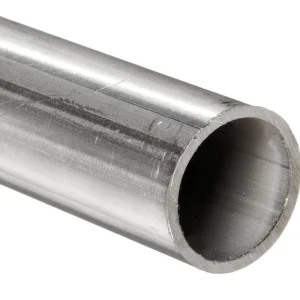
Custom Austenitic steel ASME SA312 · TP304H Manufacturers, Factories
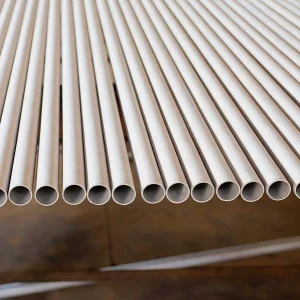
Custom Super austenitic steel ASME SA213 · S31254.SMO254 pipe Manufacturers, Products

High-Quality Super Austenitic Steels 904L • UNS N08904 • 1.4539 Suppliers, Factory

Custom Titanium Tubes • Grade 1•UNS R50250 Product, Products

High-Quality Nickel Alloy Tubes 600 • UNS N06600 • 2.4816 Manufacturer, Manufacturers

Custom Titanium Tubes • Grade 12 • UNS R53400 Manufacturers, Product

High-Quality Austenitic Steels 317L • UNS S31703• 1.4438 Suppliers, Factory

High-Quality Super Duplex Steels 32760 • S32760 • 1.4501 Manufacturers, Suppliers
Frequently Asked Questions by Industrial Buyers
Expert insights addressing mechanical polishing grit levels, electro-polishing standards, quality assurance, and material selection criteria.
Mechanical Polishing (MP) uses physical abrasive belts or wheels to physically remove surface peaks, creating a smooth finish characterized by Grit ratings (e.g., 180, 240, 320, 400 Grit). However, MP can leave micro-scratches and embedded abrasive particles. Electro-Polishing (EP) is an electrochemical process that anodically dissolves surface iron and inclusions, creating a featureless, ultra-smooth mirror finish (Ra < 0.13 µm) with a highly enriched chromium-to-iron oxide passive layer, making it ideal for semiconductor UHP lines and pharmaceutical WFI systems.
Surface roughness directly correlates with pitting corrosion susceptibility. A rough surface contains microscopic valleys and crevices where chlorides, moisture, and debris become trapped, initiating localized crevice corrosion. Smoother surfaces (lower Ra values) minimize surface area exposure and micro-cavities, allowing the protective chromium oxide film to form uniformly and resist chloride penetration.
Every factory shipment is accompanied by a full EN 10204 3.1 Mill Test Certificate (MTC). This includes heat number chemical composition, mechanical properties (tensile, yield, elongation), hardness tests, 100% NDT results (Eddy Current/Ultrasonic), intergranular corrosion testing (ASTM A262 Practice E), and certified surface roughness profilometer measurements. Independent EN 10204 3.2 inspection with third-party agencies (TÜV, SGS, Bureau Veritas) is available upon request.
Welded & Drawn (W&D) pipes undergo heavy cold working over a mandrel following welding, which fully recrystallizes the weld seam. This results in uniform wall thickness, exceptional concentricity, and lower cost under ASTM A249/A688. Seamless pipes (ASTM A213/SA312) are specified when design codes (such as high-pressure ASME boiler codes) prohibit longitudinal welds entirely or operate under severe mechanical pressure.
Standard production ranges cover Outside Diameters (OD) from 4.00 mm up to 114.30 mm, with Wall Thicknesses (WT) from 0.40 mm up to 3.05 mm. Straight lengths can be processed up to 25,000 mm. Precision cold drawing lines allow non-standard dimensions and restricted dimensional tolerances (e.g., half-standard ASTM A269 tolerance) tailored to specific OEM drawings.
Partner with a Premier Polished Pipe Manufacturer
Whether you are engineering a pharmaceutical WFI loop, a high-pressure heat exchanger, or an offshore desalination plant, our metallurgical team provides full technical guidance, custom prototyping, and EN 10204 certified quality.
