
Explore our top-tier precision-drawn tubes engineered for demanding hydraulic, heat transfer, and corrosive fluid delivery applications. Select any grade below to view full technical specs.
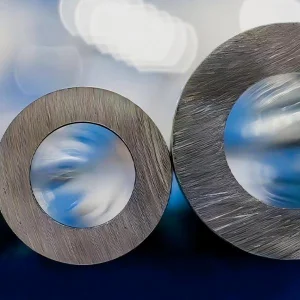







An engineering analysis of how titanium capillary tubes redefine performance benchmarks in high-stress, ultra-pure, and highly corrosive operating environments.
Interstitially Controlled Titanium Alloys
Titanium capillary tubing demands meticulous grain refinement to prevent micro-cracking during cold drawing. Utilizing Grade 1, Grade 2 (UNS R50400), Grade 5 (Ti-6Al-4V), Grade 9 (Ti-3Al-2.5V), and Grade 23 (Ti-6Al-4V ELI), our multi-pass cold drawing process controls oxygen and nitrogen interstitials, yielding yield strengths up to 830 MPa while maintaining essential ductility.
Ultra-Smooth Bore (Ra < 0.2 µm)
In analytical chromatography (HPLC/UHPLC) and medical fluidic circuits, internal wall friction causes sample carryover and pressure drops. Through proprietary plug drawing and vacuum bright annealing in pure argon atmosphere, we guarantee inner wall roughness Ra values below 0.2 µm (8 µin), eliminating microscopic crevices and fluid stagnation zones.
Dimensional Stability & Ovality Control
Capillary walls require strict concentricity (≥ 90%) to sustain extreme internal pressure cycles without wall rupture. Our advanced floating mandrel drawing technology yields wall thickness tolerances down to ±0.01 mm (±0.0004 in) and outer diameter (OD) tolerances down to ±0.005 mm, preventing geometric distortion during automated bending or orbital welding.
Unlike traditional stainless steel capillary tubes (such as 316L or 304), titanium capillaries exhibit superior resistance to chloride-induced pitting, stress corrosion cracking (SCC), and galvanic degradation. The self-healing titanium oxide passive film ($\text{TiO}_2$) forms instantly upon atmospheric exposure, providing an impervious barrier against nitric acid, wet chlorine, marine brine, and organic bio-fluids.
Strategic shift toward titanium capillary adoption across critical global sectors driven by miniaturization, extreme thermal requirements, and stringent purity mandates.
Biocompatible Micro-Fluidic Chromatography
Modern Ultra-High Performance Liquid Chromatography (UHPLC) and Mass Spectrometry (MS) systems operate at pressures reaching up to 15,000 psi (1,000 bar). Titanium capillary tubes are replacing stainless steel to eliminate metal ion leaching (such as Fe, Cr, Ni) that deactivates biological samples, enzymes, and proteins during sensitive pharmaceutical analysis.
Lightweight High-Pressure Hydraulic Lines
Aerospace manufacturers are aggressively seeking weight reduction without compromising hydraulic circuit integrity. Utilizing Grade 9 (Ti-3Al-2.5V) seamless capillary tubes delivers a 43% weight savings compared to stainless steel 21-6-9 while offering high fatigue strength against airborne vibration and thermal shock cycles ranging from -55°C to +315°C.
ISO 13485 Compliant Biocompatible Tubing
From pacemaker lead sheaths and minimally invasive surgical cannulas to neurological drug delivery needles, Grade 23 Ti-6Al-4V ELI capillary tubing is the gold standard. Its human tissue compatibility, non-magnetic MRI compliance, and high burst strength ensure zero risk of biological rejection or structural failure in vivo.
Micro Injection & Harsh Subsea Sensors
In green hydrogen electrolysis and marine geothermal monitoring, capillaries act as micro-sampling tubes exposing metal to extreme acidic condensate and seawater pressures. Titanium Grade 2 and Grade 7 (titanium-palladium alloy) capillary lines provide immune service life, reducing costly offshore maintenance downtimes.
Comprehensive metallurgical, dimensional, and mechanical parameter grid designed for procurement engineers and quality assurance specialists.
| Titanium Grade | UNS / W.Nr. Standard | Tensile Strength (MPa) | Yield Strength (MPa) | Elongation (%) | Primary Industrial Application |
|---|---|---|---|---|---|
| Grade 1 (CP Ti) | UNS R50250 / 3.7025 | ≥ 240 | 170 – 310 | ≥ 24 | Maximum formability micro-capillaries, medical cannulas |
| Grade 2 (CP Ti) | UNS R50400 / 3.7035 | ≥ 345 | 275 – 450 | ≥ 20 | Standard industrial capillary, chemical micro-fluidics |
| Grade 5 (Ti-6Al-4V) | UNS R56400 / 3.7165 | ≥ 895 | ≥ 828 | ≥ 10 | Ultra-high pressure impulse tubes, structural aerospace |
| Grade 7 (Ti-0.15Pd) | UNS R52400 / 3.7235 | ≥ 345 | 275 – 450 | ≥ 20 | Reducing acid environments, localized crevice protection |
| Grade 9 (Ti-3Al-2.5V) | UNS R56320 / 3.7194 | ≥ 620 | ≥ 483 | ≥ 15 | High-pressure hydraulic & aerospace capillary tubes |
| Grade 23 (Ti-6Al-4V ELI) | UNS R56401 / 3.7165.1 | ≥ 860 | ≥ 795 | ≥ 10 | Surgical instruments, implantable devices, medical bio-tubing |
Engineering Pressure Calculation Model for Seamless Titanium Capillary Tubes
To calculate allowable internal working pressure ($P$) for thin-walled titanium capillary tubes under Lamé's equations and ASME B31.3 standards, use the formula:
P = (2 * S * t * E) / (D - 0.8 * t)
Where S = Allowable stress value (MPa), t = Nominal wall thickness (mm), D = Outside Diameter (mm), and E = Longitudinal joint efficiency factor (1.0 for seamless drawn capillary). Our engineering team provides custom burst pressure validation reports upon technical RFQ request.
Tailored manufacturing workflows designed to solve complex operational challenges across global engineering applications.
Zero-Dead-Volume HPLC Liquid Lines
Challenge: Peak broadening and peak tailing in high-sensitivity mass spectrometers due to rough internal tube capillary bores.
Spezilla Solution: Precision plug-drawn titanium capillaries with mirror-polished interior surface finish ($Ra \le 0.15 \, \mu\text{m}$). Supplied in precut straight lengths with burr-free square face cuts to guarantee perfect compression fitting seal integrity.
Subsea High-Pressure Chemical Injection
Challenge: Pitting corrosion in ultra-deep offshore oilfields under concentrated hydrogen sulfide ($\text{H}_2\text{S}$) and seawater.
Spezilla Solution: Continuous orbital-welded and cold-redrawn Grade 7 Titanium coiled capillary tubing (up to 1,000 meters continuous length without intermediate joints), tested via 100% hydrostatic and eddy current NDT.
Ultra-Lightweight Aircraft Sensor Lines
Challenge: High vibration fatigue leading to joint crack propagation in standard stainless steel tubing.
Spezilla Solution: Vacuum annealed Grade 9 (Ti-3Al-2.5V) seamless capillary tubes possessing high fatigue strength limit (> 350 MPa at $10^7$ cycles), allowing severe tight-radius cold bending without wall buckling.
Pioneering futuristic processing methods to push micro-bore metal capillary performance beyond classical limits.
Nanometer Inert Coatings & Chemical Vapor Deposition (CVD)
We are advancing integrated inline CVD processes that apply sub-micron silica or fluoropolymer coatings to the inner wall of titanium capillary tubes. This hybrid metallic-glass channel offers absolute chemical inertness for extreme reactive species analysis while retaining titanium's high burst pressure capacity.
Ultra-Thin Wall Micro-Capillaries (WT < 0.05 mm)
For micro-heat exchangers and cryogenic space cooling loops, our R&D division is scaling production of ultra-thin wall titanium capillary tubes with wall thicknesses down to 0.05 mm (0.002 in) while maintaining pressure containment and dimensional ovality under 3%.
Total traceability, raw material verification, and full adherence to global quality frameworks ensuring seamless borderless delivery.
EN 10204 3.1 & 3.2 Mill Certificates
Every titanium capillary shipment is accompanied by detailed MTC documentation detailing heat number chemistry (ICP-OES verified), mechanical tensile test results, microstructural grain size analysis, and non-destructive hydrostatic/eddy-current test inspection logs. Third-party inspection (TÜV, SGS, Lloyd's) available upon request.
REACH, RoHS & DFARS Audited
Our raw material billets are sourced exclusively from audited titanium sponge melters adhering to DFARS clause 252.225-7014. All finished products comply strictly with EU REACH and RoHS regulations, free from SVHC contamination, ensuring hassle-free clearance through European, North American, and Asia-Pacific customs.
Class 10,000 Cleanroom Packaging
To serve medical device and semiconductor OEMs, capillary tubes undergo multi-stage solvent ultrasonic cleaning and vacuum drying to remove drawing lubricants, leaving hydrocarbon residual levels below 0.01 mg/m². Tubes are capped, color-coded, and sealed in double vacuum bags under inert gas shielding.
Explore the complete scope of our specialized stainless, nickel alloy, and titanium product lines tailored for industrial procurement needs.





Direct technical answers addressing the most common questions raised by engineering buyers and quality auditors.
