

Featured Industrial Tubing Portfolio
High-Performance Austenitic Tubing Solutions
Inspected to ASME, ASTM, and EN standards with EN 10204 3.1/3.2 full material traceability for Kazakhstan projects.
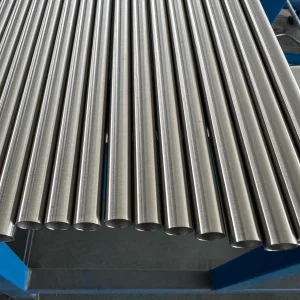
High-Quality Austenitic steel ASME SA269 · TP316L Manufacturers, Factories
View Specifications
Custom Austenitic steel ASME SA213 · TP304L Supplier, Factories
View Specifications
High-Quality Austenitic steel ASME SA213 · TP321 Manufacturer, Supplier
View Specifications
Regional Market & Industrial Context
Kazakhstan’s Industrial Evolution & Specialty Alloy Requirements
As Central Asia's economic engine, Kazakhstan presents unique operational and metallurgical demands across energy, mining, and heavy chemical manufacturing.
Kazakhstan occupies a pivotal position in global energy security and metallurgical supply chains. The rapid modernization of mega-projects such as the Tengiz Future Growth Project (FGP), the deep offshore developments in the Kashagan field, and gas processing initiatives in Karachaganak have shifted regional material requirements toward ultra-reliable, corrosion-resistant austenitic stainless steels and high-nickel alloys.
Beyond oil and gas, Kazakhstan’s industrial corridor—spanning from the chemical refining hubs of Atyrau, Pavlodar, and Shymkent to the mineral leaching zones in Karaganda and East Kazakhstan—requires high-gain metallurgical solutions. Equipment operating in these regions must simultaneously withstand intense hydrogen sulfide (H₂S) concentrations, high chloride stress, and extreme ambient temperature swings ranging from +40°C in summer to below -45°C in steppe winters.
Key Regional Operational Challenges
Sour Gas Corrosion (H₂S + CO₂): Reservoir fluids in the Caspian basin feature exceptionally high sourness, requiring strict compliance with NACE MR0175 / ISO 15156 to prevent Sulfide Stress Cracking (SSC).
Cryogenic & Winter Impact Ductility: Sub-zero winter logistics demand austenitic alloys that maintain complete face-centered cubic (FCC) lattice stability without undergoing ductile-to-brittle transition.
-50°C
Low-Temp Ductility Rated
PREN 43+
Super Austenitic Options
100%
NDT & MTC EN 10204 3.1/3.2
25m
Max Straight Tube Length
Market Drivers & Strategic Trends
Central Asia’s Technological Shift in Process Tubing Procurement
Transitioning from legacy carbon steel piping to high-performance austenitic and super austenitic alloys to extend plant lifecycle and comply with ESG benchmarks.
Refinery Modernization
Kazakhstan’s downstream facilities (Atyrau, Pavlodar, Shymkent) are upgrading heat exchanger bundles and hydrocracker lines to stabilized grades like TP321 and TP347H to eliminate intergranular corrosion caused by chromium carbide precipitation at high operating temperatures.
Hydrometallurgy & Uranium
Kazakhstan leads global uranium production via In-Situ Recovery (ISR). Leach liquor circuits containing sulfuric acid demand ultra-pure TP316L, 904L, and 254SMO tubes to resist pitting and crevice corrosion under intense acidic exposures.
Green Hydrogen Transition
Emerging mega-projects, such as the Svevind Green Hydrogen complex in Mangystau, are creating new demand for ultra-clean, high-concentricity austenitic instrumentation tubing capable of storing and transporting hydrogen without embrittlement.
Technical Metallurgy & Engineering Standards
Austenitic Steel Alloy Matrix & Chemical Mechanics
A granular evaluation of chemical composition, heat treatment routes, and corrosion performance metrics designed for procurement engineers.
Austenitic stainless steels are characterized by their non-magnetic face-centered cubic (FCC) crystal structure, maintained across all temperatures from cryogenic to thermal equilibrium through adequate Nickel (Ni) and Manganese (Mn) stabilization. Chemical additions of Molybdenum (Mo), Titanium (Ti), and Niobium (Nb) tailor specific grades to overcome chloride pitting, stress corrosion cracking (SCC), and polythionic acid cracking.
| Steel Grade | UNS / EN Standard | Cr (%) | Ni (%) | Mo / Stabilizer | PREN Value | Primary Industrial Application |
|---|---|---|---|---|---|---|
| TP304 / 304L | UNS S30400 / S30403 (1.4301 / 1.4307) | 18.0 - 20.0 | 8.0 - 12.0 | - | ~19.0 | General fluid handling, utility cooling, food processing |
| TP316 / 316L | UNS S31600 / S31603 (1.4401 / 1.4404) | 16.0 - 18.0 | 10.0 - 14.0 | Mo: 2.0 - 3.0% | ~24.5 | Chloride-bearing water, chemical process lines, oil refining |
| TP321 | UNS S32100 (1.4541) | 17.0 - 19.0 | 9.0 - 12.0 | Ti: 5×(C+N) min | ~20.0 | Refinery heat exchangers, high-temp exhaust (up to 815°C) |
| TP347 / 347H | UNS S34700 / S34709 (1.4550) | 17.0 - 19.0 | 9.0 - 13.0 | Nb: 10×C min | ~20.5 | High-pressure steam superheaters, heavy hydrocrackers |
| 254SMO (6Mo) | UNS S31254 (1.4547) | 19.5 - 20.5 | 17.5 - 18.5 | Mo: 6.0 - 6.5% + N | ≥ 42.5 | Offshore Caspian seawater cooling, acid leach mining |
Pitting Resistance Equivalent Number (PREN) Dynamics
The PREN value is calculated as PREN = %Cr + 3.3(%Mo + 0.5%W) + 16(%N). For saline soil pipelines and high-salinity Caspian brackish water cooling applications in Kazakhstan, standard 304L (PREN ~19) is insufficient, necessitating 316L (PREN ~25) or 254SMO (PREN >42) to ensure immunity against localized crevice corrosion.
Intergranular Corrosion & Carbide Stabilization
When operating between 425°C and 850°C, unstabilized austenitic steels suffer chromium carbide precipitation at grain boundaries, sensitizing the metal to rapid corrosion. Grade TP321 (stabilized with Titanium) and Grade TP347H (stabilized with Niobium/Columbium) bind carbon atoms, preserving chromium distribution and structural integrity in refinery heaters.
Engineered Solutions & Case Field Work
Proven Metallurgical Deployment Across Kazakh Projects
Custom tube engineering, cold-drawing, and thermal processing tailored to Kazakhstan's most demanding engineering environments.
Case 1: Hydrocracker Fired Heaters (Atyrau Region)
Challenge: Excessive creep deformation and severe intergranular cracking in carbon-steel heat exchangers operating under 550°C thermal cycles.
Solution: Supplied 120 metric tons of ASME SA213 TP347H seamless tubes with high-temperature solution annealing (1100°C min) and controlled grain size (ASTM 7 or coarser), doubling operational campaign life.
Case 2: Offshore Gas Injection Tubes (Kashagan Area)
Challenge: High-pressure gas containing 15% H₂S and high chloride moisture causing severe stress cracking risks in standard piping.
Solution: Delivered custom cold-worked Super Austenitic 254SMO (UNS S31254) instrumentation and heat exchanger tubing compliant with NACE MR0175, fully eddy-current and hydrostatically tested to 450 bar.
Case 3: Fertilizer & Acid Leach (Karaganda Region)
Challenge: Pitting and rapid erosion of heat exchange bundles exposed to concentrated phosphoric and sulfuric acid slurries.
Solution: Manufactured precision ASME SA269 TP316L bright annealed (BA) seamless tubes with surface roughness Ra < 0.4 µm, drastically reducing scaling and maintenance downtime.
Regulatory Compliance & Logistics Assurance
Localized Support, EAC Certification & Quality Control
Seamless integration with Kazakh national standards (GOST / KCT) and direct-to-site logistical execution across Almaty, Astana, Atyrau, and Aktau.
Comprehensive Quality Verification
Every batch of austenitic steel tubing manufactured by Spezilla undergoes exhaustive destructive and non-destructive testing (NDT) to comply with international specifications (ASME/ASTM/EN) and local Eurasian Customs Union (EAC) regulations:
- Positive Material Identification (PMI): XRF handheld analysis on 100% of tubes to guarantee heat alloy composition.
- Intergranular Corrosion Testing: ASTM A262 Practice E (Monypenny Strauss test) for sensitized grain inspection.
- NDT Flaw Detection: 100% Eddy Current Testing (ECT) per ASTM E426 or Ultrasonic Testing (UT) per ASTM E213.
- Hydrostatic Testing: Pressure tested up to 30 MPa (4350 psi) with dedicated hold times.
Cross-Reference: International vs. GOST Standards
To facilitate engineering approvals for Kazakh EPC contractors and state agencies, we provide cross-certification mapping between Western standards and GOST norms:
| ASME / ASTM Standard | Equivalent GOST Standard | Primary Grade Equivalent |
|---|---|---|
| ASTM A213 / A312 TP304 | GOST 9941-81 / 5632-72 | 0818N10 (08Х18Н10) |
| ASTM A213 / A312 TP316L | GOST 9941-81 / 5632-72 | 0317N14M3 (03Х17Н14М3) |
| ASTM A213 / A312 TP321 | GOST 9941-81 / 5632-72 | 1218N10T (12Х18Н10Т) |
| ASTM A213 / A312 TP347 | GOST 9941-81 / 5632-72 | 0818N12B (08Х18Н12Б) |
Future Engineering Roadmap
Technological Roadmap & Next-Generation Stainless Tubing (2025–2035)
Pioneering advanced metallurgical manufacturing for high-efficiency, zero-leak industrial processing.
Ultra-Clean Vacuum Melting
Implementation of VIM + ESR (Vacuum Induction Melting + Electro-Slag Remelting) for ultra-low inclusion counts, extending tube fatigue life under cyclic high-pressure regimes.
Precision Bore Electropolishing
Advancing internal electropolishing to reach surface finishes of Ra ≤ 0.15 µm for pharmaceutical, ultra-pure hydrogen, and semiconductor-grade fluid lines.
Additive Integrated Tubes
Integrating 3D micro-finned interior structures within seamless heat exchanger tubes to enhance thermal efficiency coefficients by up to 35%.
Low-Carbon Metallurgy
Transitioning manufacturing processes to green hydrogen annealing furnaces, reducing product carbon footprint in alignment with global Scope 1 & 2 carbon targets.
Frequently Asked Questions
Engineering & Procurement FAQ for Kazakhstan Operations
Expert answers addressing alloy selection, cold-climate performance, testing compliance, and logistics.
Why choose TP321 or TP347 over TP304L for refinery applications in Atyrau?
While 304L is suitable for lower temperatures, refinery equipment like hydrocrackers and thermal catalytic reformers operate in the sensitization temperature range (425°C - 850°C). Grades TP321 (Titanium-stabilized) and TP347 (Niobium-stabilized) prevent chromium carbide precipitation at grain boundaries, eliminating intergranular corrosion and polythionic acid cracking during turnaround shutdown cycles.
How do Spezilla’s austenitic tubes perform under extreme sub-zero temperatures (-45°C to -60°C)?
Unlike ferritic carbon steels which undergo brittle fracture at freezing temperatures, austenitic stainless steels possess a stable Face-Centered Cubic (FCC) atomic structure. This structure retains high Charpy V-notch impact toughness and ductility down to cryogenic levels (-196°C), making them impervious to winter cracking in Northern and Western Kazakhstan.
What certifications accompany Spezilla tube shipments to Kazakhstan?
All shipments are supplied with standard EN 10204 3.1 Mill Test Certificates (MTC) detailing complete chemical heat analysis, mechanical properties (Tensile, Yield, Elongation, Hardness), NDT test results, and hydrostatic test records. Independent EN 10204 3.2 inspection (TÜV, SGS, BV, Lloyd's) and EAC declaration of conformity are provided upon request.
Are your tubes compliant with NACE MR0175 / ISO 15156 for sour gas environments?
Yes. For applications in sour fields like Tengiz and Kashagan, our austenitic grades (TP316L, 317L, 254SMO) are supplied in the solution annealed condition with strict hardness control (HRC ≤ 22 / HBW ≤ 237) to comply fully with NACE MR0175 limits for sulfide stress cracking resistance.
What are the lead times and delivery routes to industrial hubs in Kazakhstan?
Production lead times typically range from 20 to 35 days depending on specification and NDT requirements. Shipping to major destinations—such as Almaty, Astana, Atyrau, and Aktau—is arranged via direct rail container freight (China-Europe / Central Asia Express) or multimodal sea-land transport via Aktau Caspian Port, arriving within 14 to 22 days.
Comprehensive High-Alloy Lineup
Specialty Austenitic, Super Austenitic & Alloy Tubing
Explore our complete manufacturing portfolio optimized for heat exchangers, boiler tubes, and process lines.

Custom Austenitic steel ASME SA213 · TP316H Manufacturers, Products
View Specifications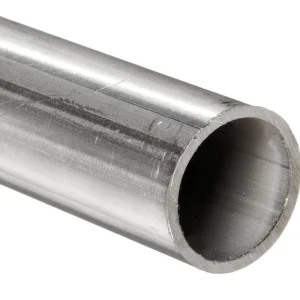
Custom Austenitic steel ASME SA312 · TP304H Manufacturers, Factories
View Specifications
High-Quality Austenitic steel ASME SA213 · TP347 Manufacturers, Supplier
View Specifications
Custom Austenitic Steels 316L • UNS S31603 • 1.4404 Manufacturer, Factories
View Specifications
High-Quality Super Austenitic Steels 254SMO • UNS S31254 • 1.4547 Factory, Factories
View Specifications
Custom Nickel Alloy Tubes 400 • UNS N04400 • 2.4360 Manufacturer, Products
View Specifications
High-Quality Duplex Steels 2205 • S31803/S32205 • 1.4462 Manufacturer, Products
View Specifications
High-Quality Austenitic steel ASME SA269 · TP304L Suppliers, Product
View SpecificationsRequire Certified Austenitic Steel Tubing for Your Kazakh Project?
Connect directly with Spezilla’s metallurgical engineering team for material datasheets, customized tolerance options, standard cross-reference consulting, and rapid direct-to-site quotations.
Send Inquiry Now