

Premier Product Selection
Featured Specialty Alloys Supplied in Greater London
High-performance stainless steel tubing engineered for severe mechanical, thermal, and chemical environments across UK infrastructure projects.

London Grade: Custom Nickel Alloy Tubes 825 • UNS N08825 • 2.4858
Explore Specifications →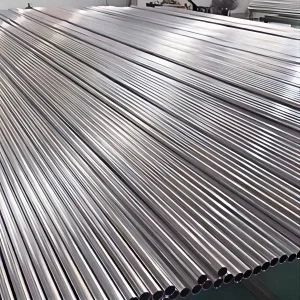
High-Temp London Service: Custom Austenitic Steel ASME SA213 · TP310S
Explore Specifications →
High-Strength London Spec: Duplex Steels 2205 • S31803/S32205 • 1.4462
Explore Specifications →Macro Ecosystem
London's Industrial Landscape & Demand for Ferritic/Martensitic Steels
From Thames Estuary maritime engineering to London Underground modernization and low-emission district energy networks, specialized steel alloys form the backbone of capital growth.
Urban Thermal Efficiency & ULEZ
Greater London's stringent Ultra Low Emission Zone (ULEZ) regulations and ambitious net-zero carbon targets demand high-efficiency exhaust gas treatment, district heating exchangers, and biomass energy boilers. Ferritic stainless steels (such as Grade 444 / 1.4521 and 441 / 1.4509) offer superior thermal conductivity and low thermal expansion coefficient compared to standard austenitic steels, making them the optimal choice for thermal cyclic environments.
Infrastructure Hardening
The Thames Tideway Tunnel, London Underground expansion, and coastal energy installations along the River Thames require materials capable of enduring high mechanical wear, abrasive sludge, and variable atmospheric salinity. Martensitic stainless steels (such as 410, 420, and 431) provide extreme surface hardness and yield strength after heat treatment, delivering uncompromised wear resistance for pump shafts, turbine blades, and mechanical fasteners.
CAPEX & Nickel Volatility Protection
Global nickel price fluctuations directly impact project budgets for London engineering consultancies. Ferritic steels contain zero or minimal nickel while maintaining chromium levels between 10.5% and 30%. By selecting stabilized ferritic grades over standard 304/316, procurement teams reduce raw material CAPEX by up to 40% without compromising corrosion resistance in atmospheric and urban industrial applications.
Engineering White Paper
Microstructural Engineering: Ferritic vs. Martensitic Stainless Steels
Understanding crystal lattice physics, phase transformation dynamics, and alloy stabilization mechanisms for optimized material selection.
Ferritic Stainless Steels (BCC Structure)
Ferritic stainless steels feature a Body-Centered Cubic (BCC) crystal structure that remains stable from ambient temperatures up to melting point. Containing 10.5% to 30% Chromium with low Carbon content (<0.08%), these alloys are inherently magnetic and demonstrate exceptional resistance to Stress Corrosion Cracking (SCC) in chloride environments.
- Thermal Conductivity: ~25 W/m·K (higher than austenitic steel's ~15 W/m·K), minimizing thermal stress.
- Thermal Expansion: ~10.4 × 10⁻⁶ /K, matching carbon steel and preventing weld joint fatigue under thermal cycling.
- Stabilization Technology: Titanium (Ti) and Niobium (Nb) additions tie up Carbon and Nitrogen, eliminating intergranular corrosion during welding.
Martensitic Stainless Steels (BCT Structure)
Martensitic stainless steels are high-carbon (0.10% to 1.20%), chromium (11.5% to 18%) alloys designed to undergo phase transformation from FCC Austenite to Body-Centered Tetragonal (BCT) Martensite upon rapid cooling (quenching).
- Hardness & Strength: Achieves tensile strengths exceeding 1500 MPa and surface hardness up to 60 HRC after quenching and tempering.
- Wear & Erosion Resistance: Ideal for high-velocity slurry transport, valve trim, hydraulic rams, and London defense engineering components.
- Tempering Tailoring: Low-temperature tempering (150-250°C) retains maximum hardness; high-temperature tempering (600-700°C) optimizes impact toughness.
Metallurgical & Mechanical Specification Matrix
| Steel Grade | UNS / EN Standard | Structure | Chromium (Cr) % | Special Additions | Yield Strength (MPa) | Typical London Application |
|---|---|---|---|---|---|---|
| AISI 409L | S40900 / 1.4512 | Ferritic | 10.5 - 11.7 | Ti Stabilized | ≥ 205 | ULEZ Automotive Exhausts, Silencers, Structural Frames |
| AISI 430 | S43000 / 1.4016 | Ferritic | 16.0 - 18.0 | Low Carbon | ≥ 260 | Indoor Architectural Cladding, Kitchen Equipment |
| AISI 439 | S43035 / 1.4510 | Ferritic | 17.0 - 19.0 | Ti + Al Stabilized | ≥ 275 | Power Station Heat Exchangers, Water Heaters |
| AISI 444 | S44400 / 1.4521 | Ferritic | 17.5 - 19.5 | 2.0% Mo, Ti+Nb | ≥ 310 | Thames Saline Water Storage, Solar Thermal Systems |
| AISI 410 | S41000 / 1.4006 | Martensitic | 11.5 - 13.5 | 0.15% C max | ≥ 450 (Q&T) | Pump Shafts, Valve Components, Fasteners |
| AISI 420 | S42000 / 1.4021 | Martensitic | 12.0 - 14.0 | 0.20 - 0.40% C | ≥ 550 (Q&T) | Surgical Tools, High-Wear Underground Wear Plates |
Proven Reliability
Global Supply Chain & Manufacturing Metrics
Precision engineered tubing manufactured under ISO 9001:2015 and EN 10204 3.1/3.2 certification guidelines.
Dual-Hub Advantage
China Smart Factory 4.0 & London Localization Synergy
Merging large-scale high-precision Chinese manufacturing efficiency with rapid London commercial compliance and project-site delivery.
Industry 4.0 Production Lines
Our smart manufacturing facility operates automated cold-drawing machines, high-frequency TIG/Laser welding cells, and continuous hydrogen bright annealing furnaces. Real-time laser micrometer inspection ensures OD tolerances within ±0.05 mm, while automated Eddy Current and Ultrasonic testing eliminates micro-defects at the mill level.
London Logistics Hub & Warehousing
To support urgent maintenance shutdowns and immediate fast-track construction schedules in Greater London, we maintain a localized warehouse network. We store standard OD stock sizes (6.00 mm to 114.30 mm) for rapid dispatch across Heathrow, Gateway, and the Thames Estuary industrial corridors.
Full UK Compliance & Traceability
Every tube shipment dispatched to London includes EN 10204 3.1 certification detailing heat number, chemical composition, mechanical test results, hydrostatic test pressure, and grain size analysis. EN 10204 3.2 inspection with independent third-party verification (TÜV, SGS, Lloyd's Register) is fully supported.
Technology Roadmap
Future Metallurgy Outlook & Hydrogen Economy Integration
Preparing London's industrial infrastructure for next-generation energy vectors and advanced additive manufacturing.
1. Hydrogen Transport & Embrittlement Resistance
As the UK transitions towards blending hydrogen into the national gas grid, selecting materials immune to Hydrogen Embrittlement (HE) is paramount. Advanced stabilized ferritic stainless steels (e.g., 444, 1.4521) exhibit significantly lower hydrogen permeability compared to high-strength carbon steels, establishing them as key candidates for urban London hydrogen distribution pipelines and refueling stations.
2. Ultra-Fine Grain Processing & Surface Passivation
Next-generation thermo-mechanical processing enables the creation of ultra-fine grain microstructures in ferritic alloys. Combined with proprietary electropolishing and laser passivation techniques, these tubes achieve surface roughness down to Ra < 0.2 μm, satisfying stringent pharmaceutical and high-purity gas requirements across London technology centers.
Full Product Catalog
Complete Range of Corrosion-Resistant & Specialty Tubes
Seamless, welded, and cold-drawn tubular products manufactured to EN, ASTM, ASME, and ISO standards for UK and worldwide delivery.
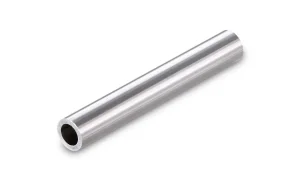
London Aerosp. & Marine: Titanium Tubes Grade 2 • UNS R50400
Explore Specifications →
London Offshore Spec: Super Austenitic Steels 254SMO • UNS S31254
Explore Specifications →
High-Strength London Spec: Titanium Tubes Grade 3 • UNS R50550
Explore Specifications →
Severe Acid London Service: Austenitic Steels 317L • UNS S31703
Explore Specifications →
High-Temp London Spec: Austenitic Steel ASME SA213 · TP316Ti
Explore Specifications →
London Standard: Custom Austenitic Steels 316L • UNS S31603
Explore Specifications →
High-Temp London Spec: Austenitic Steels 321 • UNS S32100
Explore Specifications →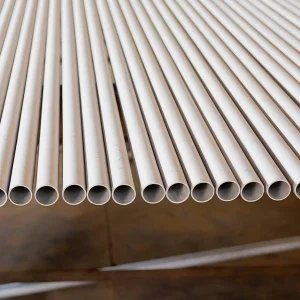
General Service London: Austenitic Steel ASME SA269 · TP304
Explore Specifications →Technical Knowledge Hub
Frequently Asked Questions by London Engineering & Procurement Teams
Expert insights on standards, selection criteria, heat treatment, and UK compliance.
Why choose Ferritic Stainless Steel over 304/316L for London district energy projects?
Ferritic stainless steels (e.g., Grade 444 / 1.4521) contain zero to low nickel, making them immune to nickel market price volatility. Technically, ferritics offer higher thermal conductivity (~25 W/m·K vs 15 W/m·K) and a lower thermal expansion coefficient, significantly reducing thermal fatigue in district heating heat exchangers. Additionally, their BCC structure provides virtual immunity to chloride-induced Stress Corrosion Cracking (SCC).
How do Martensitic Steels achieve superior mechanical hardness?
Martensitic grades (e.g., 410, 420, 431) are austenitized at high temperatures (950°C - 1050°C) and rapidly quenched in air or oil. This traps carbon inside a Body-Centered Tetragonal (BCT) lattice structure. Subsequent tempering allows precise adjustment of tensile strength (up to 1500 MPa) and hardness (up to 60 HRC) while restoring necessary ductility for heavy engineering applications.
What international standards apply to your London tube supplies?
Our tubes comply with major global standards including ASTM A268/A268M (Ferritic and Martensitic Stainless Steel Tubing for General Service), ASTM A213/A249, EN 10217-7, EN 10216-5, and BS EN 10357. All shipments are supplied with EN 10204 3.1 Mill Test Certificates and optional 3.2 third-party sign-off.
What are the lead times for custom tube dimensions delivered to London?
Standard warehouse inventory can be dispatched within 48 to 72 hours across Greater London. Custom mill runs involving specialized cold drawing, bright annealing, or U-bending typically carry a lead time of 2 to 4 weeks, supported by expedited air or sea logistics options directly into UK ports.
Start Your Procurement Consult
Require Specialized Alloy Tubing in Greater London?
Connect directly with our metallurgical engineers and supply chain specialists. Receive detailed technical datasheets, CAD drawings, sample tubes, and competitive price quotations within 24 hours.
