

UK Market Technical Whitepaper & Supply Guide
High-Quality Ferritic & Martensitic Steels Manufacturers & Product for the United Kingdom market
Engineering-grade tubular & structural steel solutions tailored to British Standard EN specs, net-zero decarbonisation targets, and severe UK industrial environments.
Precision Material Portfolio
Featured Industrial Steel Tubing for UK Projects
Inspected and certified to BS EN 10204 3.1/3.2, fulfilling high-pressure and corrosion-critical demands across the UK mainland and offshore sector.

Custom Austenitic steel ASME SA213 · TP316LN.UNS S31653 Manufacturers, Factory
View Product Specs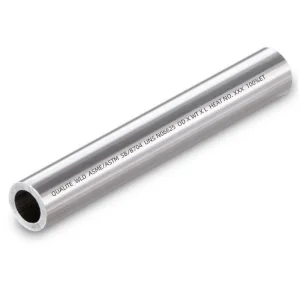
High-Quality Nickel Alloy Tubes 625 • UNS N06625 • 2.4856 Suppliers, Product
View Product Specs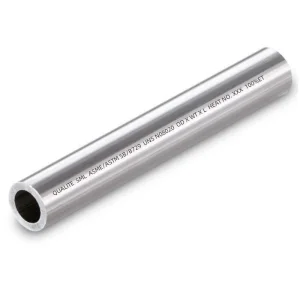
Custom Nickel Alloy Tubes 20 • UNS N08020 • 2.4660 Supplier, Product
View Product Specs
UK Sector Economics & Strategic Context
Ferritic & Martensitic Steel Demand across the United Kingdom
An in-depth metallurgical and economic analysis of how British manufacturing, Net Zero decarbonisation, and UKCA compliance drive specialized alloy selection.
The industrial architecture of the United Kingdom is undergoing a profound structural transition. Driven by the UK Government's legally binding mandate to reach Net Zero carbon emissions by 2050, alongside the implementation of the UK Carbon Border Adjustment Mechanism (UK CBAM), engineering firms across England, Scotland, Wales, and Northern Ireland are actively re-evaluating material lifecycles, thermal efficiency, and supply chain vulnerability.
UK Industry Insight: High-nickel austenitic alloys continue to face volatile price surges due to global LME fluctuations. Consequently, UK specifiers across the West Midlands automotive cluster, North Sea energy corridor, and Teesside chemical complexes are shifting aggressively toward stabilized Ferritic (e.g., 1.4509 / 441, 1.4521 / 444) and heat-treatable Martensitic grades (e.g., 1.4021 / 420, 1.4418 / 165M) to optimize Total Cost of Ownership (TCO) while guaranteeing performance integrity.
Key Regional Industrial Hubs & Specific Material Consumption
Ferritic and martensitic stainless steels serve distinct, highly technical niches within the UK’s primary industrial ecosystems:
- The West Midlands & Solihull Automotive Cluster: High-temperature ferritic stainless steel tubing (EN 1.4512 / Grade 409 and EN 1.4509 / Grade 441) is critical for hot-end exhaust manifolds, EGR (Exhaust Gas Recirculation) coolers, and catalytic converter shells for major OEMs including Jaguar Land Rover and their Tier-1 component suppliers. Low thermal expansion coefficients relative to 304/316 alloys eliminate cyclic thermal fatigue failures.
- Teesside, Humber & Grangemouth Petrochemical Hubs: Process engineering firms operating in aggressive refining and chemical cracking atmospheres specify dual-stabilized molybdenum-bearing ferritics (EN 1.4521 / Grade 444). These offer exceptional immunity to Chloride Stress Corrosion Cracking (CSCC)—a common failure mode in humid UK coastal industrial plants.
- Aberdeen & North Sea Energy Sector: Subsea control valves, pump shafts, turbine blades, and wellhead completion tools require the extreme yield strength and erosion resistance provided by high-grade martensitic alloys (EN 1.4418 / Grade 165M and EN 1.4122). These alloys deliver tensile strengths exceeding 900 MPa alongside reliable sub-zero impact toughness down to -40°C.
- UK Nuclear Energy (Hinkley Point C & Sizewell C): Secondary steam loop piping, feed water heaters, and moisture separator reheaters deploy specialized low-cobalt ferritic tube grades (BS EN 10217-7 compliant) where low thermal expansion ensures dimensional stability during intense thermal cycling.
Advanced Metallurgy Roadmap
Comparative Technical Specification & Phase Dynamics
Understanding microstructural mechanisms: Body-Centered Cubic (BCC) Ferritics vs. Body-Centered Tetragonal (BCT) Martensitics.
The structural advantage of ferritic stainless steels stems from their ferromagnetic Body-Centered Cubic (BCC) crystal lattice. Containing chromium levels ranging from 10.5% to 30% with minimal to zero nickel content, ferritic steels exhibit significantly lower thermal expansion rates (typically ~10.4 x 10⁻⁶/K) compared to austenitic steels (~16.0 x 10⁻⁶/K). This physics-based property minimizes stress building up across welded tube joints during rapid temperature changes.
| EN Designation | AISI / UNS Grade | Microstructural Phase | Yield Strength Rp0.2 (MPa) | Tensile Strength Rm (MPa) | Thermal Conductivity (W/m·K) | Primary UK Application |
|---|---|---|---|---|---|---|
| 1.4512 | 409 / S40900 | Ferritic (Ti Stabilized) | ≥ 220 | 380 – 560 | 25.0 | Automotive silencers, structural tubing |
| 1.4509 | 441 / S43932 | Ferritic (Ti + Nb Stabilized) | ≥ 250 | 430 – 630 | 26.0 | Heat exchangers, exhaust manifolds |
| 1.4521 | 444 / S44400 | Ferritic (Mo-Stabilized) | ≥ 320 | 480 – 680 | 23.0 | Potable water systems, solar boilers |
| 1.4021 | 420 / S42000 | Martensitic (Q&T) | ≥ 550 | 700 – 850 | 30.0 | Pump shafts, hydraulic piston rods |
| 1.4418 | 165M / S16500 | Low-C Martensitic | ≥ 700 | 900 – 1100 | 15.0 | Subsea valves, hydro-turbine runners |
Technology Roadmap 2025–2030: Next-Gen Alloys for UK Decarbonisation
Looking ahead toward 2030, our metallurgical R&D is focused on three critical evolutionary tracks for the British market:
- Ultra-Clean Vacuum Induction Melted (VIM) Ferritics: Formulated with interstitial carbon and nitrogen levels controlled below 100 ppm. This eliminates intergranular corrosion risk after field welding under BS EN ISO 3581 standards.
- High-Temperature Martensitics for Hydrogen Combustion: Modified 9-12% Chromium steels engineered to withstand creep deformation at 650°C under high-pressure gaseous hydrogen environments.
- Additive-Compatible Martensitic Powders & Precision Wire: Supporting the UK aerospace and defense sector in additive manufacturing (3D printing) of custom valve bodies and high-stress actuators.
Macro Sector Integration
Engineering Solutions Engineered for UK Industrial Codes
Compliant with British Standard specifications, UKCA regulatory standards, and European Pressure Equipment Directive (PED 2014/68/EU).
Renewable Energy & Hydrogen Pipeline Infrastructure
Providing seamless and welded 1.4521 (Grade 444) precision tubing designed for green hydrogen electrolysers and transport lines. Superior resistance to hydrogen embrittlement compared to conventional high-stress carbon steels.
Advanced Biomass & Waste-to-Energy Power Boilers
Deploying dual-stabilized Ti+Nb ferritic heat exchanger tubes resistant to flue-gas dew-point corrosion and high-temperature sulfurization in municipal waste-to-energy facilities across Northern England and Scotland.
Automotive & Heavy Transport Exhaust Systems
Formable Grade 409/441 welded tubes built to tight bend-radius specifications (1.5D bending). Engineered specifically for light-weighting UK commercial vehicle chassis and low-emission diesel/hybrid exhaust lines.
Subsea & Marine Hydraulic Control Lines
Quenched and tempered 1.4418 / 165M martensitic stainless components providing extreme yield strength for deepwater control manifold valves and hydraulic actuation lines operating in North Sea salt-spray zones.
UK Compliance & Local Logistics
Traceable Mill Quality & UKCA / PED Compliance
Complete material verification tailored to British procurement standards, reducing regulatory risk for UK engineers.
Navigating post-Brexit trade compliance requires strict adherence to both UK National Standards and international quality frameworks. Our production and verification routes are optimized to give UK buyers complete assurance from melt shop to site delivery:
- EN 10204 3.1 & 3.2 Inspection Certification: Every batch is supplied with full 3.1 chemical, mechanical, and non-destructive test certificates. Third-party 3.2 inspection can be conducted in-house by UKAS-recognized bodies such as Lloyd's Register, TÜV UK, or Bureau Veritas.
- Pressure Equipment Safety Regulations (PESR / UKCA): Tubes intended for UK pressure systems are verified under PESR regulations, ensuring compliance equivalent to the European Pressure Equipment Directive (PED 2014/68/EU).
- Comprehensive NDT Verification: 100% Eddy Current Testing (ET) according to BS EN ISO 10893-1, hydrostatic testing up to 250 bar, and Ultrasonic Testing (UT) for high-wall thickness martensitic tubes.
- UK Duty Paid (DDP) Express Shipping: We coordinate end-to-end logistics directly to UK industrial ports (Felixstowe, Southampton, Immingham, Grangemouth), providing custom customs clearance and duty payment under seamless DDP terms.
Smart Manufacturing Edge
China Industry 4.0: Supply Chain Resilience & Efficiency
Leveraging advanced continuous automated mill lines to deliver unparalleled dimensional precision and cost stability to the UK market.
100%
In-Line Laser Weld Profiling
< 0.05mm
Wall Tolerance Precision
1050°C
Vacuum Bright Annealing
Zero
Nickel Surcharge Volatility
Our state-of-the-art manufacturing facility in Huzhou integrates real-time Industry 4.0 monitoring across all forming, welding, and heat-treatment stages. By combining Argon-Oxygen Decarburization (AOD) refined raw strip steel with high-precision TIG and Laser welding heads, we ensure weld line integrity that matches parent metal performance.
For UK buyers, this smart supply architecture yields a double advantage: **uncompromising metallurgical purity** adhering to BS EN standards, combined with a **30% to 40% cost reduction** compared to traditional Western European steel mills.
Procurement Optimization
Streamlined Sourcing & TCO Reduction for UK Buyers
Flexible commercial models designed for UK project engineers, stockists, and Tier-1 manufacturing contractors.
Engineering procurement teams face constant pressure to balance upfront material expenditures against long-term operational performance. Our commercial framework is tailored specifically to lower transaction friction and project risk:
Austenitic-to-Ferritic Material Substitution Analysis
Our metallurgical engineering team assists UK clients in replacing expensive 304/316 grades with 441/444 ferritics where chloride stress cracking or thermal expansion is a factor, locking in long-term cost savings.
Buffer Stock Management & Scheduled Delivery
We provide framework contracts and UK-bonded consignment stock options, allowing UK manufacturers to draw down custom tube stock as needed with 48-hour domestic dispatch.
Technical Q&A
Frequently Asked Questions by UK Metallurgists & Buyers
Clear, objective answers addressing specification choices, welding procedures, and British market compliance.
Why should UK engineers choose Ferritic Grade 444 (1.4521) over Austenitic Grade 316L for aqueous systems?
Ferritic Grade 444 (1.4521) contains 2% Molybdenum and dual titanium+niobium stabilization, giving it a Pitting Resistance Equivalent Number (PREN ≥ 24) equivalent to Grade 316L. Crucially, because Grade 444 has a body-centered cubic (BCC) structure, it is virtually immune to Chloride Stress Corrosion Cracking (CSCC)—a primary cause of 316L pipe failure in hot water heating systems and marine atmospheres across the UK.
Can Martensitic stainless steel tubes be welded on UK job sites without cracking?
Martensitic steels (such as 1.4021 / 420) form hard martensite upon cooling, which can cause cold cracking if welded without precautions. Preheating the joint to 200°C–300°C and executing a Post-Weld Heat Treatment (PWHT) annealing cycle at 650°C–750°C is required. Alternatively, low-carbon martensitic grades like 1.4418 (165M) offer vastly improved weldability and can often be welded with matching or austenitic filler metals with minimal preheat.
How do Spezilla's tubes comply with British UKCA marking and Pressure Equipment Safety Regulations (PESR)?
All pressure-rated tubing manufactured by Spezilla undergoes material verification, non-destructive testing (ET/UT), and dimensional inspection compliant with BS EN 10217-7 or BS EN 10216-5. We provide EN 10204 3.1 certification detailing heat chemistry and mechanical values, supporting your UKCA technical file submission seamlessly.
What outer diameter (OD) and wall thickness (WT) ranges are available for UK delivery?
We manufacture precision welded, welded & drawn, and seamless tubing with outside diameters ranging from 4.00 mm to 114.30 mm, wall thicknesses from 0.40 mm to 3.05 mm, and custom straight lengths up to 25,000 mm. U-bend heat exchanger tube configurations are also fully supported.
What thermal expansion advantages do ferritics offer in high-temperature UK power applications?
Ferritic stainless steels expand roughly 30% to 40% less than austenitic stainless steels under thermal load. In boilers, heat exchangers, and vehicle exhausts, this lower expansion rate significantly reduces cyclic stress on thermal welds, preventing thermal fatigue cracking during frequent system start-ups and shut-downs.
Extended Alloy Catalog
High-Performance Stainless Steel & Nickel Alloy Range
Complete line-up of custom austenitic, nickel alloy, and precision-drawn tubes engineered for demanding global specifications.

Custom Austenitic steel ASME SA312 · TP321 Suppliers, Product
View Product Specs
Custom Austenitic steel ASME SA213 · TP310S Manufacturer, Products
View Product Specs
High-Quality ASME SA249 TP304 Welded Stainless Steel Tubes Manufacturer, Suppliers
View Product Specs
High-Quality Nickel Alloy Tubes 276 • UNS N10276 • 2.4819 Suppliers, Products
View Product Specs
Custom Nickel Alloy Tubes 825 • UNS N08825 • 2.4858 Suppliers, Product
View Product Specs
Custom Austenitic Steels 316L • UNS S31603 • 1.4404 Manufacturer, Factories
View Product Specs
High-Quality Austenitic steel ASME SA269 · TP321 Supplier, Products
View Product Specs
Custom Austenitic steel ASME SA213 · TP316L Supplier, Factories
View Product Specs
Engineering Partnership
Ready to Optimize Your UK Engineering Supply Chain?
Get in touch with our engineering sales specialists. We review drawings, provide alloy substitution analysis, and issue detailed quotes within 24 hours.
Send Inquiry Now